Bishops Should Bring Fullness of Catholic Teaching to the Immigration Debate
COMMENTARY: If Catholics in the pews come to believe there is only one ‘Catholic’ position on immigration policy, something essential in the Church’s own teaching has gone missing.
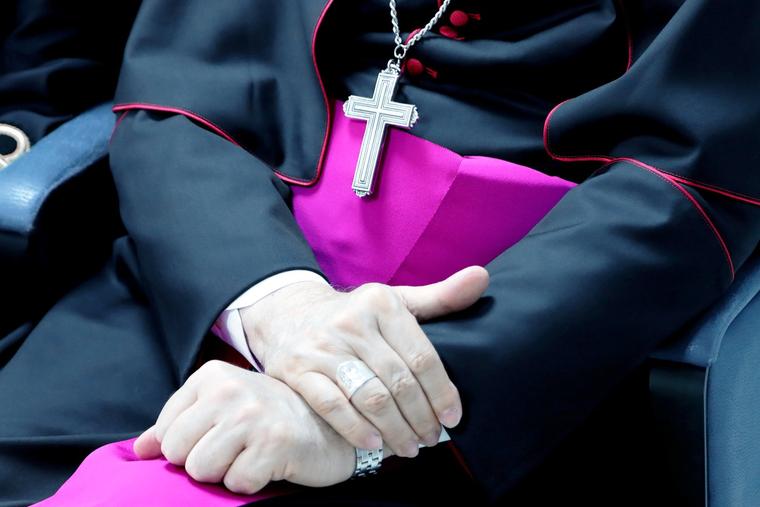
As the nation grapples with mass deportations and intensified immigration enforcement, the Catholic voice remains one of the few that appeals to conscience and moral responsibility.
For decades, the U.S. bishops have spoken with conviction on immigration, grounding their appeals in the dignity of the human person and the Church’s long tradition of welcoming the stranger. Their concern for vulnerable migrants is genuine and rooted in Scripture and Catholic social teaching.
Immigration has also been the U.S. Conference of Catholic Bishops’ most consistently addressed domestic policy issue. Since the debates surrounding the Immigration Reform and Control Act of 1986, the conference has produced a substantial body of statements, pastoral letters, policy briefs and public interventions. This sustained engagement has shaped Catholic participation in national conversations and given the bishops a steady, distinctive voice in the country’s immigration debates. Despite a recent uptick in the volume of discourse, the USCCB has been a consistent advocate.
Yet precisely because their voice carries such weight, Catholics deserve to hear not only the Church’s call to welcome the stranger, but also her teaching on political responsibility and the common good. Both belong in the larger conversation.
Scripture and the Fullness of Catholic Teaching
The bishops’ advocacy draws from a rich biblical and doctrinal tradition. Scripture repeatedly commands Israel to welcome the stranger, reminding the people that they themselves were strangers in the land of Egypt (Deuteronomy 10:19). Jesus identifies himself with the migrant and the vulnerable — “I was a stranger and you welcomed me” (Matthew 25:35) — and the Church has long emphasized the dignity of every human person, including those seeking refuge or opportunity.
Scripture also affirms the legitimacy of ordered political life. St. Paul teaches that governing authorities exist to preserve peace and protect the innocent (Romans 13:1-4). The Old Testament praises leaders who guard the people from harm and condemns those who fail to maintain justice and order. Jesus weeps over a city whose disorder has left it vulnerable (Luke 19:41-44).
The Catechism of the Catholic Church reflects this same unity, affirming both the right to migrate and the responsibility of political authorities to regulate immigration for the sake of the common good, while reminding migrants to respect the laws of the nations that receive them (CCC 2241).
Where the Bishops’ Witness Is Strong
The bishops defend the dignity of those who cross our borders seeking safety or opportunity in a climate where people are often reduced to statistics or political symbols. They reject dehumanizing rhetoric. They show pastoral concern for families, especially those facing separation or legal uncertainty, and they remind Catholics that immigration has human and moral aspects.
Where Greater Clarity Is Needed
Many Catholics in the pews have begun to assume that there is only one “Catholic” way to think about immigration policy. The Church gives us moral principles that bind every conscience — the dignity of the human person, the right to migrate and the duty of nations to pursue the common good.
Translating those principles into actual laws, enforcement practices and long‑term policy is another matter. That work involves judgment, experience and sometimes disagreement among people who are trying to reach the same moral ends.
The reality at the border is complicated. Migrants are often desperate and vulnerable, and that vulnerability attracts people who are willing to exploit it. The bishops need to speak on this topic — naming the suffering they see but also being honest about the need for order and stability. Both realities shape what’s happening at the border.
Why Order Matters
Catholic social teaching has never treated compassion as the whole story. The common good includes every person, which means it has to account for mercy, yes, but also for stability, responsibility and the basic conditions that allow people to flourish. Migrants are part of that picture, but so are citizens, families, neighborhoods and the political community that holds all of it together.
Any nation’s ability to welcome newcomers has limits, and when the system breaks down, the consequences fall on everyone, often on migrants first. That’s why enforcement, when it’s carried out with respect for human dignity, isn’t a betrayal of Catholic teaching. It is part of the legitimate work of governing.
Toward a More Complete Witness
A fully integrated presentation of Catholic teaching would hold together the full range of the Church’s principles. Far from weakening the bishops’ pastoral voice, such fullness would strengthen it by grounding compassion in a deeper understanding of the political order. This critique assumes the bishops can navigate political pressures without fracturing their unity — a demanding task, but one their moral credibility makes possible.
Effective public policy begins with a clear definition of the problem, proposes remedies that address the full scope of the issue, and offers a coherent pathway toward implementation. When public pronouncements are incomplete, public policy becomes incomplete as well, and the result is predictable: moral aspirations that fail in practice. St. Paul insisted on proclaiming “the whole counsel of God” (Acts 20:27). In the same way, the Church’s public teaching is strongest when it reflects the fullness of her doctrine rather than a selective portion of it.
The call is not for the bishops to retreat from their longstanding concern for migrants, but to embrace the issue’s totality — to speak with equal clarity about migrant claims and political responsibilities, mercy and order, welcome and civic peace. Their voice carries weight because it is rooted in the Gospel and the Church’s long tradition of defending human dignity.
A moment like this calls for more, not less — for the fullness of Catholic teaching that equips pastors and faithful to engage immigration as a Catholic question of conscience and common good.
The Church is at its best when it refuses to choose between them.
John E. Corcoran is the founder of Trinity Life Sciences and serves as chairman of the board of iCatholic Media, the parent company of CatholicTV in the Archdiocese of Boston.
- Keywords:
- immigration
- u.s. bishops
- catholic social teaching