How Mary’s Birthday Teaches Us About Hope
Mary’s entire life and example teach us to trust in God’s plan and promise, to have faith in God’s goodness and love, and to hope for the future.
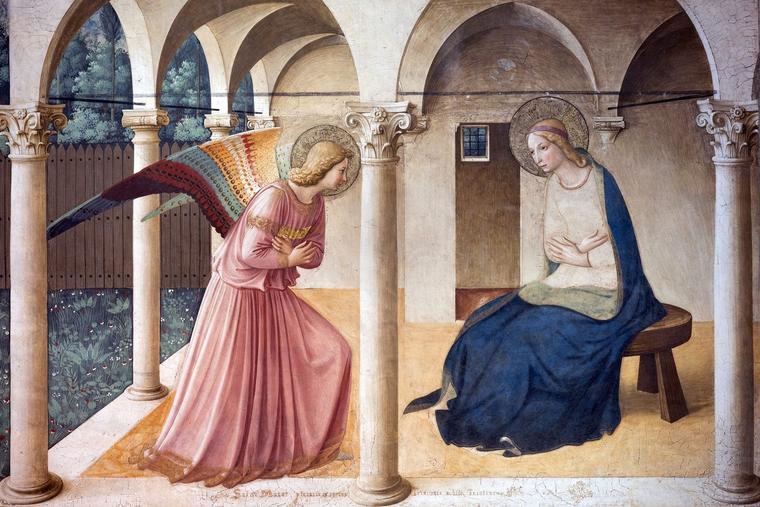
We can find many examples of saints and biblical figures who embody hope, but none as much as the Blessed Virgin Mary. As we celebrate her birthday, we can learn valuable lessons from her life and virtues, particularly the virtue of hope.
According to the Catechism of the Catholic Church, hope is defined as one of the three theological virtues; the others are faith and charity.
"Hope is the theological virtue by which we desire the Kingdom of God and eternal life as our happiness,” says the Catechism (1821), “and we obtain it through the merits of Jesus Christ and the help of His grace.”
Hope is what enables us to trust in God’s plan and promise of salvation. It is the expectation of a future good, based on faith in God’s goodness and love. Furthermore, hope is not merely a feeling or a sentiment, but a firm conviction that God will fulfill His promises and the ability to see beyond the present moment. The birth of Mary is one of the greatest signs of hope in all of salvation history.
Mary’s Birthday
We do not know the exact date of Mary’s birth because it is not specified in the Bible or early Christian tradition. However, Catholics, Eastern Orthodox, and some Anglicans celebrate her birth annually on Sept. 8 — nine months after the solemnity of her Immaculate Conception. Whether we have the actual date or not, celebrating the Blessed Mother’s birth should be an occasion of joy and gratitude for the gift God has given us in her.
Mary’s Example of Hope
Mary was chosen from all women of all time by God to be the mother of Jesus, a role filled with joy, but also uncertainty and difficulties. Despite the hardships — and there were many — Mary trusted in God’s plan and promise. There are few words of Mary recorded in Scripture, but we do have her words at the Visitation with her cousin, Elizabeth, when she gave witness to her profound hope when she spoke her Magnificat.
In the Magnificat (Luke 1:46-55), Mary’s hymn of praise to God, she sings of her hope in God’s salvation:
My soul proclaims the greatness of the Lord; my spirit rejoices in God my savior.
For he has looked upon his handmaid’s lowliness; behold, from now on will all ages call me blessed.
The Mighty One has done great things for me, and holy is his name.
His mercy is from age to age to those who fear him
Mary’s hope was not based on her own merits or abilities, but on God’s promise and faithfulness. Her sole purpose throughout her life was pointing to God’s goodness and might and giving him glory. Her every word, every action reflected her hope in God and was an effort to share that hope with others.
Lessons from Mary’s Life
In Mary’s life, we can learn many lessons on the virtue of hope. Here are a few:
Trust in God’s plan: Mary trusted that God had a plan for her life, even when it seemed uncertain or difficult. She trusted that God would bring about good, even in the midst of challenges and difficulties.
Faith in God’s goodness: Mary had faith in God’s goodness and love, even when she faced difficulties and challenges. She trusted that God would bring about good, even in the midst of suffering.
Hope for the future: Mary had hope for the future, trusting that God would bring about good even in the midst of uncertainty and difficulty.
Practical Examples
Three areas of our lives particularly depend on the virtue of hope, and we can apply the lessons we learn from Mary to each one.
Suffering: When we face suffering or difficulties, we can trust that God will bring about good, even during pain and hardship. Mary did this on the road to Calvary and at the Foot of the Cross. She suffered terribly along with her Son, yet she never lost hope in God’s might and promise.
Uncertainty: When we face uncertainty or doubt, we can trust that God will bring about good, even when we cannot see the outcome. Mary exemplified this at the Annunciation, the Wedding at Cana, during Jesus’ public ministry, and in the Upper Room as she and the disciples awaited Pentecost.
Joy: When we experience joy and happiness, we can trust that God is at work, bringing about good in our lives. Although they were also times of uncertainty, Mary expressed her joy at the Annunciation, the Nativity and Pentecost. Even though it cost her, Mary rejoiced in the coming of the Chosen One and the privilege of being his mother.
Walking Forward in Hope
Mary’s entire life and example teach us to trust in God’s plan and promise, to have faith in God’s goodness and love, and to hope for the future. By celebrating her birthday, we celebrate Mary as a beacon of hope for all mankind and an example for all of us. May we, like Mary, trust in God’s plan and promise, and may we have faith in God’s goodness and love. May we, like Mary, have hope for the future, trusting that God will bring about good even amid challenges and difficulties.
- Keywords:
- blessed virgin mary
- nativity of mary
- hope