Serenity in the Midst of Storms: The Catholic Call to Keeping Calm
During this time of public unrest, even violence, in places like Minneapolis, Archbishop Naumann, Bishop Burbidge and others offer guidance on how to react as Catholics.
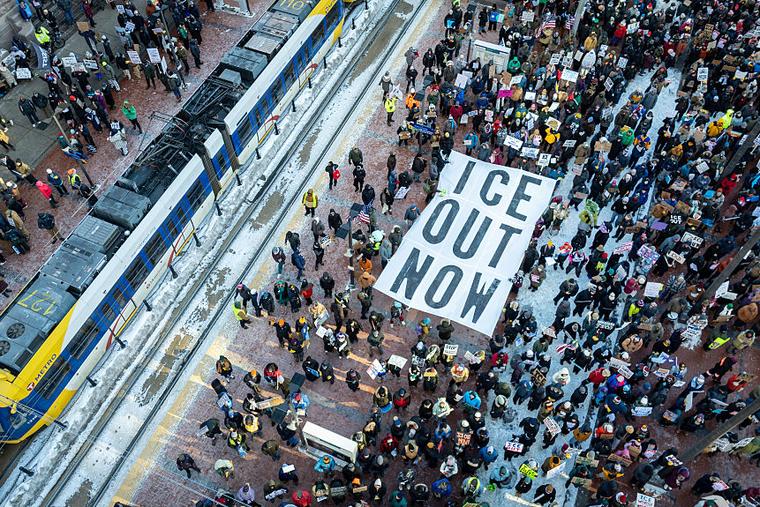
With the gravity of the situation on the ground in Minneapolis still looming large, many Catholics all over the country have felt a sense of alarm, left feeling anxious and agitated, spurred on by the ongoing social-media conversations that seem to exacerbate these chaotic times.
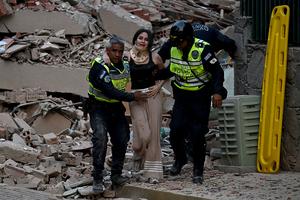
ICE operations on the ground have led to protests, some turning violent; tragically, two people have died, resulting in even more unrest.
As Catholics, we are called to be calm and to be peacemakers.
But in a world so fraught with conflict, how do we do that?
Oklahoma City Archbishop Paul Coakley, president of the bishops’ conference, and Bishop Michael Burbidge called all Catholics to offer a “Holy Hour of peace.”
Seeking more guidance from the shepherd of Arlington, Virginia, Bishop Burbidge told the Register:
“In the moment of silence before the Blessed Sacrament, entrust our nation and leaders to the Lord and ask him to transform hearts so that the stormy waters will be calmed, all divisions will end, and hearts and lives will be transformed.”
Delving even deeper into ways to quell the unease, the Register turned to not only Bishop Burbidge, but Msgr. Charles Pope, Dominican Father Joseph-Anthony Kress, Dominican Sister Mary Madeline Todd, Archbishop Emeritus Joseph Naumann, and EWTN Radio hosts Gregory Popcak and Deacon Harold Burke-Sivers.
“We live in unsettling and stormy times as we witness riots in our streets,” Archbishop Naumann said.
“On one hand, we are disturbed by officers being attacked while attempting to apprehend and deport members of gangs and cartels who have committed violent crimes. At the same time, we empathize with immigrants who fled poverty and violence in their homelands to seek a better life. Many now live in fear of being arrested, separated from family and deported.”
And the political sphere divides even more.
“We hear rhetoric that categorizes immigrants as rapists, murderers and gangsters. Similarly, we hear members of law enforcement labeled as Nazis and fascists. Instead of engaging in dialogue, people are screaming insults at one another. How do we respond to this cultural chaos?”
The archbishop emeritus of Kansas City, Kansas, recalled a dark day in Rome at the height of the pandemic.
“In an eerily empty St. Peter’s Square, our late Holy Father invited Christians to ponder the end of Chapter 4 in Mark’s Gospel. The apostles, with Jesus, were crossing the Sea of Galilee when a violent squall struck fear in their hearts. Jesus was asleep on a cushion in the stern of the boat.”
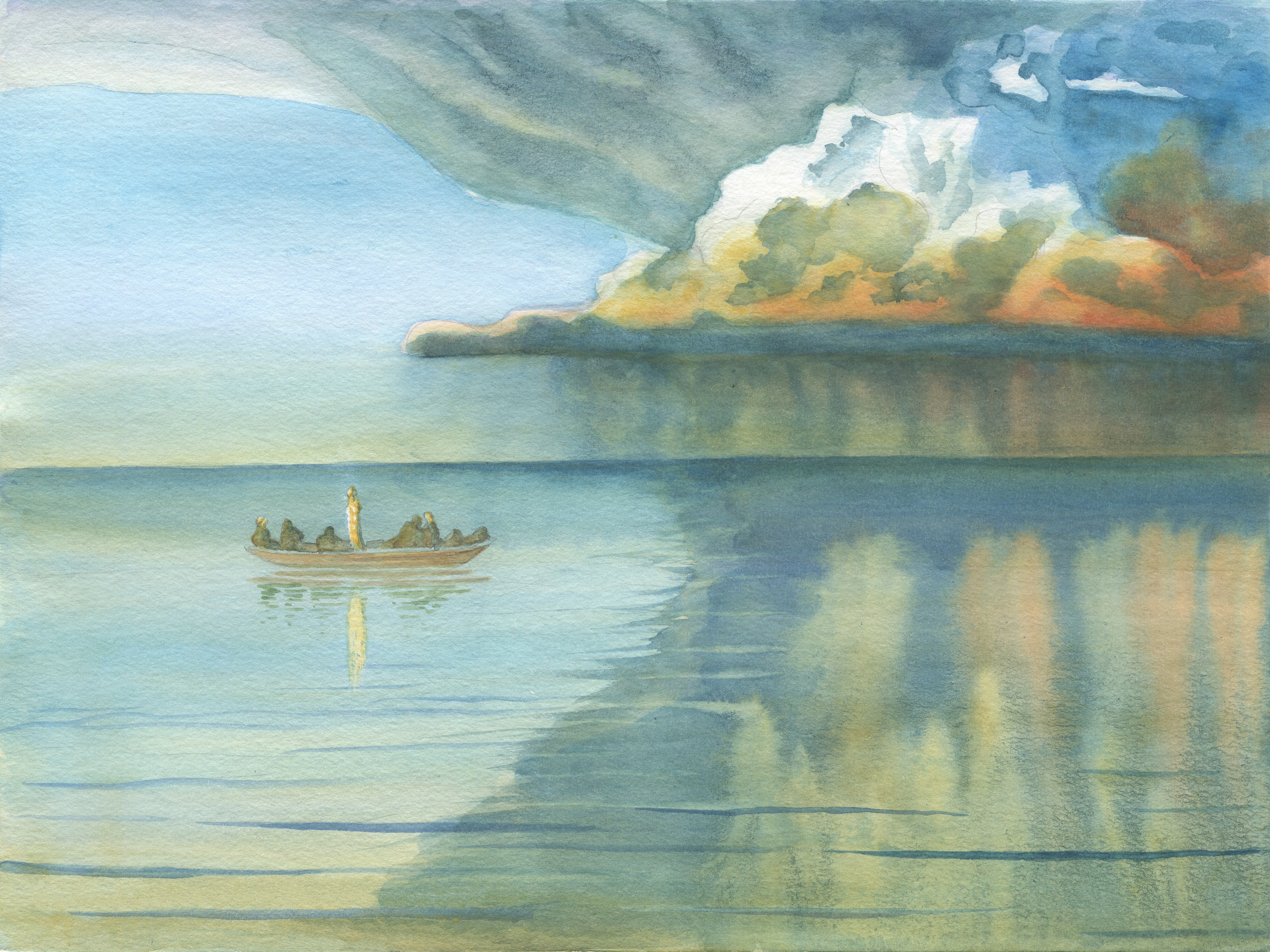
And “the disciples woke Jesus and accused him of not caring that they were about to perish,” Archbishop Naumann continued.
“Jesus rebuked the wind and said to the sea: ‘Quiet! Be still!’ Mark wrote that the wind ceased and there followed a great calm. Jesus then asked the disciples: ‘Why are you terrified? Do you not yet have faith?’”
And we must “obey the command of Jesus to the sea: to be quiet and still. We do not need to add to the inflammatory rhetoric of the cultural storm,” the archbishop emeritus explained. “Instead, we must reach out to the Lord and invite him to bring a great calm to our souls.”
The prelate was clear that this “is not a calm that originates from a disinterest in the cultural squall. It is a calm that is the fruit of knowing that we are not alone — that Jesus is with us. He is in the boat. Let us ask for the gift of deeper faith as we draw nearer to the only One who can calm our hearts. Jesus alone can bring peace, even in the midst of the storm.”
Father Kress, one of the co-hosts of the Godsplaining podcast, advised the faithful to seek the peace of Christ, too, pointing again to the apostles gripped with fear on the tempestuous sea.
“We are running to the Lord saying, ‘Do you not care about us? You’re asleep; do you not care about our well-being?’ But the Lord speaks gently to the apostles, and it’s always a reminder that it’s about our interior union with Jesus — that is going to be what gives us our peace, our interior peace.”
And this peace, he added, “doesn’t necessarily take away the chaos around us, but it does give us the ability to remember that he is close to us.”
Christ’s closeness is key amid the current cultural tenor.
“It is indisputable that we live in loud and angry times,” said Msgr. Pope.
“The tenor of public debate is contentious, wrathful and most often rooted in emotional declarations, rather than intellectual argumentation based on shared principles. The common biblical vision, natural law and the Constitution once formed the basis of cultural agreement. Today, the source of truth has moved from these sources and from the intellect to the will. One ‘wins the argument’ by a combination of loud volume, political pressure and other forms of power.”
No one contests that there are “many important moral issues in immigration policy,” the Register contributor said.
“Verbal protest, demonstrations and political organization are cherished American rights,” he added, “and sometimes a moral duty. But physical violence and destruction of property is almost never justified and crosses many moral boundaries.”
The pastor and the author of The Hell There Is continued:
“In strident times and harsh rhetoric, we need to embrace serenity and learn to remain calm.”
Msgr. Pope offered four tenets to help Catholics during these turbulent times, including consuming less news and social media, accepting things we cannot change, realizing people have different opinions and, most importantly, “don’t demonize.”
“Calmness, serenity and tranquility can be assisted by these careful distinctions,” Msgr. Pope stressed. “But to truly reach this needed goal, it must be a gift of God and is found only in prayer and trust. God is not overcome, even by the worst evils.”
Sister Mary Madeline, who teaches theology at Aquinas College in Nashville, Tennessee, said we are called to use “prudential judgment and discernment,” adding that it is “important to remember that emotions or passions arise spontaneously, but we are free to choose what might cause them or how to respond in action to them. We cannot control that in a fallen world; people make many choices that bring harm.”
The Register contributor also shared some sage advice she received.
“A priest advised me once to take in only as much media as I have equal time to dedicate to prayer. This was very wise. If we stir up intense fear or anger and do nothing to address the evils we perceive, we lose peace and even hope.”
The unrest reminded the Dominican sister about the first time she read Father Jacques Philippe’s Searching for and Maintaining Peace.
“I was initially shocked when he said that nothing is a good reason to lose our peace. I pondered this for a long time. One of my favorite definitions of peace helped me realize how such a claim might even be possible. In Augustine’s City of God, he defines peace as the tranquility of order, not the absence of conflict. Tranquility comes from a well-ordered mind and will, from knowing God and choosing to love God and all in God. This is the key to interior peace and freedom, to seek God and to trust that even amidst the inevitable brokenness of our world, he is working for ultimate goodness.”
Deacon Burke-Sivers of The Beacon of Truth also expounded on peace.
“When we hear the word ‘peace,’ our mind envisions the end of war and conflict. Peace, however, is not limited to maintaining a balance of power between adversaries,” he said.
The author of Behold the Man urged the faithful to have confidence in Christ alone.
“With unwavering faith and trust in God’s merciful love, let us be confident in Christ’s words of blessing: ‘Peace I leave with you; my peace I give to you. Not as the world gives do I give to you. Do not let your hearts be troubled or afraid’ (John 14:27).”
During cultural upheaval, Popcak, a Catholic psychologist and co-host of More2Life, also called the faithful to look to the wisdom of St. Augustine:
“Peace is the tranquility that results from right order.”
“Peace is possible — even in difficult times — if our responses are rooted in prayer and reflect a proportionate, appropriate and productive approach to solving the problem," the director of Catholic Counselors underscored to the Register.
And as we learn to navigate these storms of our day, carry the words of Bishop Burbidge to the Real Presence during a Holy Hour:
“Here, before the Blessed Sacrament, we are in the presence of the Source of Peace. Ask him to calm the stormy waters in our nation; to heal our wounds; to unite us; and to help us to go forth today as instruments of his peace so that we may truly live together as brothers and sisters in the Lord today and always. Amen.”

Alyssa Murphy Alyssa Murphy is the Register's Managing Editor of Digital Assets. Starting her career on the airwaves in San Francisco, she has worked in all facets of media. Alyssa enjoys writing and covering stories that inspire and uplift. Register readers may be familiar with her voice from EWTN radio's Morning Glory. Alyssa currently lives in New Jersey just outside Manhattan with her husband Andrew and young daughter, Annabelle.