Joan of Arc’s Ring: A Modern-Day Heist Returned the Saint’s Last Relic to France
To let the relic return to France was, for many in England, unthinkable.
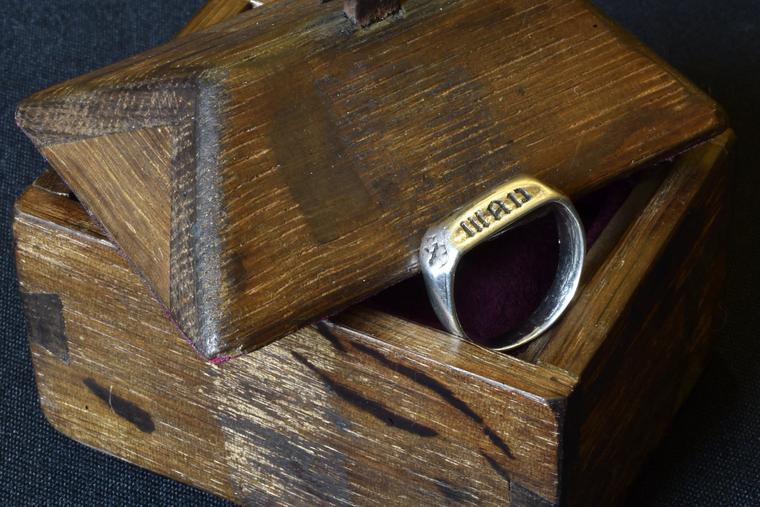
History has its mysterious twists and ironies, and it sometimes grants belated justice. The return to France of St. Joan of Arc’s ring — her only existing relic — nearly six centuries after her unjust execution in Rouen, offers an eloquent reminder of this. Seized as a spoil of war after her condemnation during the Hundred Years’ War, the ring remained in England for centuries.
The circumstances surrounding its return to its homeland in 2016 were themselves epic, echoing the life of the famous warrior saint who found an unexpected ally in the late Queen Elizabeth II.
Now, Puy du Fou, the historical theme park that owns the relic, has launched a fundraiser to build a chapel worthy of its significance.
A Bold Acquisition and a Car Chase
Timing driven by Providence left little room for hesitation.
“It was a Wednesday evening, February 2016, when a historian friend called me: ‘Joan of Arc’s ring is for sale in London on Friday.’ I didn’t even know Joan had a ring,” Nicolas de Villiers, president of Puy du Fou, recounted in an interview with Register. With only 48 hours, he set about raising the necessary funds, calling friends and benefactors. Many gave small amounts by word of mouth — 5 or 10 euros, with others giving larger sums — until he had nearly 400,000 euros in pledges. “The price was bound to rise quickly.”
During the auction, Villiers directed his lawyer in London via videoconference. Dozens of bidders quickly dropped out as the sum climbed, and the Puy du Fou team entered the bidding at the very last moment. “One opponent remained, but we outpaced him with rapid counterbids. When the hammer fell, the relic was ours,” Villiers continued, explaining that when the taxes were added, the total came out exactly, down to the euro, of what had been pledged. “It was mysterious, providential, to say the least.”
However, winning the auction did not guarantee the relic’s release. “Immediately, we were warned: The English National Arts Council considered this a national treasure. It couldn’t leave the territory,” he explained. The symbolism was, in fact, significant. Joan of Arc had been condemned under English authority. Her possessions were, therefore, treated as trophies of war. To let the relic return to France was, for many in England, unthinkable.
The following Tuesday, the president of Puy du Fou flew to London with a photographer. “I told my lawyer: ‘I want to see the ring,’” he recalled. At the auction house, he obtained permission to take it out briefly to be photographed with it — flanked by three bodyguards “charged with protecting the ring and instructed not to let [me] leave with it.”
Then came the most audacious move: “With a sleight of hand, casually switching vehicles — my photographer and I in one car, the bodyguards in another — we managed to lose them in the streets of London,” he said. He went straight back to the airport and returned to France — with the ring.
The pressure quickly intensified in the days after. “Every day the National Arts Council called me: ‘Where is the ring? Where is the ring?’” He said that Scotland Yard officers even came to his office, demanding that he hand it over. “I told them that I lost it, that I didn’t know where it was; it was a particularly baroque, novelistic moment,” Villiers remembered with a smile. He noted that he asked the French government for support, in vain.
Queen Elizabeth’s Discreet Complicity
At this impasse, Villiers turned to renowned lawyer Éric Dupond‑Moretti (who served as minister of justice from 2020 to 2024). His advice was simple: Appeal to Queen Elizabeth II.
In his heartfelt plea to the sovereign known for her benevolent nature, he recalled that her great‑grandmother Queen Victoria had once said that Joan’s relics should return to France.
Weeks later came a letter from Buckingham Palace (which now hangs in his office).
“The Queen cannot intervene in political matters,” it read officially. Yet between the lines, the message was clear: Despite her institutional powerlessness, she stated that she had let the authorities know that she would personally “find it natural that the ring return to France.”
The effect was immediate. “The very next day, the Arts Council called: It’s all settled; the papers are signed; you may keep the ring.” Joan of Arc had, in a sense, received justice centuries after her condemnation.
Immortalizing a Shared Heritage
For Catholics, the relic is a tangible link to the Maid of Orléans, who gave her life in fidelity to God and country. For the Vendée region, where Puy du Fou is rooted, its symbolism runs even deeper. This region paid a terrible price during the French Revolution, when nearly 200,000 peasants and nobles were massacred for their loyalty to the Church and the king. In this land of sacrifice, the precious relic stands as a symbol of faith enduring against oppression, injustice and passing centuries.

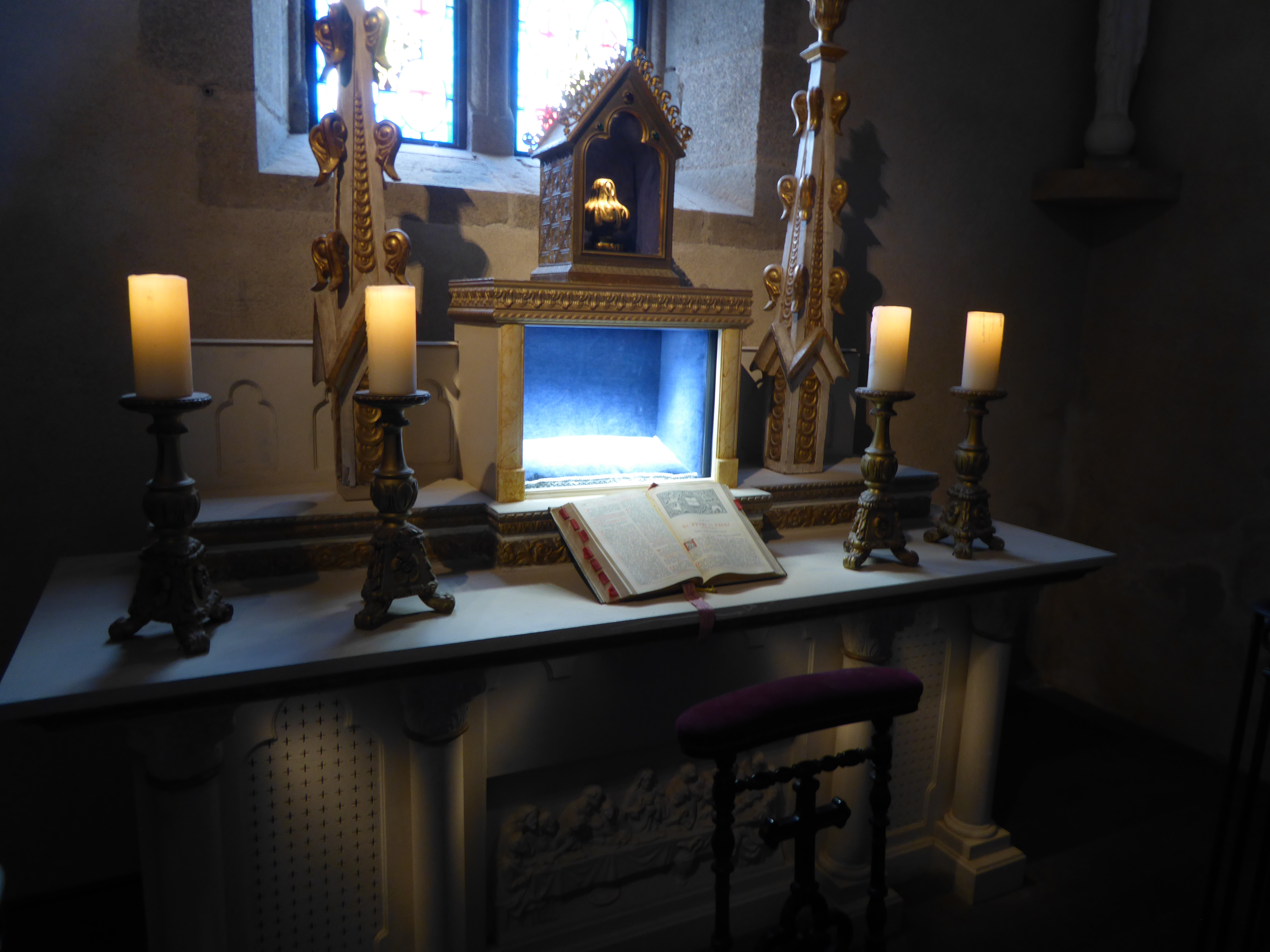
It is currently displayed in a Renaissance hall that is part of the park. But Puy du Fou has launched a campaign to build a chapel dedicated to St. Joan of Arc, where the relic will be permanently enshrined. A collection box is available for visitors to make donations so that the park can create a sanctuary where pilgrims may kneel before this testimony of faith.
“Year after year, donations are gathered,” said Villiers. “One day soon, a beautiful chapel will rise.”
For the Villiers family, whose ancestors once fought the English alongside George Washington’s troops during the American Revolution, this coup de maître in London carries the flavor of a poetic historical reckoning.
- Keywords:
- st. joan of arc
- relics