How the Abortion Pill Undermines Dobbs
ANALYSIS: Because of its distribution, U.S. abortion totals have climbed since 2022, despite the enhanced restrictions on abortion that many states have introduced.
When the Supreme Court’s landmark Dobbs v. Jackson Women’s Health decision was released in June 2022, returning abortion law to state jurisdiction, pro-life activists knew what their greatest challenge would be in the post-Dobbs era: thwarting distribution of the abortion pill.
That’s because these life-destroying drugs now constitute nearly two-thirds of U.S. abortions — and because they can be distributed by mail even in states like Texas that passed near-total bans on abortion in the wake of Dobbs.
Two years on, however, it’s clear that the pro-life movement is continuing to lose ground due to the ever-expanding availability of the abortion pill.
The pro-abortion-rights Guttmacher Institute estimated the number of U.S. abortions climbed to 1,033,000 in 2023, its highest level in more than a decade, despite the enactment following Dobbs of near-total bans in 12 states and substantially increased restrictions in several others. Of this total, 63% were chemical abortions.
Guttmacher’s national total climbed only marginally in 2024, but the organization acknowledged that its current figure is an undercount because it excludes abortion-pill procedures that occur in states with abortion bans. The Society of Family Planning, which includes these abortions in its post-Dobbs “WeCount” initiative, reported a national total of 1.14 million abortions last year.
A key factor facilitating the continuing expansion of abortion-pill utilization is “telehealth abortion,” which doesn’t involve in-person contact with an abortion provider. Instead, contact is only via online and/or telephone, followed by the prescribing of abortion pills and their shipment by mail.
Obtaining abortion pills in this manner was prohibited prior to 2021, when it was authorized by the Biden administration in the context of the COVID-19 pandemic. According to WeCount’s figures, 245,000 telehealth abortions occurred in 2024. Currently, they comprise 25% of all abortions, compared to only 5% before the Dobbs decision.
A research letter published online Aug. 11 by the Journal of the American Medical Association indicated that a major share of telehealth abortions occur in states with strong pro-life laws. The report analyzed data provided by Aid Access, an organization founded by Dutch abortion activist Dr. Rebecca Gomperts in 2018 for the specific purpose of facilitating online abortions in the U.S.
Of the 118,000 abortion-pill shipments distributed by the Aid Access network from July 2023 through September 2024, 84% were sent to states with robust pro-life restrictions. This shows “telehealth abortions are reducing the impact of these strong pro-life laws,” Michael New, a senior associate scholar at the pro-life Charlotte Lozier Institute and professor at The Catholic University of America, commented in National Review.
Pro-Life States and Shield Laws
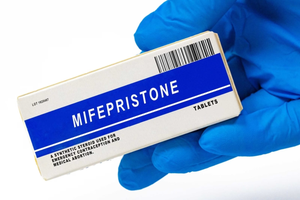
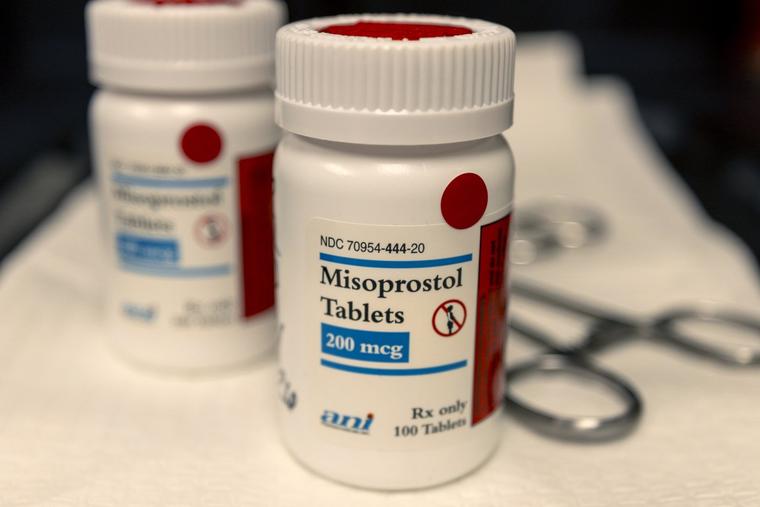
Chemical abortions are induced by a combination of two drugs, mifepristone and misoprostol. Mifepristone causes the end of a woman’s pregnancy, and misoprostol afterward induces the discharge of her unborn baby and other pregnancy tissues from her body.
Because the Food and Drug Administration has approved the drugs’ use for abortions only until 10 weeks gestation, this means there are a total of 16 states whose pro-life laws are being undermined by the distribution of chemical abortion through telehealth and shipments by mail. Twelve of the states ban almost all abortions, while the other four ban abortions after six weeks.
Abortion-pill distribution into these states has been facilitated by the passage of laws by eight states, including California and New York, that shield abortion providers from liability for contravening other states’ pro-life laws. According to the Society of Family Planning, the shield laws were responsible for an average of 12,330 abortions per month by the end of last year.
The pro-life governments of Louisiana and Texas have responded to these out-of-state pro-abortion incursions by initiating a pair of legal actions against Dr. Mary Carpenter, a New York-based abortionist.
In January, a Louisiana grand jury indicted Carpenter and issued an arrest warrant on a felony charge of criminal abortion for allegedly prescribing pills online to a pregnant teenage girl. In response, New York Gov. Kathy Hochul instructed state law enforcement officials in February “not to cooperate and enforce,” with requests for Carpenter’s extradition, stalling the prosecution.
Instead of a criminal proceeding, the Texas state government opted to file a lawsuit against Carpenter for illegally prescribing chemical abortion drugs to a Dallas-area woman. A Texas judge ruled in favor of the state and fined Carpenter $100,000 for the violation. But local officials in New York’s Ulster County, with Hochul’s vociferous endorsement, have twice declined requests by Texas Attorney General Ken Paxton to file his state’s legal judgment against the abortionist.
Aid Access has also been targeted by a Texas-based legal action. On Aug. 11, a woman filed a lawsuit in the Southern District of Texas against Aid Access and its founder Rebecca Gomperts and her former boyfriend, alleging that he obtained chemical-abortion medications from Aid Access and covertly gave her the drugs in a cup of hot chocolate, resulting in her unborn child’s death, The Washington Times reported.
A similar lawsuit has been filed against California abortionist Rémy Coeytaux by a Texas man who alleges that, in 2024, Coeytaux illegally provided his girlfriend with abortion drugs that caused the death of two of their unborn children. Jonathan Mitchell, the solicitor general of Texas from 2010 to 2015, is seeking an injunction in the suit on behalf of “fathers of unborn children,” Catholic News Agency reported.
And on Aug. 20, Paxton announced he had sent a cease-and-desist letter to “multiple radical organizations,” including Aid Access, demanding they “immediately cease promoting, selling, or facilitating the shipment of abortion drugs to Texas residents” and warning that continued shipments could result in “civil penalties of no less than $100,000 per violation under Texas law.”
Given that shield laws are clearly designed to frustrate the intention of the Dobbs decision to return abortion to the jurisdiction of individual states, many legal analysts believe the Supreme Court eventually will be required to pass judgment on their legality.
“That is inherently a challenge with shield laws and telehealth,” Carmel Shachar, faculty director of Harvard’s Health Law and Policy Clinic, told The Associated Press in June. “At a certain point, for the purposes of abortion bans, the courts will need to decide: Do we treat a telehealth abortion as happening within the state of the provider or within the state of the patient?”
Medical Dangers
Along with challenging shield laws, pro-life state governments are calling on the federal government to revisit the Food and Drug Administration’s approval of chemical abortion on the grounds that the incidence of injuries to the women who take mifepristone is far greater than previously realized.
Attorneys general from 22 states have signed a July 31 letter to Health and Human Services (HHS) Secretary Robert F. Kennedy Jr. and FDA Commissioner Martin Makary. Drafted by Kansas Attorney General Kris Kobach, the letter cites a study published earlier this year by the Washington, D.C.-based Ethics and Public Policy Center that found that serious adverse events are more than 20 times more likely to occur than the FDA has concluded.
The study, which is based on analysis of a database of 865,727 mifepristone abortions from 2017 to 2023, “shows that, following a mifepristone abortion, 10.93 percent of women experience sepsis, infection, hemorrhaging, or another serious or life-threatening adverse event,” the Ethics and Public Policy Center stated in a press release.
In their letter to Kennedy and Makary — which was written in support of Kennedy’s commitment earlier this year to review the FDA’s current policies regarding the use of mifepristone for abortions — the state attorneys general argued that this threat of injury has escalated dramatically since 2016 due to the lax supervision that’s now in place for mifepristone abortions.
Restrictions were far tighter when the abortion pill was first authorized in 2000 for abortions by the FDA, including three mandatory days of in-person office visits spaced over two weeks, the requirement that only doctors could dispense the drugs, and the stipulation that they must be taken in the prescribing doctor’s office.
But those requirements were greatly relaxed during the Obama and Biden administrations.
“Currently, a woman can obtain a mifepristone abortion by participating in only one telehealth visit with any approved healthcare provider (not necessarily a physician), ordering the drugs through a mail-order pharmacy, and self-administering them,” the letter notes.
The Current Federal Context
During his successful 2024 presidential campaign, Donald Trump repeatedly indicated he would oppose new limits on the distribution of the abortion pill. When pressed about that position during his post-election “Person of the Year” interview with Time magazine, he affirmed “it’s always been my commitment” that the FDA would not reduce access.
But during his confirmation hearings following his nomination as HHS secretary, Kennedy said that “President Trump has asked me to study the safety of mifepristone.” And in May, when Republican Sen. Josh Hawley of Missouri asked him to respond to the Ethics and Public Policy Center’s findings, Kennedy called them “alarming” and indicated that the drug’s labeling should be changed, at a minimum.
“I’ve asked Marty Makary, who is the director of the FDA, to do a complete review and to report back,” Kennedy added.
Although The Hill reported in June that Makary had subsequently confirmed to Hawley that the FDA would initiate the review, the FDA commissioner qualified that commitment in July. In an interview with Politico, he advised there were no “preconceived plans” to change his agency’s policies regarding mifepristone use for abortion.
DOJ Opposes Abortion-Pill Lawsuit
The Department of Justice’s response to an effort by three pro-life states to refile a lawsuit in Texas that challenged the FDA’s abortion-pill regulatory framework is another hint that the Trump administration might not be inclined toward tightening the rules. The Supreme Court unanimously dismissed the case in June 2024 on the narrow procedural ground that the plaintiffs, a group of pro-life doctors, lacked the appropriate standing to challenge the FDA.
Responding to an effort by Idaho, Missouri and Kansas to replace the doctors as the lawsuits’ plaintiffs, the DOJ submitted a brief in May arguing these states also lack the appropriate standing to participate in a Texas-based legal action.
While the DOJ’s opposition appears to be motivated mainly by a desire to protect the authority of the executive branch, Politico noted that the DOJ also “slammed the challengers’ claims that FDA rules allowing the pills to be mailed across state lines violate laws in Idaho, Kansas and Missouri banning the use of the pills in most circumstances.”
According to the DOJ brief, the states “fail to identify any actual or imminent controversy over whether any of their laws are preempted.”
Given the continuing uncertainty over the direction the administration will take, Hawley has introduced a congressional bill that would mandate that the FDA restore its pre-2016 restrictions on the abortion pill. But it’s unlikely that such a bill could pass at the current time — and even less likely it could overcome a presidential veto if it did.
So for the foreseeable future, the final decision on whether to amend federal abortion-pill policy is likely to remain entirely in President Trump’s hands.
- Keywords:
- abortion pills
- trump administration