Pope Leo XIV Shares Message to Pilgrims at Historic Mass in Canterbury Cathedral
To have such a Mass celebrated in the mother church of England was ‘very impressive, very moving. We must pray a lot for the conversion of England...’

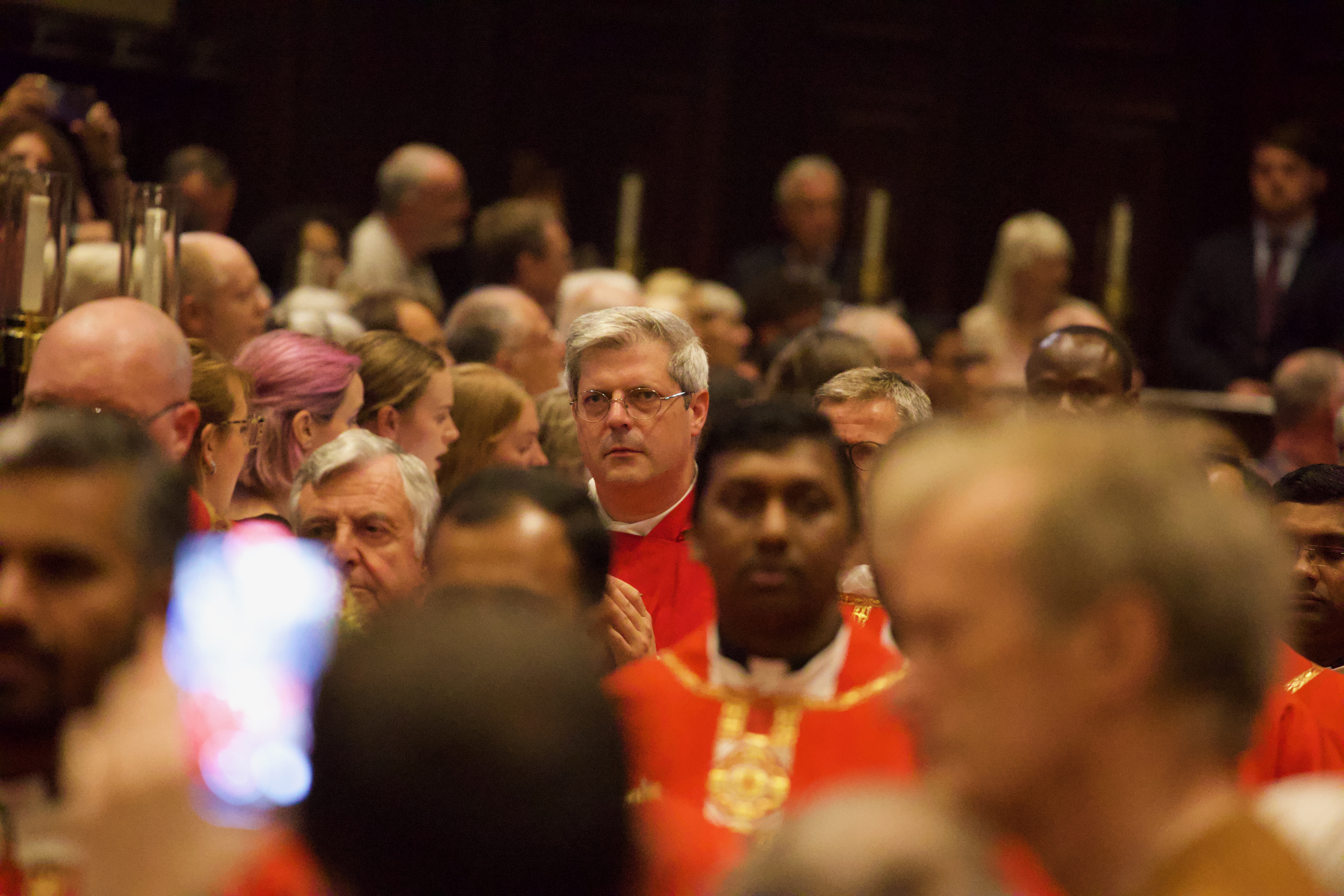
CANTERBURY, England — Catholic faithful packed Canterbury Cathedral on Monday evening for a historic Mass, complete with a papal blessing and the Eucharistic liturgy celebrated by the apostolic nuncio to honor St. Thomas Becket and the translation of his relics in 1220.
Since at least the late 20th century, the Cathedral’s Anglican leaders have allowed the local Catholic parish of St. Thomas of Canterbury to celebrate the translation (transferal) of the relics every July 7 with a Mass at the high altar.
But this year’s Mass was considerably different: Celebrated to mark the Jubilee of Hope, it had the presence of the apostolic nuncio, Archbishop Miguel Maury Buendia, and a world-class choir, turning it into a grand spectacle with historical significance.
Filled to overflowing with Catholic priests, dignitaries and pilgrims, and even the Vatican cricket team on tour in England, many pilgrims had to sit outside the quire in the cathedral’s side transepts due to the large attendance.

According to the organizers, around 800 worshipers were at the Mass, making it the “best-attended Mass in Canterbury Cathedral since the ‘Deformation’,” the Catholic peer, Lord Christopher Monckton of Brenchley, told the Register.
The last previous historic celebration of the translation, attended by 300 faithful, was a decade ago when Cardinal George Pell celebrated the Mass in the cathedral, becoming the first Catholic cardinal to celebrate the Eucharist there since the last Catholic archbishop of Canterbury, Cardinal Reginald Pole, in the 16th century.
Monday’s Mass comes months after the Cathedral’s administrators angered many of the faithful by allowing a series of “silent discos” to take place in the cathedral nave last year. Last week, they announced they will be allowing a “Great Gatsby Ball” to take place in September. The events, which have been condemned as desecration, aim to raise money for the cash-strapped cathedral.
In his message to the pilgrims on Monday, the Holy Father prayed that in this Jubilee year those gathered would be “truly pilgrims of hope.” He assured them of “his spiritual blessings,” and that they “offer their devotions to St. Thomas of Canterbury in the place of his martyrdom.”
A former Lord Chancellor before being appointed Archbishop of Canterbury in 1162, St. Thomas Becket fought a bitter conflict with King Henry II over the sovereign’s efforts to assert royal authority over the Church.
After St. Thomas excommunicated bishops who supported the king, four knights travelled to Canterbury, under the impression that Henry wanted the archbishop murdered. After the knights slew Becket in Canterbury Cathedral in 1170, his martyrdom quickly led to a great cult of devotion.
Canterbury’s Living Tales
Following his death, the number of pilgrims to Canterbury to honor Becket continued to grow, leading to the shrine being transferred from the crypt in 1220 to a magnificent shrine behind the High Altar. As the shrine’s fame increased, so did the throngs of pilgrims devoted to St. Thomas, inspiring Geoffrey Chaucer’s Canterbury Tales. Four centuries later, in 1538, King Henry VIII, then engaged in a similar church-state dispute, had the shrine completely destroyed. Today, only an inscription and a single lit candle mark where the shrine once stood.

In his homily at Monday’s Mass, Archbishop Maury pointed out that the liturgy was taking place in the oldest cathedral of the English-speaking world, and that the cathedral’s stained-glass windows “illustrate the many miracles attributed to St. Thomas in the mediaeval period.”
“This should be a living story, too. Our world, today as then, is in need of hope,” he said.
The faithful should be “inspired by St. Thomas’ holiness and his courageous witness to Christ and His Church,” he continued. Like St. Paul, he said, Becket rejoiced in his sufferings, not for personal gain “but for the sake of the Body of Christ, particularly in defending the Church’s freedom from secular interference.”
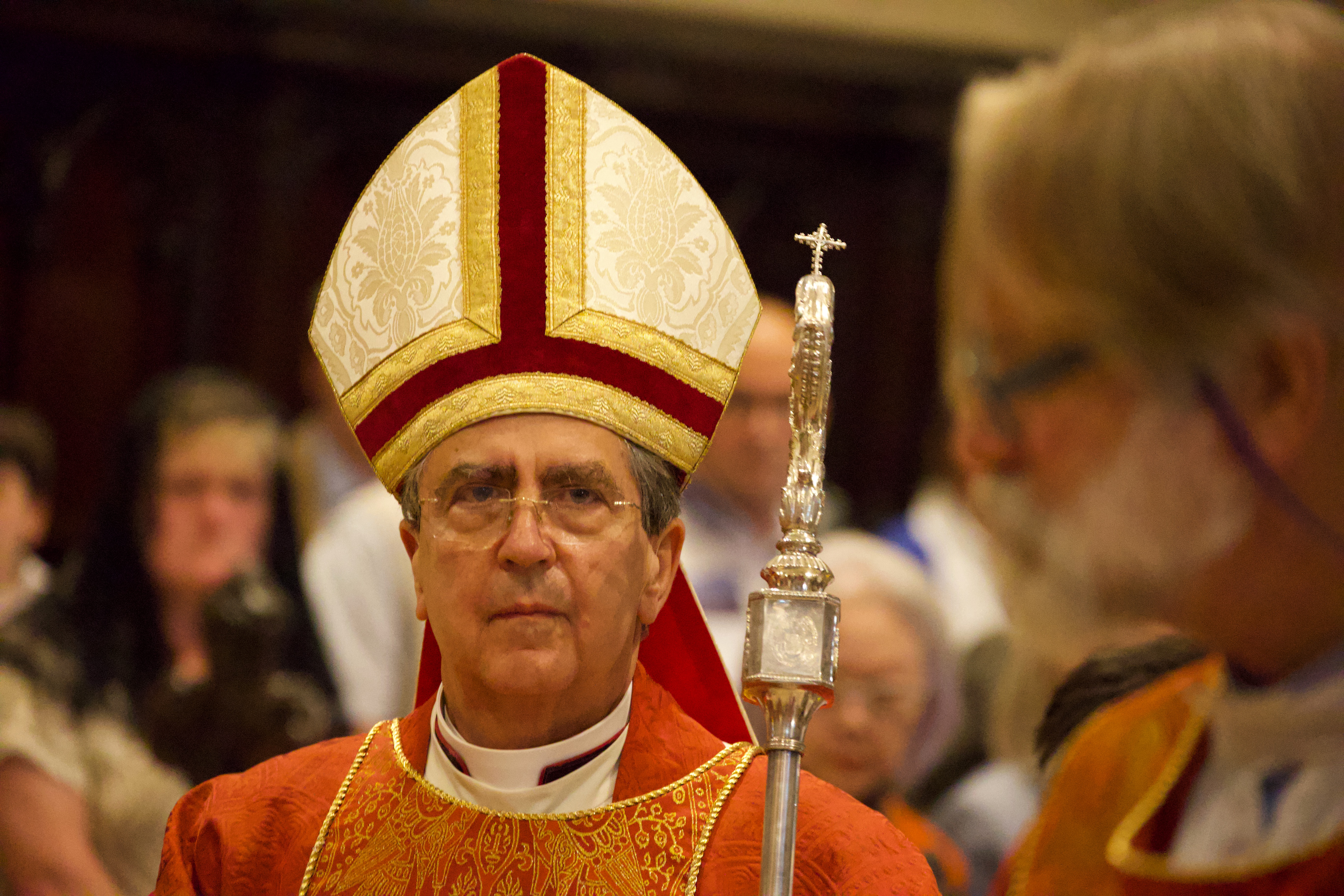
Becket embraced his cross with a self-emptying love, said the papal diplomat, making himself a servant in order to bring others to knowledge of Divine Love. He also cited Pope Leo’s recent exhortation “to move aside so that Christ may remain, to make oneself small so that He may be known and glorified.”
“St Thomas did not die for an ideology,” Archbishop Maury asserted. “His martyrdom was a witness to the relationship with Christ he nurtured in his episcopal ministry: a participation in Our Lord’s Paschal mystery.”
He closed by calling on the faithful to pray to St. Thomas as pilgrims in need of hope and healing, asking for the Blessed Virgin Mary’s intercession so “we might be faithful witnesses to Christ, growing each day in love of Him and each other. Amen.”
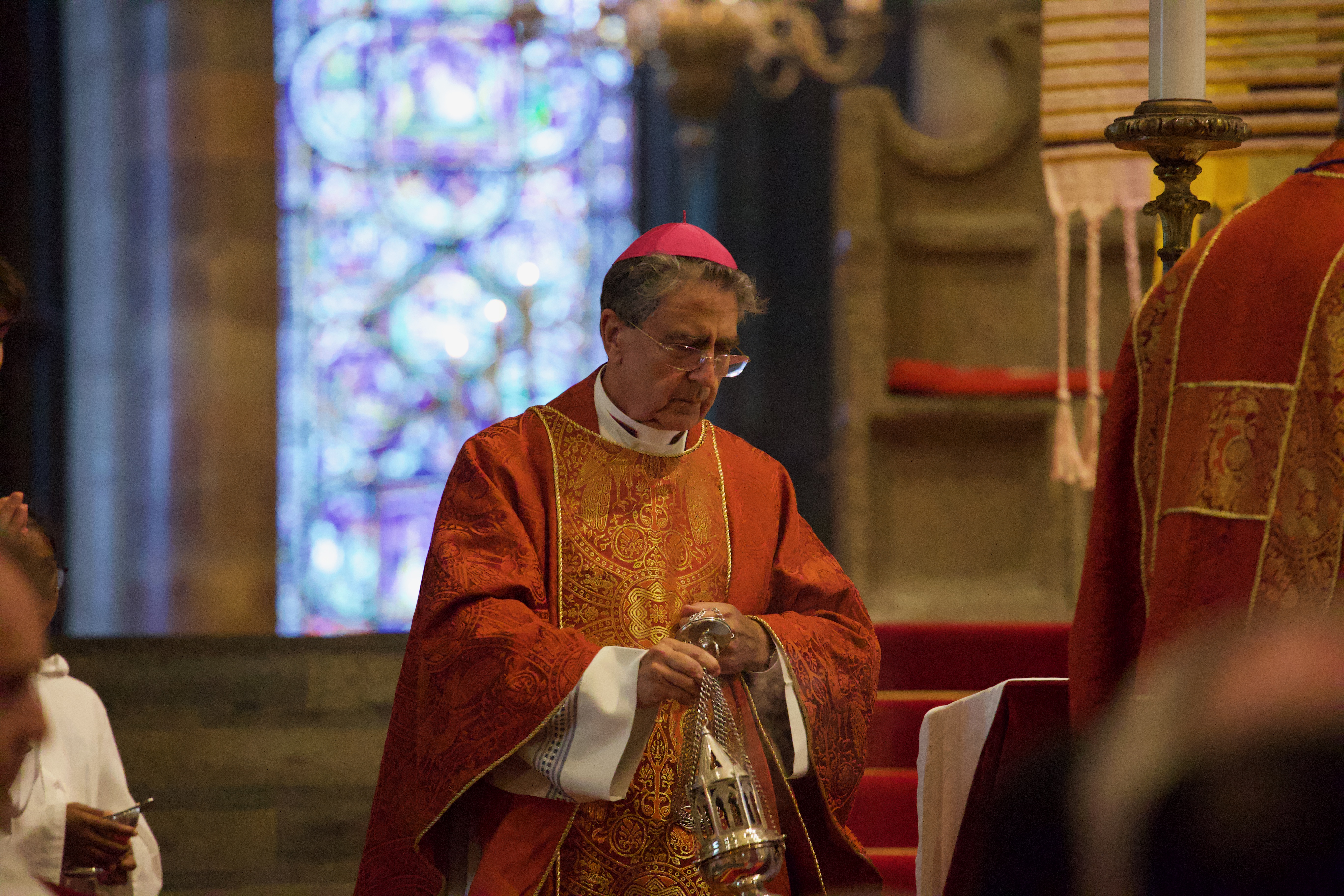
At the close of the pilgrimage Mass, which throughout featured sacred music by the 16th century English composer William Byrd and performed by the world-famous Tenebrae Choir, the congregation sang William Blake’s rousing patriotic hymn, “Jerusalem.” Archbishop Maury blessed the faithful with relics of St. Thomas.
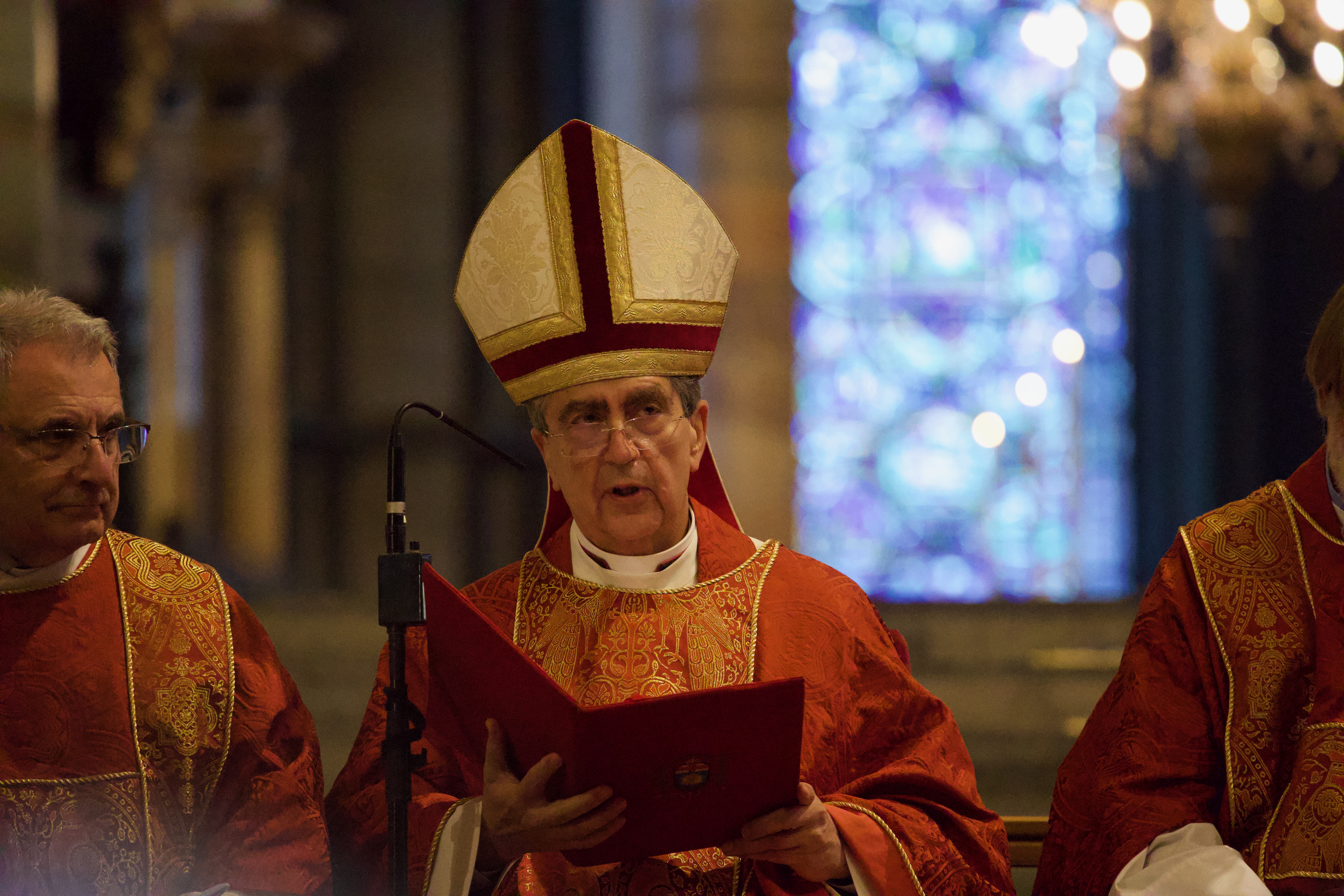
Many of those present told the Register how struck they were by the historical significance of the Mass.
“I think it’s been just the most remarkable event,” said Michael Southern, who has been Catholic all his life and worships at a parish in nearby Tunbridge Wells. He noted how times have changed since Anglicans and Catholics were not allowed to enter each other’s churches, and marveled at being able to sing the Salve Regina in the cathedral. “That’s where it should be sung,” he said. “Hopefully it’s the start of something.”
Opus Dei Father Paul Diaper, who had travelled from the London parish of St. Thomas More, Swiss Cottage, said that to have such a Mass in the mother church of England was “very impressive, very moving. We must pray a lot for the conversion of England,” he said.
The respected Catholic commentator Gavin Ashenden, who as a boy in the 1970s was confirmed as an Anglican in Canterbury Cathedral before becoming an Anglican vicar and later received into the Catholic Church in 2019, said he could never have imagined a Mass being celebrated there. “I’m still kind of mind-boggled, and absolutely thrilled,” he told the Register.
Cathedral Built for the Mass
“There’s a presence to the Catholic episcopate and priesthood,” Ashenden said. “The Anglicans, God bless them, borrow the clothes and some of the choreography, but — I don’t know how else to put it — there’s an authenticity: This is the Catholic Mass that the cathedral was built for, it’s unmistakable and there’s a sense of healing congruity.”
“It was just wonderful – the place, the people, the music, like a bit of Heaven,” said Jack Valero, Opus Dei’s spokesman in Britain. “The Catholic Church is alive, we belong here in this country, we have something really important to say. And here we are, at the center of Christianity in the British Isles.”
He said he did not know if it marked the beginning of a revival but said it shows the Catholic heart of the country “is pumping” and that the Mass was a clear sign showing that, “with all that is going on, there’s something very strong here in the Catholic Church. We are confident.”
Pointing to two recent votes in the House of Commons, one decriminalizing abortion up to birth and the other allowing assisted suicide, Ashenden, who was a former chaplain to Queen Elizabeth II, said the country is having to again confront the “the overreach of the state.” Monday’s Mass, he said, was not, therefore, “just a moment of nostalgic celebration” but a reminder that the country’s forebears had to pay the highest price to be able to practice the one true faith. “It was that path and principle we were celebrating tonight,” he said.

Edward Pentin Edward Pentin is the Register’s Senior Contributor and EWTN News Vatican Analyst. He began reporting on the Pope and the Vatican with Vatican Radio before moving on to become the Rome correspondent for EWTN's National Catholic Register. He has also reported on the Holy See and the Catholic Church for a number of other publications including Newsweek, Newsmax, Zenit, The Catholic Herald, and The Holy Land Review, a Franciscan publication specializing in the Church and the Middle East. Edward is the author of The Next Pope: The Leading Cardinal Candidates (Sophia Institute Press, 2020) and The Rigging of a Vatican Synod? An Investigation into Alleged Manipulation at the Extraordinary Synod on the Family (Ignatius Press, 2015). Follow him on Twitter at @edwardpentin.