Brothers in Christ: Carlo Acutis and Pier Giorgio Frassati
The two young men from northern Italy will be canonized together this fall by Pope Leo XIV as the first saints of the new pontificate.

They lived a century apart. One climbed Alpine peaks; the other coded websites. One served the poor of post-war Turin; the other evangelized from a laptop in Milan. But on Sept. 7, two young men from northern Italy — Blessed Pier Giorgio Frassati and Blessed Carlo Acutis — will be canonized together by Pope Leo XIV as the first saints of the new pontificate.
Their lives were separated by time but united in love for the Lord. In canonizing them side by side, Pope Leo highlights the Church’s universal call to holiness — that all are called to use their unique gifts to reach the heights of holiness.
Large numbers of the faithful who have drawn inspiration from both Frassati and Acutis will descend on Rome to celebrate their heroic witness. Among them will be Brice Griffin, a mother of five from North Carolina, who booked plane tickets to Rome on the day that the new canonization date was announced.
“As a mother especially, it is such a gift to see how Carlo brought his own parents back into full communion with the Catholic Church. I love that he is so relatable for our young people. In my own teenage son, I see similarities with Carlo,” Griffin told the Register. “I am so excited to be able to witness the canonization of Carlo with Pier Giorgio, another great example for our youth and especially for our younger adult children.”
Frassati was born in 1901 in Turin during northern Italy’s industrial boom. The city was fast becoming the nation’s manufacturing hub, fueled in part by Fiat and the new automative industry. At 13, as World War I broke out, Frassati witnessed returning soldiers who were wounded, unemployed and broken. He later became a member of Catholic Action and the People’s Party, working to apply the Church’s social doctrine to the modern world.
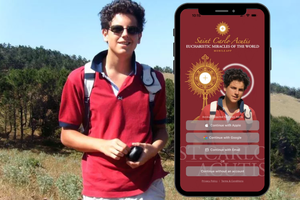
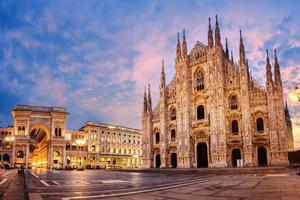
Nearly a century later, Acutis was born in 1991 — the same year that the World Wide Web went public. A self-taught coder, he experimented with Java and C++, loved Super Mario video games, and filmed his pets on a camcorder. While his computer-coding millennial peers launched start-ups, Carlo used his tech savvy to catalog Eucharistic miracles from his family’s Milan apartment.
“His life shows that holiness is achievable in the modern world, even amidst technology and everyday challenges,” Father Will Conquer, a French missionary priest in Cambodia and author of a book on Acutis, told the Register.
For Pope Leo XIV, who has expressed a desire to address the ethical and societal questions raised by artificial intelligence and modern technology, the joint canonization offers a chance to echo his predecessor Leo XIII’s response to the Industrial Revolution in a new era.
Finding Solace in Nature
Frassati may have grown up in Turin, but it was the family’s summer home in Pollone, a small village 50 miles north at the base of the Alps, that became his sanctuary. As a member of the Italian Alpine Club, he climbed many peaks — from the Gran Tournalin to the 13,000-foot Mount Grivola in Val d’Aosta — and prayed beneath crosses erected on their summits.
“With each passing day, I fall madly in love with the mountains,” wrote Frassati, whose motto was “verso l’alto” (“to the heights”).
Acutis found similar peace in Assisi, the hometown of St. Francis, where his family spent summers. Away from Milan’s fashionistas and financiers, he prayed with Assisi’s Franciscan friars and Poor Clare nuns. He hiked the Umbrian hills near Mount Subasio with his dogs and made crosses from sticks he found on the trail — hoping someone might think of Jesus when they found them.
Both young men loved animals. Frassati had dogs named Jor, Mime, Wotan and Uadi and a cat named Scimbo. Carlo’s pets included dogs named Briciola, Stellina, Poldo and Chiara (after St. Clare), plus cats Bambi and Cleo.
Archbishop Domenico Sorrentino of Assisi called the canonization of Acutis and Frassati together “a sign of Providence that puts the holiness of ordinary life back at the center of the Church’s attention, especially for new generations.”
Eucharistic Devotion
Though raised in homes with non-practicing family members, both boys were drawn to the Eucharist from a young age.
Frassati’s father was an agnostic, but that didn’t stop Pier Giorgio from joining the Marian Sodality and Apostleship of Prayer. At the age of 12, Frassati also sought permission to receive daily Communion — a rarity at the time.
“I urge you with all the strength of my soul to approach the Eucharistic Table as often as possible,” Frassati told a Eucharistic Congress at the age of 22. “Feed on this Bread of the Angels from which you will draw the strength to fight inner struggles.”
Carlo, who famously called the Eucharist “my highway to heaven,” began attending daily Mass shortly after his first Communion at age 7. His exhibition of Eucharistic miracles has been viewed by thousands around the world.
“People who place themselves before the sun get a tan; people who place themselves before the Eucharist become saints,” young Acutis once said.
Love for Mary and the Poor
Frassati consecrated himself to Mary at the age of 17 and later joined the Dominican Third Order.
“As a devout member of the Dominican family, he kept a rosary in his pocket and prayed it daily,” Father Gerard Francisco Timoner III, the master of the Dominican Order, said in an official statement on Frassati’s canonization.
Acutis made his first personal consecration to the Virgin Mary at age 5 at the Shrine of Our Lady of Pompeii. He had a special devotion to Our Lady of Lourdes and Fatima and often gifted rosaries to houseguests.
Though both came from affluent families — Frassati’s father was editor of La Stampa, Acutis’ father a Milanese insurance executive — they were both known for serving the poorest among them.
Frassati joined the St. Vincent de Paul Society at 17, gave his bus fare to the poor, and visited the sick. On his deathbed, he wrote instructions to ensure medicine reached a sick man named Converso.
“Jesus comes to me every morning in Communion, and I return the visit by going to serve the poor,” he once said.
As a child, Carlo gave up eating Nutella as a sacrifice and sold toys to help the poor. He later volunteered at a Milan soup kitchen run by Capuchin friars and bought sleeping bags and hot drinks for the homeless in winter.
“His love was extraordinary,” said Nicola Gori, postulator for Acutis’ cause. “He used the savings from his weekly pocket money to help the beggars and those who slept outdoors.”
Sudden Illness
Frassati died of polio — possibly contracted from the sick he served — in 1925 at age 24. Carlo died in 2006 at just 15, from a sudden and aggressive leukemia.
“I offer all the suffering I will have to endure to the Lord for the Pope and for the Church,” Carlo said shortly before his death, “in order not to go through purgatory and to go straight to heaven.”
Both funerals drew the poor and marginalized from their communities, people the holy young men had helped in life.
Frassati lived nearly a decade longer than Acutis and found his vocation as a lay Dominican. Carlo, still a high-school student, was beginning to discern a possible call to the priesthood.
“Canonizing these two young men together offers one seamless spiritual model, particularly for those navigating the teenage and young-adult years,” Christine Wohar, the executive director of Frassati USA, told the Register.
“Where Carlo’s life ends, Pier Giorgio’s picks up, providing a continuity in facing the challenges of adolescence and adulthood.”
Inspiring Young Catholics
Both have been patrons of World Youth Day (WYD) events. Frassati inspired WYD pilgrims in Sydney in 2008 and Krakow in 2016; Acutis was named patron of WYD Lisbon in 2023 and the 2024 National Eucharistic Congress in the U.S.
Katie McGrady, a SiriusXM host and Catholic youth speaker, said their appeal to young people is clear.
“When I talk about either of these two, young people sit up a little straighter, listen a little more closely, and want to hear more. Their stories are captivating,” McGrady said.
“Carlo and Pier Giorgio show young people that not only is holiness possible, but it is found in the ordinary components of our lives. It’s in the hiking and the computer coding and the hanging out with friends and in the finding chances to be generous that we can follow and love Jesus.”
Father Conquer added, “Carlo’s tech-driven apostolate speaks to a generation immersed in digital culture, while Frassati’s active, relational charity inspires those drawn to community and service. Both lived ordinary lives with extraordinary faith, proving that sainthood is accessible to all.”
Carlo himself admired Frassati. In his final days, he was reading a French book about young saints, his mother Antonia recalled.
“Carlo knew about [Frassati],” she said. “He knew about many young saints: Pier Giorgio Frassati, Chiara Badano, Gabriel of Our Lady of Sorrows. … He loved young saints.”
Now, the boy who loved saints becomes one — beside a saint he loved. “Perhaps the most important lesson,” Wohar reflected, “is that we need to examine our lives and see if we are truly living or merely existing.”
“Life passes quickly — as evidenced by the short lives of both Carlo and Pier Giorgio,” she noted.
“If we are spending our days looking at screens, maybe we need to reflect on that. Pier Giorgio said, ‘To live without faith, without a patrimony to defend, without a steady struggle for truth — that is not living, but existing.
“‘We should never just exist, but live.’”
Register correspondent Sabrina Ferrisi contributed to this story.
- Keywords:
- carlo acutis
- blessed pier giorgio frassati

Courtney Mares Courtney Mares is a Rome correspondent for Catholic News Agency. A graduate of Harvard University, she has reported from news bureaus on three continents and was awarded the Gardner Fellowship for her work with North Korean refugees. She is the author of Blessed Carlo Acutis: A Saint in Sneakers”.