Fascinating Facts About the Milan Cathedral, Olympics’ Sacred Sensation
The resplendent church in Italy’s second-largest city has been in full view.
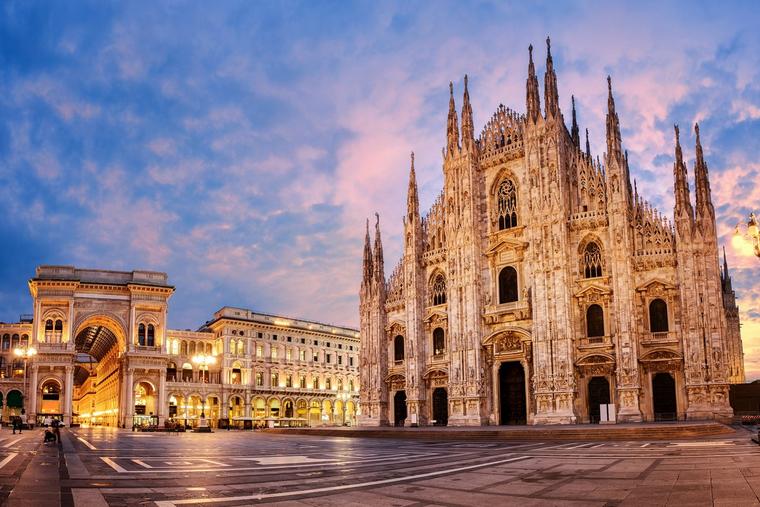
In these last weeks, during the Winter Olympics in Milan, the cathedral has been at the center of it all — “the jewel of Milan amidst the Olympic Games” as an EWTN video explains.
In promos and intros, the resplendent church in Italy’s second-largest city has been in full view.
An Olympics segment narrated by actor Stanley Tucci even took viewers inside the grand Catholic edifice to highlight the Olympians’ larger story. “It is fitting then that the city that emanates outward from this monument is the setting for these games,” Tucci said, going on to highlight “the beauty of the smallest things imaginable” that “can propel us to improbable, yes, even heavenly heights — how they can inspire nothing less than the entire world.”
Sweeping views of the rich interior and soaring peaks high above the metropolis were part of the NBC presentation, the official broadcast partner of the games.
Here are five things to know about the city’s Catholic cathedral.
The cathedral stands at the city’s center. The streets of Milan radiate out from or circle the sacred edifice.
“They would build a cathedral in the very center of the city that would be a holy testament to all humanity is capable of,” Tucci explained in the NBC segment.
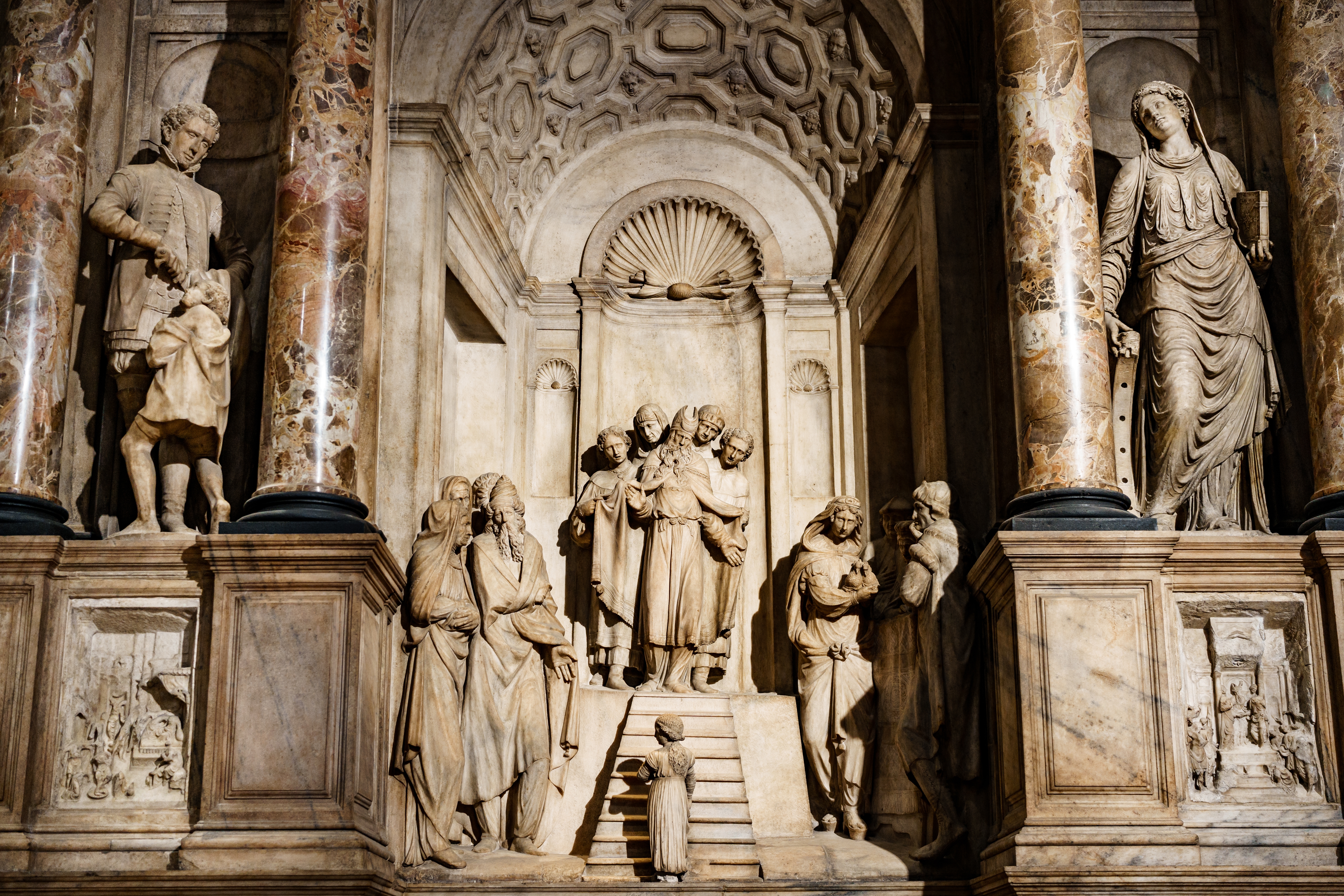
It’s named for Mary: The cathedral’s official name is the Metropolitan Cathedral-Basilica of the Nativity of St. Mary. But it is generally referred to simply as the “Duomo”; duomo is the Italian word for “cathedral” — coming from the Latin domus (“house”), and a cathedral is, of course, a house of God. The facade features Our Lady, along with statues of other saints. Inside, a sculpture of the Presentation of the Blessed Virgin Mary reflects the Marian designation, as EWTN explains.
It took over half a millennium to build. Construction began in 1386 and was officially completed in1965.
As an EWTN News article explains, “Napoleon commissioned the facade while occupying Italy in the 19th century, and gargoyles and statues of saints were added over time with still room for more in today’s age.”
In his NBC segment, Tucci highlights the cathedral’s 3,400 hand-carved ornaments — “every last tiny detail matters.”
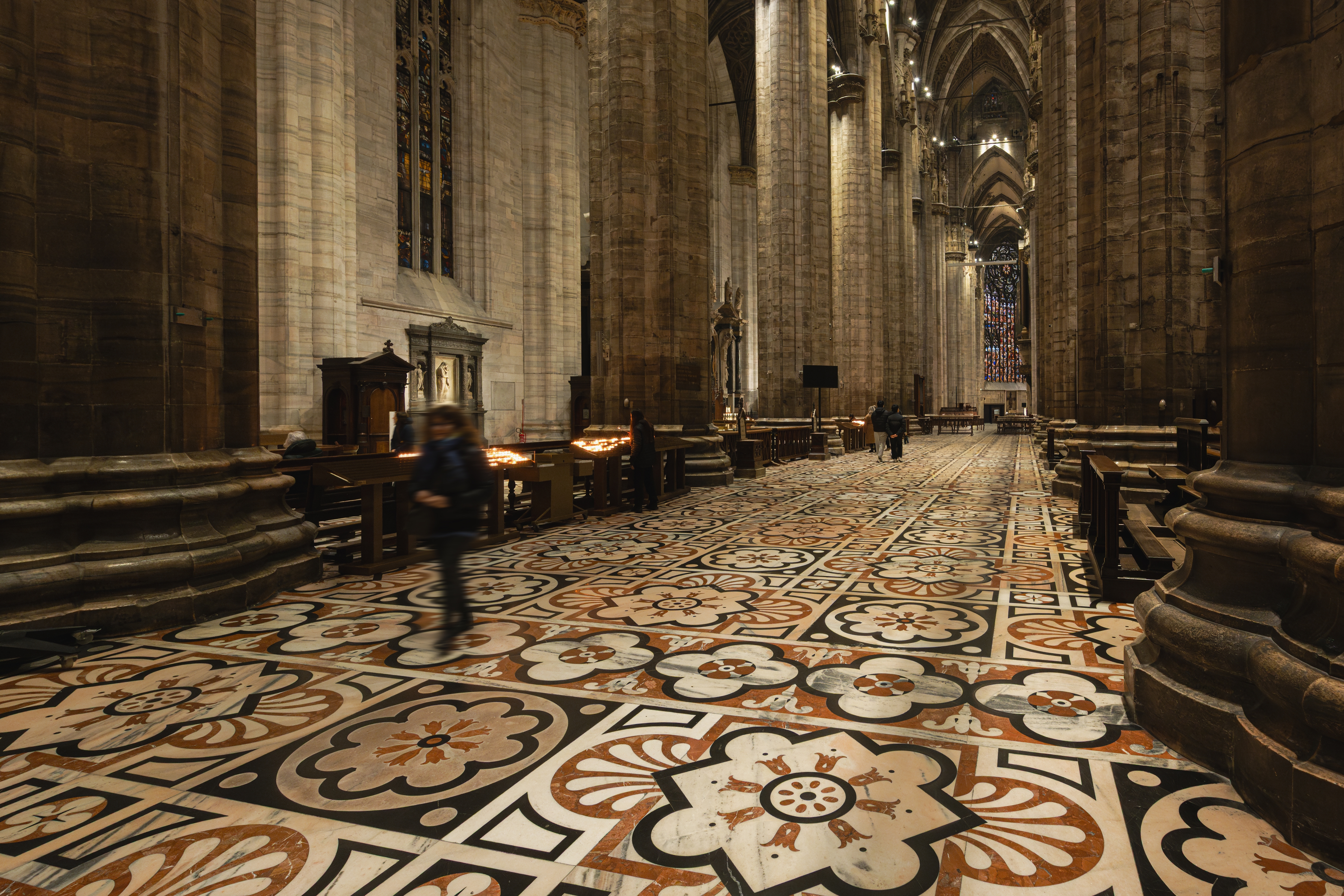
Additional amazing architectural features in the interior include the colorful marble floor comprised of geometric and floral patterns; the intricacies are lovely to behold. Google Arts & Culture explains that “Milan Duomo’s flooring was designed by Pellegrino Pellegrini, also known as ‘Tibaldi,’ who was Archbishop Charles Borromeo's favorite artist.” St. Charles Borromeo served as Milan’s archbishop from 1564 to 1584. Pellegrini also designed the side altars, among other accomplishments within the cathedral.
St. Carlo Acutis has a local connection. St. Carlo was raised in Milan, so the Duomo was his cathedral, though his parish was in a different neighborhood.
Mark Twain was impressed by it. The American writer visited Milan in the summer of 1867 and later described the Duomo:
“What a wonder it is! So grand, so solemn, so vast! And yet so delicate, so airy, so graceful! A very world of solid weight, and yet it seems ... a delusion of frostwork that might vanish with a breath!... The central one of its five great doors is bordered with a bas-relief of birds and fruits and beasts and insects, which have been so ingeniously carved out of the marble that they seem like living creatures — and the figures are so numerous and the design so complex, that one might study it a week without exhausting its interest ... everywhere that a niche or a perch can be found about the enormous building, from summit to base, there is a marble statue, and every statue is a study in itself. ... Away above, on the lofty roof, rank on rank of carved and fretted spires spring high in the air, and through their rich tracery one sees the sky beyond. ... (Up on) the roof ... springing from its broad marble flagstones, were the long files of spires, looking very tall close at hand, but diminishing in the distance. ... We could see, now, that the statue on the top of each was the size of a large man, though they all looked like dolls from the street. ... They say that the Cathedral of Milan is second only to St. Peter’s at Rome. I cannot understand how it can be second to anything made by human hands.”
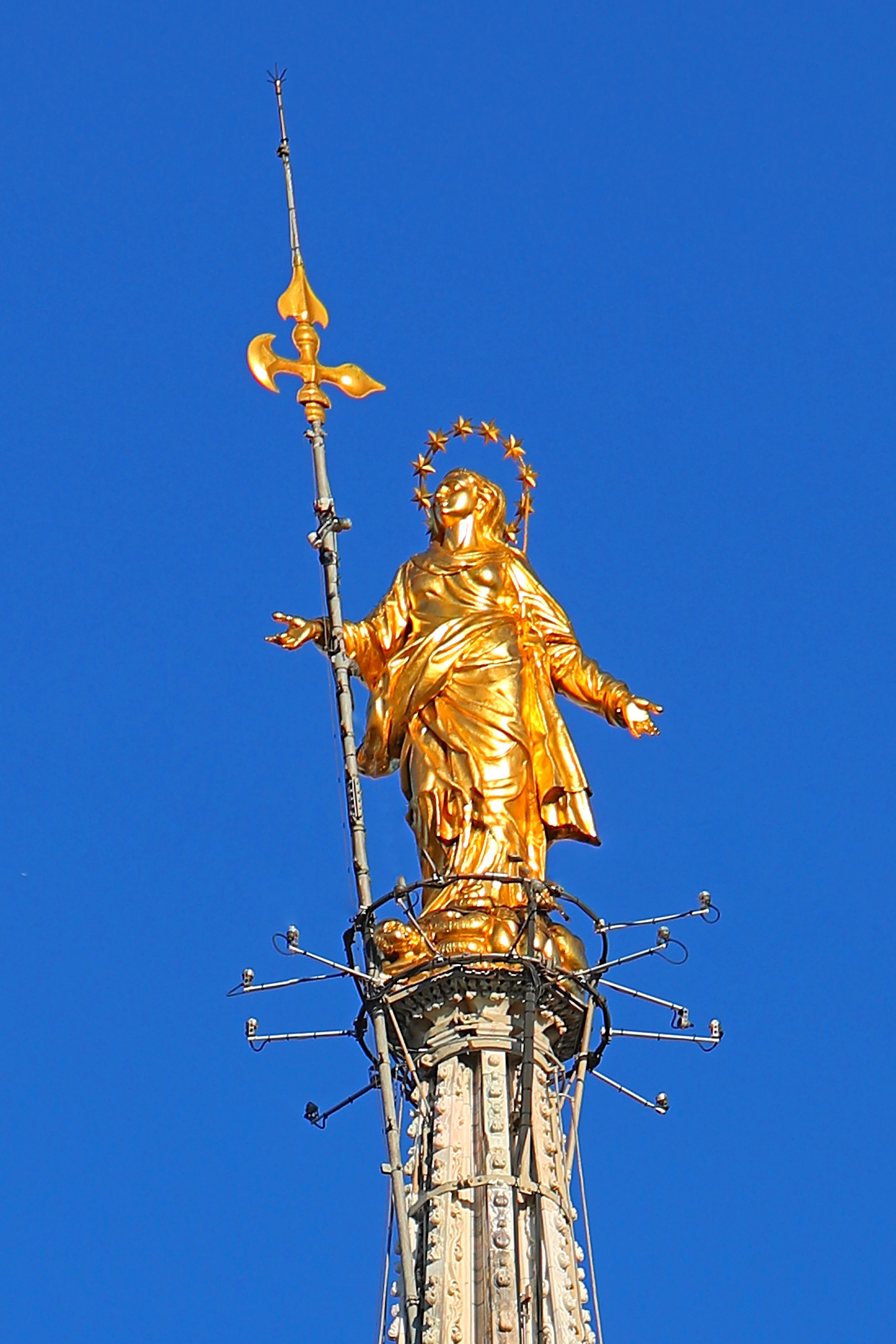
The highest spire of the cathedral is Marian. The Madonnina has been in many aerial shots of the city during the course of the Olympics. Added in 1774, it was designed by Giuseppe Perego. The pure-gold-gilded statue depicting Mary’s assumption is beloved in Milan. As the Duomo’s website explains, “If the Duomo is the symbol of Milan in the world, the Madonnina, perched on the highest spire of the Cathedral, represents the heart and soul of the city.” If you visit, you can walk on the roof to admire the statue and all of the other features at a magnificent height.
BONUS
Check out more of Milan via EWTN’s travel app.
Learn about Milan’s patron saint:
Read more about the Catholic connections to Milan and its environs here.
- Keywords:
- milan
- church history
- olympics
- winter olympics
- carlo acutis

Amy Smith Amy Smith is a Register senior editor who edits devotions and features for print and online. Fueled by prayer and coffee, she enjoys writing about everything from Jane Austen to saints for the Register. She is the author of The Plans God Has for You: Hopeful Lessons for Young Women (Emmaus Road Publishing). Her writing has also appeared in various other Catholic publications. She has a master’s degree in journalism and a B.A. in English.