Franciscan Podcaster on Ireland’s Hidden Faith Boom: Beauty and Truth Draw Many to Faith
Father Columba Jordan discusses the sudden rise of Catholicism in Europe, the crisis in male-female relationships, and the opportunities that AI offers Christians around the world.
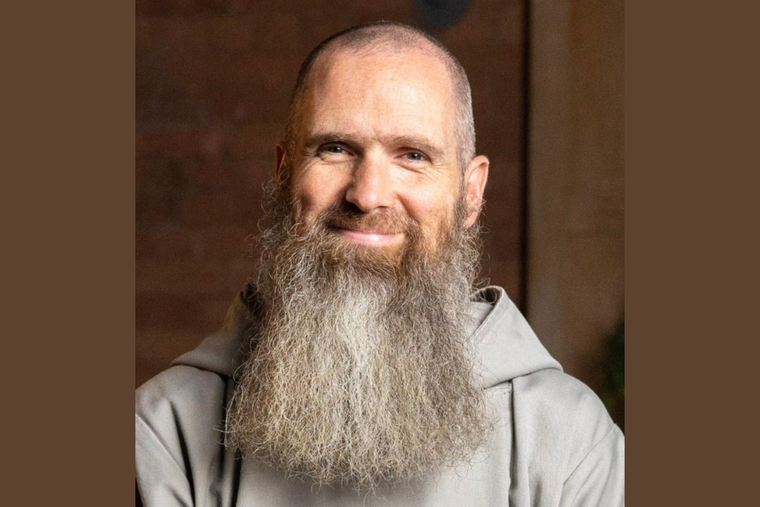
With his long beard, twinkling eyes, and Franciscan habit, Father Columba Jordan, of the Franciscan Friars of the Renewal, doesn’t seem like much of a social-media personality. Yet this Irish friar has quickly conquered the digital continent in recent years, touching millions of souls. Thanks to his podcast, Little by Little, his humorous yet profound voice has attracted a growing audience of young Catholics and those seeking meaning. His reflections blend theology and everyday wisdom, offering a refreshing invitation to rediscover the beauty of faith in a disenchanted world.
A native of County Kildare, Ireland, Father Columba now serves at St. Patrick’s Friary in Limerick. Before becoming a friar, he worked as a web designer — an experience that would later shape his intuitive use of digital media for evangelization.
Behind the camera, he observes what he calls “a surprising renewal of faith” discreetly spreading through Ireland and beyond, a movement that remains mostly invisible to mainstream media but palpable to those evangelizing on the ground.
The Irish Paradox
“Ireland is in a really interesting place right now,” he told the Register. “Things are not great here in terms of church attendance, but there are definitely signs of things shifting.” Those signs, he insisted, are largely hidden: “It’s certainly not in the mainstream media, but it is something quite obvious.”
Official data are already supporting this field experience. A recent poll commissioned by the Iona Institute confirmed a marked revival of interest in religion among young people in Northern Ireland, especially among 18-to-24 year‑olds. This matches Father Columba’s own impression: the new generations, from millennials to Gen Alpha, appear far more open — or at least neutral — toward faith than their parents, who were often hostile to the Church. “Better than neutral,” he has said, “they’re open and they’re curious.”
An Irish FOCUS missionary serving on a university campus confirmed to Father Columba that “the degree of openness, especially among young men, is massive.” Up to 80% of the students approached were willing to talk about God, join discussions, or attend events.
The same openness appears in his own youth work in Limerick. “Our youth club used to be entirely girls; and now, in the last few years, it has completely shifted, and it’s almost entirely guys.” Many of these young men come from underprivileged backgrounds, yet they surprise him by seeking confession or speaking candidly about prayer. “They tap me on the shoulder and say, ‘Hey, Father, any chance of a confession?’” he recalled.
Pilgrimages continue to sustain this spiritual growth. “In Ireland, Medjugorje has been a massive source of conversion,” he said. This revival, according to him, is mostly happening around traditional Mass communities in Dublin filled with young professionals and families and a “new wave” of charismatic prayer groups and “houses of prayer” founded by laypeople. “There’s so many around the country. It’s amazing.” he said.
A Cultural Turn
The paradox of decline and renewal, Father Columba suggested, mirrors a wider cultural awakening. Beauty itself is drawing many back to faith. When older generations often dismiss the Church’s splendor as wasteful, younger visitors, by contrast, are moved. “When young people step into such places, their first reaction is simply, ‘Wow,’” he observed. Remembering a Mass he celebrated in Cologne Cathedral, surrounded by the towering Gothic interior, he compared the experience to standing at the edge of a cliff: a moment that reveals both one’s smallness and God’s immensity, filled with awe yet strangely safe. According to him, these are transformative experiences for generations exhausted by the disenchantment of the world.
He also traced part of the current shift to what he calls the “Jordan Peterson phenomenon.” Father Columba sees in Peterson a rare voice defending objective truth and moral order, themes that particularly resonate with disillusioned young men seeking meaning. “He gave voice to something sociologically,” he explained. The recent murder of U.S. commentator Charlie Kirk has reinforced this observation, with many young people in his own parish having expressed admiration for Kirk’s testimony of faith and courage. “They liked a lot of what he said,” Father Columba noted, “and they felt he really spoke the truth.” That openness to inherited wisdom, he believes, has given many — especially young men — the courage to think differently.
Having accumulated years of field experience accompanying young people, the friar has also touched on the wound dividing young men and women nowadays. Having once hesitated about religious life because he wanted to marry, he speaks with empathy about human longing and the search for authentic love. “A lot of brokenness,” he admitted, may stem from “the massive attack from popular culture on fatherhood and masculinity.”
Drawing on Catholic psychologists Conrad Baars and Anna Terruwe and his pastoral experience with broken families, he highlights affirmation as the foundation to develop the ability to love: “The greatest thing we can do for a child or anyone is to really see them and to offer a spontaneous response of joy to that person.” Whenever parenting or relationships are not rooted in love, he warned, “they leave deep scars that ripple through society — wounds can be passed from one generation to the next.”
Baptizing Today’s Language
His podcast Little by Little, produced within Called to More — a Catholic media initiative that develops videos, podcasts and resources to evangelize younger generations — embodies Father Columba’s conviction that the Gospel must occupy spaces where youth already live and think, especially online.
What distinguishes Little by Little is Father Columba’s ability to weave traditional spirituality with the language of modern psychology. On the show, he frequently draws on tools like attachment theory and the five love languages as entry points for pastoral healing — linking personal wounds to wider social outcomes, including the West’s emerging demographic winter.
His approach, shaped by Servant of God Father Luigi Giussani’s pedagogy, rejects a defensive Catholicism:
“Christians can engage with all of human culture, even its flawed parts, since they too reveal something true about the human heart and the consequences of sin.”
Even secular art, he insisted, can point to truth. He cited as an example Goodfellas, a film he dislikes yet values because “it depicts the absolute demise of the human person and shows the nature of sin.” Honest storytelling, he believes, can lead viewers to “hate sin more.”
Hunger for What Is Real
Father Columba turned to technology as another mirror of those same wounds. He views artificial intelligence and the rise of virtual companions as a symptom of humanity’s longing for connection — a search for easy substitutes nowadays, when real love feels too costly. Yet he remains confident that “the truth is on humanity’s side, and the human heart knows it.” Even amid anxiety, “the younger generations are looking for the Source of all peace; nothing else will satisfy them because nothing else works.”
With a background in computer science and a lifelong curiosity for technology, Father Columba sees a role for the Church in addressing philosophical questions of personhood and consciousness. But beyond theory, his conviction is pastoral: The future will belong to those who help people encounter what is real.
The greatest danger, he cautioned, is discouragement: “The enemy wants to discourage us and get us to focus on the one thing that’s wrong.” Gratitude, humility and joy, he believes, are the truest marks of renewal: “If there is something good, it has come down from the Father of lights, as St. James told us.”
- Keywords:
- church in ireland
- podcasting