The Holy Land Must Be Seen, Not Debated From Afar, Says Catholic Leader
For the president of the International Catholic Legislators Network, Christiaan von Geusau, Jerusalem represents the ultimate testing ground for whether people of different religions can peacefully coexist.
Few issues today are as polarizing as the Israeli-Palestinian conflict — and few provoke such strong and immediate opinions. From political debates to social-media discussions, positions are often firmly held, especially by those far removed from the realities on the ground. Paradoxically, it can sometimes seem that the greater the distance, the stronger the convictions.
Amid rising tensions in recent months — now extending beyond Gaza and Israel to involve Iran and draw in the United States — Christiaan von Geusau warns against simplistic or binary approaches.
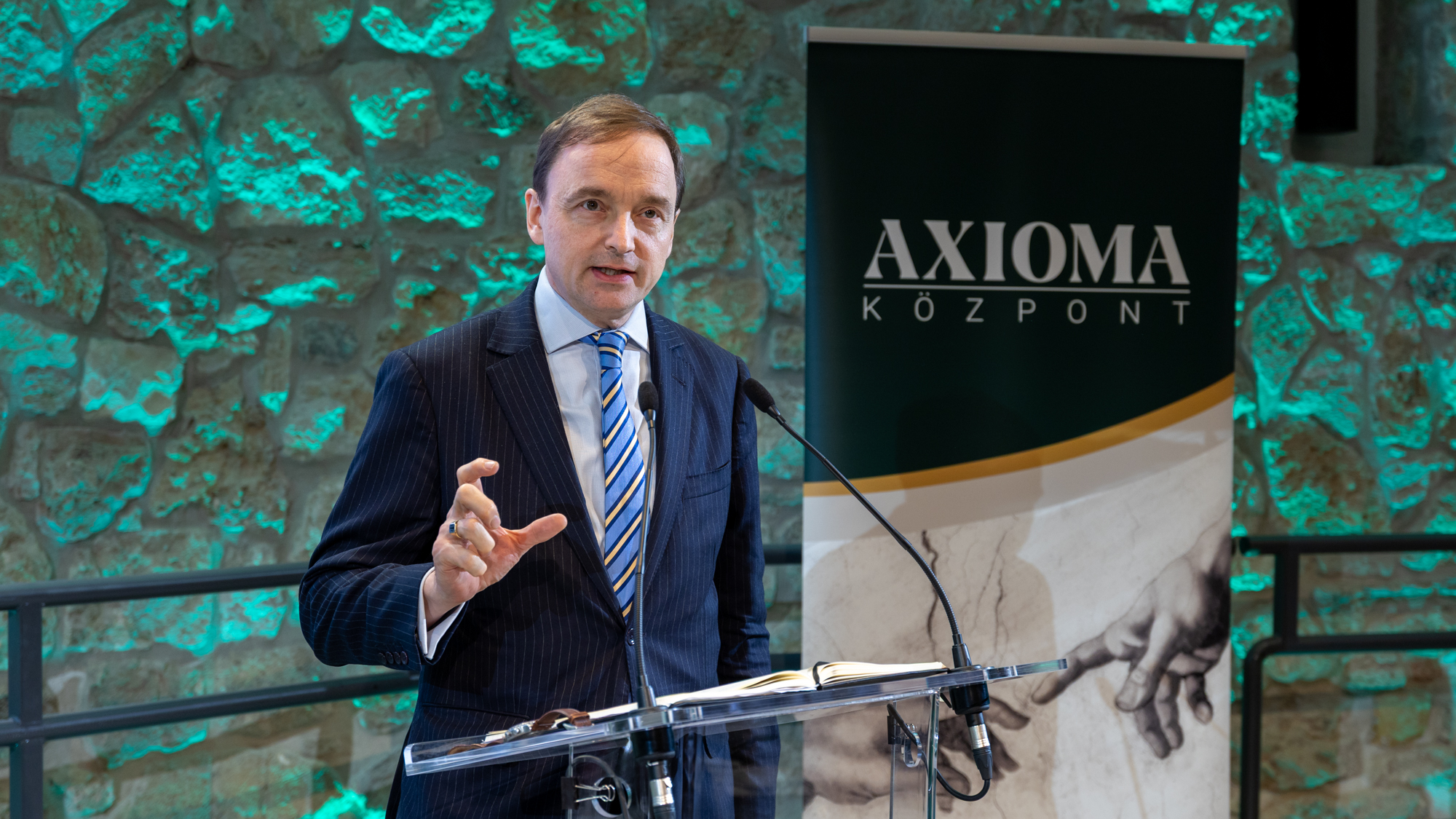
“If Christians cannot demonstrate unity in the city where Christ was crucified and resurrected, what credibility do we have?” von Geusau, president of the International Catholic Legislators Network, told the Register.
The International Catholic Legislators Network (ICLN) is a nonpartisan initiative bringing together Catholic political leaders for fellowship, spiritual formation and reflection on global challenges.
In January, he led a delegation of around 20 international Catholic politicians to Israel and the Palestinian territories to encounter firsthand the people and communities living the conflict daily.
Von Geusau returned convinced that firsthand experience changes perspective. In this interview with the Register, he reflects on what he witnessed and why, in his view, the Holy Land is the ultimate testing ground for humanity.
As president of the ICLN, why did you decide to organize this trip — and why now?
First of all, it is essential to understand that this journey was a pastoral visit rather than a political one. The ICLN is completely nonpartisan — participants come from across the political spectrum, including Democrats and Republicans from the U.S. — because people attend not for political alignment but because they believe in Christ.
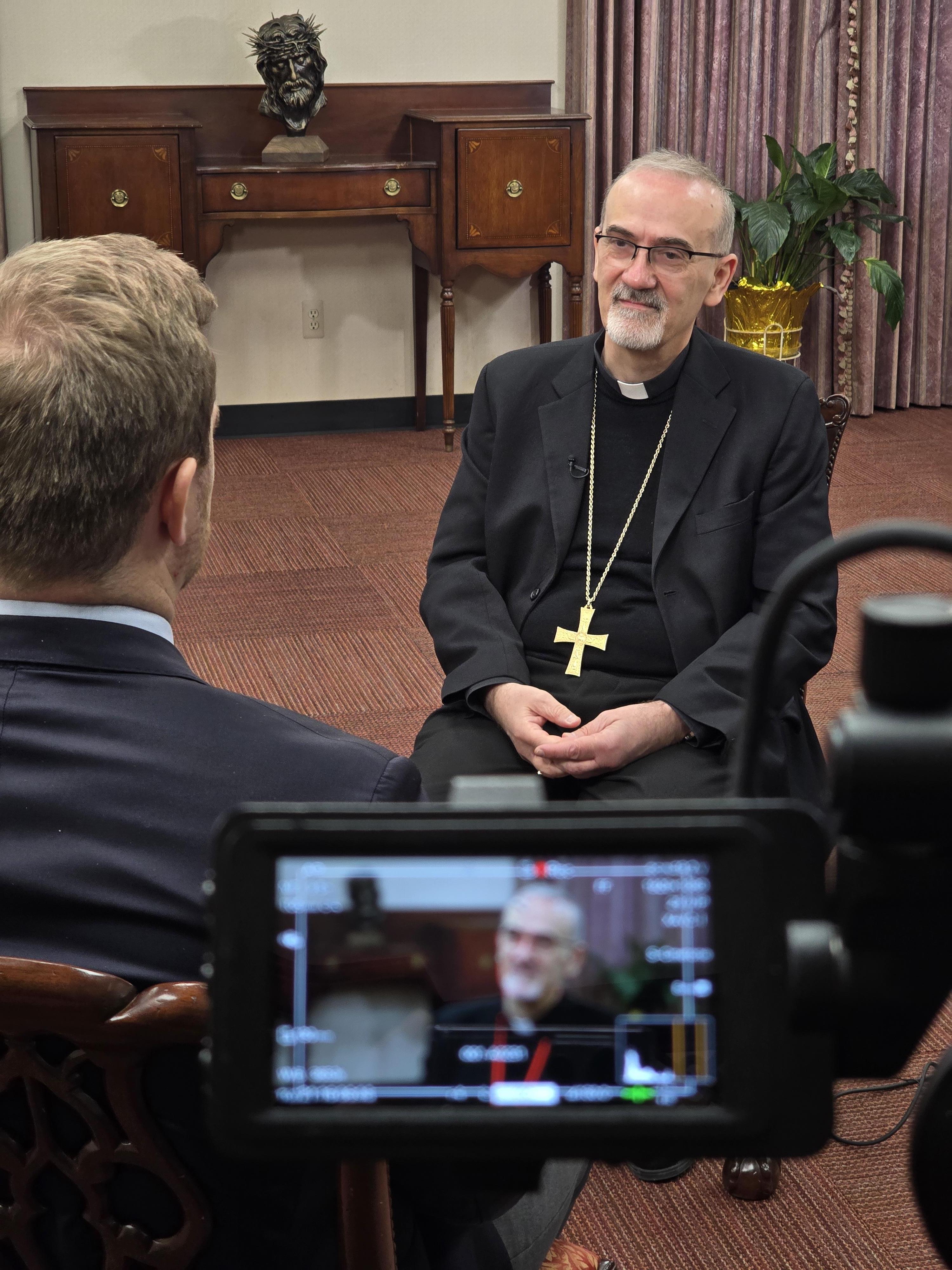
Catholic politicians traveled as private individuals to observe and listen. We deliberately met no politicians. Instead, we met civilians, Jewish-Israeli NGOs, and Christian church leaders — people working directly with communities on the ground. The visit took place at the invitation of Cardinal Pierbattista Pizzaballa, the Latin patriarch of Jerusalem, and its purpose was not political engagement but encounter.
We went now because presence matters. Tourism has collapsed in the region, and pilgrimages support both Palestinians and Israelis economically. By going there, we also wanted to encourage fellow Christians to return to visit.
Above all, we went because it is crucial to understand realities firsthand. This trip convinced me that any politician who has not personally visited Israel and the Palestinian territories and spoken with the people there has no right to speak about the situation.
What were your main takeaways after meeting with Cardinal Pizzaballa?
It left a profound impression on all of us. The patriarch spoke from a deeply pastoral perspective without political or ideological bias. He spoke as a shepherd, someone whose “clothes are dirty” from caring for his flock. He works daily with Palestinians and Israelis alike and sees them first as human beings loved by God.
That is what makes this very Catholic approach so powerful: It re-humanizes everyone. Public discourse often presents the conflict in black-and-white terms: one side aggressor, the other victim. As Christians, we should step outside that narrow narrative and always speak to the human dignity of all people on all sides.
It is precisely by focusing on the dignity of every person that the Catholic Church has maintained trust across communities and can be a credible mediator. The Church naturally respects Israel’s right to exist and acknowledges Palestinian aspirations, but it does not engage in partisan political positioning. Instead, it cares for human beings in many ways, especially pastorally, in education and in health care, regardless of their creed or nationality.
If we truly live the Gospel, we cannot dehumanize others, ever. That refusal to polarize was what impressed participants most. One U.S. member of Congress stood up after an earlier presentation by the patriarch in Rome and said: “We’ve never heard this before.” What struck participants was the balance of his presentation, a refusal to polarize. That led to a simple question: Could we come and see the reality on the ground for ourselves? That is what we then did.
Is there a particular reflection from Cardinal Pizzaballa that you can share?
He stressed that Jerusalem must remain a city where Jews, Christians and Muslims all have equal religious access. This is not a political statement but a religious one.
Jerusalem is, in many ways, a testing ground for humanity: whether people of different faiths can live together in peace. Its layered history reminds us that nothing there can be solved through slogans. If coexistence can work in Jerusalem, it can work anywhere.
How would you describe the atmosphere on the ground? Were tensions palpable?
I never felt unsafe there, but I could definitely sense a pervasive anxiety, especially in Jerusalem, but also in Bethlehem. People seem constantly on guard. I have not experienced that level of tension even in European or American cities facing high crime or violence. This is something different: a society shaped by decades of conflict and deep suffering.
One of the most shocking things I witnessed in Jerusalem was groups of Israeli teenagers, starting at about age 16, walking through the streets with M16 rifles strapped over their shoulders. They were civilians, not soldiers or police. As a father of a 16-year-old son, I cannot imagine him walking through Vienna carrying an automatic rifle.
It shows how deep the trauma is among Israelis, particularly after Oct. 7 [2023]. I understand the context and that it is legal, but it remains confronting, and one inevitably thinks about the psychological consequences.
At the same time, despite tensions, you still see Christians, Jews and Muslims mingling daily in the streets. Coexistence remains fragile, but it exists.
In such a polarized context, Christians are often pressured to take sides. How should they approach this conflict, in your view?
Christians should not take sides, and the patriarch himself does not. Through schools, hospitals and pastoral initiatives, the Church seeks to remain open to everyone and to serve all in need.
Many Christian communities, understandably, devote enormous energy to defending property rights in Jerusalem because the pressure on them is very strong, and increasingly so. But this can sometimes push pastoral care into the background.
The Catholic Church has an advantage here because it is less dependent on commercial property and can focus strongly on pastoral work: education, health care, youth programs. I believe that is the right path. All major Christian communities in Jerusalem already do important work in that regard.
If Christians cannot demonstrate unity in the city where Christ was crucified and resurrected, what credibility do we have? Cooperation among churches has improved greatly compared to 40 years ago, but there is still work to do.
More concretely, how should Catholics worldwide engage in this situation that leaves no one indifferent?
Catholics exist on all sides of this conflict: Palestinian Catholics, Israeli Catholics and Hebrew Catholics — Jewish Israelis who have converted. We are present within every community involved.
That alone should make us cautious about one-sided political statements. We are called to be bridge-builders.
The conflict is extraordinarily complex, multilayered, and social-media slogans often make matters worse. Instead, Catholics should engage concretely. One direct outcome of our trip is that the group of politicians decided to adopt and support a Catholic and another Christian school in the Palestinian territories.
Research shows that where Christian schools operate, Muslim students are significantly less prejudiced against Christians. Education is key. Supporting schools may be one of the most effective ways Catholics worldwide can help.
What was the most memorable moment of that trip for you personally?
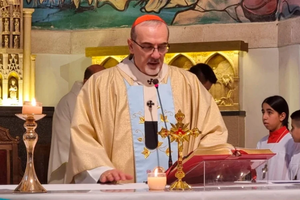
The Sunday Mass with the Palestinian Catholic community at the Church of the Nativity in Bethlehem was unforgettable. The church was full, and although I did not understand the Arabic liturgy, witnessing the faith and joy of the congregation was a powerful testimony, especially given the difficult circumstances in which they live.
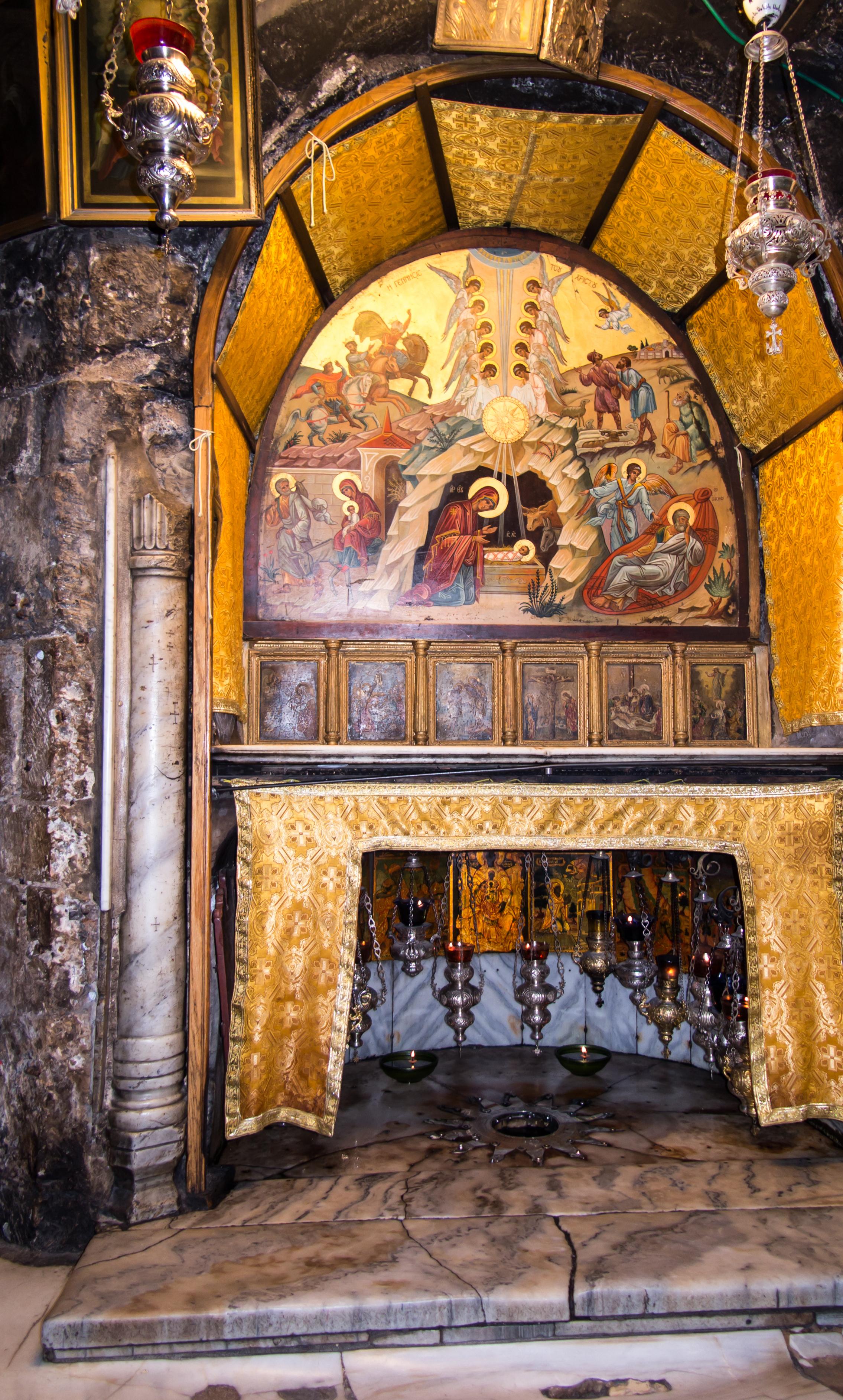
Praying early in the morning at the Holy Sepulchre, at the empty tomb, and Golgotha without crowds was another profound moment. We also visited Syriac Orthodox Archbishop Yakoub at the Monastery of St. Mark in Jerusalem, where a restored Marian icon believed by some to date back to St. Luke had just returned, accompanied by the Our Father sung in Aramaic.
At the same time, I felt that some holy places are not always conducive to prayer, sometimes because of internal Christian tensions or a lack of reverence by visitors — something we Christians must reflect on.