The Meaning of America’s Consecration to the Sacred Heart
COMMENTARY: There are two reasons why the date of June 11 is especially important.
As the United States prepares to mark the 250th anniversary of the signing of the Declaration of Independence and the birth of our country, the bishops of the United States are solemnly preparing today to consecrate the country to the Sacred Heart of Jesus. It will take place at the Basilica of Our Lady Queen of the Universe in Orlando, where the bishops have convened for their spring meeting.
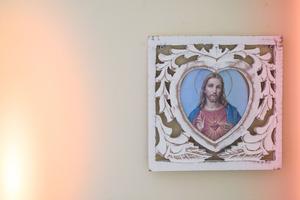
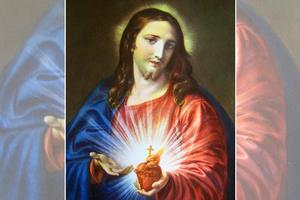
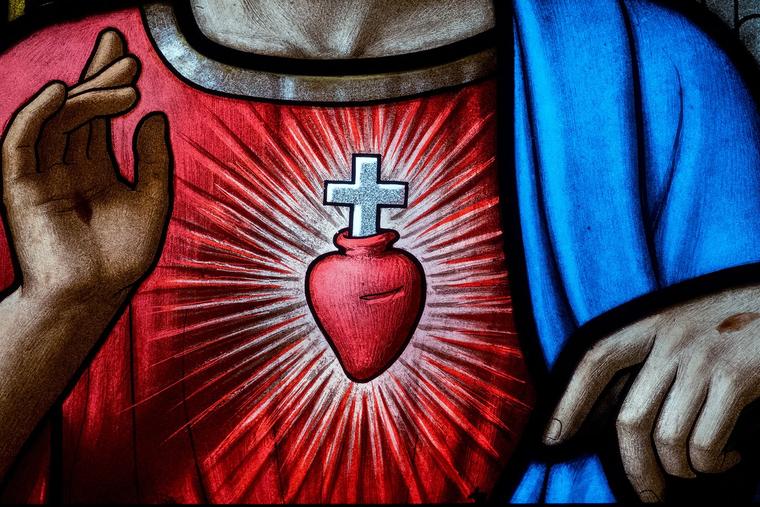
To consecrate the country to the Sacred Heart of Jesus means to prayerfully entrust its present and future to Jesus’ sacred humanity and to the divine and human love symbolized by his burning and crucified heart.
The consecration was originally proposed to take place tomorrow, on the Solemnity of the Sacred Heart of Jesus, at the conclusion of the bishops’ spring plenary assembly. But a motion was made during the bishops’ meeting last November to celebrate the consecration the day before, on June 11, so that bishops might return home to their dioceses on the solemnity to consecrate their dioceses to the Sacred Heart.
Little attention was given at the time to the significance of the date of June 11 for the consecration. But there are two great reasons why it is especially important.
Pope Leo XIII’s Global Consecration
The first is that June 11 was the date in 1899 when Pope Leo XIII consecrated the world to the Sacred Heart of Jesus.
Exactly one century later, on June 11, 1999, St. John Paul II wrote, somewhat astonishingly, “The consecration of the human race in 1899 represents an extraordinarily important step on the Church's journey.”
Few Catholics today are aware of the consecration of the human race to the Sacred Heart 127 years ago. Few would consider that act, as John Paul II did, “an extraordinarily important step on the Church’s journey.” But John Paul II saw something that most historians and journalists, secular and Catholic, miss: the objective significance of an act of consecration.
Our prayer matters. Our entrusting ourselves and the world to God matters — just as Jesus’ consecration to the Father and self-offering on Calvary for our salvation matters, and matters a lot.
What the U.S. bishops are doing today, John Paul II would emphasize, is likewise highly significant for our country.
Some — not just secularists but also some Catholic progressives — try to dismiss devotion to the Sacred Heart of Jesus, acts of consecration and other forms of personal and popular piety as inconsequential distractions. Some argue that such devotions were basically phased out by the Second Vatican Council as unbiblical and unworthy of public practice. St. John Paul II spoke right into these falsities when he wrote, reflecting on the 1899 consecration, “The words of Leo XIII still ring true: ‘We must have recourse to him who is the Way, the Truth and the Life.’ … Is this not the program of the Second Vatican Council and of my own pontificate?”
John Paul II was reminding the whole Church that consecration to Jesus’ sacred humanity and divine love is not an optional part of our faith, but the heart of Sacred Scripture, the core of Vatican II and the work of post-conciliar popes, and the essence of the Church’s proclamation. Pope Benedict XVI would say in a 2008 Angelus meditation that devotion to the Sacred Heart is the “center of faith,” because the incarnation of the Son of God and the divine and human love expressed by Jesus’ pierced heart are the nucleus of redemption.
That’s why consecration to, and love of, the Sacred Heart of Jesus is not principally an act of personal taste or devotion, but a means by which the Church enters more deeply into Jesus’ saving work and mission.
When Leo XIII on June 11, 1899, consecrated the world — and not just the Catholic Church — to the Sacred Heart, he was fully aware of the missionary significance of what he was doing. Jesus, Leo XIII said, had given himself as a ransom for “all” and by consecration the Church was uniting the whole human race to herself and entrusting it to the redeeming love of Jesus, who “shed His blood for the salvation of the whole human race. … In pity for [non-Christians’] lot, with all our soul we commend them, and as far as in us lies, we consecrate them to the Sacred Heart of Jesus.” In this way, the consecration, he said, would be of benefit to all, including those who have not yet come to faith.
Pope Francis, in his 2024 encyclical on the Sacred Heart, Dilexit Nos, emphasized this missionary dimension of devotion to Jesus’ Sacred Heart. “The enduring relevance of devotion to the heart of Christ is especially evident in the work of evangelization,” he wrote. When we meet the ardent, crucified love of Jesus, we cannot but burn to share it ourselves, he indicated. Mission is “a radiation of the love of the heart of Christ,” because the “flames of love of the Sacred Heart of Jesus expand through the Church’s missionary outreach, which proclaims the message of God’s love revealed in Christ.”
Pope Francis quoted St. Vincent de Paul, who taught that “the heart of Our Lord … sends us, like [the apostles], to bring fire everywhere.” Jesus himself said, “I have come to set the earth on fire and how I wish it were already blazing” (Luke 12:49). The Holy Spirit came down upon the apostles as tongues of fire, so that we might bring that divine and human fire to the ends of the earth by proclaiming the Gospel.
So the consecration of our nation to the Sacred Heart of Jesus is not just for practicing Catholics, but for everyone, and it involves a request that God will ignite us with a renewed sense of mission, not just from “sea to shining sea” but across the seas to the missionary territories. Our national consecration to the Sacred Heart is meant to rekindle and stir into a flame the fire of Christ’s love among us so that, as contagious spiritual arsonists, we may bring that fire everywhere.
Ven. Fulton Sheen’s Episcopal Consecration
The second reason why June 11 is providential is because it is the 75th anniversary of the episcopal consecration of someone who brought that evangelical blaze to America and to the whole world.
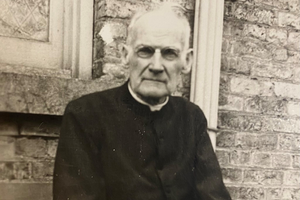
On June 11, 1951, soon-to-be Blessed Fulton J. Sheen was ordained a bishop. Devotion to the Sacred Heart of Jesus was central to his priestly life. Jesus had revealed to St. Margaret Mary the Eucharistic dimension of devotion to his Sacred Heart and Archbishop Sheen therefore urged us, in adoring Jesus in the Holy Eucharist, to remember his pierced and burning heart from which his Precious Blood poured. “We become what we gaze upon,” he underlined. Adoration is where Christ makes our heart like unto his.
Eucharistic adoration is also the place, Ven. Sheen confessed, where he received his fire to proclaim the faith and incite people to share in Christ’s mission.
“The secret to my preaching is that I have never [since my ordination] missed spending an hour in the presence of our Lord in the Blessed Sacrament. That’s where the power comes from. That’s where sermons are born. That’s where every good thought is conceived.” He told his fellow priests, “How much more would our words burn as we preach if we prepared our sermons before the Eucharistic Lord!”
Archbishop Sheen would doubtless be pleased that his fellow American successors of the apostles are together consecrating our country to Jesus’ Sacred Heart. This great missionary to missionaries across the globe in his 16 years as national director of the Pontifical Mission Societies would likewise be praying that the fruits of this consecration will lead not just to the reevangelization of the United States but to American Catholics’ bringing the fire of divine love to the ends of the earth.
We pray that today’s consecration will indeed become an extraordinarily important step on our country’s journey.
- Keywords:
- sacred heart of jesus
- sacred heart
- united states