Christian Renewal in the West Is Here, but Will Leaders Be Able to Sustain It?
Through the International Catholic Legislators Network, Dutch professor Christiaan Alting von Geusau is striving to address the global leadership crisis.
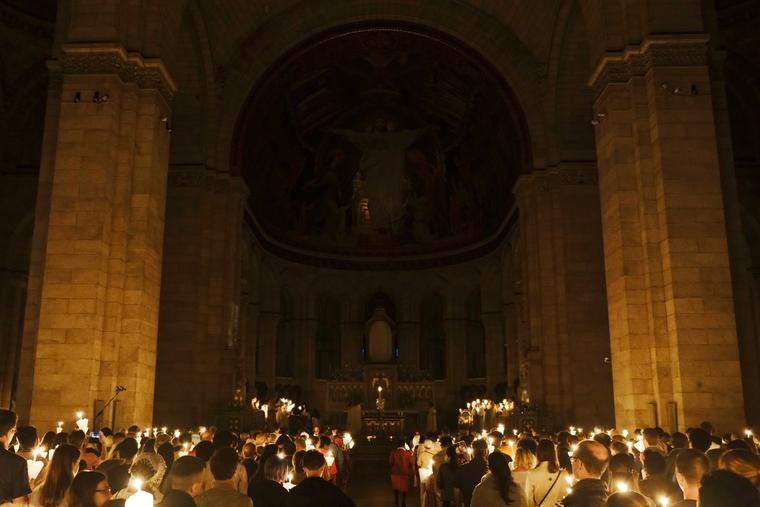
Evidence of a Catholic revival in the West, particularly among young people, is no longer anecdotal. Its manifestations are now visible in parishes, communities and pilgrimage groups across multiple countries. For those who have monitored this trend over the past five years, the deeper question is no longer whether a renewal is underway, but whether the trend has the foundations to sustain it for the long term.
Few experts are better equipped to analyze this historic moment than Dutch legal philosopher and educator Christiaan Alting von Geusau, founder and president of the International Catholic Legislators Network (ICLN), whose work with public leaders has long taken place away from the spotlight.
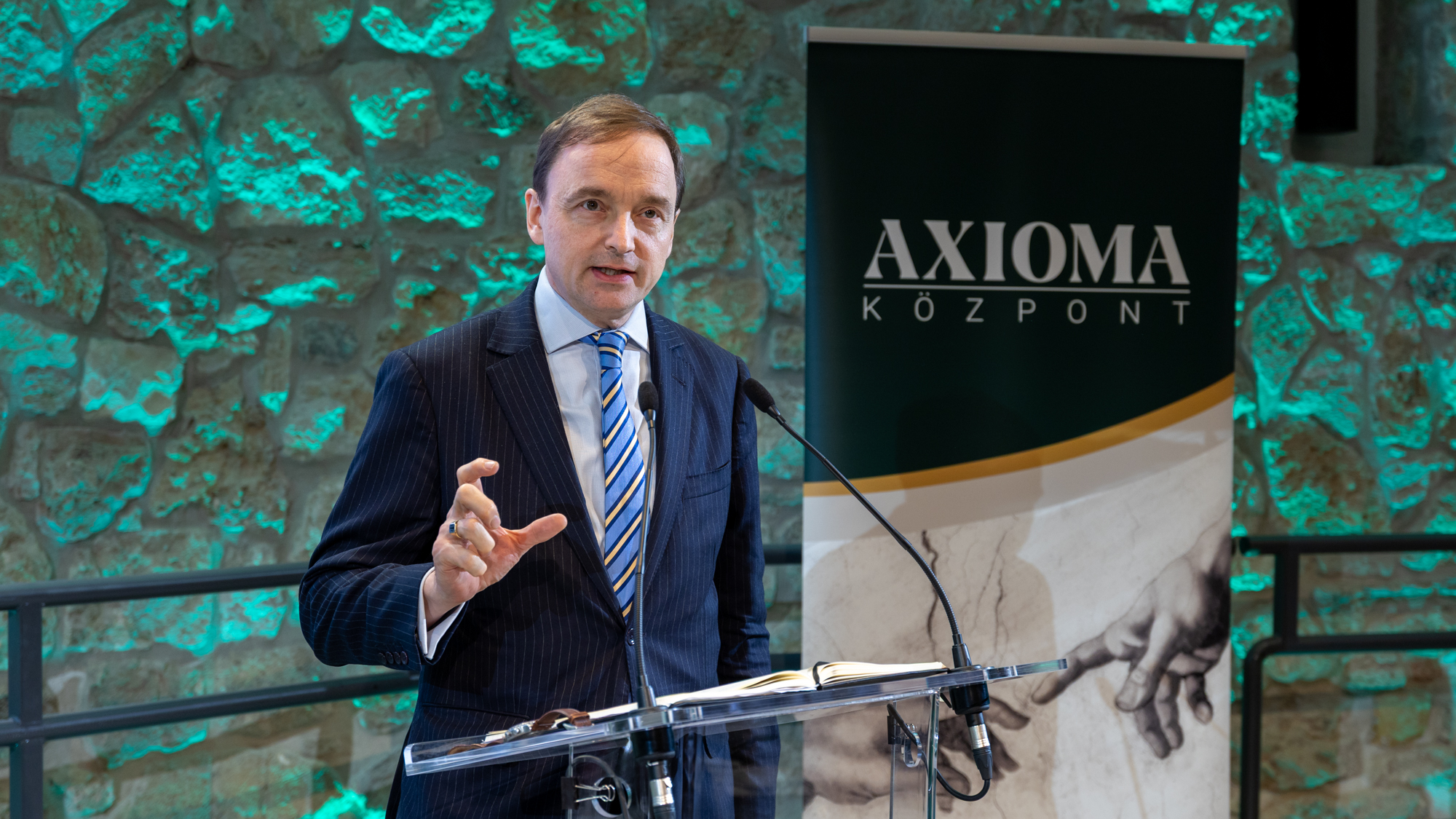
Born in 1971, this father of five has spent two decades accompanying those who translate convictions into decisions. His intellectual approach is grounded in practical experience. For him, faith must be intelligible to be lived and lived to influence public life. He articulated this vision with clarity in a keynote speech he delivered in Budapest, Nov. 21, at a symposium organized by the Axioma Center and moderated by the Register, on the theme “Shining Communities: The Future of Christianity.”
COVID-19 and the Rediscovery of Transcendence
Faced with ideologies that promised power and autonomy, delivering fragility and despair instead, young people are increasingly returning to the Church out of exhaustion, Alting von Geusau argued. The pandemic period, in his view, crystallized this turning point. A culture convinced of its mastery — scientific, technological and institutional — was suddenly brought to its knees by something invisible. “With its enormous advances in science and technology, humanity thought it had become God,” he told the Register following the Budapest conference. “Then it discovered its impotence in the face of a small virus.”
What emerged from that period, he believes, was not only polarization, though it appeared so on the surface, but deep disillusionment — especially among the young, as attested by the sharp increase in youth suicide rates during the pandemic period. In his reading of the period, many young people felt they were living through a moment when public life was driven less by consistent principles than by rapidly changing emotions — rules tightening and loosening in ways that felt arbitrary, justified more by fear than by clear reasoning.
“We have moved from the rule of law to the rule of feelings,” he said. Young adults, he added, “see through that.” As a result, they now gravitate toward places where truth is stable rather than improvised and where worship is not psychological therapy but contact with transcendence.
For the Dutch legal philosopher, this explains why the most vibrant expressions of renewal are those that have beauty, reverence and intellectual rigor at their core, for beauty and coherence signal that reality is orderly, intelligible and not accidental. And this is precisely what secular narratives can no longer offer.
The Return of Masculinity in a Confused Age
One of the most striking features of such revival — both in Europe and in the U.S. — is the unexpectedly high presence of young men. Alting von Geusau attributes this to something that has been increasingly observed yet still insufficiently understood: Men have long been deprived of permission to be men.
Not by women, he emphasized, but by ideological models of feminism that had, in his view, overshot healthy objectives and eventually equated masculinity with threat. “Men were told they are dangerous, toxic, that women can do anything the same way, so why would we need men?” The result, he argued, has been disorientation, growing insecurity and passivity.
Men, he argued, can find solace in the Church because they’ve rediscovered “the possibility of healthy manhood.” Women, meanwhile, long for men they can trust, who can protect and provide for them.
Alting von Geusau’s ability to speak confidently to this issue is informed by his upbringing, where it was the men who naturally stepped in when his mother faced chronic health issues — teaching him early on that service and masculinity are never in conflict with one another.
This is also why, he insisted, Christianity — not Marxist feminism — has historically safeguarded women. Mary stands at the center of Christian identity, while medieval Christianity elevated women in every way possible. “When Christianity, rooted in the Gospel and in tradition, flourished, women flourished,” he stated. “God created man and woman in his own image and likeness and has made them to be mutually complimentary, meaning that the one cannot do without the other and thus each has their role to play.”
In the professor’s view, the Church’s coherent anthropology has the capacity to speak deeply to both men and women and to break the deadlock in which today’s younger generations find themselves stuck.
His instinct for formation of young people follows naturally from this anthropology. Long before working with legislators, he spent 20 years shaping young minds as president, rector and professor at the ITI Catholic University in Trumau, Austria. In 2012, he founded with his wife the Schola Thomas Morus in Austria, a school built on faith, classical virtues and the art of learning to think.
Addressing the Crisis of Leadership
The youth may be rediscovering transcendence, and men may be reclaiming their vocation — but without leaders capable of holding the line when pressure intensifies, these sparks will not grow into a lasting fire.
A turning point for Alting von Geusau came during a 2008 event featuring a talk by Cardinal Christoph Schönborn to a group of Catholic lawmakers in London, during which one MP expressed his frustration: “We receive no real formation. The Church forms everyone except those who govern.” From that point on, his mission was centered on the belief that the crisis driving all other crises was that of leadership.
Two years later, in 2010, ICLN was officially born. Its aim: to help leaders base their decisions in faith, think with greater coherence, and find companionship in a vocation that can otherwise feel quite isolating. Its methodology is deliberately discreet and refrains from advocacy, lobbying or media strategy. The organization’s policy is to form first, influence later.
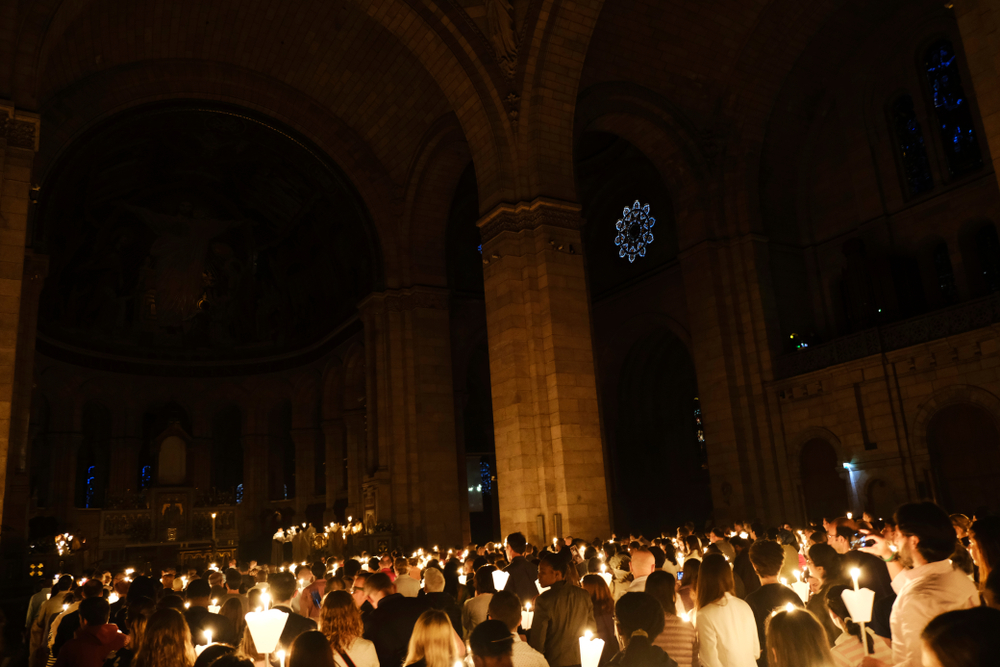
Formation at ICLN centers on spiritual depth, intellectual clarity and genuine fraternity in a nonpartisan setting. Its main gathering takes place each year in Rome, where legislators from the most diverse backgrounds spend four days in prayer, study and conversation, culminating in a private audience with the Holy Father.
Behind closed doors, the president of ICLN hears the same concerns repeatedly: the growing difficulty of remaining morally coherent without being punished for it, the erosion of parental rights, and the push to redefine human identity by decree. Another fear concerns the rise of militant secularism and political Islam as well as the cultural pressure it adds on already-fragile democracies — a topic many leaders hesitate to mention publicly.
He often compares this general climate to St. Thomas More’s trial, when silence was not enough and assent was demanded. “We are entering a phase,” he warned, “where the mere fact that you do not acclaim certain movements automatically marks you as suspect.” This now applies above all to abortion, gender ideology and the shifting meaning of freedom.
Such pressures, he believes, show why it’s crucial to form leaders so that they have the strength to remain steady in the most challenging times. This is also the spirit behind Ambrose Advice, another initiative founded by Alting von Geusau, where he accompanies senior political and institutional figures who strive to maintain freedom, dignity and stability in their respective countries.
What ultimately emerges from his vision is the confidence that Christianity’s future will not be shaped by louder rhetoric or sharper cultural battles, but by communities and leaders rooted deeply in truth.
For Alting von Geusau, this work is the fundamental rebuilding of the West’s moral architecture without which no Christian renewal can survive.