A Pilgrimage Carved From Rock: How an Italian Punk Band Found Its True Vocation
Before playing a candlelit concert in the ancient city of Petra, Italian Catholic rock band The Sun survived a wild punk past to bring 130 pilgrims to the heart of the Middle East.
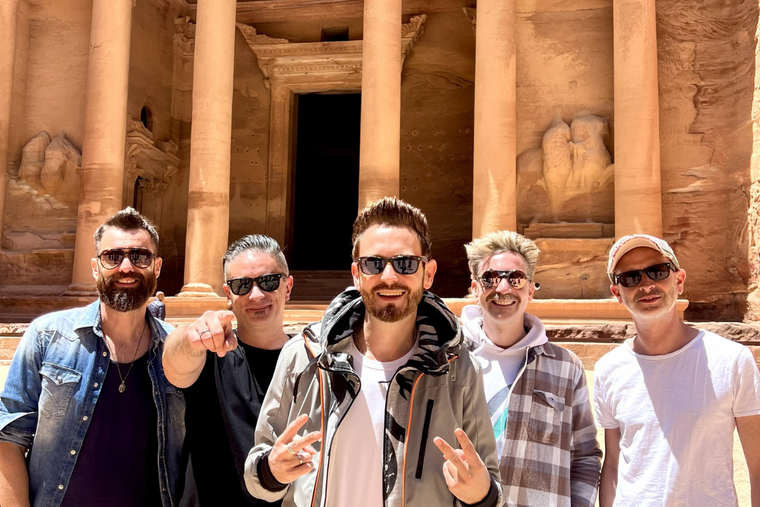
AMMAN, Jordan — Before The Sun became one of Italy’s best-known Catholic rock bands — before World Youth Days, Vatican stages, pilgrimages and the improbable but accurate phrase “Catholic punk-rock conversion story” — there was a band from northern Italy playing hard, fast and far from home.
They were called Sun Eats Hours then. From the province of Vicenza, they toured across Europe and Japan, opened for international acts, and shared stages with names including The Cure, The Offspring, The Misfits and Muse.
Then something happened to Francesco Lorenzi, the band’s lead singer, guitarist and main songwriter. Something broke.
In 2007, after a night out with friends fell through, his mother suggested something that, to a punk rocker used to the emotional weather system of the music business, must have sounded like a category error: Go to a parish faith-formation course.
Lorenzi later admitted that he told her he wanted to be happy — and that church was not where he expected to be happy. He went anyway. There, strengthened by a new community, prayer, Mass and Eucharistic adoration, his life changed. The other band members watched and, over the next five years, followed, wanting to understand the source of his “contagious happiness.”
The band shortened its name to The Sun and began writing in Italian with an openly Christian message. The official history describes The Sun as the artistic evolution of Sun Eats Hours, founded in 1997.
That is the clean version. The truer version is rougher and more interesting: A rock band survived its first life and decided not merely to keep playing but to make music answerable to a vocation.
This month, that vocation brought them back to Jordan.
The pilgrimage, titled “An Invitation, Then a Journey … to Jordan,” brought 130 pilgrims through Amman, Jerash, Petra, Mount Nebo, Madaba, Bethany Beyond the Jordan, the Dead Sea and Wadi Rum.
The trip included daily Mass, visits to biblical and historical sites, encounters with local Christians and support for refugee projects in Amman.
But the geography was only the surface. The deeper story was a band returning to the Middle East at a time when many others have stepped back.
Catholic pilgrimages to the Holy Land and nearby countries have been disrupted in recent months by the conflict involving Iran, Israel and the United States. For Lorenzi, the decision to return to Jordan was not a scheduling matter. It was not spiritual tourism with better branding. In an interview with EWTN, he called it “a necessity of the soul.”
“As a band and as Christians, we believe that peace is not the absence of conflict but the presence of Christ, especially in moments when the strategy of fear creates distance and closure,” Lorenzi said.
The Sun first came to Jordan as musicians in 2018 and returned with pilgrims in 2019. Even earlier, their path had taken them through the Holy Land, including a 2011 concert for peace in Bethlehem that their official biography describes as decisive for the band’s mission.
The Middle East, for Lorenzi, has not been a backdrop. It has been a teacher.
“From these wounded communities we have learned what is essential,” he told EWTN. “In Europe we often live a ‘comfortable’ faith that wavers at the first problem; they live a ‘naked’ faith, rooted in sacrifice.”
Comfortable faith. Naked faith. The first has schedules, committees, good intentions and climate control. The second has loss, memory, displacement, and the stubborn decision to remain Christian where remaining Christian costs something.
The Sun’s own story makes them unusually suited to receive that witness without turning it into decorative inspiration.
In 2013, The Sun opened the plenary assembly of the Pontifical Council for Culture on emerging youth cultures, an extraordinary moment for a Catholic rock band and a unique moment in Church history. The band later performed at World Youth Days in Rio de Janeiro, Krakow, Panama and Lisbon and in 2025 received three honors at the Catholic Music Awards in Rome.
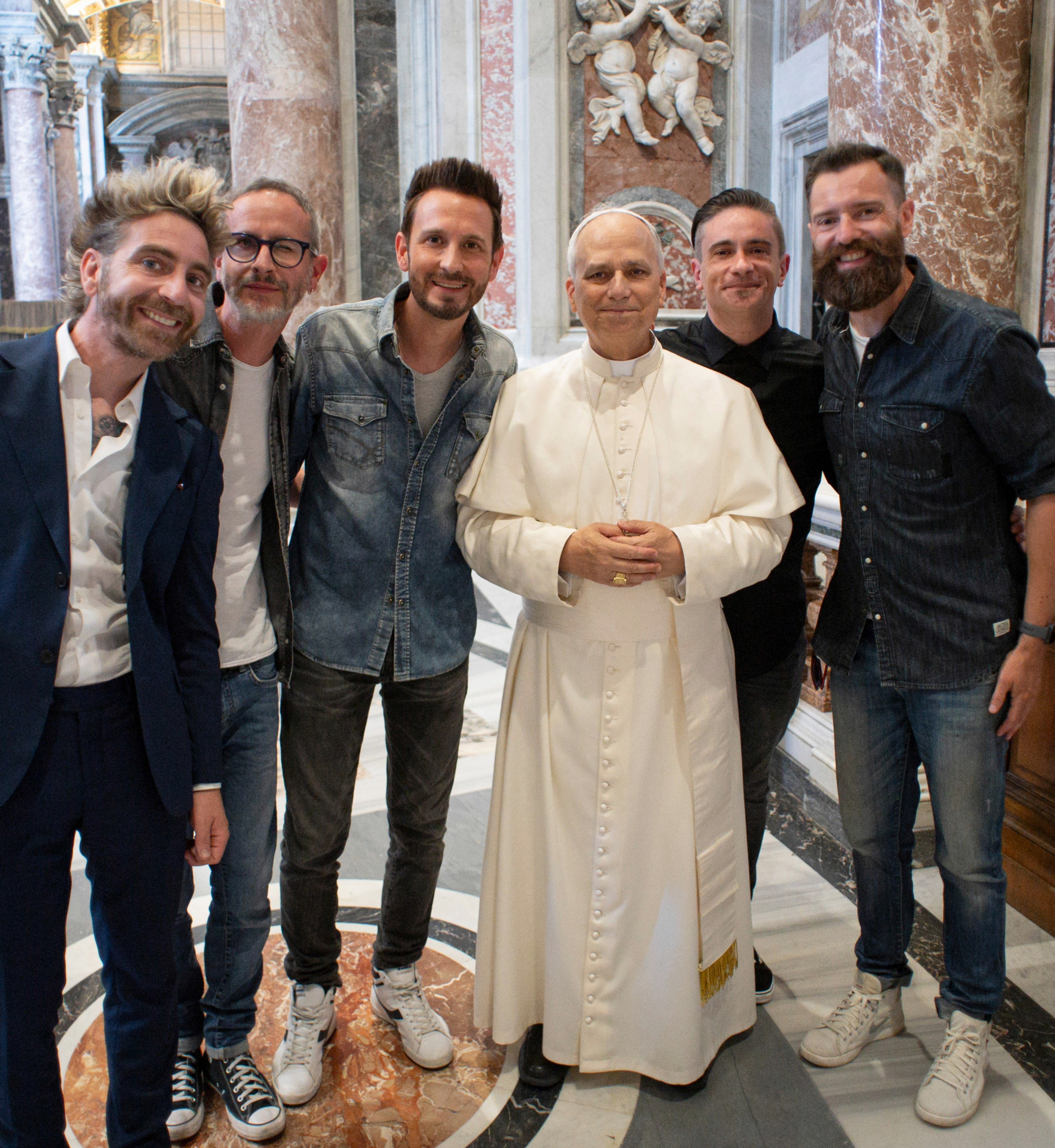
Still, a band is tested less by stages than by where it chooses to stand when the stage lights are not guaranteed. In Jordan, The Sun stood with pilgrims, local Christians and refugees.
At Mount Nebo, the group attended Mass where tradition holds that Moses viewed the Promised Land. In Madaba, they visited the famous Byzantine mosaic map of the Holy Land. At Bethany Beyond the Jordan, pilgrims renewed their baptismal promises. In Wadi Rum, they spent two nights in the desert and gathered for Mass among the sand and rock.
For the pilgrims, the journey was not simply a sequence of holy places. Maria Lapi said what struck her most was the warm welcome.
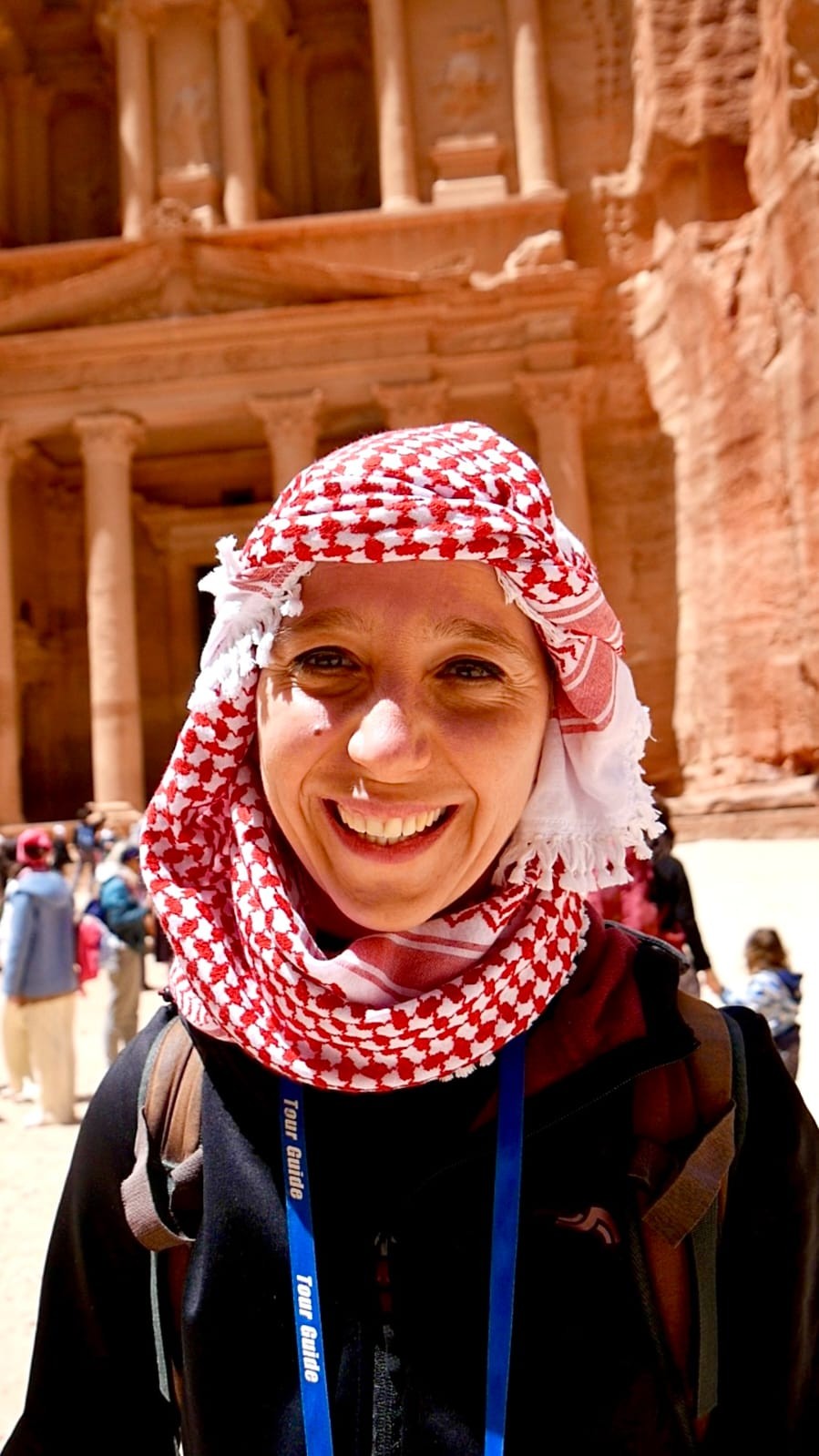
“Everything we see here is beautiful, but what touches me most is the hospitality,” she said. “People are sincerely happy to have us here. It is a warmth that perhaps we in Italy have somewhat lost.”
Her story also carried a personal history. Three years earlier, she had joined a pilgrimage with The Sun to the Holy Land, traveling alone. This time, she returned with the man she met on that journey — now her husband — along with two of her closest friends.
“In my small way, I am a witness to many blessings that have come through these experiences with this band,” she said.
Then came Petra.
The pilgrims walked through the Siq by candlelight toward the Treasury. Petra at night can swallow noise. But that evening, in cooperation with local authorities and Father Mario Cornioli, The Sun offered an exclusive “Petra by Night” performance for the pilgrims. One of the world’s great ancient cities became, for one evening, not a monument, but a resonant chamber.
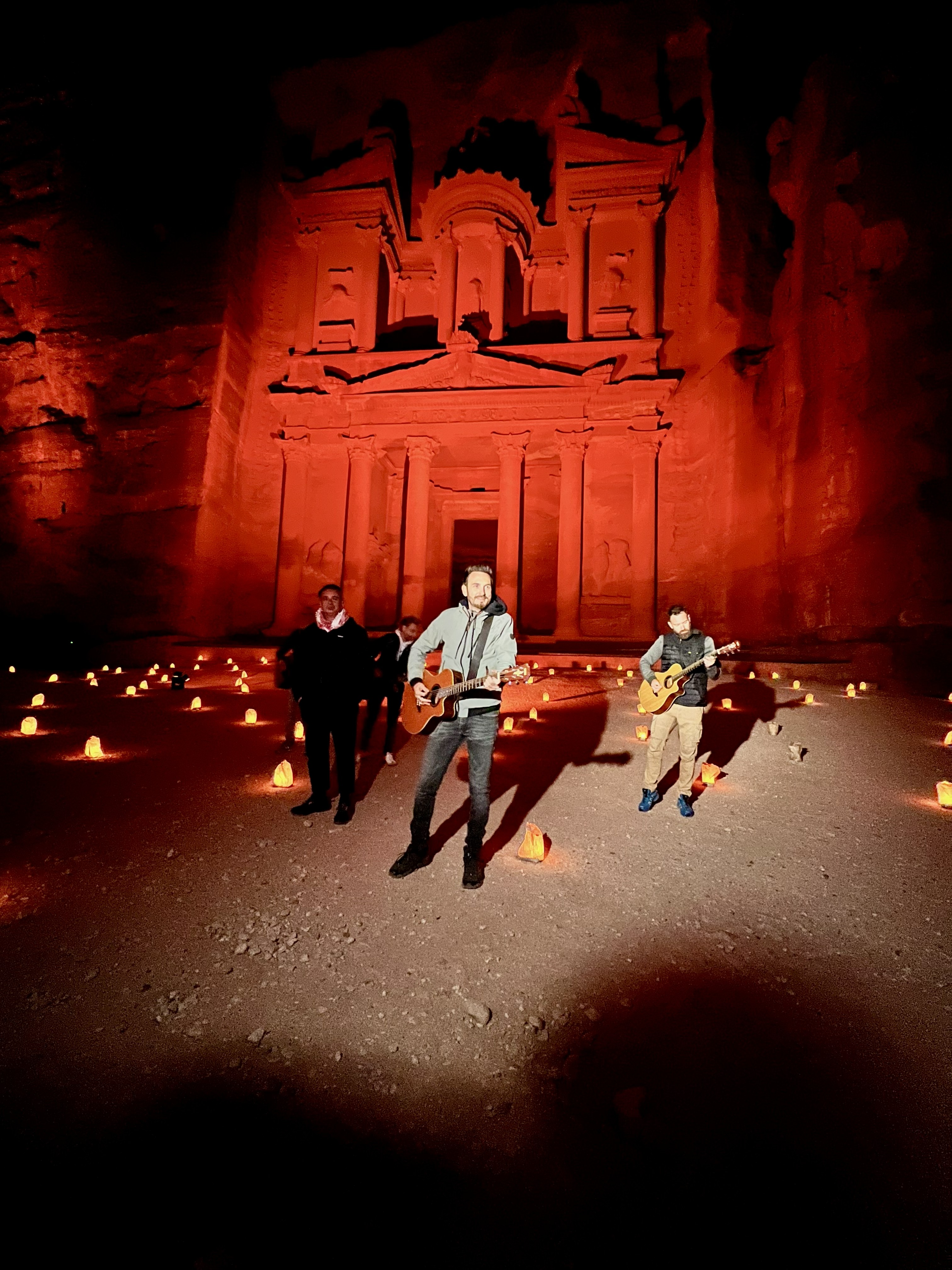
For pilgrim Anita Spada, who celebrated her birthday during the journey, the night became a gift.
“This is the most beautiful experience I have ever had,” she said, thanking God for being in “a stunning place” with “the best people I could have wished for.” Celebrating with live music by The Sun, she added, was “the greatest gift I could have received.”
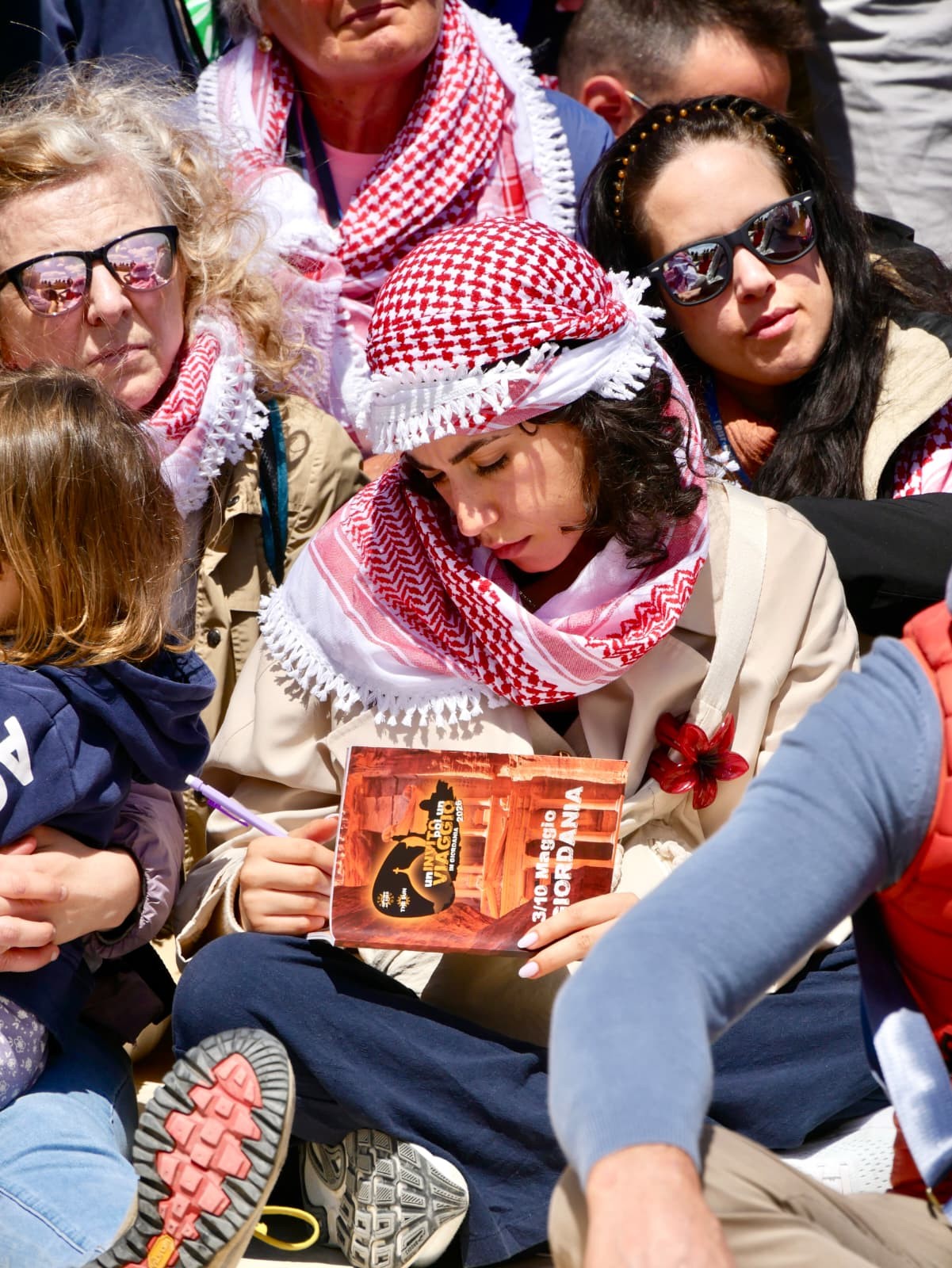
“Music is a very powerful instrument that goes beyond laws and cultures: It opens hearts,” Lorenzi told EWTN. “I have seen with my own eyes heavily armed soldiers let themselves be disarmed by a song.”
A song does not sign treaties, rebuild bombed schools or solve border disputes. But it can make a small clearing inside fear. Sometimes that clearing is the first available form of peace.
The charitable center of the pilgrimage was in Amman, where the group visited Christian refugees and projects connected to the Habibi Association, a Catholic initiative linked to Father Cornioli. The program included Mass, lunch with local families, and encounters with projects serving Iraqi and Syrian refugees.
Lorenzi described the local Church in Jordan as “a Church with its sleeves rolled up.”
“Father Mario and the reality of Habibi are the Gospel translated into facts,” he said, citing sewing workshops for refugee women, schools, cheese production, a pizzeria and restaurant projects.
Jordan has long received refugees from neighboring conflicts, including Iraq and Syria. For The Sun, this is precisely why a pilgrimage cannot remain detached from reality.
“Spiritual tourism can sometimes risk becoming a bubble,” Lorenzi said. “We burst that bubble.”
Augustinian Father Gabriele Pedicino, provincial of the Augustinians in Italy, said the initiative had a high spiritual and cultural value because participants were not simply tourists. They came as pilgrims, he said, to experience how the intertwining of holy places, music and communion “can transform your life.”
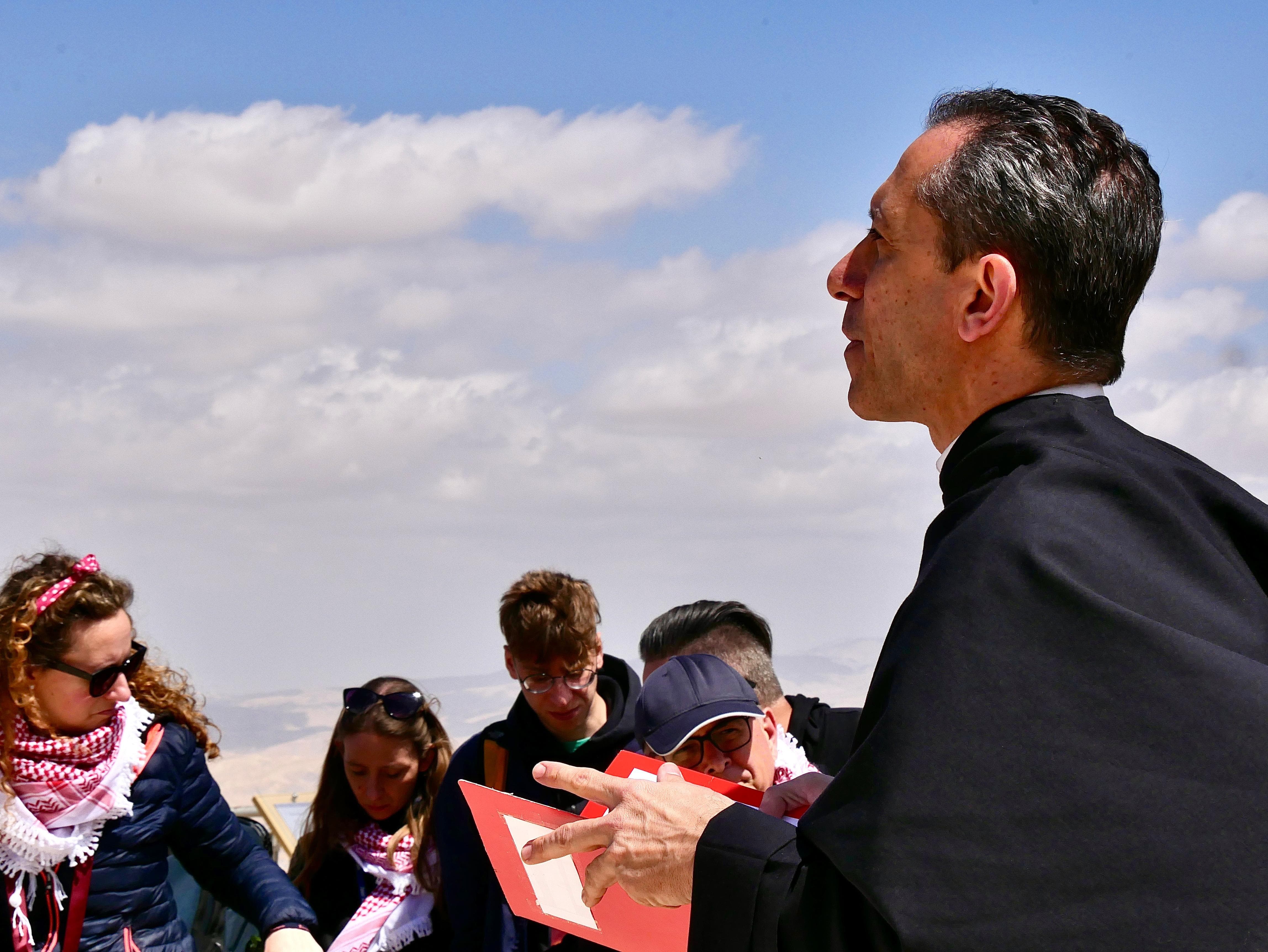
That may be the most useful description of the journey. Christian pilgrimage, at its best, does not protect pilgrims from reality. It wounds their sight so that they can see differently.
Asked what he would say to European Catholics afraid to travel to the region, Lorenzi did not dismiss fear.
“Fear is human,” he said, “but it is an instrument of spiritual death if we allow it to take over.”
Then he added a line that should not be softened: “Isolation is what kills Christian communities in the Middle East, sometimes even more than bombs.”
For Lorenzi and The Sun, the journey was part of a longer road: from punk stages to Vatican halls, from Bethlehem to Petra, from European success to the uncomfortable school of wounded Christian communities. Their mission now is not merely to sing about hope, but to carry people where hope is harder to fake.
A song does not end a war. A pilgrimage does not empty refugee camps. A candlelit concert in Petra does not redraw the future of the Middle East.
But sometimes not enough is still something.
Sometimes it is the beginning of fidelity.
- Keywords:
- catholic musicians
- pilgrimage
- holy land