Sweet Treats for a Saint: Tasty Tradition of Celebrating St. Joseph’s Day With Zeppole
What a pastry can teach us about St. Joseph, quiet devotion and the power of tradition.

“You would like a what?”
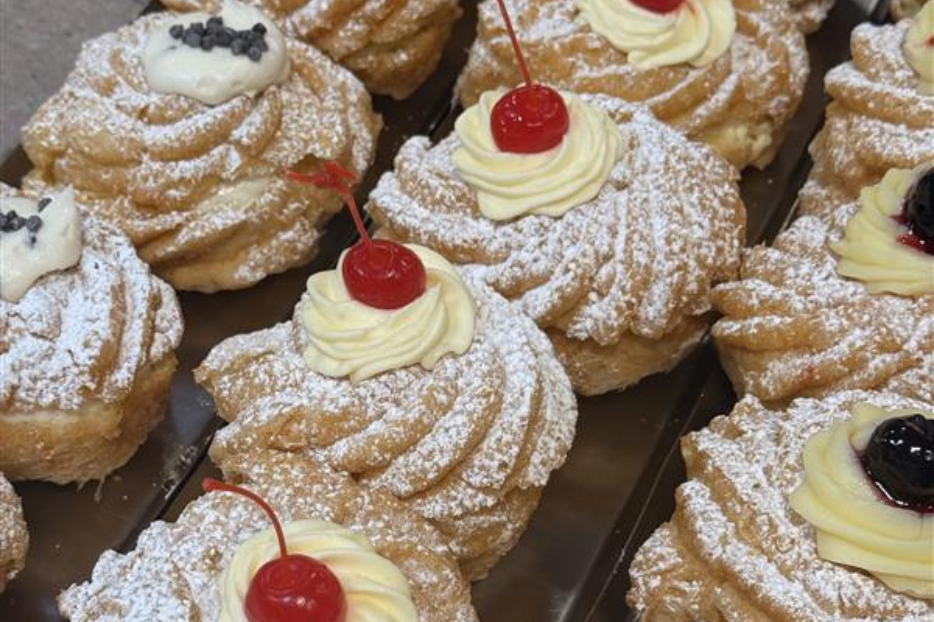
That was the response I often received when I asked for St. Joseph’s zeppole, or zeppole di San Giuseppe — light, airy dough filled with either sweetened ricotta or a rich custard (my personal favorite) and topped with powdered sugar and an Amarena cherry — in Italian bakeries throughout South Carolina.
After moving there for college, I didn’t expect the traditional pastry to be readily available but was surprised when very few people seemed to recognize it at all.
That unfamiliarity stood in stark contrast to my own upbringing. Growing up in a Catholic, Italian family in New Jersey, St. Joseph’s zeppole were a well-known staple. Many Sundays after attending Mass in Raritan, one of the state’s many Italian-American enclaves, my mom would take my brother and me to the Italian bakery down the street for the sweet treat. While that bakery carried zeppole all year-round, nothing compared to enjoying them on the Solemnity of St. Joseph.
The feast day always held particular meaning in my family, as my parents’ wedding anniversary falls on March 19. Though the date usually lands during the penitential season of Lent, St. Joseph’s Day was an exception. Each year, we celebrated both the saint and my parents’ marriage by indulging in zeppole. As my mom always reminds me, “St. Joseph became the patron of our family along with Our Lady.”
My great-aunt Emilia, my mom’s aunt, made sure that zeppole were part of every St. Joseph’s Day. Emilia’s daughter, my mom’s first cousin Jean, recalled her mother’s enthusiasm and playful rivalry with an Irish friend, Kris. Each year, the two women would compete over which holiday was more important — St. Patrick’s Day or St. Joseph’s Day.
According to Jean, St. Joseph always prevailed, with zeppole brought home and to the office for family and friends. Today, Jean continues the tradition with her own family, including a son named Joseph. “There’s something so intriguing about St. Joseph. He’s quiet and humble, yet strong,” Jean told me. “He always did the right thing as a fatherly figure.”
Through these stories, it’s easy to see how St. Joseph’s Day — and those sweet zeppole — has always been about faith and togetherness.
Years later, my attachment to St. Joseph deepened beyond childhood tradition. As a freshman in college, amid the Church’s Year of St. Joseph, I read Consecration to St. Joseph. Though I had been raised Catholic, reading about the example of this simple, faithful man inspired me to claim my faith as my own.
That devotion has made traditions bearing his name feel more meaningful. It also invites a question: How did the saint known as the Terror of Demons come to be so closely associated with one of Italy’s most beloved desserts?
Italy Loves St. Joseph?
Though St. Joseph bears no direct connection to Italy, he has long inspired deep devotion among Italians and Italian Americans alike.
One of the earliest legends linking the saint to Italian popular piety dates to the Middle Ages, when Sicily was struck by a devastating drought and famine. As crops failed and families were forced to survive on fava beans, the people turned to St. Joseph in prayer.
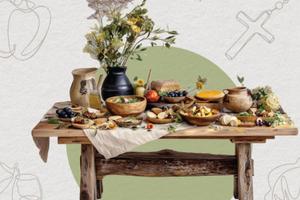
When rain finally came, relief turned to thanksgiving. Communities began marking March 19 with celebrations centered on food shared freely with neighbors and the poor. From these customs emerged the “St. Joseph Table,” or la tavola di San Giuseppe: altars adorned with bread, pastries and simple dishes offered in gratitude.
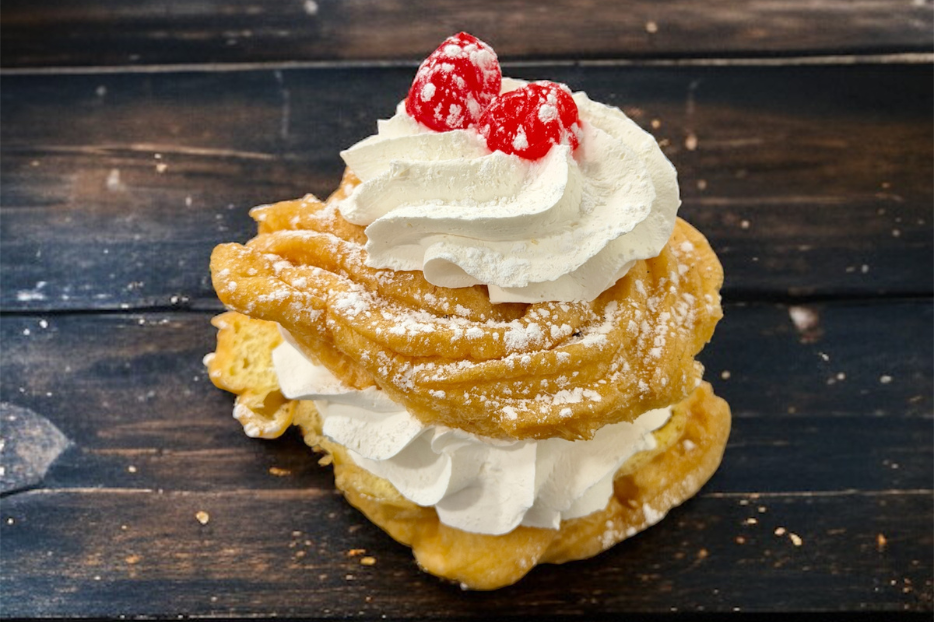
While now inseparable from the March date, the roots of zeppole lie in older culinary practices of southern Italy, particularly in Naples and Sicily, where my family’s roots trace back.
Though not formally recorded in historical sources, popular Italian tradition offers several explanations for the pastry’s connection to St. Joseph. One legend recounts that during the Flight Into Egypt, St. Joseph supported the Holy Family by selling fried dough. Another tale points to 16th-century Naples, where nuns from the Basilica of San Gregorio Armeno are believed to have first created the iconic coiled, custard-topped version.
By the 19th century, zeppole were firmly established. The first written recipe appeared in Ippolito Cavalcanti’s 1837 cookbook, Cucina teorico-pratica. Around the same time, Neapolitan baker Don Pasquale Pintauro (known for popularizing sfogliatella, my nonnie’s favorite pastry) sold zeppole from a street cart in Naples every March, cementing the pastry’s place for St. Joseph’s Day.
As March 19 is also celebrated as Father’s Day throughout Italy, zeppole are shared throughout homes and neighborhoods in honor of earthly and spiritual fatherhood.
When Italian Catholics immigrated abroad, they carried these customs with them.
Tradition Passed On
That living continuity is perhaps most visible in family-owned bakeries. In cities like New York and Boston, zeppole di San Giuseppe arrive each March as reliably as the feast itself. Customers don’t ask what they are; instead, they ask, “Are the zeppole ready yet?”
That devotion extends beyond those who can visit in person. Social-media fans frequently share their excitement, commenting, “I just can’t get enough of those delicious treats!” and “I absolutely love and definitely miss those zeppole.”
In Manhattan’s Little Italy, Ferrara Bakery has long been a destination for zeppole fans. For owner and chef Ernest Lepore, the meaning behind the pastry is inseparable from the man it honors. “Joseph stood up to the responsibility given to him from above,” Lepore told the Register. “That’s what we’re really celebrating.”
Italian food, Lepore added, reflects that same responsibility with honest, authentic ingredients. “Italian food starts with simplicity,” he said. “That’s why it’s so full of love. It hits all the taste profiles — sweet, sour, pungent, spicy.”
Lepore’s appreciation for St. Joseph’s zeppole grew over time. As a child, he remembers long lines forming outside the bakery. “We’d sell thousands,” he said. “I didn’t really understand it then.” Only later did the deeper meaning take hold. Joseph, he reflected, was a man who worked with his hands and accepted his calling without fanfare.
For Lepore, the offerings made on St. Joseph’s Day are not empty gestures. “They’re a way to grow,” he said. Even something as small as a treat can serve as a moment of joy amid hardship. And the zeppole themselves reflect that balance. “They’re light and delicate,” he said, “simple, but full of meaning and flavor that melt in your mouth.”
That same balance between tradition and family life is evident a few hours away in Boston’s North End, where Mike’s Pastry continues its own St. Joseph’s Day customs. “Some people bake zeppole, and some people fry them,” said manager Angelo Papa. “Originally, they were always fried, so that’s what we do.”
Papa described weeks of preparation as March approaches, with production increasing steadily until the special day arrives.
The work itself demands care and patience. The dough must be mixed, shaped and fried gently, then cooled, filled and finished with a cherry. “That little touch of showmanship makes it special,” Papa said. Ingredients, too, are chosen deliberately; even the Amarena cherries are imported from Italy.
Regional memory still plays a role. In parts of southern Italy, ricotta-filled zeppole are more common than the custard ones. Papa laughed as he explained the friendly disagreements that often arise. “Someone will ask for a ‘traditional’ zeppole,” he said, “and then someone else will say, ‘Where’s the ricotta?’ That’s why we make both.”
For Papa, however, the heart of the tradition is family. “Who buys zeppole?” he asked. “My generation, my children, my grandchildren. It’s all in the family.” Instead of just buying one or two, Papa noted, customers typically buy boxes to bring to relatives. “That’s what keeps the tradition alive,” he said.
‘Faithfully in the Ordinary’
Marian Father Donald Calloway, author of Consecration to St. Joseph, explained that many of the saint’s traditions grew as cultural ways of including him in family life.
“Because we don’t have his words recorded in the Gospels, people instinctively knew he was important, but they didn’t necessarily know how to incorporate him into their spiritual lives,” Father Calloway said. “These customs — like the zeppole — help people honor him in tangible ways.”
Joseph’s hiddenness and refusal of public praise are precisely what make him compelling. “Most of us won’t be famous or get recognition,” Father Calloway noted. “St. Joseph never received honors or praise; he lived faithfully and protected his family, even under mortal threats to Jesus and Mary. That quiet fidelity is what our world needs today.”
He emphasized that St. Joseph’s example also provides guidance for daily life.
“Even small gestures like family meals, customs and prayers can become ways to live faithfully in the ordinary, just like Joseph did,” he added.
It is no surprise, then, that one of the saint’s most enduring tributes is a simple pastry. This Solemnity of St. Joseph, know that when you lift the zeppole to your lips, you’re not just enjoying a treat — you’re participating in a centuries-old tradition, honoring a saint marked by hidden heroism.
And maybe, just maybe, you’ll understand why this Italian American from New Jersey will always reach for the custard-filled zeppole over the ricotta one.
Buona Festa di San Giuseppe!