Valencia’s Jubilee of the Holy Chalice Invites Pilgrims to Eucharistic Mystery
From now through October 2026, the Spanish city will welcome pilgrims from around the world, offering a renewed light on the treasured relic kept there since the 15th century.
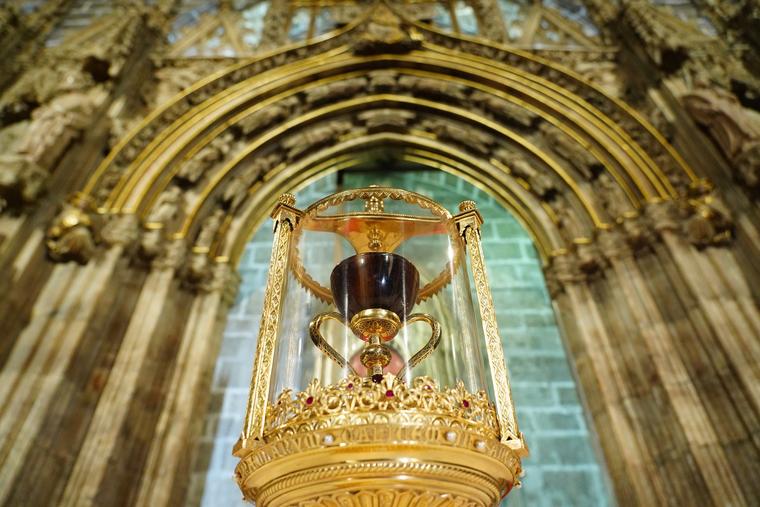
Valencia, SPAIN — One of Christendom’s most cherished relics will be at the heart of Valencia’s religious life this coming year. Its archdiocese has just launched its third Jubilee Year dedicated to the Holy Chalice — a relic revered as the vessel used during the Last Supper.
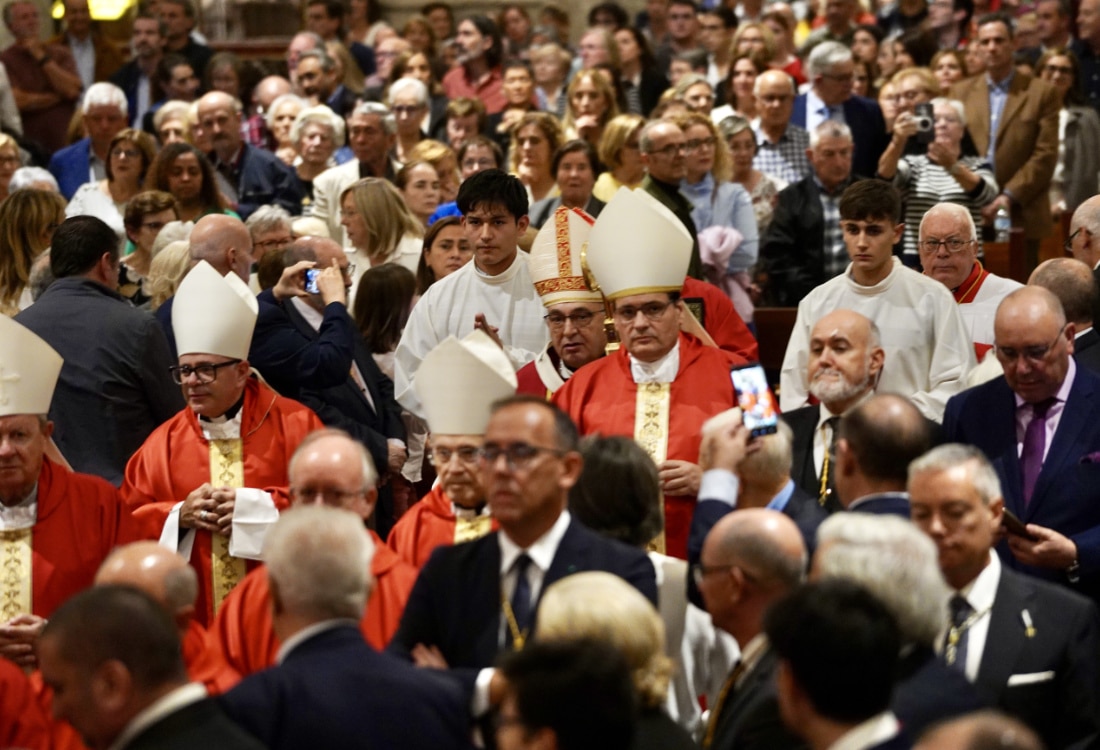
The jubilee’s opening ceremony, Oct. 30, was presided over by Valencian Archbishop Enrique Benavent in a packed cathedral where the relic was on display. This special year, placed under the motto “Chalice of Hope,” aims to offer pilgrims a renewed encounter with the sacrament of the Eucharist within the broader context of the Jubilee of Hope taking place in Rome until Jan. 6.
In the coming months, an ambitious cultural, pastoral, and devotional program centered around the Chalice will mark the life of the archdiocese. Celebrated every five years in honor of the relic, which is preserved in Valencia’s St. Mary’s Cathedral, this year’s Eucharistic jubilee was granted by Pope Francis in 2015.
In his homily, the Archbishop of Valencia invited the faithful “to allow their outward pilgrimage to the cathedral to reflect an inner return to the Cenacle — the room of the Last Supper — where the Church first received the Eucharist.”
A Year Rooted in the Eucharist
For Father Álvaro Almenar Picallo, canon of the cathedral and guardian of the Holy Chalice, this sacramental dimension is essential. “It is very important to underline that this jubilee year has been granted to us as a Eucharistic year, because the relic of the Holy Chalice cannot be separated from the institution of the sacrament of the Eucharist,” he told the Register. For that reason, he noted, Archbishop Benavent “has wanted us to stress in preaching and catechesis the importance of Sunday Mass.” A true devotion to the Holy Chalice, he added, “must lead to a true Eucharistic adoration, seeing this sacrament as a food that strengthens us.”
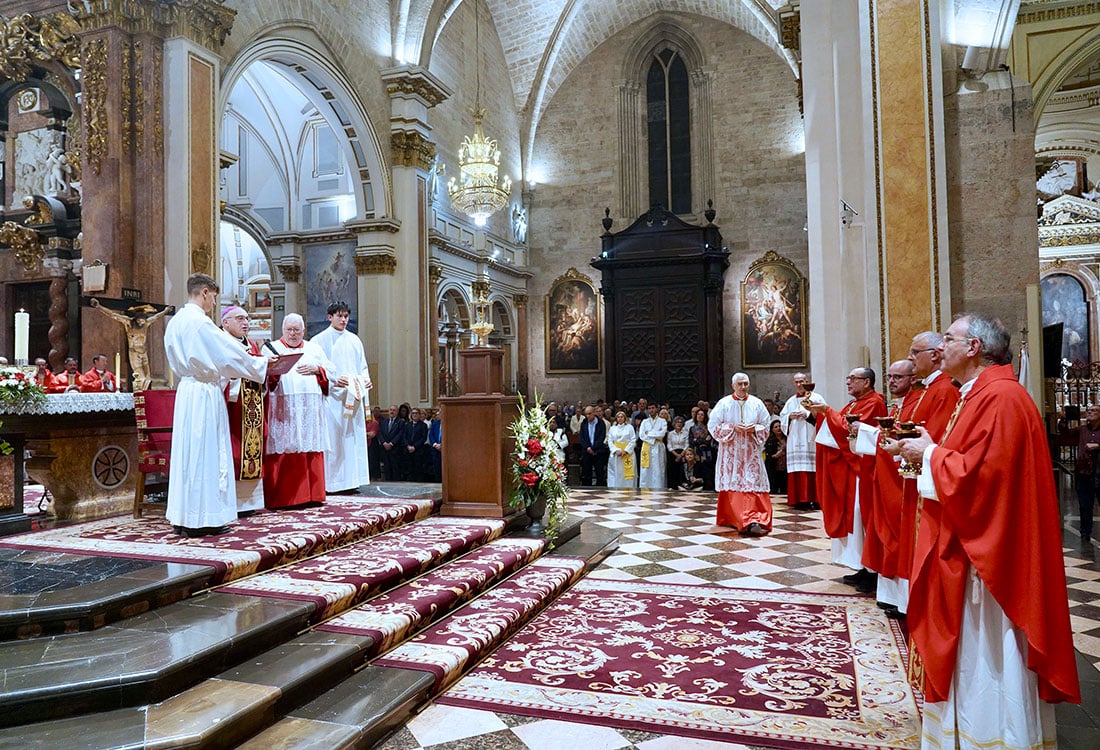
The archbishop’s call for an “interior pilgrimage” is one of the themes the guardian considers most important. Such a pilgrimage, he said, first invites the faithful “not to grow accustomed to jubilee years” but to receive them as special occasions of grace. It also calls, in his view, for “the grace of an authentic and coherent Christian life,” in which liturgy and daily life reflect one another faithfully. Ultimately, he is hoping that this year will foster “a true Eucharistic piety that helps us recognize the Lord in the breaking of the bread and share what we celebrate with hope, especially with those abandoned.”
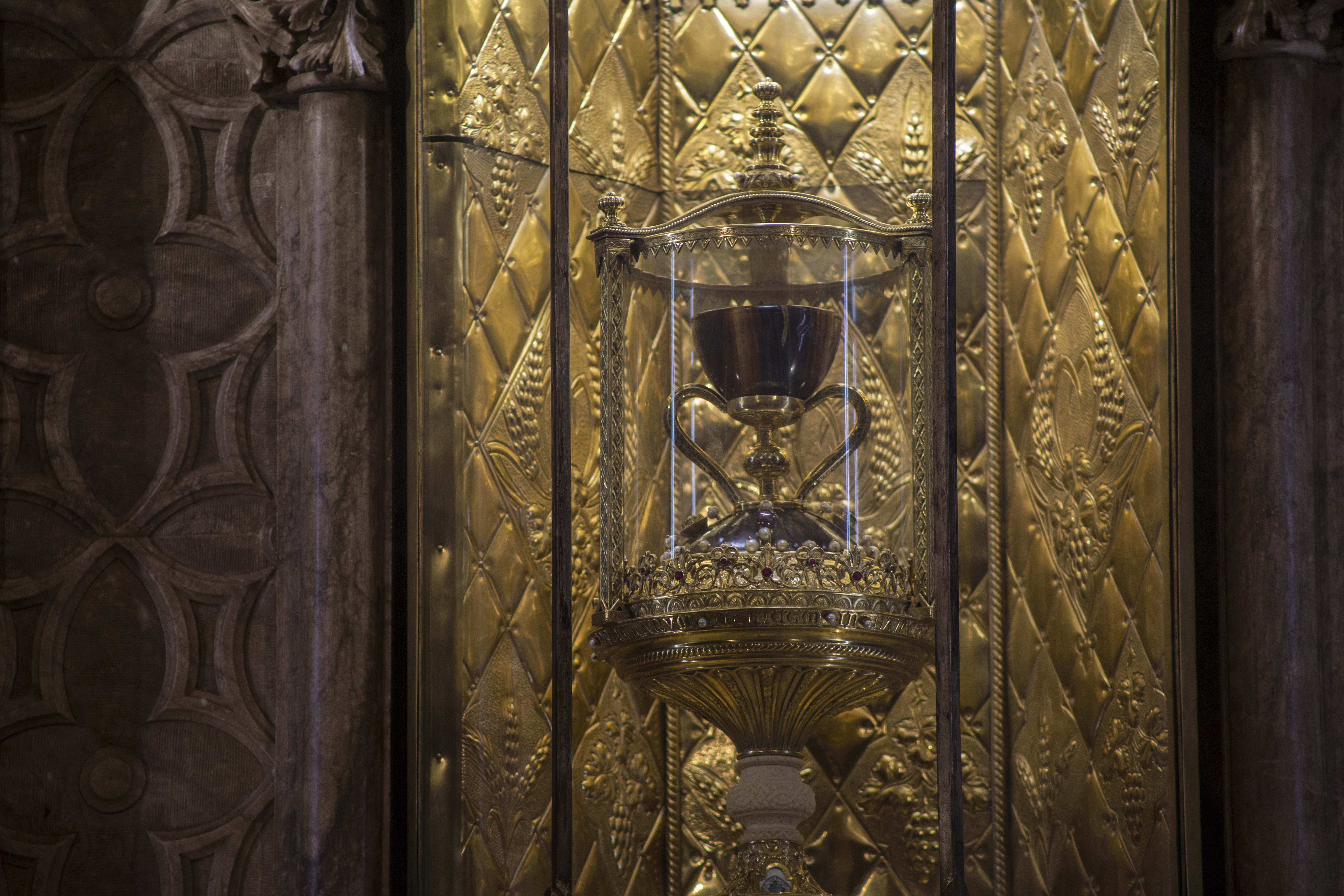
Alongside this pastoral emphasis, Valencia is presenting the jubilee through a broader cultural lens. The “Holy Chalice Urban Route” — linking monasteries, palaces, churches, and historic institutions connected to the relic — has been renewed for the occasion. The Almudín, a medieval granary in the city center, now serves as a reception point for pilgrims and hosts an exhibit dedicated to the Chalice’s historical and artistic significance. The relic itself is a relatively small and delicate piece: a smooth, finely crafted dark red agate cup measuring just about 3,5 inches in height and set on a medieval gold base adorned with pearls, rubies, and emeralds. As the cup is kept behind protective glass in a dedicated chapel in the cathedral, visitors are usually unable to get close to it. A recent high resolution 3-D digitalization of the relic will soon make it possible for visitors around the world to examine the cup with unprecedented precision.
History, Legends and Devotion
As the jubilee unfolds, the question of the Chalice’s authenticity is reemerging. Mentioned in Arthurian tradition as the mysterious Grail sought by the Knights of the Round Table, the relic has always been the subject of all kinds of theories and legends. Although the Vatican has not formally recognized the Chalice’s authenticity, it nonetheless has been venerated as an important relic through the ages.
Bearing in mind its history, Father Picallo was careful to put the Church’s stance about the relic into its proper context. “This concession does not certify that the chalice of Valencia is the authentic and original one used by Jesus Christ in the Upper Room with his apostles,” he said, “but it does give great seriousness and authenticity to the whole traditional and historical account that supports and affirms that the chalice of Valencia is the same ‘cup of blessing’ that would have been on the table of the Last Supper and in the ‘holy and venerable hands’ of Jesus.”
According to tradition, the relic now venerated as the Valencian Chalice was taken from Jerusalem to Rome by St. Peter and used by the early popes. Amid the Christian persecutions under the Roman emperor Valerian, Pope Sixtus II entrusted it to his deacon St. Lawrence, who sent it to his native region near Huesca. During the Muslim invasion, it was sheltered in various monasteries in the Pyrenees — including San Juan de la Peña, where an 11th-century document mentions a precious stone chalice — before entering the treasury of the kings of Aragon. In 1437, King Alfonso V entrusted it to the Cathedral of Valencia, where it has been venerated ever since. The chalice survived two exiles: first during the Napoleonic invasion, when it was taken to Mallorca for safekeeping, and later during the Spanish Civil War, when it was hidden in the town of Carlet.
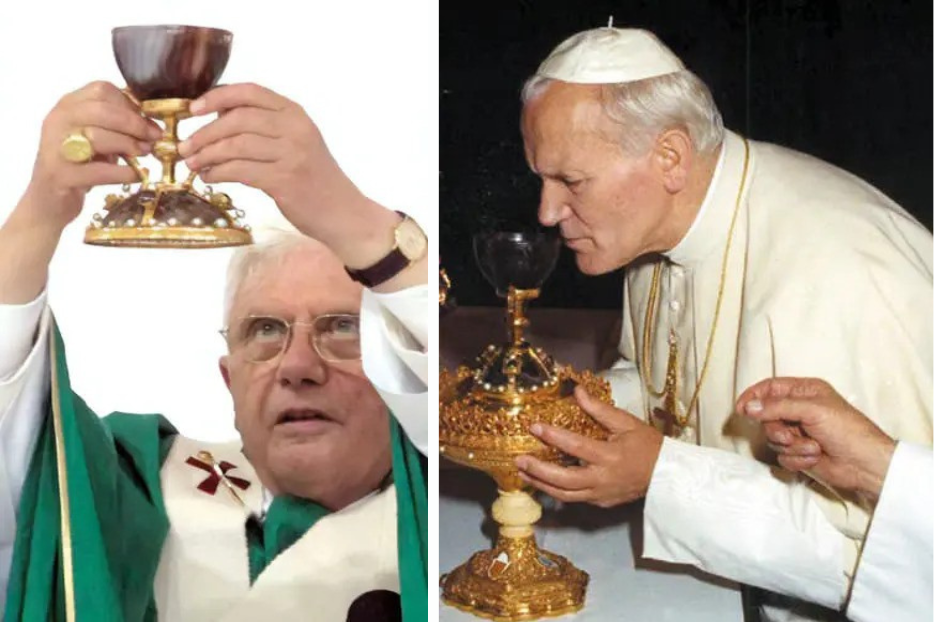
In recent decades, this relic gained renewed prominence when St. John Paul II celebrated Mass with it during his visit to Valencia in 1982, followed by Benedict XVI in 2006 during the World Meeting of Families.
Pilgrims who visit the cathedral during this Holy Year — together with receiving the sacraments of confession and Communion and praying for the intentions of the Pope — may obtain a plenary indulgence.
Symbol of Self-Giving
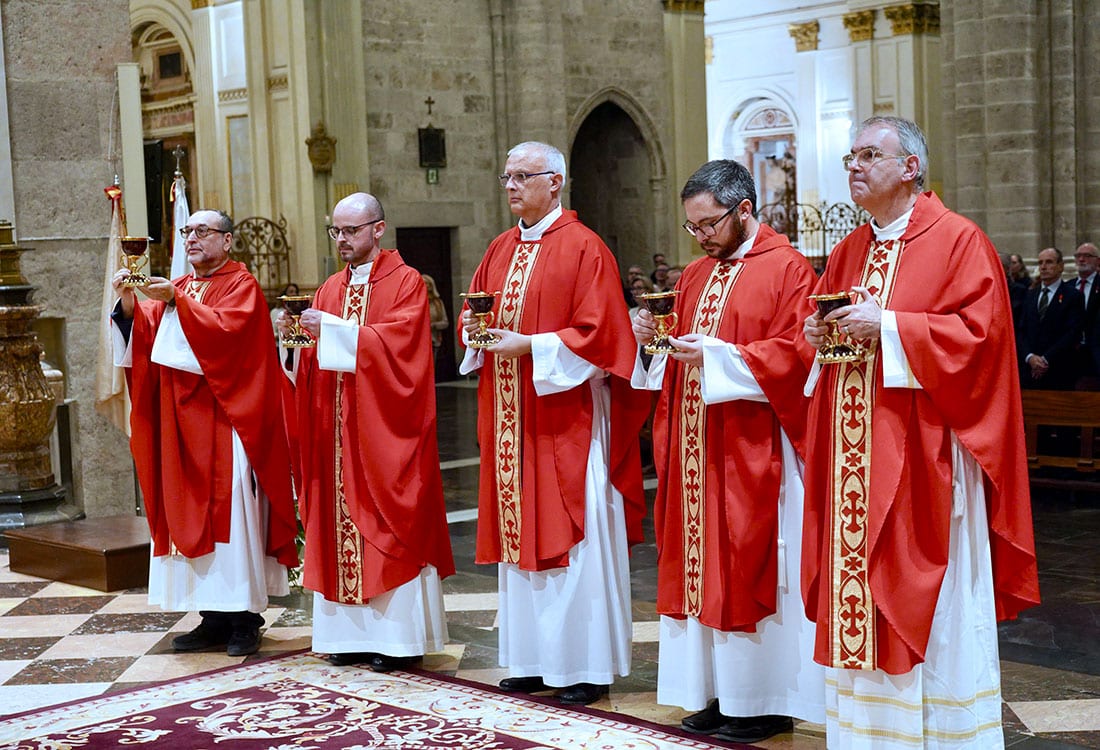
The opening Mass of the jubilee offered a concrete expression of the themes the archdiocese hopes to highlight throughout the year. Spanish parishes that were particularly affected by last year’s devastating floods received replicas of the Chalice, underscoring the link between Eucharistic devotion and the call to solidarity and pastoral closeness.
The jubilee is designed to guide pilgrims through a three-step journey, beginning with the liturgical life of the archdiocese, continuing through the long history and tradition surrounding the Chalice, and leading them ultimately to the Eucharistic mystery at its core. The purpose of the organizers is not to resolve every historical detail, but to help the faithful move more deeply into the reality to which the relic ultimately leads.
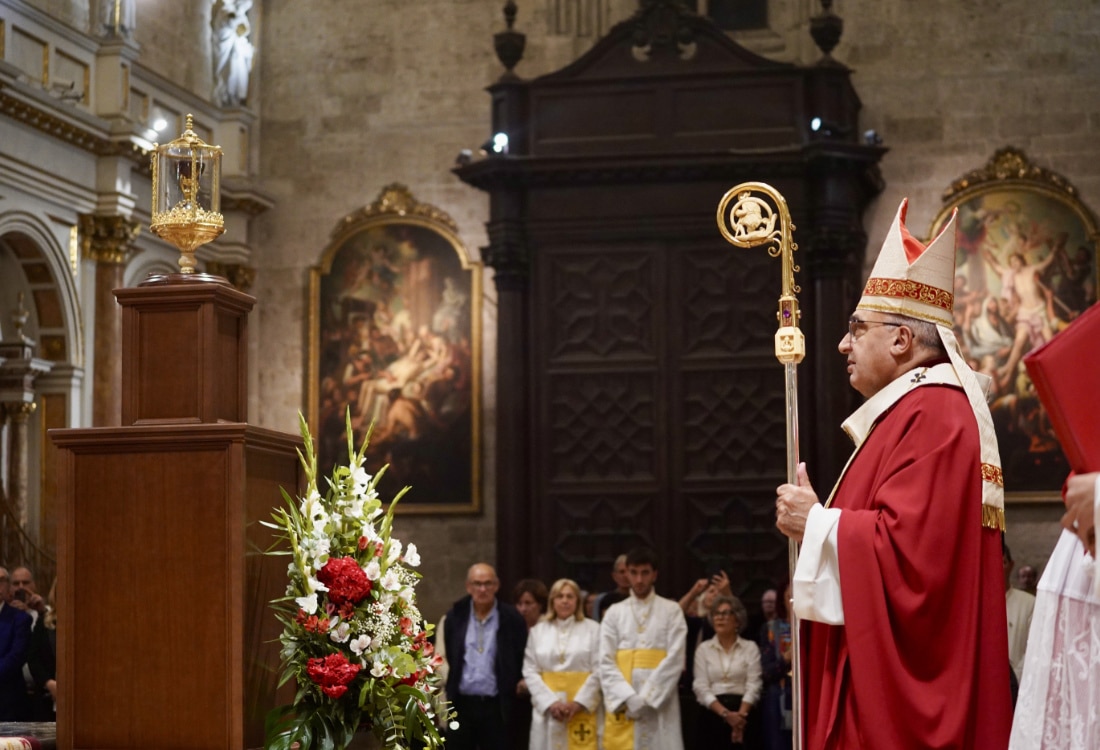
As guardian of the chalice, Father Picallo described this role as a long-term mission. “Every five years we have the commitment to strengthen devotion to the Holy Chalice, which must lead us to a true worship of the Eucharist, which is the symbol of self-giving,” he said. “Many people do not know that we have it here in Valencia, and so it is also a duty and a commitment for Valencian society and the public authorities to promote this reference to the Holy Chalice, not only for Valencia but for all humanity.”
- Keywords:
- chalice
- eucharist
- archdiocese of valencia