Pilgrimage of Fathers to Cotignac Brings Men to Beloved St. Joseph Apparition Site
Each year, this gathering in French Provence offers some 2,000 souls a unique journey of spiritual renewal and brotherhood at a place of profound significance.

The Pilgrimage of Fathers to Cotignac, held annually in the Provence region, southeastern France, is one of the most significant spiritual gatherings for French Catholic men every year.
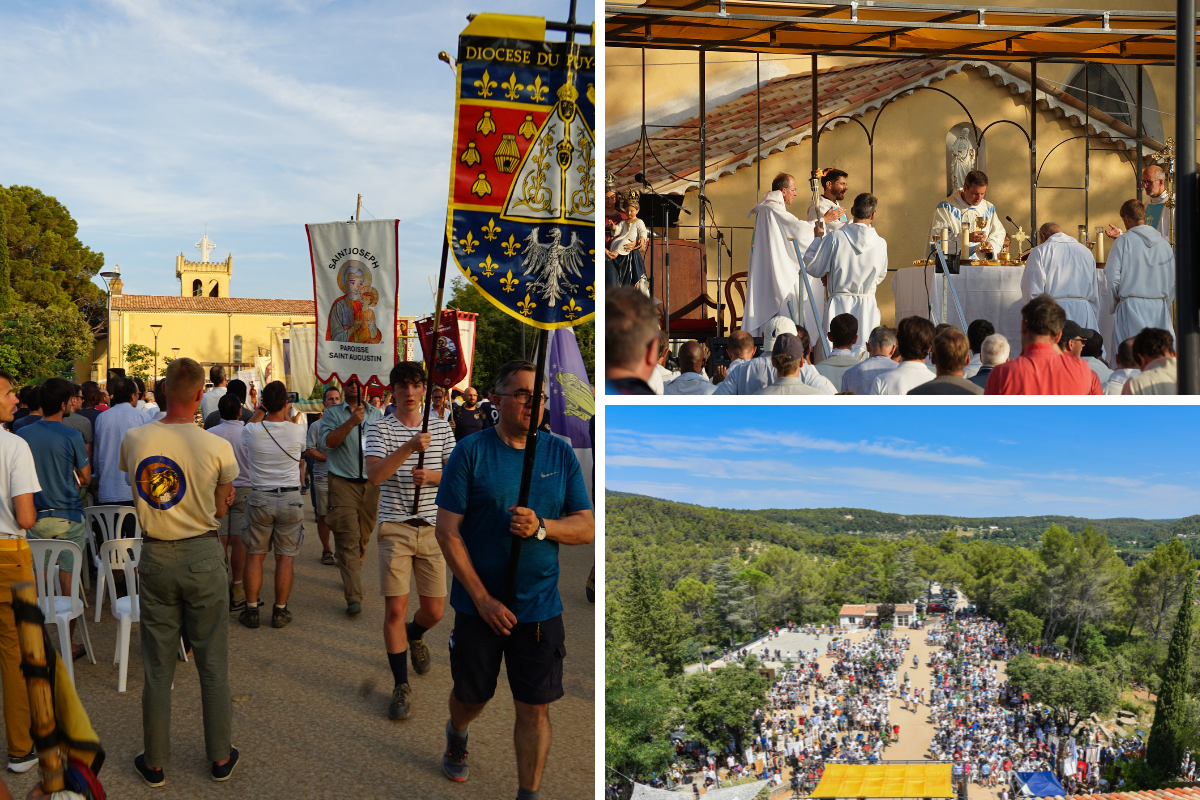
From July 4-6, some 2,000 men, fathers, husbands and aspiring fathers, converged on the picturesque Provence roads for the pilgrimage, which will mark its 50th year in 2026. This event, which has already been replicated in several other countries, including the United States, offers men the chance to pause, reflect and recommit to their vocations while forging solidarity with others on a shared spiritual journey.
A Deep-Rooted Tradition
What began as a personal act of thanksgiving in 1976 has blossomed into one of France’s most powerful and enduring pilgrimages.
Jean-Louis Bouzereau, deeply worried by his wife’s high-risk pregnancy, promised the Virgin Mary that if she gave birth to a healthy child, he would walk from Aix-en-Provence to Cotignac (around 75 miles) in gratitude. After the birth of their daughter Emmanuelle in 1977, Bouzereau fulfilled his vow, starting a tradition that continues to inspire the lives of thousands.
The pilgrimage’s roots are intrinsically connected to France’s history, especially because of the apparitions of the Virgin Mary and St. Joseph in that place. One of the most famous miracles associated with Cotignac is the birth of King Louis XIV.
In 1637, after 22 years of childlessness, Louis XIII and Anne of Austria were granted the birth of their son, the future Sun King, purportedly following the Virgin Mary’s intercession. She appeared to an Augustinian friar and directed him to the chapel at Notre-Dame-de-Grâce, where a novena was to be prayed for this cause. Nine months later, Louis XIV was born. Grateful for this divine intervention, Louis XIII vowed to consecrate France to the Virgin Mary.
In 1660, Louis XIV himself visited Cotignac to give thanks to the Virgin Mary for the gift of his life. A few months later, on June 7, St. Joseph reportedly appeared in his famous apparition to a parched shepherd, guiding him to a spring, offering a symbol of divine Providence and protection. This event continues to inspire fathers who seek St. Joseph’s intercession in their roles as protectors and providers for their families.
“We can feel like we are all part of a centuries-old tradition of fathers seeking the grace of fatherhood from St. Joseph and Notre-Dame-de-Grâce,” Pierre Brottier told the Register.
‘Faith Enters Through Feet’
Set against the iconic sunbaked hills of Provence, the pilgrimage spans three days, blending physical exertion with moments of deep spiritual reflection. The walk itself becomes a metaphor for life’s journey — challenging at times, yet ultimately transformative.
“One of our priests always says that faith enters through feet,” Tanguy Lévesque, a chapter leader, told the Register. We wake up our men at 4 a.m. to create the conditions for them to let go of their comfort zone, so that the Lord can work and mark out a highway for his grace.”
This year, temperatures soared to 95 degrees, making the physical journey even more grueling. But for Lévesque, this challenge is precisely what allows pilgrims to connect deeply with their faith: “The heat, the exhaustion, the physical effort of walking through the hills — it all helps to break down the walls we build around ourselves throughout the year.”
Participants are grouped into chapters, led by some 90 priests, where they are given a space to meditate on their personal vocation and share their personal stories, struggles and moments of grace. Lévesque was particularly edified by the diversity among participants: “This year, I had an undocumented immigrant, CEOs, lawyers, notaries, workers — everyone walked together without labels. What unites us is the recognition that we are all ‘poor guys,’ as Pierre Goursat, the founder of Emmanuel [a Vatican-approved public association of the faithful], put it. We are all wounded men who need to lean on each other to move forward.”
The pilgrimage includes a vigil of adoration at the sanctuary of Notre-Dame-de-Grâce and culminates with a solemn Mass before the men’s reunion with their families.
Transformative Experience
For the organizers, the powerful act of confession is a key element of the gathering, enabling men to return home with a fresh sense of purpose and renewed strength.
“The walking confessions are magnificent,” Lévesque said. “The priests hear confessions from 5 a.m. until 6 p.m. non-stop. Many pilgrims who hadn’t confessed for years go straight to the heart of the matter. They remove their masks and experience true spiritual healing. It’s a transformative experience.”
Countless men have been reporting miraculous changes after the pilgrimage: meeting their future spouses or having children after years of infertility. This literal fecundity mirrors the broader spiritual fecundity of the pilgrimage itself, as it has spread across France and internationally. From Vézelay to Mont-Saint-Michel, Rocamadour, to Egypt, the U.S. and Asia, the pilgrimage continues to multiply, offering spiritual renewal to the generations to come.
“These pilgrimages have grown from Cotignac, and we now work together as part of a larger network of inter-pilgrimages,” Brottier said with joy.
The 50th edition in 2026 is set to give thanks for this incredible fruitfulness. Whether through the thousands of births and marriages attributed to the prayers at Cotignac, or the new pilgrimages and faith initiatives that have emerged, the organizers plan to immortalize all these gifts of Providence by compiling them into a collection of fioretti (short stories or anecdotes, often miraculous, about the life of a saint or a sacred place), destined for posterity.
For Lévesque, the pilgrimage’s significance lies in its ability to create lasting change.
“In the chapters, a deep fraternity is formed. We create bonds that extend far beyond the pilgrimage itself. Even after the event, we stay connected via a WhatsApp group where we share prayer intentions and support each other throughout the year,” he concluded.
For him, in a society bereft of solidarity and transcendence, knowing that after such an intense experience, dozens of brothers remain permanently committed to praying for one another is enough to give participants the spiritual fuel to see them through the year ahead.
As Brottier said, “My goal is for every pilgrim to leave this journey renewed in the Lord, to lift up their families and our country through this spiritual journey.”
- Keywords:
- pilgrimages
- catholic men
- fatherhood
- st. joseph
- france