Pilgrimages Are Also Made for Walking
‘A powerful component of pilgrimage can be traveling with others.’
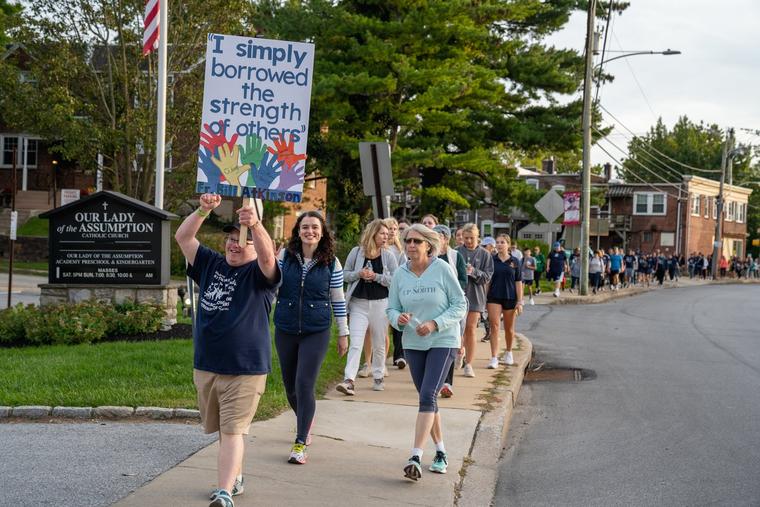
When Taylor Kelly learned there was going to be a first-ever Way of St. Joseph pilgrimage planned in South Bend, Indiana, a 5-mile walk from her parish of St. Joseph Church in South Bend along the St. Joseph River to St. Joseph Church in Mishawaka, she immediately joined.
“It was really special to participate in a pilgrimage that was connected to where I live and work and spend so much of my time,” Kelly explained of the meaningful walk five years ago, adding that she really appreciates making pilgrimages domestically and “wanting to make it something that is accessible and just relatable to my everyday life.”
Kelly, who was one of the hundreds of faithful to attend that first pilgrimage walk, says the spiritual impact remains. Now, when she is at her home parish or visiting St. Joseph's Mishawaka or just out and about along the St. Joseph River, she “can connect that to that moment of prayer and pilgrimage, think back to the intentions I was carrying with me on those days and prayers that have been answered and ones that I’m carrying with me now, and ways that I can just incorporate pilgrimage into my daily life.”
Will Peterson presented the idea for this local walking pilgrimage to the Diocese of Fort Wayne-South Bend three days before Pope Francis announced the Year of St. Joseph, which was celebrated Dec. 8, 2020-Dec. 8, 2021. “There was a Holy Spirit moment then,” Peterson said. “Our partners at the diocese and at the parishes said, ‘Yes, we have to do this in honor of St. Joseph.’” That 2021 walk marked the beginning of his walking-pilgrimage apostolate, Modern Catholic Pilgrim, that Peterson went on to found.
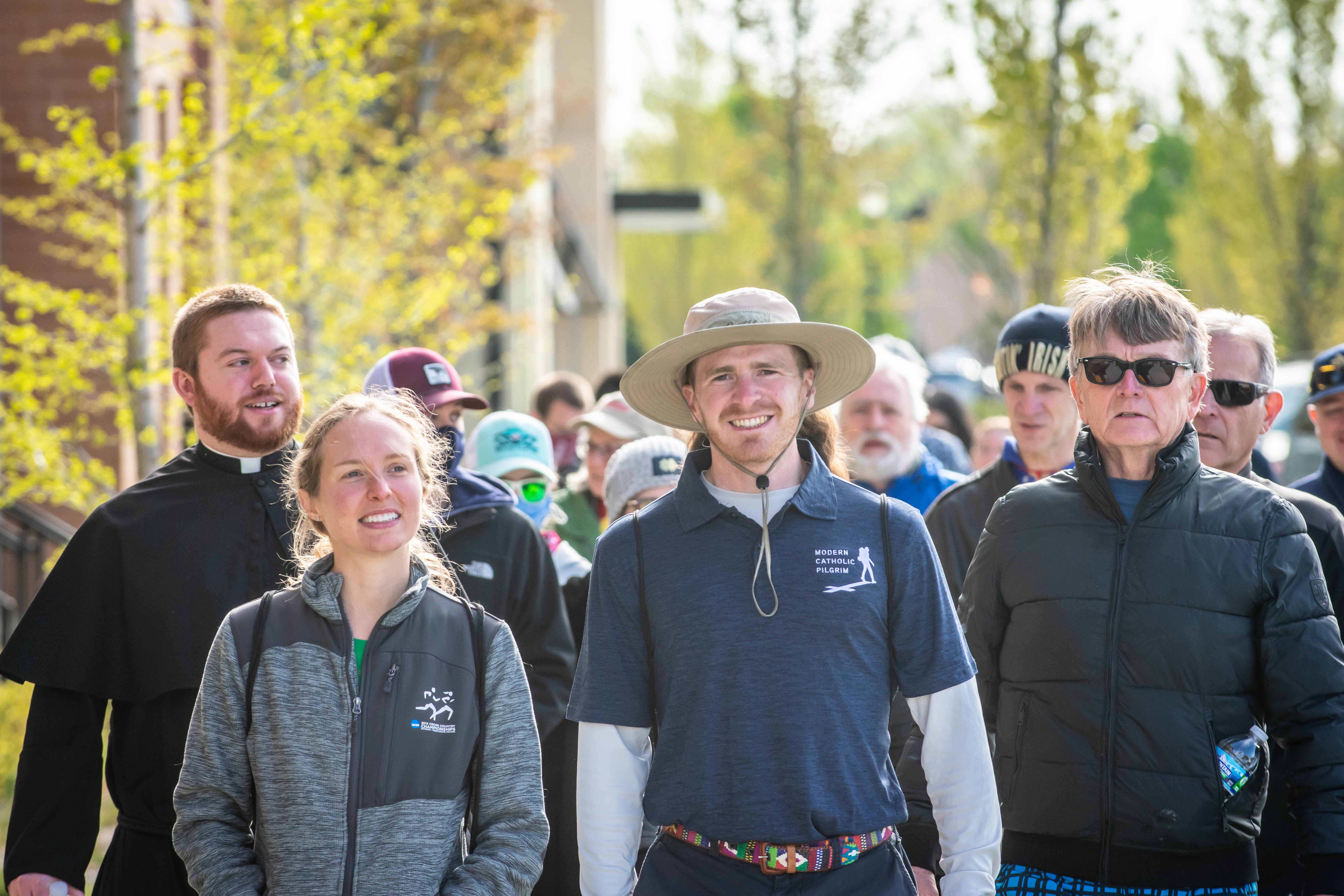
“Being the Year of St. Joseph, people enjoyed being together,” Peterson said, adding, this one walking event “provided a great example of the power of a pilgrimage that’s local, responsive to our Church traditions, and also accessible.”
The idea originated with his experience of the Holy Spirit on Easter Sunday in 2013 when he was on pilgrimage in Rome with the University of Notre Dame. “That stuck with me — the power of pilgrimage,” he said.
Walking pilgrimages are an ancient tradition in the Church. Early Christians journeyed to sites related to Jesus and saints. Such walks grew in popularity during the Middle Ages, particularly to Jerusalem, Rome and Spain, along the Camino de Santiago.
While few people can do a walking pilgrimage such as the Camino because it requires international travel and its longest route stretches nearly 500 miles, most people can make a local walking pilgrimage, even the shortest in length. The solution prompted Peterson to ask himself, “Why aren’t we doing walking pilgrimages here in the United States?”
Proving how accessible a pilgrimage can be became a main factor when Peterson began launching other walking pilgrimages. He underscores the need to “provide different opportunities for people to join along the way. Then when you get to your holy site, to have this large group coming together in prayer and song and praise.”
Reflecting on a walking pilgrimage, Joan Watson, author of Making a Pilgrimage: A Companion for Catholics (or at Emmaus Road Publishing), points out that one important part of pilgrimage is to set an intention. “We can make pilgrimages for a variety of reasons, but many times we go on pilgrimage in either supplication for a specific intention or in gratitude for prayers answered.”
We can take such pilgrimages alone, “but a powerful component of pilgrimage can be traveling with others. Again, this does not have to be complicated.”
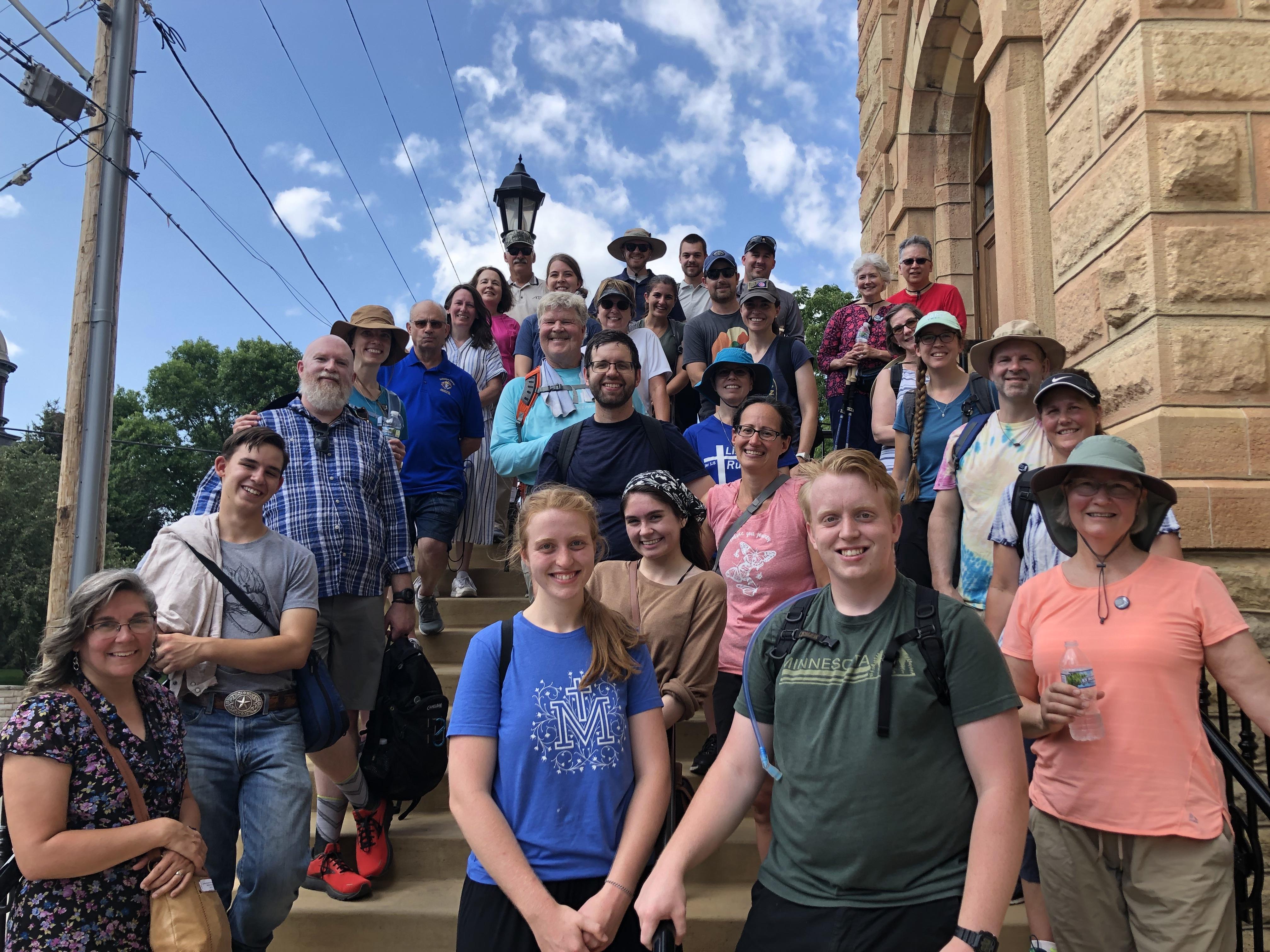
Watson describes how a friend organized her youth group to walk the last few miles on a pilgrimage to their local cathedral. She prepared them to realize this was more than a fun hike through downtown. “They set intentions, gathered intentions from their friends and family,” and in the morning, everyone walked “a mile or two, praying a decade of the Rosary, singing songs, and journeying together. They arrived in time to pray and receive the sacrament of confession before Mass.” Afterwards, they shared their experience with each other.
Many Sizes and Kinds
Peterson’s apostolate, Modern Catholic Pilgrim, expanded to include other day pilgrimages and walks, plus some overnight and longer ones, all with “an intentional destination with some significance as a place of prayer to God or the saints,” according to the website.
It launched the first, now annual, Young Adult Lenten Pilgrimage Walk in the Diocese of San Diego. This year’s approximate four-hour walk went along the Pacific Coast from Sacred Heart Church in Ocean Beach to All Hallows Church in La Jolla, with young families joining around the halfway point.
The National Shrine of Our Lady of Champion in Champion, Wisconsin, has established its own annual 22-mile “Walk to Mary” in early May. It now draws not only locals but people from around the country. People of all ages, including many families with youngsters, join in this annual pilgrimage for the day that begins at the National Shrine of St. Joseph in De Pere, Wisconsin, and continues to the shrine, which commemorates the only approved Marian apparition in the United States.
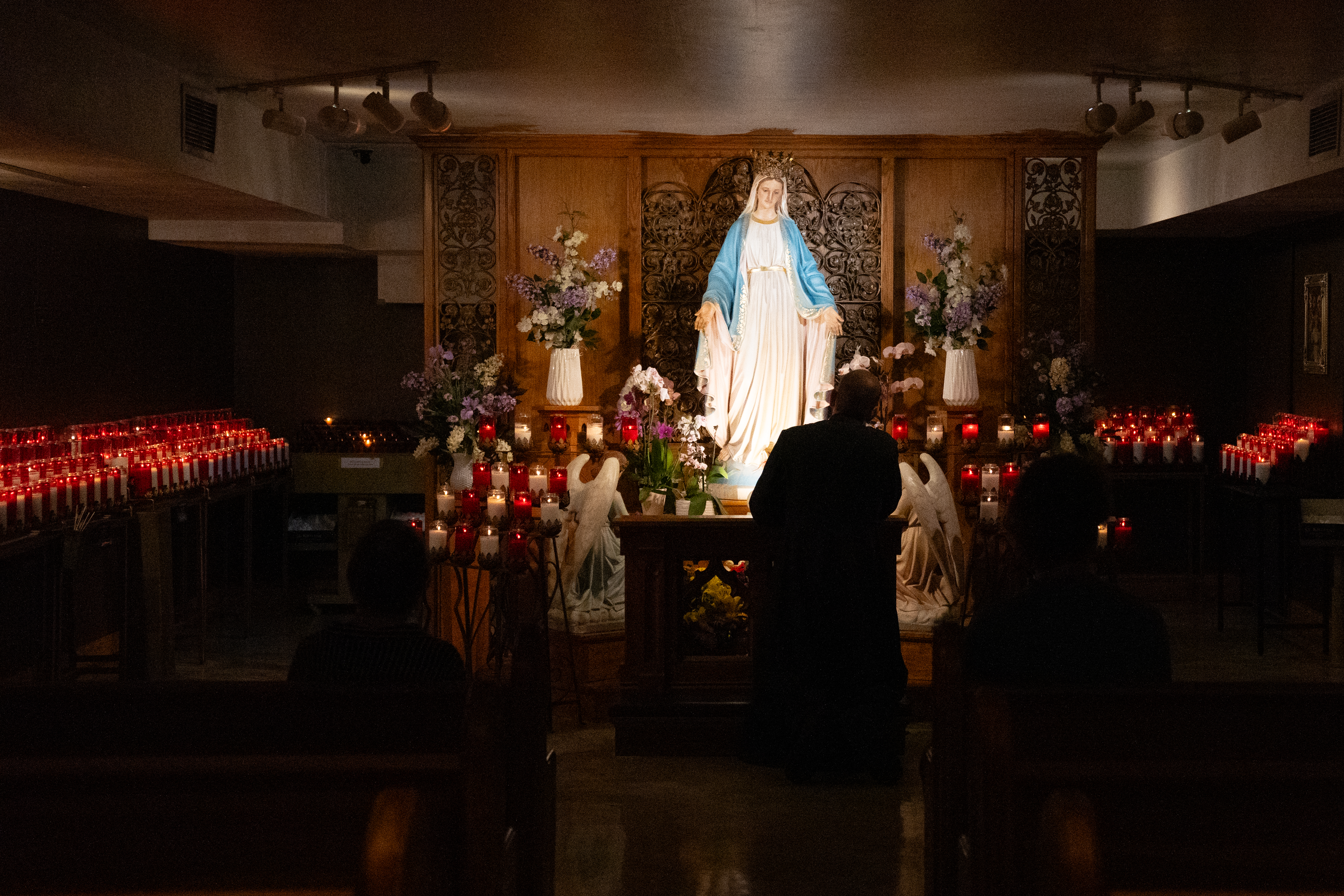
The companion 1.7-mile route around the shrine grounds becomes a shorter pilgrimage route specifically for families with young children and for those who are challenged to walk longer distances (such as elderly pilgrims and those with disabilities). It merges into the last half-mile of the longer “Walk to Mary.”
Kym and Preston Allex and their eight children, who range in age from 4 to 18 years old, have been pilgrims. They have participated in both routes, and for the first time this year they walked the full 22-mile pilgrimage on May 2.
“It means so much to know and see the blessings that Mary and Jesus give to my family,” Kym said, speaking of the pilgrimage. “We are blessed to know a spiritual Mother in heaven who is a role model of pure generosity, unwavering love and commitment to family.” Mary has answered their prayers again and again.
Kym added that on family vacations the family also makes pilgrimages to local churches, shrines or other holy sites, showing their children tangible ways that faith can be moving in everyday life.
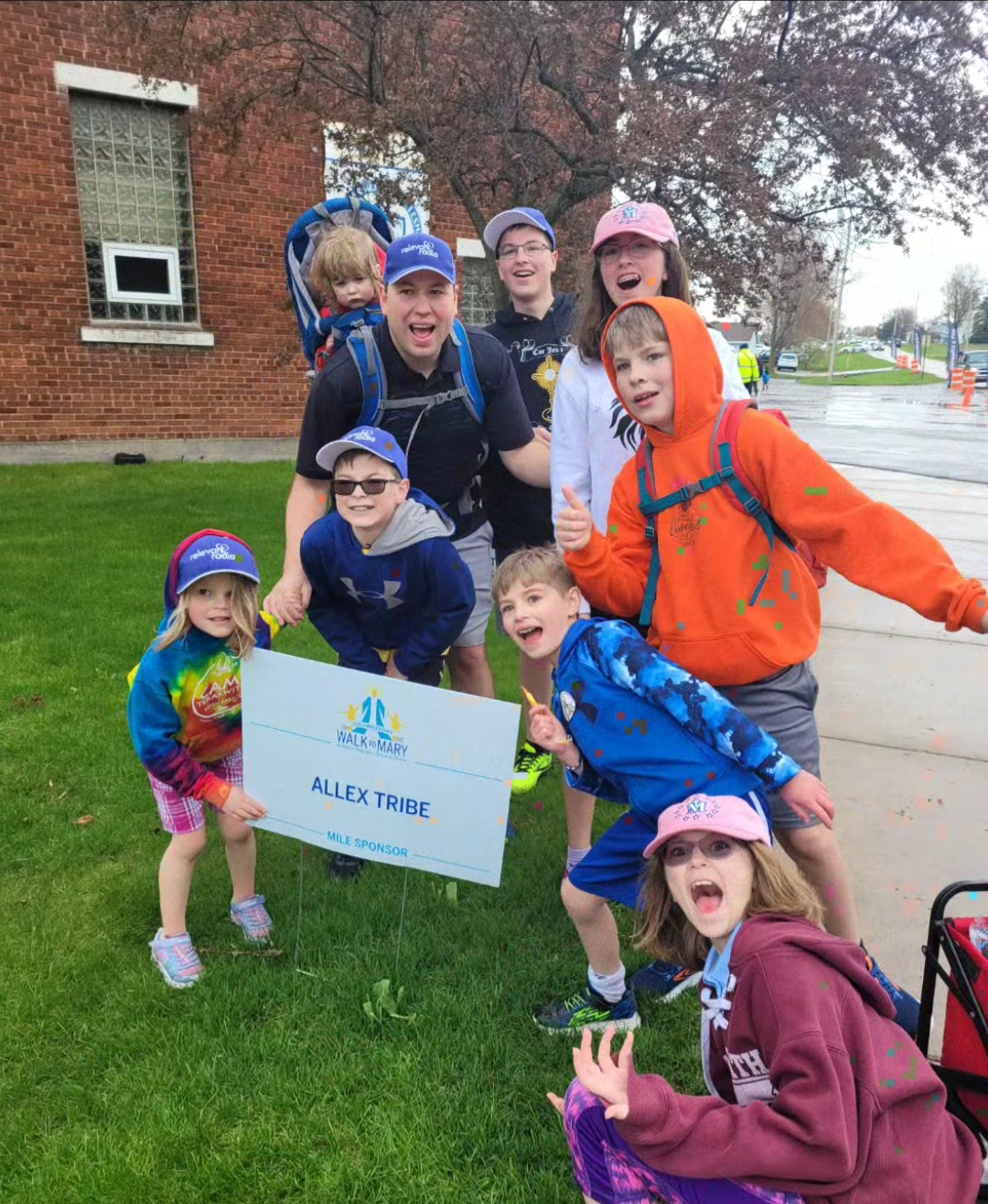
On this “Walk to Mary” they were “praying for their future vocations, and we’re praying for a spouse for one of my best friends,” she explained, adding that prayers along the route include a Rosary together, “singing all different praises to Our Blessed Mother,” and offering up “our feet hurting.”
Capuchin Father Christopher Iwancio, the new executive director of Modern Catholic Pilgrim, is no stranger to walking pilgrimages. He has walked across America with Crossroads Pro-Life walks and served as a priest adviser and chaplain on the 2024 and 2025 National Eucharistic Pilgrimages.
For example, in his new position, he is developing the Camino de San Francisco, a 24.5-mile Catholic pilgrimage connecting two missions: one in San Rafael and the other in San Francisco.
Be Creative
But distance is not necessarily the key factor. The Capuchin friar shared some pointers, beginning with saying a pilgrimage “is a spiritual tool that we have in the Church in our spirituality, like the Stations of the Cross, that people can practice and experience, and they don’t have to travel halfway across the world to have that. People can just walk from their parish to the cathedral. They can walk to their own parish or to a shrine that’s in their backyard. And that’s beautiful.”
He also said during this Year of St. Francis (which runs through Jan. 10, 2027), the faithful should consider walking to a church dedicated to St. Francis or that’s staffed by the Franciscans.
His main advice for walking pilgrimages: “Keep it simple. Just, where are you going and what are your intentions that you’re carrying with you? You can choose those and go … and invite others to join you.”
- Keywords:
- pilgrimages
- catholic pilgrims