Guided by Faith, Driven to Win: Jadin O’Brien’s Olympic Journey
From overcoming a rare disease to collegiate track titles and bobsledding, O’Brien relies on God, the Blessed Mother and her patron St. Thérèse every step of the way.
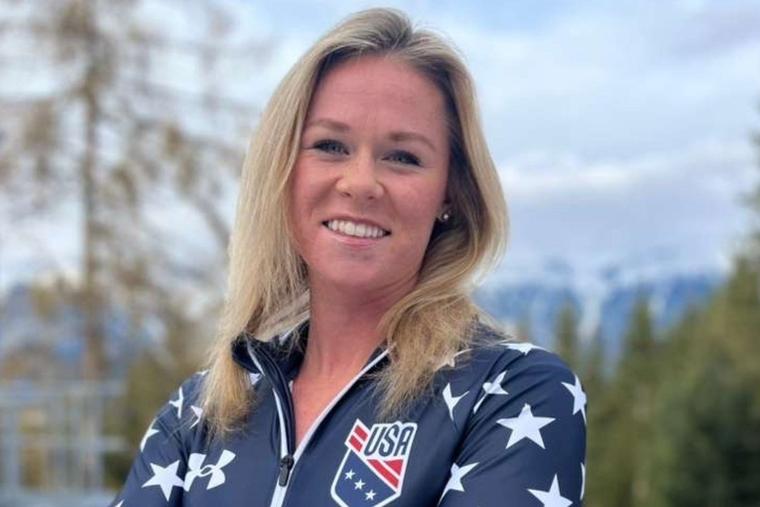
As a third grader, Jadin O’Brien could not put on her coat, brush her hair or even step outside without feeling paralyzed by fear.
She repeated certain motions compulsively, convinced that if she didn’t, something terrible would happen.
“She was thinking that if she touched a certain thing or moved, the house was going to explode, or someone would get hurt,” her mother, Leslie O’Brien, told the Register.
While other children played outside, Jadin became reclusive, trapped in obsessive thoughts and compulsive rituals that she could not control.
The confident, carefree child her parents knew seemed to gradually fade. And they couldn’t understand why.
“It was so horrible, just watching her disappear,” Leslie recalled, holding back tears. “She couldn’t do anything. She couldn’t run. She couldn’t play. … The constant fear that she lived in was so awful.”
Unsure what was wrong, or where to turn for help, Jadin and her family leaned on prayer and their Catholic faith, trusting God amid fear and uncertainty while seeking guidance from St. Thérèse of Lisieux.
Looking back, the family now sees how that early trial, filled with such anxiety and fear, helped to make Jadin, now 23, who she is today: a woman of strong faith, resilience and determination.
And something else, too. That scared little girl? She’s now a steely-eyed U.S. Olympian, gripping the moment as she races down a hairpin, perilously banked bobsled track at the Winter Games in northern Italy.
From Track to the Olympic Ice
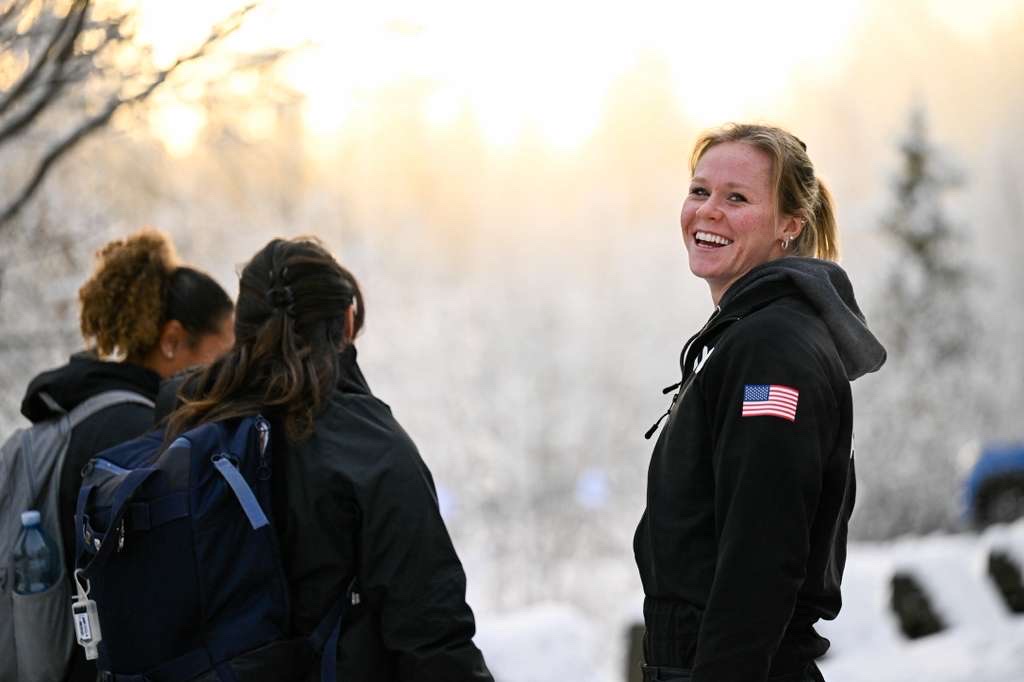
A big part of Jadin O’Brien’s Olympic story is that she never even thought about bobsledding until last summer.
Her parents were both Division I athletes in college — her mother in track and her father, Kevin, in football at Bowling Green State University. An outstanding athlete herself in high school, Jadin was a top recruit for track and field and landed at Notre Dame.
“I wanted to go somewhere I could practice my Catholic faith openly and grow in it. That was the most important thing,” Jadin said.
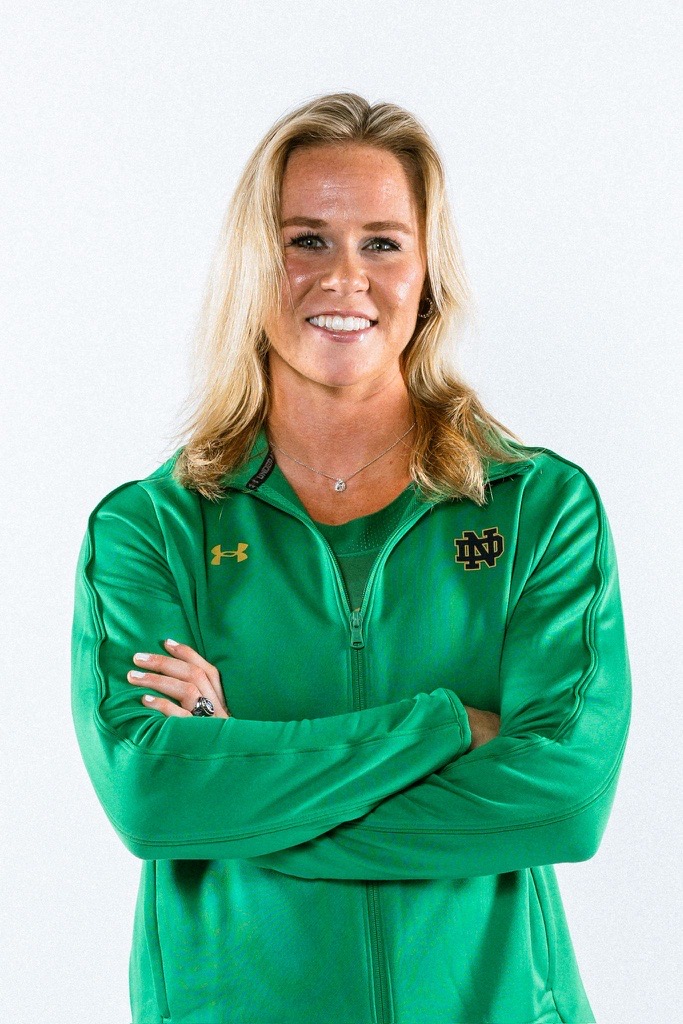
At Notre Dame, Jadin competed in the pentathlon and heptathlon — demanding multi-event disciplines that test speed, strength and endurance across sprints, hurdles, jumps and throws. She won three national titles in the pentathlon, finished as national runner-up twice in the heptathlon, and became a 10-time All-American. She captured four ACC championships and still holds the school records in both the indoor pentathlon and outdoor heptathlon.
“She didn’t just compete for trophies and medals,” Kevin noted. “She trained to glorify God and push herself to be the best she could be.”
Injuries tested Jadin repeatedly during her collegiate career. Early on, frustration came easily. “It’s easy to blame God and say, ‘If you’re so loving, why would you let this happen?’” she said.
Over time, her attitude shifted.
“Competing while not fully healed taught me to offer it up for someone else: for my aunt with a brain tumor, or for a little girl who had passed away,” she recalled. “I always had someone in mind. It helped me stay focused and determined, because I wasn’t competing for myself anymore. I was competing for a higher purpose.”
She never imagined she’d be competing as a bobsledder, though.
In the months leading up to the end of her track season in August 2025, Jadin began receiving messages from Elana Meyers Taylor, one of the most decorated athletes in U.S. bobsled history, encouraging her to try the sport.
“When she first reached out to recruit me for bobsled, I thought it was a scam,” Jadin said with a laugh, citing the movie Cool Runnings as her only prior knowledge of the sport.
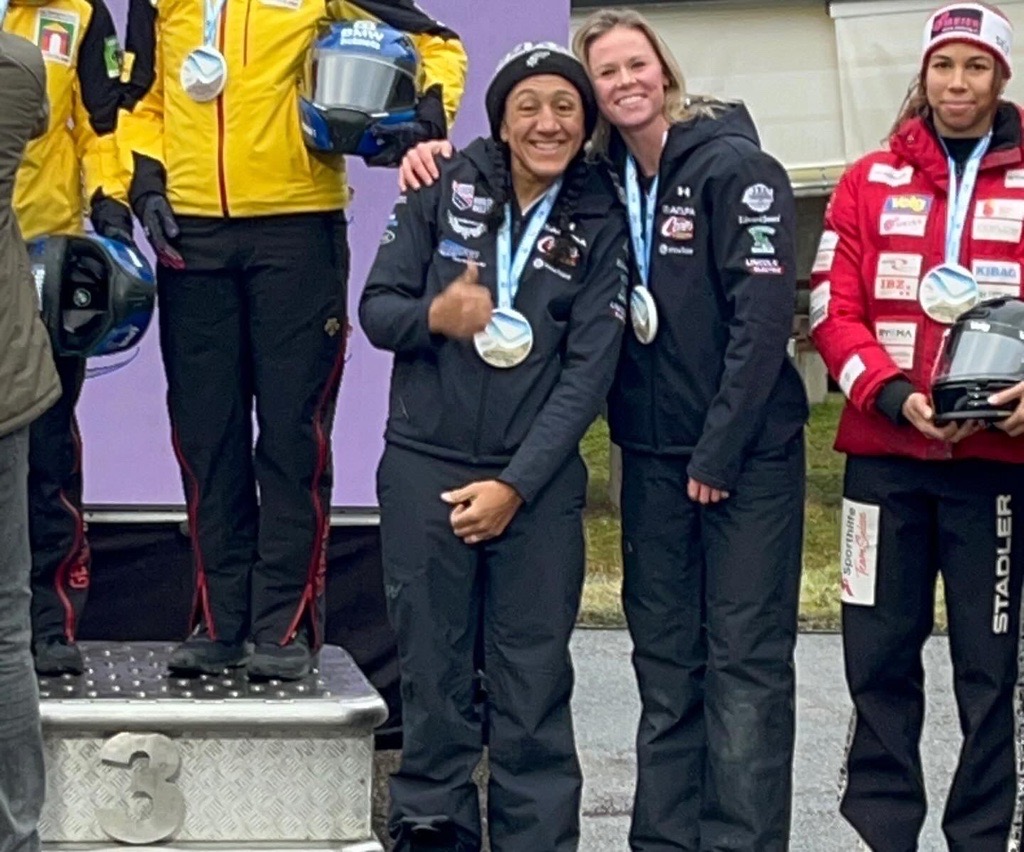
After prayerful discernment, however, she took the leap. Jadin transitioned into two-woman bobsled as a brakewoman, the powerful pusher who provides explosive speed at the start, while Meyers Taylor serves as pilot, steering the sled down the icy course at nearly 90 miles per hour.
“Ten days after I started training, I went to rookie camp in Lake Placid,” Jadin said. “The following week was more training, and then the final week was tryouts, where I made the world team.”
The next five months were spent training and competing in Europe, before Jadin was officially named to Team USA on Jan. 19.
“It’s crazy how fast this transition has happened,” she said. “But I’ve loved every second of it. Going to the Olympics has always been a dream of mine.”
O’Brien will compete Feb. 20-21 in the two-woman bobsled event at Cortina d’Ampezzo — bringing to the Olympic spotlight a steadiness shaped long before her athletic success.
Learning to Trust Through Suffering
The fuller story of Jadin’s Olympic journey, however, started long before she became a standout athlete.
In elementary school, she developed symptoms later diagnosed as Pediatric Autoimmune Neuropsychiatric Disorders Associated with Streptococcal Infections (PANDAS), a condition in which strep infections trigger an autoimmune reaction affecting the brain. Obsessive thoughts, compulsive behaviors, severe anxiety and depression overtook her daily life, worsening over the course of five years.
The family pursued multiple avenues for help, often feeling discouraged as countless doctors and therapists failed to identify Jadin’s illness. They even attended a healing Mass and consulted an exorcist friend, who helped them discern that the suffering was physical in nature.
During that time, Leslie often turned to St. Thérèse of Lisieux. “I started a novena and really dove into asking for her intercession,” she said. “Then I started to get mad at her, because after my novena, I was like, ‘Okay, I got no roses. Are you listening?’”
Jadin later came to understand why the saint resonated so strongly. “St. Thérèse suffered with OCD as a child,” she said. “That was one of my symptoms with PANDAS. That’s why my parents chose her to be my patron saint during that period.”
What followed were small but powerful signs. Jadin later recalled how her grandfather, while attending Mass, felt a sudden chill pass through him and knew she would be okay as he walked by a stained-glass window. “Later he went back to the church and realized the stained glass depicted St. Thérèse,” she said.
Through a series of more providential encounters — including teachers and friends suggesting a strep-related cause — the family finally found a practitioner who accurately diagnosed Jadin with PANDAS, recognizing it as a strep-driven condition. After an initial course of antibiotics brought partial relief, further treatment began to address the lingering infection.
“Eight weeks after we started that, Jadin recovered and came back,” Leslie said. “It was a miracle.”
The witness of Thérèse of Lisieux, Jadin noted, inspired that spirit of hope and self-offering during those times and continues to do so today.
“Her ‘Little Way’ and her unrelenting trust in God have brought me back to my center many times,” Jadin said of her confirmation saint. “When you think about the Olympics, your thoughts go to, ‘That’s the biggest stage in sports.’ But viewing it through St. Thérèse’s lens and as an avenue to glorify God and do a lot of good helps me to keep everything in perspective.”
A ‘Competitive Edge’ in a Dangerous Sport
That faith would be tested again in January 2026 — this time on one of the most dangerous bobsled tracks in the world
During a World Cup event in St. Moritz, Switzerland (the sport’s only remaining natural-ice track), O’Brien and Meyers Taylor were involved in a severe crash that left both athletes shaken, as well as the sled and track badly damaged. The impact was so violent that, according to the Milwaukee Journal Sentinel, the International Bobsleigh and Skeleton Federation declined to release the footage.
The sled’s front axle tore through the nose on impact, sending the runners backward as Meyers Taylor lost steering and visor protection. The sled hurtled down the course and crashed three more times before finally coming to a stop, aided by track officials who rushed in.
“I got thrown from the sled, flipped over and slammed on my back,” Jadin told the Journal Sentinel. “I slid down the track thinking I was paralyzed because I couldn’t move anything. Her steering was gone. Both of us survived by a very narrow margin. It was really traumatic.”
“Only by the grace of God — and a small weight plate in the front of my sled — was I saved,” Meyers Taylor later wrote on Instagram. The duo went to the hospital with minor injuries before returning and ultimately finishing in the Top 10.

Experiencing this scare alongside Meyers Taylor — a mother of two young boys with disabilities and a woman of faith — bolstered Jadin’s resolve. “Her being a Christian strengthens our bond and gives us a competitive edge over other pilot-brakeman combinations,” she said. “Faith is our extra tool.”
Other tools in her faith life consist of the Rosary and Marian devotion, as Jadin always wears her Miraculous Medal and prays a novena to Our Lady of Victory before competitions.
Each new year, the O’Brien family prays together and draws a patron saint for the next 365 days. “This year, I drew Our Lady of Fatima,” Jadin said — a devotion that has deepened her “trust in Mary’s call” to prayer, sacrifice and “peace when it’s hard to find.”
“There have been so many times when I’ve said, ‘God, I don’t know if I can do this,’” she said. “And then somehow a breath of peace comes — and he helps me through it all.”
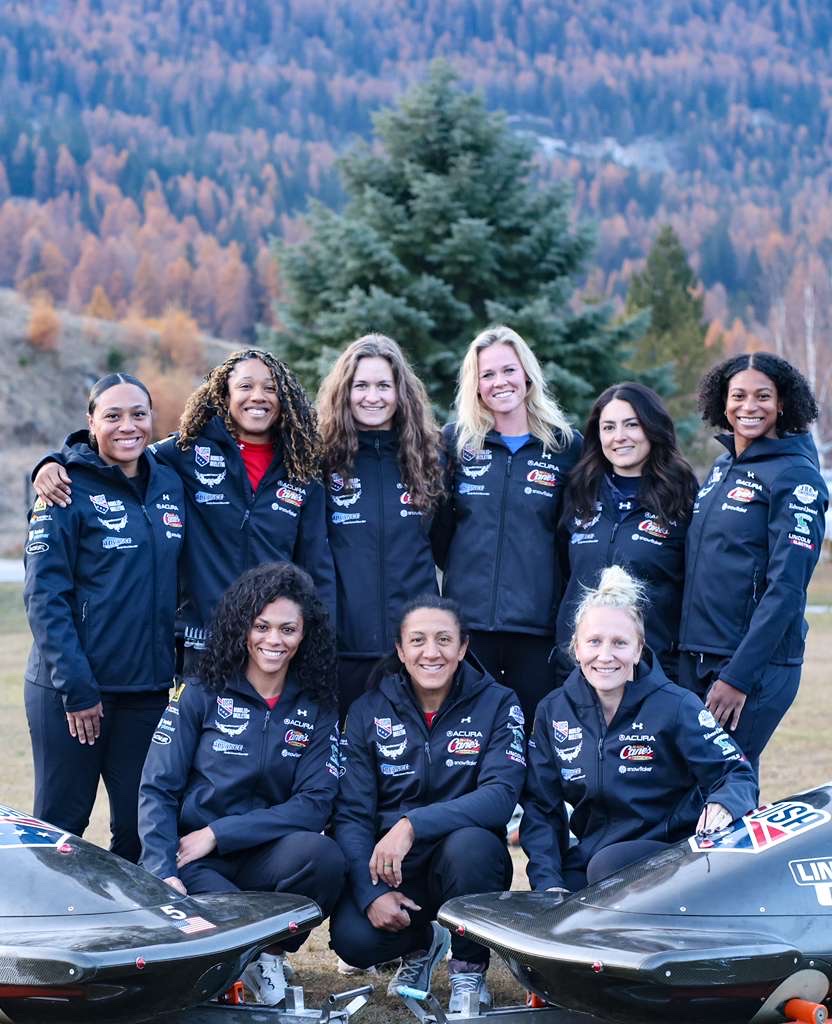
As the Olympics approaches, the O’Brien family continues to lean into that prayer as they prepare to travel to Italy to watch Jadin compete.
“The beauty of the Catholic faith becomes deeper the more you live it out,” Kevin said. “Faith, family and sport are all integrated. God wants to help. Go to him through prayer and the sacraments.”
“When you walk into that stadium,” he told his daughter, “pour out your anxiety and fear. Be grateful. Gratitude washes worry away.”
“Trust,” Leslie added. “Trust what God wants will happen.”

While Jadin’s goal of winning an Olympic medal remains close, she is also looking ahead to track and field for the 2028 Summer Olympics in Los Angeles.
“But even with those dreams, I’m focused on the present right now,” she said.
“If you think too far ahead in the future, it’s easy to get distracted,” she added. “Handing all those worries and anxieties over to God and tackling one thing at a time helps you accomplish incredible things.”
- Keywords:
- olympics
- winter olympics
- catholic athletes
- st. therese of lisieux
- catholic living
- university of notre dame