Alysa Liu and the Olympic Lesson We Almost Missed
COMMENTARY: Figure skater Alysa Liu’s story is not about risking everything to invent herself. It is about refusing to let achievement define her.
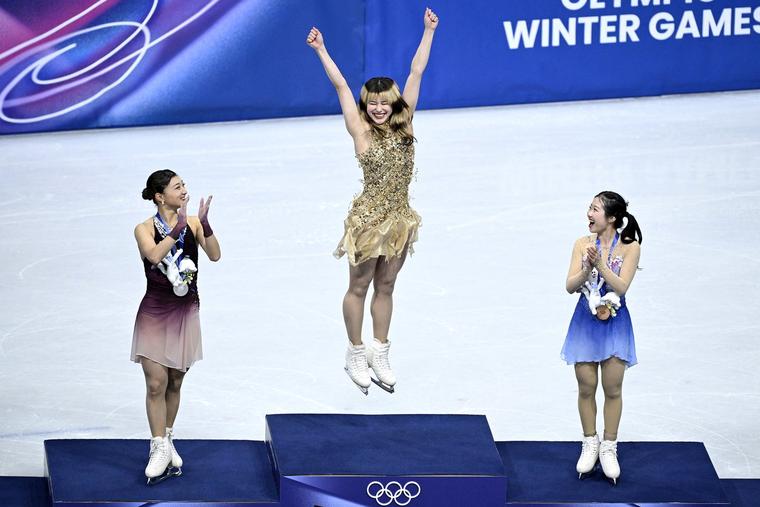
A wonderful Winter Olympics concluded Sunday in Italy — two weeks filled with overtime goals, breathtaking athletic feats and the familiar tears of triumph and heartbreak. For a brief moment, the world remembered what it feels like to be united in admiration.
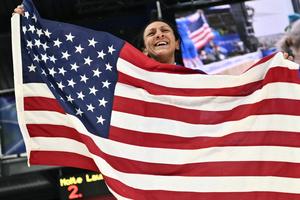
Yet the Olympics’ most profound moment came not from a scoreboard, but from a story: the astonishing gold-medal performance of American figure skater Alysa Liu. The 20-year-old from northern California captivated the world with a program remarkable not only for its technical brilliance, but for what it represented. Viewers saw the jumps, the sweeping music, the crowd in the sold-out arena on its feet. But beneath the spectacle was a quieter drama — what happens when a young woman refuses to let her worth rise and fall with a score.
Her personal story is now well known. She began skating at 5, competing nationally at 7, and collected championships with a grace that made her seem destined for the sport’s highest stage. And then, on April 19, 2022, at the age of 16, she walked away. She had completed her goals, she said. She was satisfied with her career. She was moving on with her life.
When she returned to the ice in 2024 — not as a prodigy, not as a pressure-laden favorite, but as a young woman choosing freely — the world watched in awe, if not suspicion. After her gold-medal performance — women’s singles and team event, ending a 24-year U.S. drought — social media lit up with tributes. One post captured the mood: “How life looks when you risk it all to be fully yourself.”
It is a beautiful sentiment. But it misses the point.
Alysa Liu’s story is not about risking everything to invent herself. It is about refusing to let achievement define her: the freedom to step away, the wisdom to know that a gift is not a god, and the courage to live a life not dictated by applause. And that is a lesson our culture desperately needs.
The Freedom to Stop
We live in an age that worships relentless striving. Children are measured by their output. Adults are valued by their productivity. Rest is treated as weakness. Limits are treated as failures.
The Christian vision of the human person begins differently. In Genesis, God rests — not because he is tired, but because rest is part of the rhythm of creation. The Sabbath is not merely a suggestion; it is a command. It is God’s way of teaching us that our dignity does not come from what we produce. The Catechism puts it plainly: “Human life has a rhythm of work and rest” (2184). We are not machines. We are creatures.
Alysa Liu’s 2022 retirement was, in its own way, a small echo of that truth. She stepped away not because she lacked ability, but because she refused to let her identity be swallowed by her gift. She lived — perhaps without knowing it — the wisdom of St. John Paul II, who reminded the world in Redemptor Hominis that the human person is “willed by God for his own sake.” Necessary before achievement. Loved before performance. Willed before success.
Vocation, Not Compulsion
When Liu returned to skating, it was not to reclaim a lost identity or chase unfinished business. It was something quieter and purer — she simply wanted to skate again. This is the difference between vocation and compulsion.
Catholic tradition teaches that vocation is not merely what we are good at. It is what we are called to — freely, joyfully, without coercion. St. Catherine of Siena said, “Be who God meant you to be and you will set the world on fire.” Scripture gives the same lesson: “Where the Spirit of the Lord is, there is freedom” (2 Corinthians 3:17).
Freedom does not mean doing whatever we feel like at any given moment. It means receiving the grace to do what we are called to do — and only that. Liu’s return was not a resumption of the old treadmill. It was a rediscovery of joy and beauty. That joy radiated through her Olympic performance in a way that technique alone never could.
The Lesson We Must Not Lose
There is a temptation to turn Liu’s story into a slogan about following your heart or doing whatever makes you happy. That would flatten something demanding and deep into something shallow and sentimental. Her story is not about walking away for no reason, or being selfish or indulgent, or doing whatever you want without concern for others. The world has far too many people doing that already.
Her story points to something harder: the courage to discern what is yours to do — and what is not. The humility to step back when a gift becomes an idol. The maturity to know that achievement is not identity. The freedom to return to a gift without being enslaved by it.
This is not self-indulgence. This is the spiritual discipline of discernment — the same discipline a parent needs to say no to one more activity for an exhausted child, or a professional needs to step off a career ladder that is costing his family, or a college student needs to change majors when a talent no longer brings real life.
The Idol of Talent — and the Christian Alternative
Modern culture often treats talent as destiny. If you are gifted, you must pursue that gift to its absolute limit. To do otherwise is treated as wasteful, even irresponsible. Christianity has always rejected the idea that gifts define us. Gifts are entrusted to us, not imposed on us. They are meant to serve our flourishing, not to consume it.
St. Paul reminds us that the body of Christ has many parts, and that the Spirit distributes gifts as he wills (1 Corinthians 12:11) — not as the market wills, not as the culture wills, not as the crowd wills. Liu’s story is a quiet reminder that gifts are not gods. When we treat them as gods, they devour us — in sports, in academics, in careers, even in ministry.
The Christian alternative is ordered love: to receive our gifts with gratitude, to use them generously, and to hold them lightly enough that we can set them down if they begin to deform our souls.
A Witness to True Freedom
In a culture that confuses authenticity with self-creation, Liu reminds us that the deepest authenticity is not found in manufacturing ourselves, but in receiving ourselves from the hands of God. In her gold-medal performance, the world saw beauty, precision and artistry. The deeper beauty was this: a young woman who had learned that her gift was not her master.
Not a perfect person — none of us are — but a free one. At the closing ceremony, she shared, “I have no plans to leave yet” — a nod to skating by choice, not chains. The Olympics are a celebration of human excellence. Alysa Liu’s story points to something even greater: the truth that excellence is not the highest good. Love is. Freedom is. The dignity of the person is.
Her journey — from prodigy to retiree to champion — reminds us that the human heart is not made for endless striving, but for rightly ordered desire. For choosing the good. For living in freedom. For becoming who we are not through achievement, but through grace.
Christ himself asks, “What does it profit a man to gain the whole world and lose his soul?” (Mark 8:36). The question is not about losing salvation over an Olympic medal. It is about remembering that no achievement, however glittering, can define the human person.
In Milan, the world saw a gold medal. Perhaps the more important victory was invisible: a witness to the freedom that comes when we refuse to be defined by what we do and instead embrace who we are in God. When we do that, beauty follows. We, too, can glide — on ice, in classrooms, in offices, in our daily lives — knowing that God’s grace knows no bounds.
For as St. Paul reminds us, “By the grace of God I am what I am” (1 Corinthians 15:10) — a truth deeper than any medal, and the only foundation on which a human life can truly rest.
John Corcoran is the founder of Trinity Life Sciences and serves as chairman of the board of iCatholic Media, the parent company of CatholicTV in the Archdiocese of Boston.
- Keywords:
- olympics
- 2026 olympics
- alysa liu
- winter olympics
- sports
- athletics