Echoes of Christian Europe: Beauty, Memory, and the Soul of Budapest
Explore quiet corners of grace shaped not only by elegance, but by endurance.
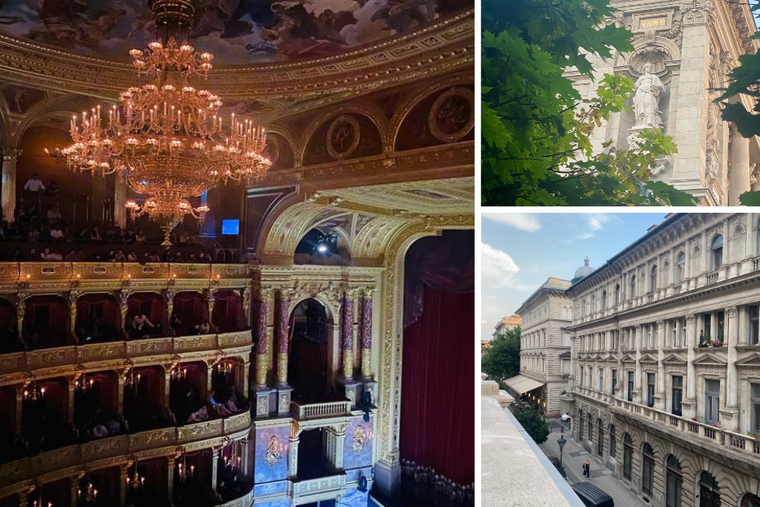
Budapest is a city where beauty feels both radiant and veiled — luminous, but never ostentatious. It carries a kind of sublimity: the beauty of a city that has not entirely healed from its past wounds but stands proudly, nonetheless. It is, in a nutshell, the idea I sought to convey through my recent contribution to the video series Urban Tales: Stories of Budapest Through Foreign Eyes, promoted by the Hungarian Scruton Hub, in which I shared some of the places that have most inspired me in the city.
I moved here at the end of 2022 as a journalist covering Europe for the Register. It was not primarily beauty I was seeking — but beauty found me, gently yet unmistakably, as if it had been waiting here all along to deepen my gaze and open me to the subtle grandeur of a city that revealed depths I hadn’t expected: quiet corners of grace shaped not only by elegance, but by endurance.
A Bridge Between East and West
It enhanced my quest for beauty not as an ornament, but as a spiritual path, something that elevates the soul, including, I hope, in my readers. It also resonated with the years I had spent in Rome — 12 formative years of studying journalism, working for the Vatican, and reporting on Church life — and resonated with the Parisian sensibility I carry from my childhood.
Here, beauty bears the traces of a complex past: one marked in particular by decades of communist rule, whose effects are still being overcome. That history lends a certain gravity to the city’s elegance, making its beauty not only aesthetic, but also redemptive. From the very first day, I was captivated by the curves of its bridges, the Haussmannian façades that recall Paris, and the delicate grandeur of its interiors. This beauty doesn’t shout; it invites.
Though I still divide my time with Rome, Budapest opens a fascinating new vista, one that broadens my perspective and sharpens my awareness of the spiritual and cultural tensions shaping Europe today. With its singular language and strong cultural identity, Hungary stands as a bridge between East and West — between rootedness and change — revealing the European continent’s fractures and hopes. It doesn’t try to be like anywhere else. It insists on being itself, even when the world pressures it to dissolve into sameness. In that sense, it reminds me of the faith.
Places That Speak
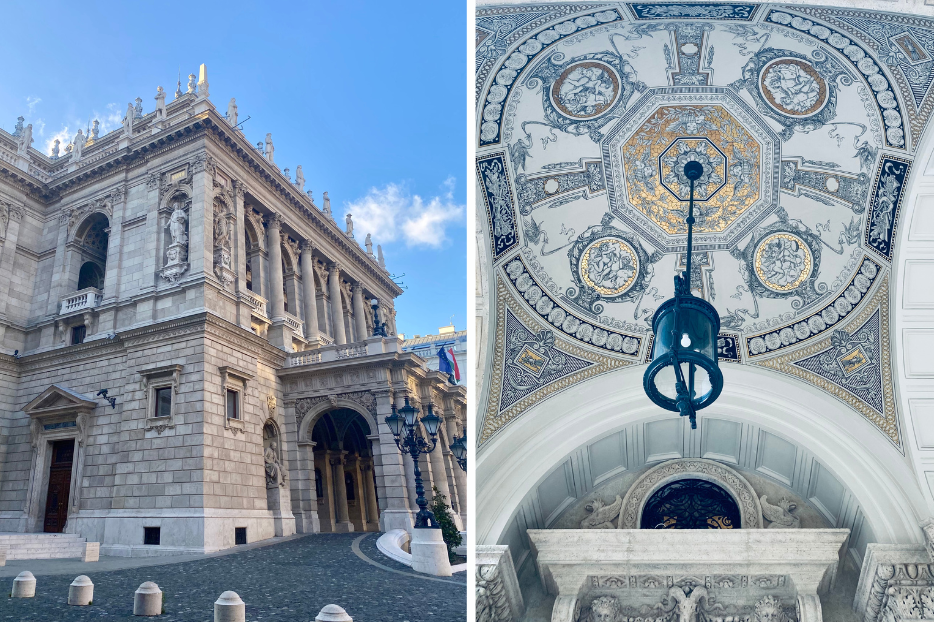
As I mentioned in the video, the Hungarian State Opera House was the first place in Budapest that truly captured my heart. I called it a “jewel box” — not only for its exquisite neo-Renaissance architecture, but also for the “soul” it carries. Like so many buildings in this city, it reflects not just style, but spirit: proportion, harmony and a cultural ambition rooted in something greater than itself.
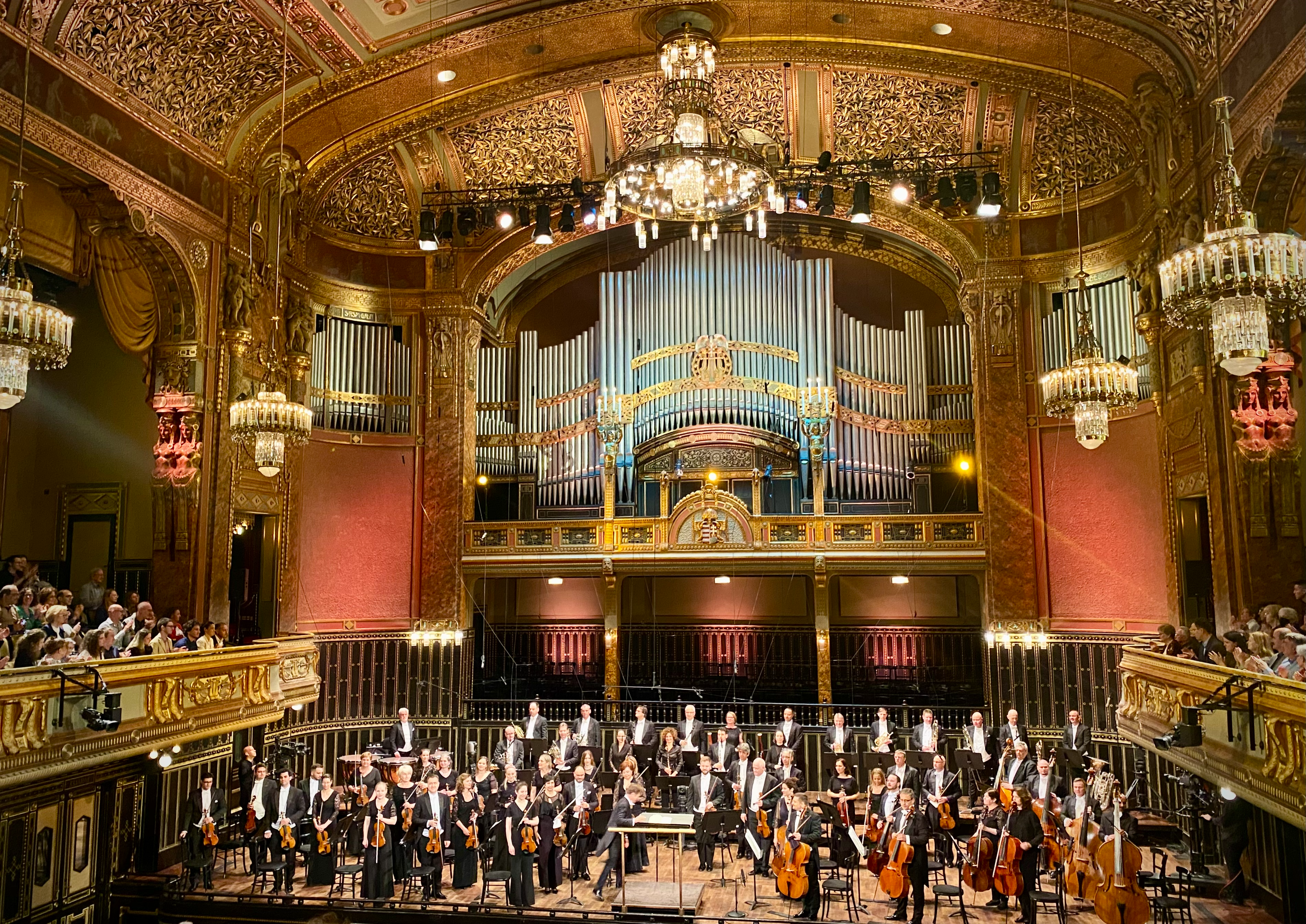
Nearby is the Liszt Academy of Music, my second favorite place in Budapest. Stepping inside always feels a bit like stepping into my own story. I come from a family of musicians, and Hungarian music — especially its folk and gypsy traditions — shaped our emotional world. The very first song my mother taught me as a child was a Hungarian nursery rhyme. Thus, it’s not just admiration I feel for this place, but a kind of kinship. And what I love about Liszt Academy — beyond the breathtaking acoustics and remarkably affordable concerts — is the building itself: a masterpiece of Hungarian Art Nouveau, where every motif, every detail seems to breathe.
These reflections, prompted by my contribution to the Urban Tales video series and my encounter with Hungary’s cultural soul, call to mind a broader renewal unfolding across the West: one I explored in a recent article about the online fascination for Catholic aesthetics. Far from being a mere nostalgic retreat, it reveals a prophetic instinct. In a world saturated with utility and speed, beauty offers a different horizon. It slows us down. It transcends us, reminding us that the visible world points to an invisible one — that something greater is at stake.
Budapest is full of such reminders. Whether in the arches of St. Stephen’s Basilica or the melancholy strain of a violin, beauty here is not a luxury but a language. Such beauty, however, does not stand alone. It joins the chorus of distinct yet harmonious expressions of beauty found throughout Christian Europe, whether in the luminous Baroque of Rome, the soaring Gothic of Paris, or the Imperial confidence and contemplative grace of Budapest. Each in its own way reflects what Chateaubriand once called the genius of Christianity: a tradition where beauty is not incidental, but essential, like a visible echo of the Incarnation, and a sign that truth is objective, universal and can be encountered through form. These different shades of beauty across the continent all attest to the same spiritual lineage — and to the enduring vitality of a culture shaped by faith.
And that, for me, is why Budapest is more than just home. It’s a quiet, persistent reminder of what I believe as a Catholic: that Beauty is not something we create, but something we receive — and that every real beauty, in the end, leads us back to the One who is Beauty.



![‘The Holy See has made clear that the clergy of the Society [of St. Pius X] are now to be regarded as schismatic,’ Bishop Frank Caggiano said in a statement.](https://publisher-ncreg.s3.us-east-2.amazonaws.com/pb-ncregister/swp/hv9hms/media/2026070617078_0ab6902d-8c02-4eac-aba4-1ec174e52618.png "‘The Holy See has made clear that the clergy of the Society [of St. Pius X] are now to be regarded as schismatic,’ Bishop Frank Caggiano said in a statement.")