St. Thomas More: God’s Servant First, and the King’s Too
COMMENTARY: The subtle yet profound difference in More's last words.
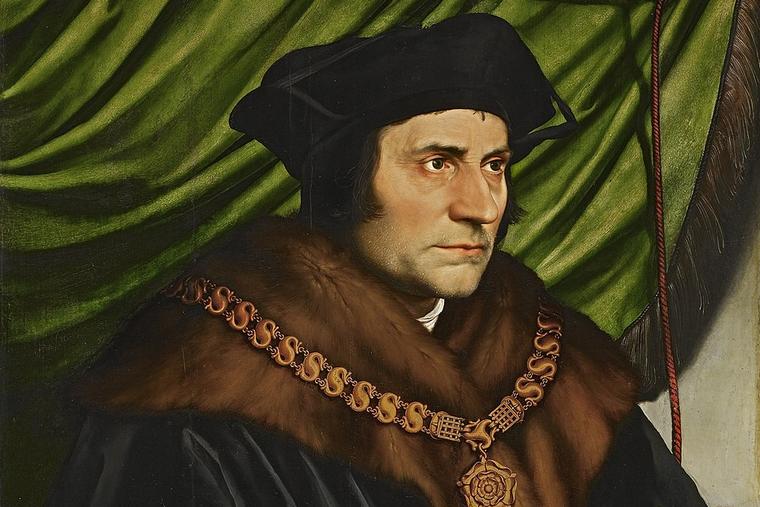
“I die His Majesty’s good servant, but God’s first.”
If you’ve ever seen the film A Man for All Seasons about the trial and execution of St. Thomas More, you know this unforgettable line, spoken by More just moments before his beheading for opposing King Henry VIII.
But I recently learned that this isn’t what More said — not exactly.
According to the most accurate account of More’s last words, published shortly after his death, the great saint and statesman actually said, “I die the King’s good servant, and God’s first.” Not but, but and.
Now, on the face of it, there’s little difference between these two statements — a negligible shift in emphasis, perhaps, but nothing more. After all, aren’t both statements conveying essentially the same two-part message? More served the king; More served God first.
But consider the dictionary definition of the two conjunctions: “And” indicates “connection or addition”; “but,” on the other hand — in this usage — indicates “on the contrary” or “on the other hand.”
In using the word “and,” therefore, More — a man of deep thought and juridical prudence who chose his words very carefully — is signifying a connection between these two forms of service: He is at one and the same time the servant of God and the servant of the king. In his mind, at least, the two roles should not be opposed to each other, even as the service of God has the clear primacy.
The popularized version with “but” signals something different — namely, that the service of God and the service of king, already contrasted in form, are now in competition with each other. We’ve come to a conflict in which the first has to assert itself at the expense of the second — potentially even by choosing against it.
By way of analogy, consider the contrasting notes in two statements spoken by a father to his child. First, “I love you, and I love your mom first.” And second, “I love you, but I love your mom first.”
In the first, we sense that the father’s love for his wife and his child aren’t at odds; they go together, even as the man and wife first attend to their own love in order to be loving parents.
In the second, we sense that the father’s love for his wife and his love for his child have become a problem to each other; indeed, we can imagine these words being spoken in a situation where the father has faced some kind of choice between them — and chosen against the child.
At this point, we understand exactly why the popularized version has taken hold so powerfully in the popular imagination. After all, isn’t this “but” scenario exactly what More faced? Didn’t King Henry and Thomas Cromwell put him in a position where he had to choose between God and king, insofar as the latter now demanded to be his first fealty? And didn’t Thomas More, in the end, choose God — even at the expense of his life?
It would be hard to see it otherwise.
More’s death as a martyr — the spilling of his blood on Tower Hill and the displaying of his head (which may be exhumed on the 500th anniversary of his martyrdom in 2035) on London Bridge — bears witness to this fidelity to God when it mattered most. It’s true: More died the king’s good servant, but God's first.
Yet this only accentuates those carefully chosen last words — that resounding “and.” As the executioner approached, it would have been so easy for him to focus on the “but” in which he found himself — to cry out a note of resistance against the king, against the king’s courtiers, against all those who had signed the oath to save their own hides.
But More — noble, virtuous, irreproachable in character — went on aspiring serenely to the Catholic both/and, and inspiring those around him to do the same. To his last breath, he wanted to serve, to the best of his ability, God first and the king too, rendering to each his due. He had no interest in positioning himself as a kind of revolutionary or rebel; he was a man of both religious and civic duty, and in that order — come what may.
In a June 21 address to members of the International Inter-Parliamentary Union, just before More’s feast day, Pope Leo XIV invoked the saint in precisely the same both/and terms: More was “a perfect servant of the state precisely because of his faith” — a martyr for “the primacy of conscience,” yes, but a man ever “faithful to his civic responsibilities.”
St. Thomas More, knight of the both/and, pray for us!
- Keywords:
- st thomas more