Julia Greeley: Former Slave Who May Become an American Saint
COMMENTARY: Denver’s ‘Angel of Charity’ spent her life bringing Christ’s love to the poor, one wagonload at a time.
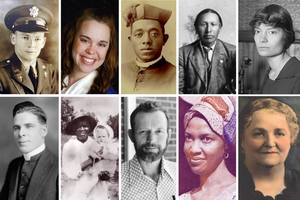
At the last reckoning, America has produced 10 canonized saints — 11 if you count Mother Teresa, who became an honorary U.S. citizen in 1996. In addition, we have five blesseds and 15 venerables.
We certainly have been blessed with an abundance of holy examples and Christians in heaven praying for us.
Some might think this is a paltry number, but we must also consider the 75 American Servants of God.
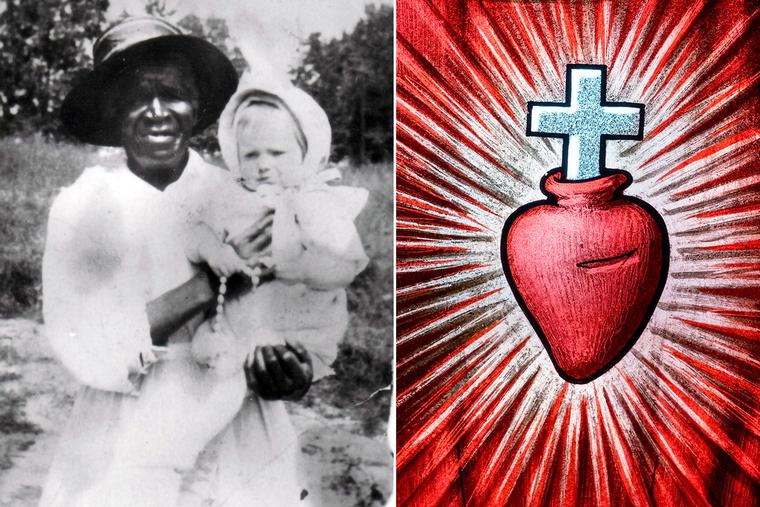
Among this august grouping of heroically saintly men and women is Julia Greeley — a Third Order Franciscan of profound faith, heroic charity and indomitable joy.
The people of Denver knew her as the “Angel of Charity” and revered her for her devotion to the Blessed Sacrament and the spirituality of St. Francis.
Julia Greeley was born into slavery in Hannibal, Missouri, in the 1830s. When she was a young child, she was struck in her right eye due to a master’s careless and cruel use of a whip on the little girl’s mother. The blow blinded and disfigured her.
After the Civil War, Julia was free but destitute, without family, property or education. She made her way to Denver, working as a maid for several prominent families, including William Gilpin, Colorado’s first territorial governor. Her honesty, humility and diligence soon earned the affection of those she served.
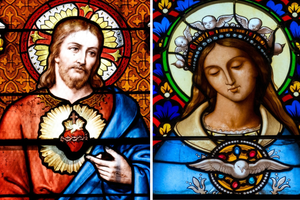
On June 26, 1880, she was baptized into the Catholic Church at Sacred Heart Church in Denver. Her conversion was complete and heartfelt. From that moment onward, Julia’s life was consumed with love for the Eucharist, the Blessed Virgin Mary and, above all, the Sacred Heart of Jesus.
Julia’s devotion to the Sacred Heart served as the source of compassion and strength that sustained her through the many hardships of life. She endured racism, hatred, rejection and humiliation. Her devotion to the Sacred Heart brought her healing, belonging and dignity.
Julia’s spirituality was deeply Franciscan in tone. Inspired by St. Francis of Assisi’s life, she joined the Secular Franciscan Order in 1901. She pledged herself to living the Gospel through poverty, humility and joyful service. She saw Christ in everyone, especially in the poor, infirm and forgotten. As a Secular Franciscan, she practiced radical humility, service to the poor and prayer, often distributing food, clothing and firewood anonymously to those in need.
Under the cover of darkness, Julia could be seen pulling a small red wagon through the streets of Denver, loaded with food, clothing and firewood for those in need. She delivered supplies after sundown so those she helped might preserve their dignity.
Julia’s charity was heroic. She lived in poverty herself, often relying on the kindness of others, yet any money she earned was immediately given to those more in need than she was. When she lacked money, she begged for donations from local merchants and neighbors, not for herself, but for “her poor” — much as Mother Teresa would later do. She suffered from severe arthritis, which caused her constant pain, but that didn’t deter her nightly rounds. She suffered silently, embracing Christ’s Cross, offering her suffering in union with Christ’s Passion.
Friends and colleagues recalled Julia’s joy as being contagious. She laughed heartily and was known for her unwavering faith. She relied openly and completely upon Divine Providence. She remained confident that God would provide for her needs if she continued to care for others.
Julia’s devotion to the Sacred Heart of Jesus offered a certain profundity to her Franciscan charity. The Sacred Heart was a mirror of her own woundedness and suffering with Christ, which steeled her with the strength to forgive and to love those who had wronged her.
The Jesuits and the Apostleship of Prayer emphasized devotion to the Sacred Heart as reparation for sin and the triumph of divine mercy over human indifference. As part of her ministry, she distributed pamphlets about the Sacred Heart in response to Christ’s request to St. Margaret Mary Alacoque that his Heart, so full of love, be loved in return.
She filled her life with First Friday devotions, the Rosary, Eucharistic adoration and acts of reparation. These formed the backbone of Julia’s spiritual life. She saw herself as a “missionary of the Heart of Jesus,” preaching not with words but with acts of compassion, realizing St. Francis of Assisi’s adage: “Preach the Gospel at all times; if necessary, use words.”
Julia’s Franciscan vocation was a practical theology of presence. Like all the saints, Julia recognized the face of Christ in every suffering person. She spent her nights visiting the sick, elderly and lonely. She comforted children and helped struggling families. She prayed her Rosary wherever she went, placing the needs and sufferings of others before her own.
She possessed almost nothing of material value — an old hat, a faded shawl, her rosary and her ever-present red wagon.
By God’s Providence, Julia died on June 7, 1918 — the Solemnity of the Sacred Heart of Jesus, the very feast and devotion that had defined her life. She was buried at Mount Olivet Cemetery, but her remains were reinterred in 2017 at the Cathedral Basilica of the Immaculate Conception in Denver. Her cause for canonization was formally opened in 2014, granting her the title “Servant of God.”
Her sanctity was not marked by visions, prophecies or miracles. Instead, it was manifested in her works of mercy and fidelity to Christ’s love.
As the Church continues to investigate her cause for canonization, her sanctity, though hidden in her humility during her lifetime, is now known to all who come to learn of her extraordinary love for Jesus Christ.
- Keywords:
- julia greeley
- sacred heart of jesus