Adoring Jesus Perpetually Is ‘Good for Your Soul,’ Says 93-Year-Old Adorer
John Angerer has been adoring Christ since his parish began perpetual adoration — on All Saints’ Day 1962 — and other souls are benefiting, too.
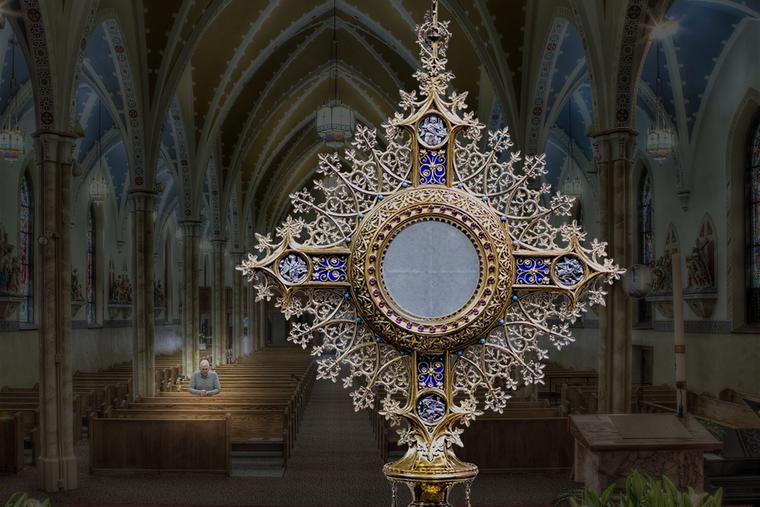
John Angerer, 93, has been adoring Christ in the Blessed Sacrament at St. Augustine, in Barberton, Ohio, for an hour each week for the past 63 years — since the parish began perpetual adoration on All Saints’ Day 1962.
Pope John XXIII had just opened the Second Vatican Council in Rome 21 days earlier. That means the nonagenarian has done more than 3,276 hours of adoration.
“It’s good for your soul,” Angerer said, “a beautiful way to talk to God with no disturbances.”
“The year before going perpetual, we had adoration from 9 a.m. to 6 p.m.,” he recounted. “A group of us men decided we’d do the night hours. Then, we went two by two around the neighborhood, inviting people to sign up for adoration. Some wanted time to think about it, and we’d go back to see them again. We had three people an hour.
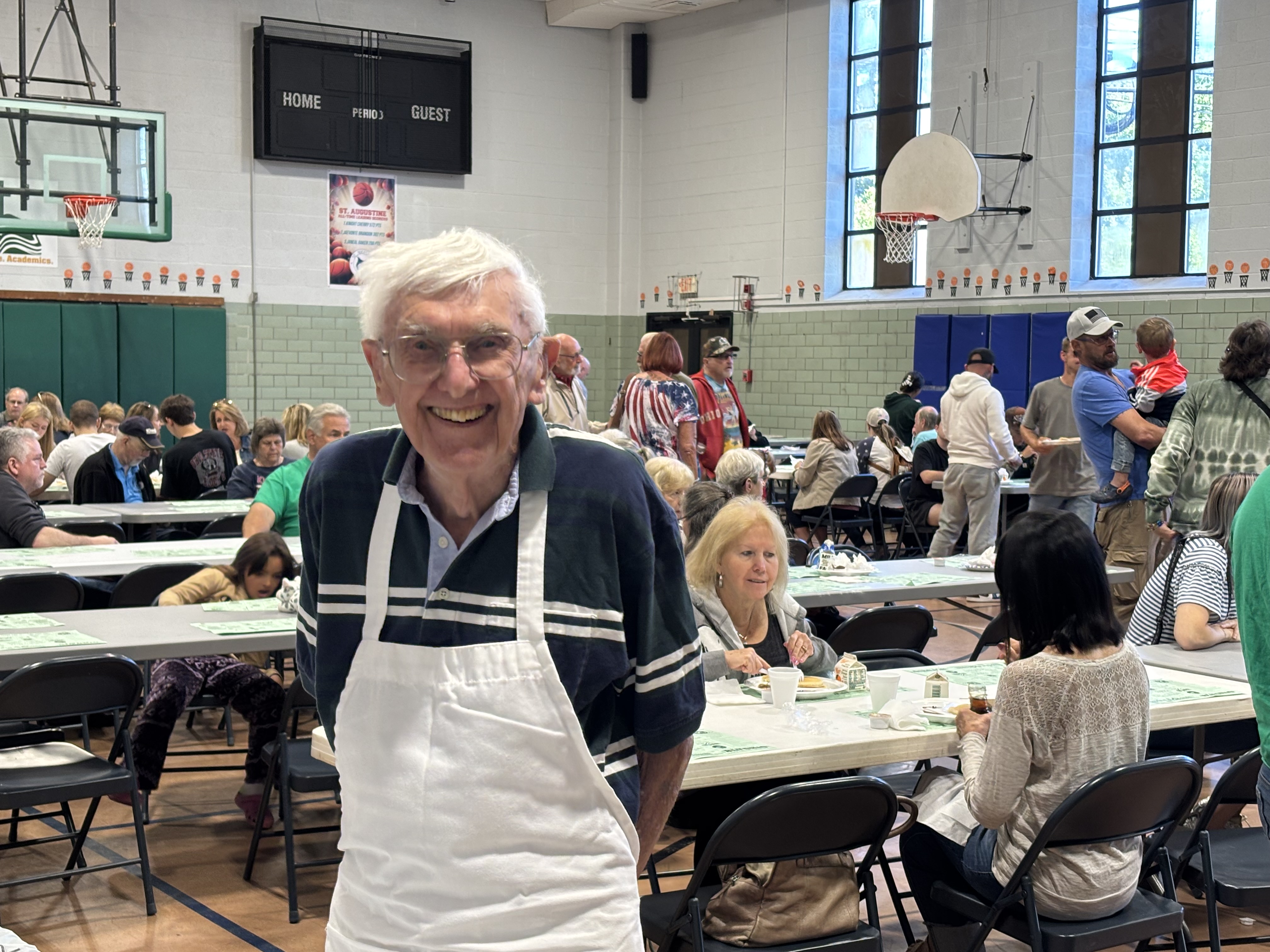
“Many people have died since then,” he continued, “and now we have one or two people an hour and some are doing one and a half hours to make it work.” Although he retired long ago, he maintained adoration during his years working 27 years in home finance and another 20 with a company building homes for the handicapped.
“About five years ago, I had to stop driving at night, so I switched to Saturday morning,” he explained. “But I can’t tell you what a blessing the night hours are, and honestly, I had more energy the next day.”
Strength came through the Holy Hours for some of the hard things he went through in life. In 2006, he and his wife Letty celebrated their 50th wedding anniversary by renting a place on the ocean in North Carolina with their family. Their 45-year-old son came back from a swim and had a heart attack and died on the beach.
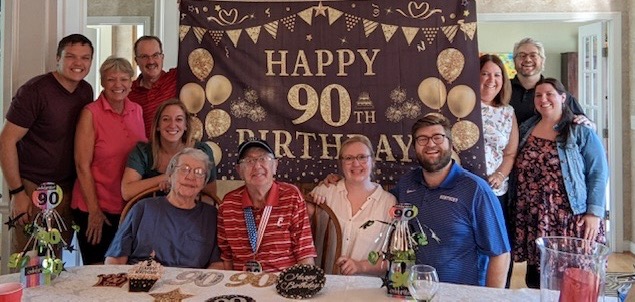
Letty died two years ago, after 68 years of marriage; and years earlier she had been injured in a carjacking attack. “Sometimes I went into Holy Hour with a heavy heart, but God helped me get through it,” Angerer recounted. One thing he had prayed for during Holy Hours was for Letty to convert to the Church. Twenty years into their marriage, she did — and then she too signed up for a Holy Hour.
“Perpetual adoration at your parish unites your church community,” he said. “We have so many volunteers for things. We go to church and know everybody. It feels like you are home.”
Therese Harper oversees scheduling at St. Augustine for adorers like Angerer. She has been a weekly adorer for 20 years and often also accompanies her husband during his hour.
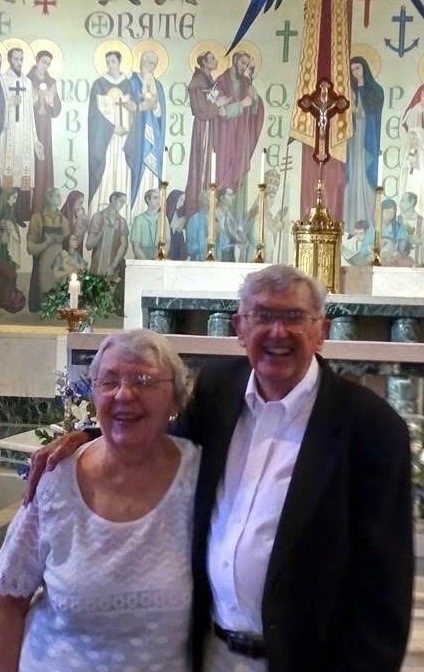
Even 2020’s health emergency did not stop the prayers.
“During COVID, we did not shut down,” she said.
“People wanted to be in the presence of Our Lord because there was no Mass, so there was no problem filling the spots. Our pastor had to tell people not to come if they weren’t signed up so there would not be too many people in the church. At that time, we couldn’t go to confession or receive the Eucharist, but being able to sit with Our Lord was a Godsend. It is my slice of peace through the week, so I don’t want to miss it.”
Perpetual adoration — 24/7, nonstop — sounds daunting, and yet, in parishes across the United States and elsewhere, Catholics are taking shifts coming before the Real Presence of Christ exposed in perpetual adoration chapels. A new study about the fruits of the Eucharistic Revival in the United States supports this trend, citing access to Eucharistic adoration has grown by 60%. And a new app also tracks where the faithful can stop in to adore Christ.
According to Andrew Niewald, president of the Beloit, Kansas based Adoratio Foundation which helps parishes to expand or establish adoration, they estimate that 800 parishes out of 17,500 total in the U.S. have perpetual adoration. Their extensive research also found that 77 parishes have increased or begun adoration hours since 2025, and 44% or 7,700 have adoration in some capacity.

“There is an ebb and flow, so it’s not possible to get an accurate count,” he said. “Looking deeper into this, we found that even in parishes with 24/7 adoration, usually less than eight percent of the parishioners participate; seemly demonstrating that even those parishes have all sorts of opportunities for growth.”
The graces of adoration are evident for those who commit to scheduled time before the Eucharist.
The faithful at Our Lady of Lourdes Church in Raleigh, North Carolina, have adored Jesus perpetually for 30 years. Father Tim Meares, parochial vicar at the parish, told the Register, “You can’t quantify the many graces and blessings that come through it. The parish has been a beacon of life and activities and has had countless miracles.”
The commitment for perpetual adoration demands faith and persistence from both the parish priest and parishioners, according to Father Meares. At their parish, 35 adorers have participated the entire 30 years, with 12 of them keeping their original hours.
“When you have perpetual adoration, Jesus is an active member of the parish, working in us through the Blessed Sacrament,” said parishioner Candace Barati, whose adoration time has stretched to two to three hours a week; in addition, she now helps schedule adorers.
The Gold Standard
According to The History of the Eucharistic Adoration: Development of Doctrine in the Catholic Church, King Louis VII of France, following his victory over the Albigenses, asked the bishop of Avignon to have the Blessed Sacrament exposed in the Chapel of the Holy Cross (Sept. 14, 1226).
“The throng of adorers was so great that the bishop decided to have the adoration continue day and night. This was later ratified by the Holy See and continued uninterrupted until 1792 during the French Revolution. It was resumed in 1829.”
After the Council of Trent, which began in 1545, adoration, including perpetual, spread.
Around-the-clock adoration is the gold standard, according to Lisa Anne Kromar, manager of the Apostolate of Eucharistic Adoration, an approved collaborator of the National Eucharistic Revival. It aims to establish, maintain and expand Eucharistic adoration in parishes. “Since prayer helps to save and sanctify souls, Eucharistic adoration is a tremendous blessing, given that at least one person will be praying during exposition of the Real Presence of Christ in the Blessed Sacrament.” This organization assists parishes in North America and beyond in starting and expanding adoration and offers extensive resources, including training and ongoing support. “Incredible fruits are evidenced in parishes we have helped,” she said.

Father Declan Gibson serves as director of the Most Holy Eucharist, a Scottsdale, Arizona-based nonprofit established to lead souls to Jesus in the Most Holy Eucharist, he gives missions and talks to promote perpetual adoration across the country.
Father Gibson explains that when people encounter Jesus in adoration, life is never the same. “The noise fades away and their soul can breathe and they realize that Jesus has been waiting for them,” said the priest, who is also assistant dean of men and priest-formation adviser at Holy Apostles Seminary in Connecticut. “They come to know that they are sitting face-to-face with Jesus Christ, and he knows them and loves them completely. We can weep, we can rejoice, we can question, or we can sit in silence and listen and be loved.”
Scheduling Hours
Jim and Mary Ann Gruber have been weekly adorers for 28 years, since the beginning at the Twin Cities Perpetual Adoration Chapel housed at St. Margaret Mary Church in Neenah, Wisconsin, a parish cooperative drawing on five parishes. The Grubers are team captains for one of the six-hour time slots, to insure there are always adorers in the chapel. The goal is to have two adorers signed up for every hour so if one has to be absent, there’s backup. Church law forbids leaving the exposed Blessed Sacrament unattended in the monstrance, even for a moment.
In the early years, scheduling was done in a written log. These days, most parishes, including in Neenah, use software companies specializing in adoration scheduling.
Every hour is a blessing.
“It’s a spiritual awakening each and every time,” Jim said. “The silence with Jesus is so refreshing. Many times, I look at the monstrance and ‘see’ his heart beating and sometimes ‘see’ his face. Since it’s open 24 hours, even people who don’t have assigned hours can pop in and spend time with Jesus.”
“It’s so beautiful,” Mary Ann added. “It makes me weep to come before the Lord and to think there’s people from all over Fox Valley who come.”

‘So Many Prayers Answered’
Tim Cumberland, a scheduling captain at St. Bonaventure Church in Columbus, Nebraska, explained that the parish’s perpetual adoration began 65 years ago on St. Valentine’s Day.
And the spiritual edification is profound, he has discovered.
“When I started in 2012, I was 63 and a new convert to the faith,” Cumberland explained. "‘Okay, God, I’m here, but I don’t have a clue what to do,’ I told him. I sat there, and in just a few minutes I had the best conversation with God ever in my life.”
Cumberland and his wife lead a Bible study at a nursing home, and he takes people’s intentions with him to Holy Hour every week from 3 to 4 a.m. “We’ve had so many prayers answered,” he shared. “One lady put her nephew’s name in the envelope. He was walking by a church and for some reason went into it in the middle of the morning. He started talking to a priest, and before he knew it, went to confession. ‘So, Aunt Catherine, I’m back,’ he told her.”
Another Bible study participant had an atheist brother in the hospital who repeatedly and angrily refused to see a priest. “I took his name to Holy Hour,” Cumberland said. “Afterwards, some people came by his room and asked if he wanted to see a priest. He agreed — and two days later, he died.”
Cumberland underscored, “There are so many benefits of an hour of adoration. People are hungry, and they are being fed with the Real Presence in the Eucharist.”
Back in Ohio, Angerer often grabs a book from the church library to read during adoration. During his night hours, Angerer admitted that he sometimes stood at the pulpit and gave homilies to no one but Jesus and the angels.
“I have my prayer list, which has gotten quite long, and I give my burdens to Jesus,” he said. Angerer also brings his gratitude to the Lord such as his daughter and three grandsons and his first great-grandchild due in April.
“It’s so nice just to be there in the quiet and the peacefulness; just you and Jesus.” he said. “Love my Holy Hour. You have to do it to feel it.”

Patti Maguire Armstrong Patti (Maguire) Armstrong is an award-winning journalist and was managing editor and co-author of the bestselling Amazing Grace Series. Her latest books are the humorous and inspirational second-edition Dear God, I Don't Get It, Dear God, You Can't Be Serious!, What Would Monica Do?, Holy Hacks and Michelle Duppong: Hope in the Depths of Suffering. Patti worked in social work and public administration before staying home as a freelance writer while she and Mark raised their 10 children in North Dakota. Follow her on Twitter at @PattiArmstrong and read her blog at PattiMaguireArmstrong.com.