From Stars to Stable: Augustine, Astrology and the True Light of Christmas
COMMENTARY: St. Augustine’s rejection of astrology reveals why the light we seek is not found in the heavens, but in the humility of the Incarnation celebrated at Christmas and Epiphany.
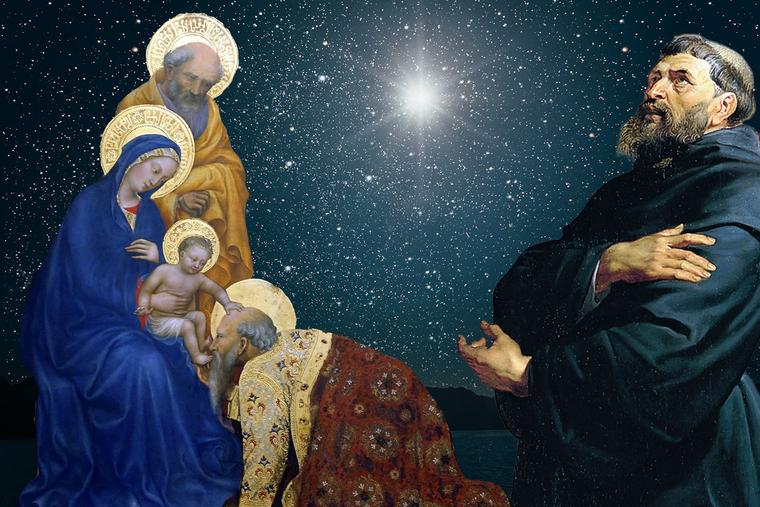
For as long as human beings have looked up at the night sky, we have tried to make sense of ourselves by reading what we see there.
Long before telescopes or algorithms, people named the stars, traced patterns between them, and searched the heavens for meaning that seemed elusive closer to home. The impulse is ancient and understandable. When life below feels chaotic, unjust or opaque, the promise of clarity “from above” is alluring.
St. Augustine knew this temptation well.
In Confessions Book VII, Augustine recounts his fascination with astrology — not merely as a youthful curiosity, but as a serious attempt to explain the world and his own life. Astrology offered him an ordered universe governed by intelligible laws, where events could be explained, predicted and justified. Yet Augustine eventually recognized that this apparent illumination was a form of darkness. Astrology did not lead him to truth, but away from responsibility, freedom and grace. It explained everything while converting nothing.
What finally unsettled Augustine was not simply that astrology was false, but that it subtly displaced God. By locating meaning and causality in the stars, it excused human pride and moral evasion. Sin could be blamed on fate. Failure could be traced to configurations of the heavens. The hard work of interior conversion (of humility, repentance and trust) could be postponed indefinitely.
Augustine would later offer a sustained critique of astrology in The City of God, but it is in the more personal pages of the Confessions that the spiritual stakes of that rejection become most accessible. In both works there is the same conclusion: Astrology promised light but instead it delivered distance.
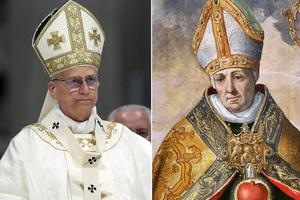
That is why Pope Leo XIV’s Christmas Eve homily feels so deeply Augustinian. Its opening lines echo the very movement Augustine describes in Book VII:
Peoples have gazed up at the sky … tried to read the future in the heavens, seeking on high for a truth that was absent below … grasping in the dark, they remained lost, confounded by their own oracles.
This is not a rejection of wonder or beauty. Augustine never lost his awe before creation. What both Augustine and the homily resist is the temptation to seek explanation instead of encounter, systems instead of salvation.
Christmas announces a radical reversal.
“The hint of the dawning day is no longer to be sought in the distant reaches of the cosmos, but by bending low, in the stable nearby.” What astrology sought in abstraction, Christmas offers in proximity. The light that saves the world does not arrive as a theory, a calculation, or a clever solution. It arrives as a Child.
This movement (from stars to stable) is the heart of the Christian critique of every age. Whenever we attempt to master reality from above, to impose coherence without humility, we repeat Augustine’s early mistake. We trade participation for control. We substitute explanation for love.
The Incarnation refuses this trade.
God does not clarify history from a distance; he enters it. He does not resolve human complexity by force; he assumes it. He does not eliminate darkness by command; he illumines it from within. The omnipotence of God appears not as domination, but as vulnerability. Divine wisdom cries, needs warmth, and must be held.
Augustine would later summarize this truth with devastating simplicity: Human pride weighed you down so heavily that only divine humility could raise you up again.
This is why Christmas is not merely consoling; it is disruptive. It exposes the inadequacy of every worldview (ancient or modern) that promises total explanation without transformation. In Augustine’s time, astrology played that role. In ours, the names have changed, but the logic remains familiar.
We still look “on high” for answers that spare us the work of conversion. We place our hopes in economic systems, technological mastery, political ideologies, or therapeutic frameworks that promise order without sacrifice. These systems often contain partial truths.
Like astrology, they can be sophisticated, data-driven, and internally coherent. Yet when they crowd out the human person (when they leave no room for the poor, the child, the stranger, or the inconvenient) they reveal their limits.
As Pope Benedict XVI once warned, if there is no room for the human person, there is no room for God. Christmas insists that salvation does not arrive as mastery but as mercy. God does not give us “a clever solution to every problem,” the Holy Father reminds us, “but a love story that draws us in.” That distinction matters. A solution keeps us in control. A love story asks us to change.
To find the Savior, the homily says, one must not gaze upward, but look below. That is an Augustinian sentence if ever there was one.
For Christians today, the wisdom of Christmas is therefore not primarily about sentiment. It is about re-learning where the light is found. Not in distance, but in nearness. Not in abstraction, but in flesh. Not in systems that explain humanity, but in a God who becomes human.
Augustine’s journey away from astrology prepared him to receive the Incarnation. Our own age, crowded with competing (false) explanations, stands in similar need of preparation. Christmas does not ask us to abandon reason, inquiry, or wonder. It asks us to let them be completed by humility.
The stars still shine. But they no longer determine our fate. In the quiet of a stable, God has given us something greater than certainty: Himself.

Brendan Towell Brendan Towell is the Director of Spirituality and Mission for Secondary Schools and Schools of Special Education in the Archdiocese of Philadelphia, where he lives with his family. His interests include Augustinian Studies, Ressourcement Theology and the theological legacy of Pope Benedict XVI. His website is BrendanTowell.com.