‘As You Wish’: Truth and True Love in Rob Reiner’s ‘The Princess Bride’
COMMENTARY: The beloved film echoes a truth taught from the manger and proclaimed by the martyrs: Death cannot stop true love.
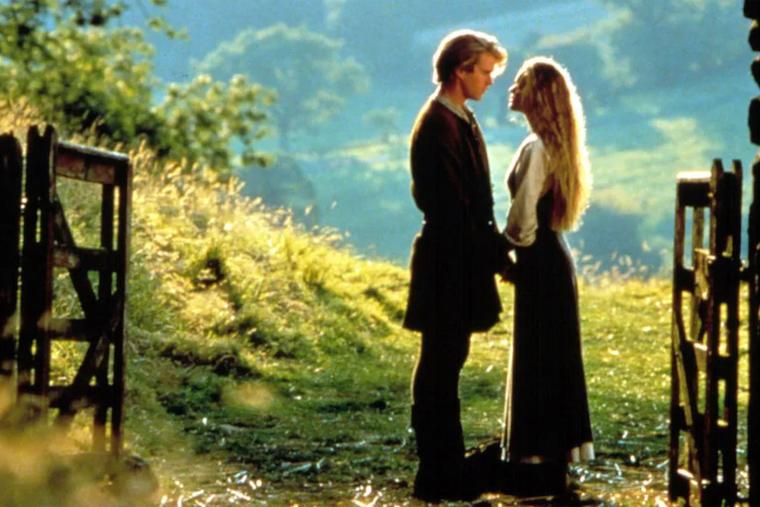
The dreadful murder of Rob and Michele Reiner, allegedly at the hands of their son, has returned the filmmaker’s work to greater prominence in recent days. No doubt some families will be prompted to watch again The Princess Bride over the holidays. That would be a good choice, for the film has some powerful Christian messages.
And it is wholesome family fare — the entire film is framed as a grandfather reading a story to his grandson, sick in bed. It is the story of a young boy’s imagination, where there lurk frightening water creatures and fearsome rodents, where giants are delightful and not menacing, where wizards raise the (mostly) dead, and even boys not yet teenagers know that there is something lovely about girls.
A celebrated actor in the 1970s sitcom All in the Family, Reiner had an astonishing run as a movie director, making a series of acclaimed and popular films one after another: Stand by Me (1986), The Princess Bride (1987), When Harry Met Sally (1989), A Few Good Men (1992). He was one of the hottest directors of the time, capable of choosing his own projects, and he insisted that he would make a film version of William Goldman’s novel, The Princess Bride.
For years Hollywood studios had turned it down, not knowing what to do with it. Was it a fairy tale? A comedy? A medieval farce? A fantasy? A swashbuckling adventure? A romance? But Reiner was at the top of his game, so he got his wish, and he made the film as all of the above.
The Princess Bride did not do particularly well upon theatrical release — partly because the studio did not know how to market this strange film that defied categorization. It was saved by the then-new world of home video rentals, and it grew in popularity by word of mouth. In the 1990s, it was a favorite for movie nights at church youth groups.
I saw it for the first time on the big screen less than a year ago, having watched it elsewhere for decades. The theater was packed with people born long after its 1987 release, and yet the audience could recite plenty of lines along with the characters.
As you wish.
Inconceivable!
You keep using that word. I do not think it means what you think it means.
Hello. My name is Inigo Montoya …
For many years, I used the “battle of wits” scene in classes for future Catholic schoolteachers to illustrate the relationship between the truth and different conceptions of freedom. Is it better to know the truth about which goblet is poisoned before choosing which one to drink?
If freedom is mere license, the capacity to choose without restraint, better not to know the truth, as one would feel compelled not to choose the poisoned goblet. But if freedom is the capacity to choose the good, much better to know the truth about what is being chosen, for good or for ill.
Truth is the enemy of freedom as willful license; truth is the friend of freedom as the path to flourishing. The Princess Bride made learning such lessons fun.
While various scenes remain lodged in the memory, it is the main arc of the film that reflects a Christian understanding of the world. In a world marred by sin, wickedness can prevail for a time, as the Psalmist observed in ancient times: Why do the wicked prosper?
In The Princess Bride there is the wicked Prince Humperdinck who employs Vizzini, a Sicilian mercenary, to capture Princess Buttercup and provoke a war by dishonest means. Inigo is consumed by a desire for revenge. And the Dread Pirate Roberts is powerful because of his reputation for merciless slaughter.
In such a world, true love seems an impossible ideal. Westley, the hero, remains motivated by true love. He explains his rising from the (mostly) dead:
“Death cannot stop true love. All it can do is delay it for a while.”
That line echoes the Bible’s great love poem, the Song of Songs:
“For love is strong as death. … Many waters cannot quench love, neither can floods drown it” (8:6-7).
The film’s surprise twist is that the Dread Pirate Roberts is a fake, a villain who relies on pretense to intimidate others. He must hide behind a mask. Westley, as the pirate, is a deception; Westley, who loves Buttercup and is willing to die for her, is the truth.
True love rooted in sacrifice is real; power rooted in deceit and domination is not, in the end, as real. Indeed, in the final battle Westley triumphs not through power or skill, but in a state of sacrificial weakness.
A fairy tale is not the gospel story, and it is enjoyable to repeat favorite lines without searching for deeper meanings. But those Christian concepts are there in The Princess Bride, a fitting way to remember Rob Reiner as his family mourns him now.
- Keywords:
- truth
- love
- movies
- rob reiner