The Catholic Church Should Be Doing What Charlie Kirk Did
COMMENTARY: Of all the diabolical smears in the world, none have the sticking power of false witness, when people want to believe it.
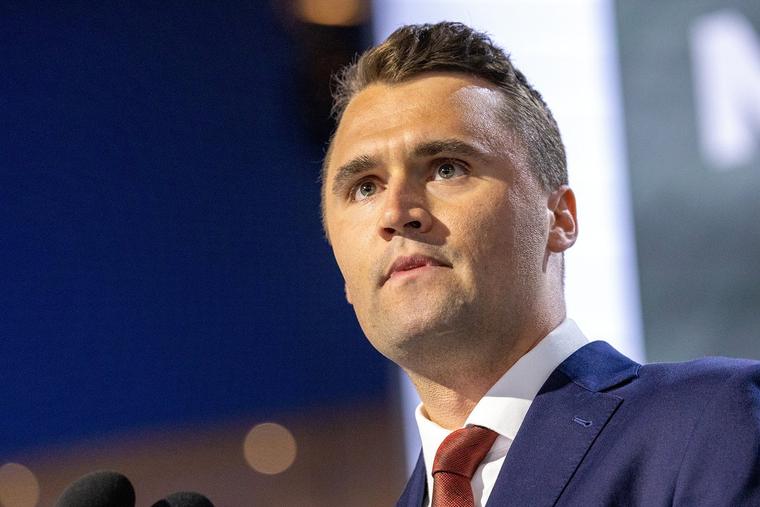
The last two weeks have been a sobering time for me and my family, as the assassination of Charlie Kirk has brought to my mind a few of my encounters with mobs.
Let me say straight out that I find mobs loathsome and dehumanizing. I have told this story before, but it bears repeating.
The year was 1984, and I was on the political left — but not with regard to abortion, euthanasia, pornography, or national oversight of education. I was serving at St. Francis Catholic Worker House in Washington, D.C. Some young people from El Salvador had come to recruit me to their cause against the new president, José Napoleón Duarte. They showed me a film about their war-torn nation.
I was persuaded. So one Saturday morning, I walked to the Salvadoran embassy to take part in a demonstration.
But when I got there, I was stunned. I saw 60 or 70 people, mostly young, both male and female, marching around the embassy, banging on garbage can lids and shouting slogans at the top of their lungs. One face, that of a stout young woman, remains seared in my mind's eye, as it was contorted with wrath.
If you can imagine laying your hand idly on a rock and feeling instead the flesh of a snake, you know what I sensed, that I had unawares come upon something inhuman, cold and evil. I did not disagree with their position. I remained persuaded. But I could not join them. I sat for a while and watched them, fascinated and appalled. Then I left, as the poet says, a sadder and a wiser man.
On a winter night in 2012, I drove 100 miles to Yale University, invited to speak to a small group of Christian students, a chapter of the recently founded Anscombe Society, dedicated to traditional sexual morality and named after the formidable Catholic philosopher, Elizabeth Anscombe. I had recently written a book, Defending Marriage: Ten Arguments for Sanity, upholding, in a variety of ways and without any vituperation, the natural law as regards male and female.
I was not there to talk about the book. My talk was on the meanings of personhood and love, and was inspired by insights I had gotten from the theologian Hans Urs von Balthasar, surely no hide-bound conservative by any stretch of the imagination. But some gay students got notice of the talk, and when I arrived at the building, my hosts came to warn me early that there might be a bit of trouble.
There was. It could have been worse, but about 40 students came marching in to disrupt the talk or just to make themselves obnoxious. “One in four and maybe more!” they chanted, referring to somebody's estimate of how many of the men at Yale were gay.
I decided on the spur of the moment to delay the talk I had planned, beginning with a personal story. I don't remember what it was, but I meant to appeal to them and to lead them, gently, to be open to listening. I had said quietly to one of my hosts, “Kids,” referring to the young people who didn't know that they were embarrassing themselves, and this one little word was enough for one of the protesters to use, reporting on it in the student newspaper and claiming that I had treated them with scorn.
That was not true. I invited them to stay. Most of them, seeing that I wasn't going to breathe fire for fire, and guessing that a talk on rather abstruse Christian personalism was going to be anticlimactic after their show of anger-in-numbers (it was Yale, after all, and they far outnumbered my hosts), left when I paused before the talk proper. A few of them did stay. They behaved themselves, mostly, but they kept my hosts from asking any questions afterward, dominating the room.
Since I didn't want to give the impression that their objections could not be met, I engaged them in talk, patiently, for 45 minutes, after which it was time to go. My hosts, who paid me an honorarium, did not end up getting what they had hoped for.
An invidious account of the event later appeared in the student newspaper. Not all the superglues in the world, I find, have the sticking power of false witness, when people want to believe it.
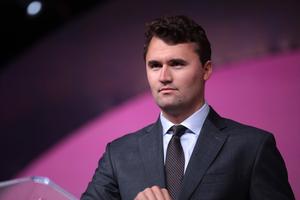
Which brings me to Charlie Kirk. From what I have seen, the young man — somehow overlooked by schools and colleges despite his sharp and energetic mind, or maybe not despite but because of it — did not shout at people, did not try to muffle or humiliate his interlocutors, and did not allow the crowds of his admirers to do so either.
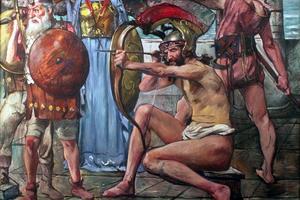
In one clip, a young man comes up to the microphone to insist that the United States is a democracy, while Kirk, trying to correct him, says instead that we have a representative republic, and that the Constitution was devised to keep democratic forces in check. That was because most of the Founding Fathers detested democracy, having taken to heart the failure of Athenian democracy to survive its internal contradictions and weaknesses.
Kirk is patient and, in a young man’s fashion, lenient. In another clip, he is arguing with a young woman about abortion, and he presses her, not letting her wiggle out of it, to tell him exactly when the developing child becomes a human being, and why. When she suggests brain activity as the divide, he asks her when she believes that activity begins, and her guess is too late by a couple of months.
Other clips are similar. If whipping a mob into fury is a money-maker, Charlie Kirk didn’t do that, and his website doesn't give any indication that the people in charge of it want to get rich that way.
Meanwhile, I have seen a video clip of my friend Robert George, the celebrated professor of political science at Princeton, with his good friend and colleague Cornel West, talking about their own dealings with Kirk. Kirk had invited them to speak to him on a podcast about a book they had written together, George the conservative and West the “non-Marxist socialist,” as he defines himself.
George and West, like Kirk, are devout Christian believers. They enjoyed their time with him, and they both mourned his assassination. What most impressed them was, as West said, “The brother read the text.” That is, before the podcast, Kirk read their book attentively, so that all his questions were clear and well-founded.
Most interviewers do not. The professors did most of the talking in that podcast, while he listened. This was a sign that he meant it when he would say, at his college events, “Prove me wrong.” He was open to changing his mind.
That he was in fact changing his mind with regard to the Catholic Church, I think no reasonable person can now doubt. I am not saying he was certainly going to become a Catholic. But his wife is Catholic, and he had begun to pray the Rosary, and he had begun to speak about Mary with some special veneration.
I have witnessed, since the assassination, various Catholics online who seem to detest the very idea that he was moving closer to Catholicism. Why should it sadden them to think so?
Bear in mind, the Church gathers a variety of sins under the heading of false witness: for one, thinking the worst of your brother’s words or deeds, when a more charitable and reasonable construction is available; and appearing to delight in thinking the worst.
I will not speculate about Charlie Kirk’s soul. I am shy of declaring anyone to be a saint or a devil. The human heart has many secret chambers; who can fathom it?
I will say this. What he did, the Catholic Church should be doing, if we can find someone to do it. Such a person must be young and winsome and almost preternaturally patient. He must be tireless in reading and thinking. He must be willing to change his mind, certainly not on anything de fide, but on the implications or applications of those truths; and he must show himself as open to do so, regardless of the dire temptations of success or fame.
It also means that truth comes first, not feelings, because if it is beyond our capacity to know someone else's heart, it is no less difficult for us to know our own, and though the lies we tell about other people are more culpable, the lies we tell about ourselves are far more frequent and do us the greater harm.
To build a cathedral of supposed love on a falsehood is to build with sand on sand. The first lap of a wave undermines it; a little more, and it is gone.
Yes, some people employ the truth for uncharitable purposes. They love not truth but the harm they cause by it. But it remains truth, nonetheless.
Good and evil remain what they are, good essentially and evil by its contradiction or perversion or deficiency of good, regardless of what the clock or the calendar says. Honey is sweet and arsenic will kill you, and it does not matter what you think about it.
There can be genuine truth without love, which brings no good to the truth-teller and which does not assist the propagation of the truth. But there can be no genuine love without truth, though that truth may be nearly buried, or so twisted out of shape as to be hardly recognizable. We must rededicate ourselves to truth.
Perhaps it might be a spur for us, if we remember that Truth was the name St. Augustine commonly gave to him whom we are to follow and love and obey: Jesus Christ our Lord.
As for Mr. Kirk: Requiem aeternam dona ei, Domine, et lux perpetua luceat super eum.
- Keywords:
- charlie kirk
- truth