The Many Hidden Saints of Kent: Holy Men and Women Who Remain ‘Powerful Intercessors’
The Catholic history of the English county that’s slightly smaller than Rhode Island has had an enormous impact on the world, thanks in large part to its close links with possibly as many as 80 saints and blesseds.

CANTERBURY, England — “It’s like an epicenter of holiness,” said Canon Marcus Holden, “like several continents put together, all in one little place.”
Canon Holden, who formally established the Shrine of St. Augustine of Canterbury in Ramsgate in 2012, was referring to the “remarkable” Catholic history of the county of Kent in England, an area slightly smaller than Rhode Island but with close links to possibly as many as 80 saints.
Many of them are hardly known to most English citizens — even citizens of Kent — aside perhaps from some of its most famous who, to name just a few, include St. Augustine of Canterbury, the sixth-century chief evangelizer of the English, the 12th-century martyr St. Thomas Becket of Canterbury, the Carmelite St. Simon Stock of Aylesford, and Reformation martyr St. John Fisher of Rochester.
Canon Holden told the Register that he “would be willing to bet” on Kent having more canonized saints than any other county in England, adding that the reason for this is that it is the cradle of Christianity in England, the home to so many of England’s first holy souls, including those of royalty and England’s early missionaries. “It could hold its own with the Diocese of Rome,” he said.
If St. Augustine had not taken up the mission entrusted to him by Pope St. Gregory the Great (and had succumbed to the temptation to turn back while on his way to Canterbury), Christianity in the West would have looked quite different, said Church historian John Coverdale, who has written extensively about the saints of the Diocese of Southwark, which includes the county of Kent.
“You wouldn't have had Catholicism or, more broadly, Christianity in England, and also when the colonies were being established on the east coast of the United States, when the British went to India, when we went to Australia and so on,” he told the Register. “By that time they were Protestant, but they wouldn’t have had the Christian attitudes and faith.”
St. Simon Stock played a leading role in establishing the Carmelite Order in Europe at Aylesford in Kent and was born near the town. Perhaps most famous for founding the Brown Scapular sacramental after the Blessed Virgin Mary gave it to him in a vision in 1251, his role was later vital to the lives of the Carmelite Sts. Thérèse of Lisieux, Teresa of Avila and John of the Cross.
Canon Holden pointed out that much of the Carmelite tradition therefore stems from Aylesford. He recalled subsequent apparitions such as at Fatima, where Our Lady is holding both a scapular and Rosary, saying there is therefore “a huge Fatima link with Kent.” The Carmelite Priory at Aylesford, founded in the 13th century, continues to be a popular pilgrimage destination for the faithful in England.
Canterbury Archbishops
Other well-known saints of Kent are past archbishops of Canterbury who, besides St. Thomas Becket, whose martyrdom inspired great devotion and led to many miracles due to his intercession, include the 12th-century Italian theologian and Benedictine St. Anselm; the first martyred archbishop of Canterbury, St. Alphege; the seventh-century scholar, martyr and soldier St. Theodore; and the missionary saints who traveled with St. Augustine: Mellitus, Justus and Paulinus.
In total, 20 archbishops of Canterbury who lived between the sixth and 13th centuries have been canonized. Canterbury became an Anglican diocese after Henry VIII broke with Rome.
Another archbishop was St. Dunstan, a 10th-century monk, metalworker and bellmaker who once warded off the devil using hot-red tongs taken from his forge. St. Dunstan’s church in Canterbury, home to the head relic of St. Thomas More which, it was announced in July, will be exhumed after 500 years, also fittingly has the oldest working church bell in Kent dating back to 1325.
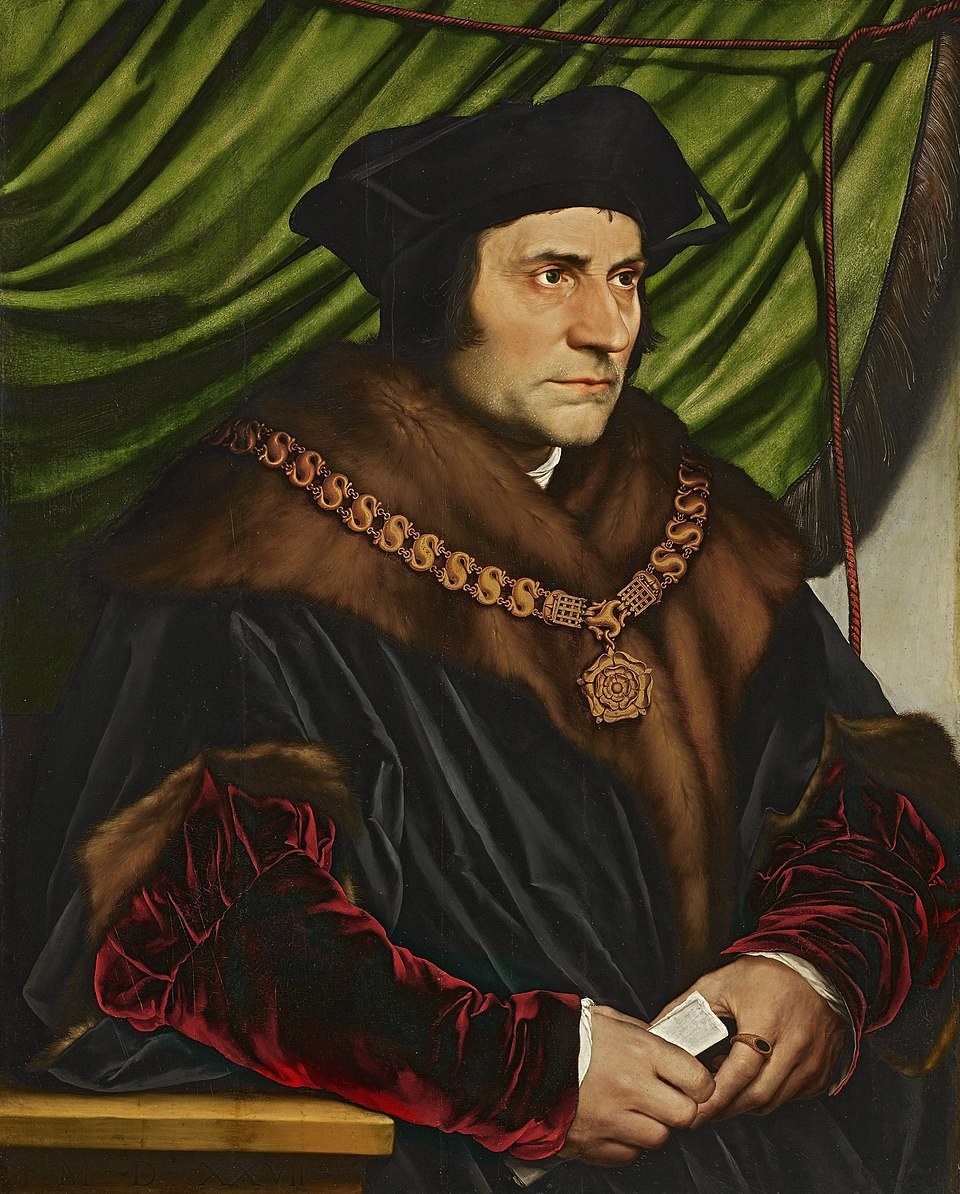
“Canterbury really is a saintly city,” said Coverdale. “Were it not for the Reformation, we would probably still be going on pilgrimage there today to venerate the huge number of saints who lived and died there. Their shadows still lie in the city’s streets, if you know where to look.”
Among the lesser-known saints and their remarkable stories is that of St. William of Perth, a baker from Perth in Scotland, who moved to Kent and set aside every 10th loaf to feed the poor. He adopted a foundling child, but the orphan would rob him outside Rochester, killing him in the process and making him a martyr. St. William worked many miracles, and his tomb “became a major draw in Rochester,” said Coverdale. A story of “virtuous Christian charity,” St. William did not seem to do much out of the ordinary “but became this very attractive saint, and so there’s hope for most people there,” Coverdale said.
The 11th-century St. Gundulf was a bishop of Rochester, a Benedictine known for his architectural and engineering expertise in Kent and beyond. Some wonder if he was the inspiration for J.R.R. Tolkein’s character Gandalf in The Lord of the Rings, although this is only speculation. St. Gundulf is credited for being behind the construction of the Tower of London and Rochester Castle, both of which have similar architectural designs.
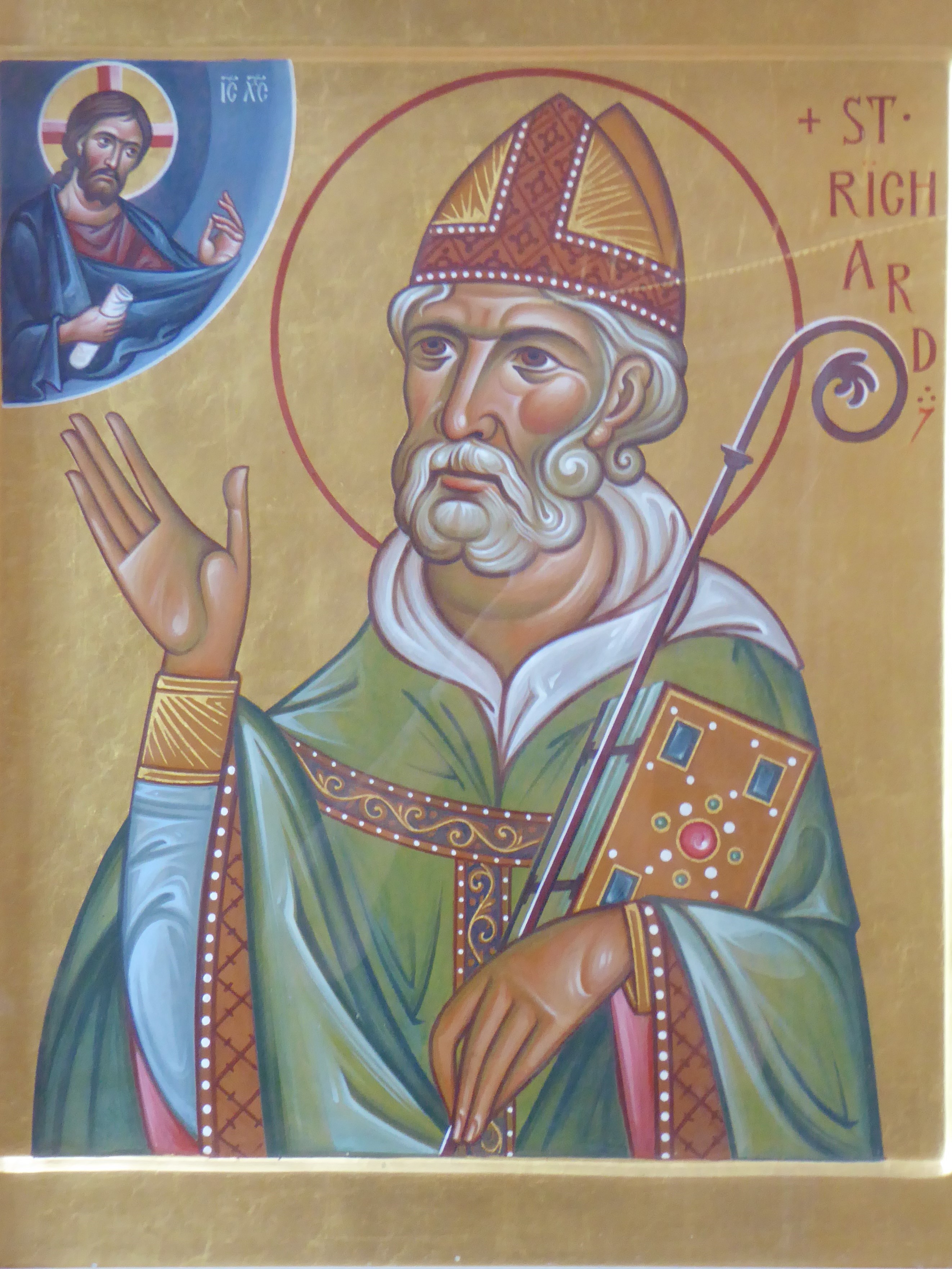
Then there is St. Richard of Chichester, a preacher of the crusades and once parish priest in the Kentish towns of Charing and Deal, who died in Dover in 1253. The chapel of St. Edmund which St. Richard had consecrated is known as the Miracle Chapel on account of surviving at least three attempts to destroy it over the past 800 years. A local priest, Father Terence Edmund Tanner, restored the chapel in the 1960s. The organ relics of St. Richard remained in the chapel for pilgrims to venerate shortly after his death before they decomposed. He is perhaps best known for this prayer to Our Lord:
“May I know thee more clearly,
Love thee more dearly,
Follow thee more nearly.”
Kent is also home to many other prominent pre-Reformation saints, such as sixth-century St. Bertha, queen of Kent and wife of King Ethelbert, who was later baptized and canonized. St. Bertha was a princess from what is now France and was already a Christian when St. Augustine arrived, although she was only allowed to practice her faith privately. King Ethelbert was not a Christian for most of his life, yet allowed St. Augustine to preach the faith freely, gave him land to live on and to build Canterbury Cathedral, and, recalled Coverdale, told him he was allowed to win as many people to Christianity as he could.
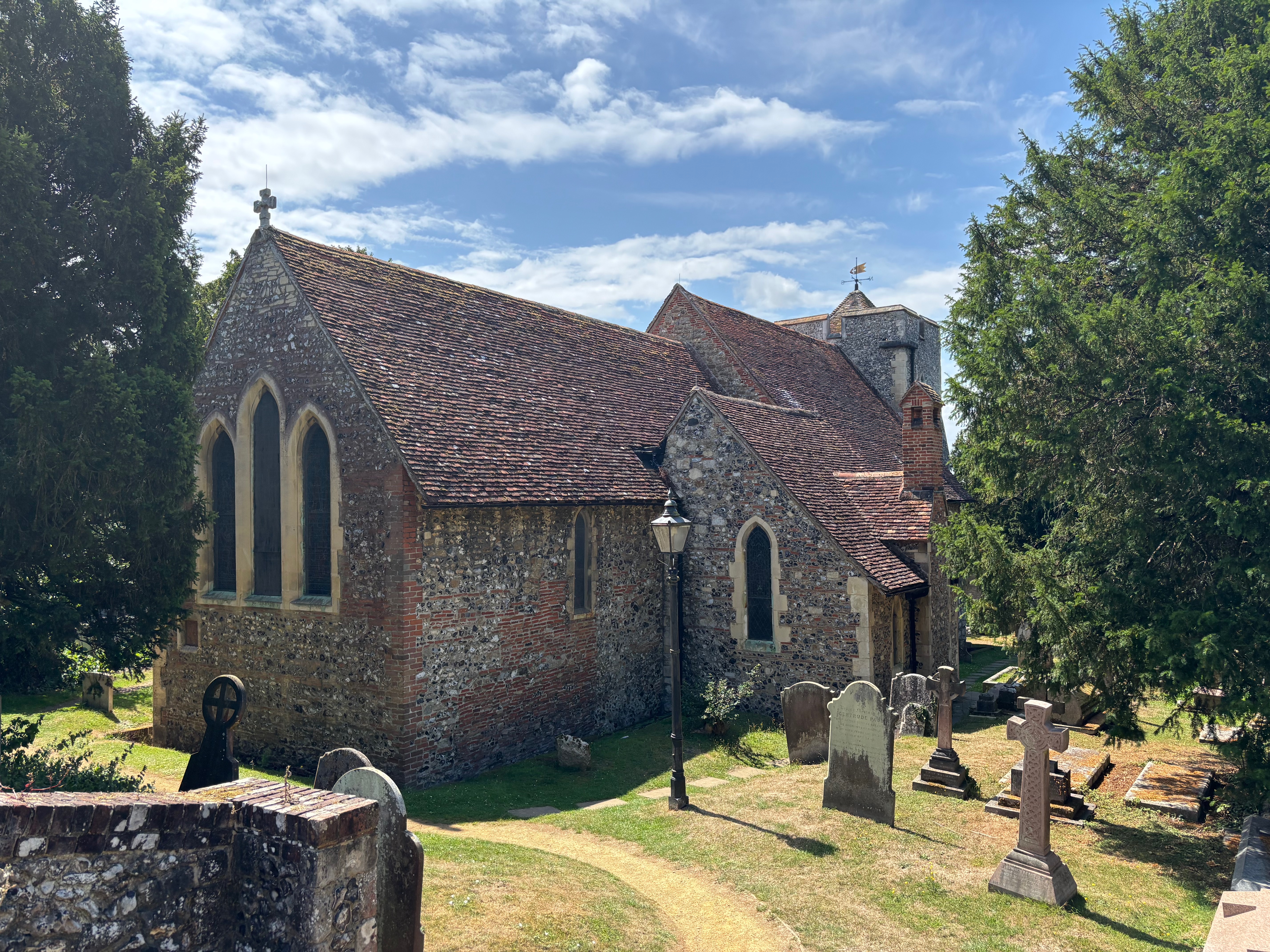
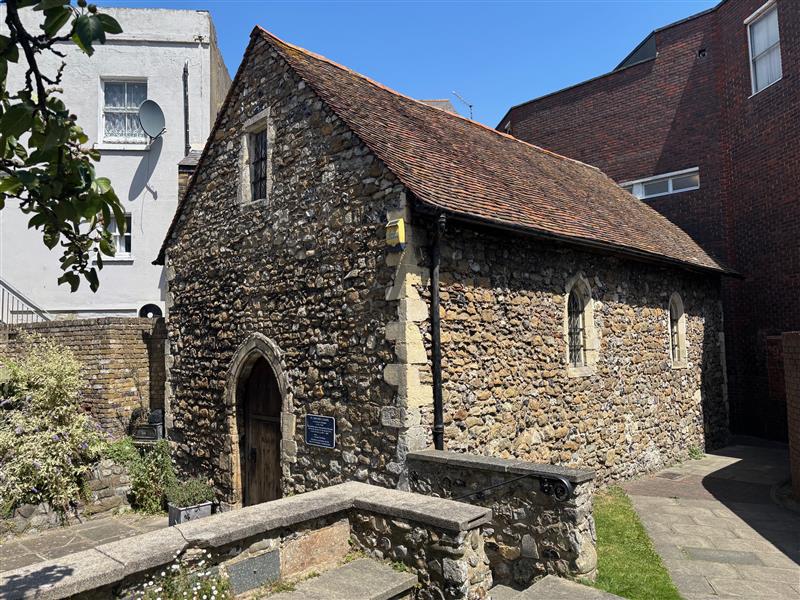
St. Martin’s church in Canterbury, said to be the oldest church in continuous use in the English-speaking world, was originally St. Bertha’s private chapel.
The county also has many other women saints, such as eighth-century St. Mildred of Thanet, an abbess who was the great-great-granddaughter of St. Ethelbert. St. Mildred’s mother, Domne Eafe, a Kentish princess and founder of Minster Abbey, which exists to this day, also became a saint, as did St. Mildred’s two sisters: St. Milburga of Much Wenlock and St. Mildytha.

In recent years, St. Eanswythe, a granddaughter of St. Ethelbert who died around the year 650 at age 20, has risen to prominence. She founded a convent in Folkestone, possibly the first in England, on the south Kent coast and lived a good and holy life there. Her relics were discovered in 1885 in a wall of St. Mary and St. Eanswythe’s Anglican church in the town and were authenticated in 2020. They are believed to be the only verified remains not only of the Kentish royal dynasty, but also the earliest verified remains of an English saint.
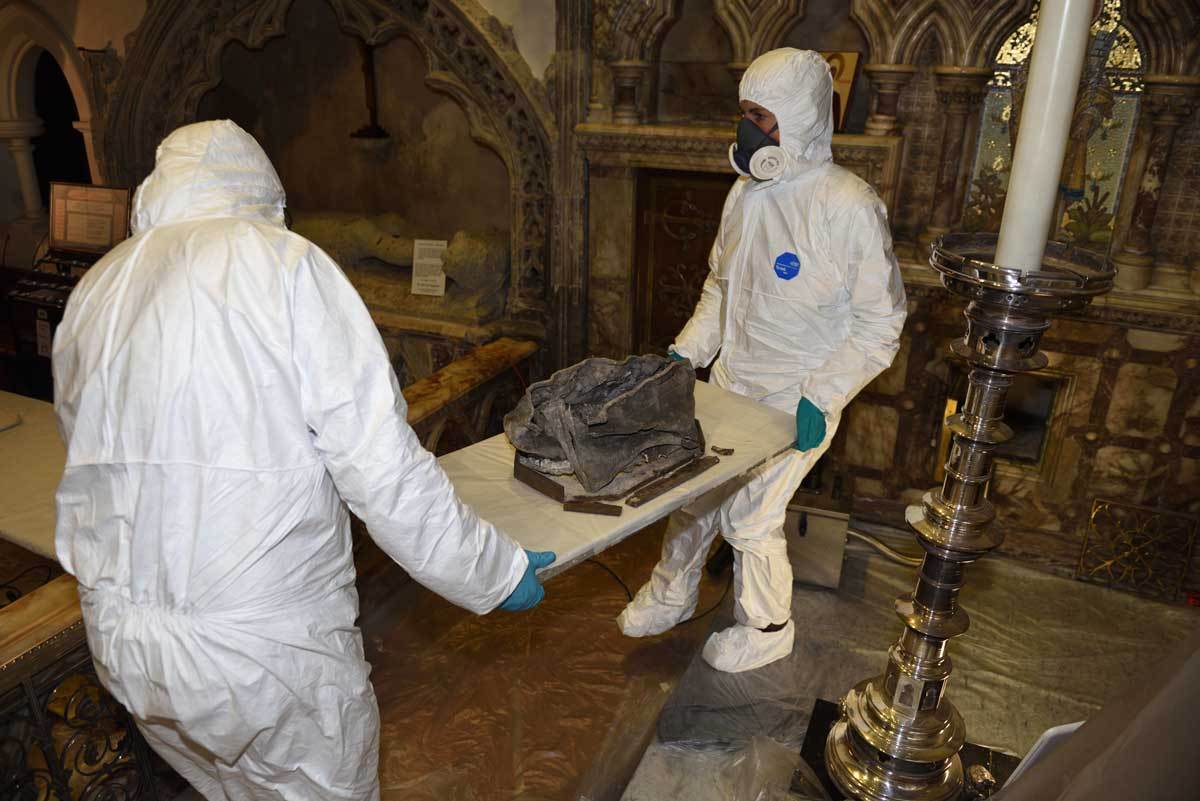
Stressing the significance of the Kentish saints that go back to the early Church, Coverdale said it is the pre-Reformation saints who daily “lived the faith” while those at the Reformation faced persecution and martyrdom for the Catholic faith.
Reformation Saints
Even so, not all of the Reformation saints of Kent are “recognized fully,” said Coverdale, “but all are English martyrs of one sort of another.”
These include St. John Stone, an Augustinian friar in Canterbury and the only friar to refuse to accept Henry VIII’s claim to supremacy over the Church when the friary was dissolved in 1538. For this, he was hung, drawn and quartered on top of the Dane John, which is a prominent hill in Canterbury, and afterwards venerated as a saint and martyr.
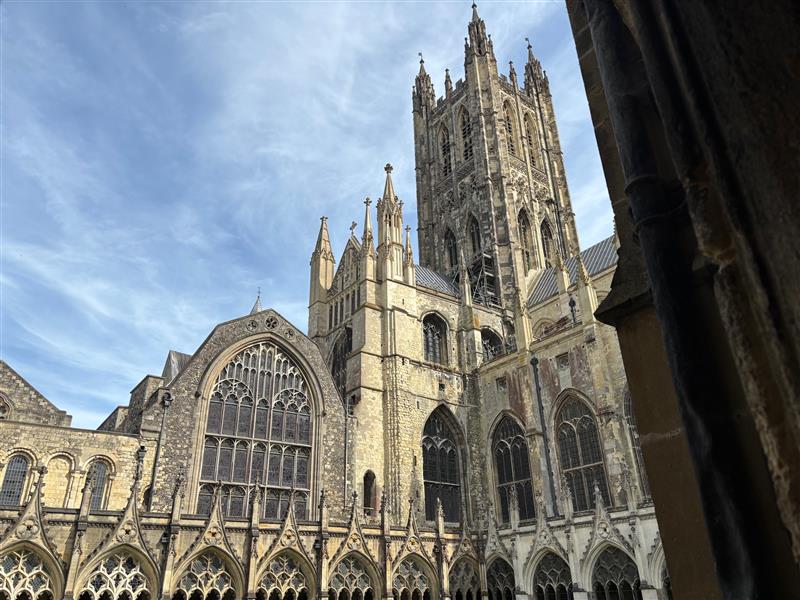
Although not strictly in Kent, also among the many martyrs of the region was Blessed David Gunson on the Old Kent Road in modern-day London, close to the border with Kent. A Knight of Malta born into a naval family and martyred in 1541, Coverdale said he is “an emblem of what England lost at the Reformation — a man of international Catholic nature where you were distinctively English but at the same time part of a much wider world.” He said Blessed David is a good example of “looking at how the Church interacts beyond national boundaries.”
Possibly as many as 57,000 people were executed in England under Henry VIII, many of them Catholic martyrs for the faith, and a good number came from Kent. Although not yet recognized as a saint, Elizabeth Barton, known as the “Holy Maid of Kent,” was executed in 1534 after having visions of heaven and making accurate prophesies, one of which was that Henry “was in danger of hell,” according to Kent resident Joseph Bevan, author of Two Families: A Memoir of English Life During and After the Council. The prophesy led to her execution. “Barton, to this day, has not been recognized by the Church as even a venerable, yet prayers to her have resulted in many blessings,” Bevan told the Register.
Coverdale, who in 2014 co-founded the Way of St. Augustine pilgrimage route with Canon Holden and also played a key role in establishing the Shrine to St. Augustine in 2012, underlined the importance of raising awareness of these saints and blesseds so they can become again part of our “prayer life and spiritual reality, not just historical figures.”
Invoking the saints, making pilgrimages to where they are venerated — as is possible with the Way of St. Augustine and other pilgrimage routes in Kent — helps to “bring them alive again,” said Coverdale. Local saints’ lives, he said, often share relatable experiences with the community, fostering a sense of spiritual closeness and relevance. There are four “Canterbury Caminos” the faithful can undertake to visit places linked to the saints in the county, each one centered on Canterbury.
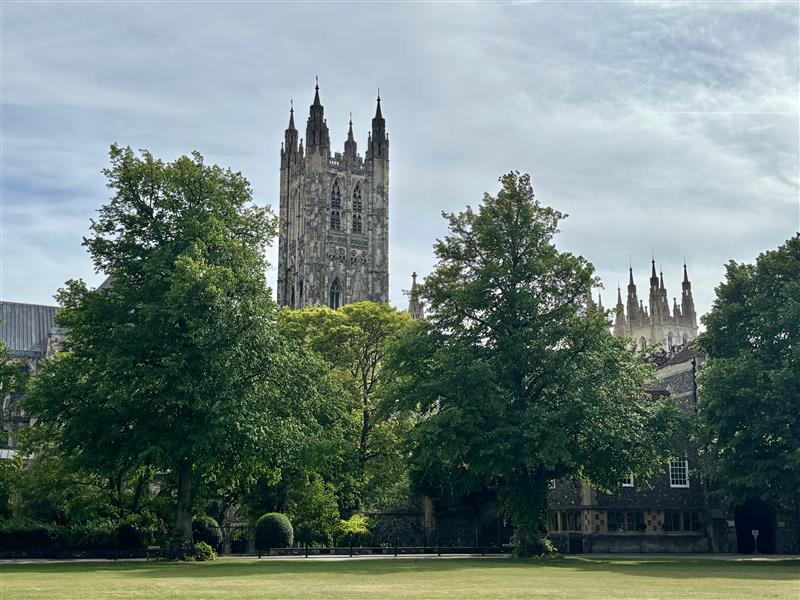
Canon Holden said he has often been pleased, when giving presentations on these saints of the diocese, how interested people are in them. “They get very excited once they hear about them; they love the idea of discovering these saints and drawing lessons from different ones,” he said.
“I think Americans, particularly, love all of this,” he added, while lamenting how “we [in England] have played it down; we ourselves have buried it.”
But by bringing the saints back into public consciousness, Canon Holden said, “you not only share knowledge about them, but also come to realize they are very powerful intercessors.”

Edward Pentin Edward Pentin is the Register’s Senior Contributor and EWTN News Vatican Analyst. He began reporting on the Pope and the Vatican with Vatican Radio before moving on to become the Rome correspondent for EWTN's National Catholic Register. He has also reported on the Holy See and the Catholic Church for a number of other publications including Newsweek, Newsmax, Zenit, The Catholic Herald, and The Holy Land Review, a Franciscan publication specializing in the Church and the Middle East. Edward is the author of The Next Pope: The Leading Cardinal Candidates (Sophia Institute Press, 2020) and The Rigging of a Vatican Synod? An Investigation into Alleged Manipulation at the Extraordinary Synod on the Family (Ignatius Press, 2015). Follow him on Twitter at @edwardpentin.