Looking at Venezuela Through a Catholic Lens
COMMENTARY: Truth matters, means matter and human beings are never mere instruments — not even when the target is guilty and the temptation to ‘finally do something’ is overwhelming.
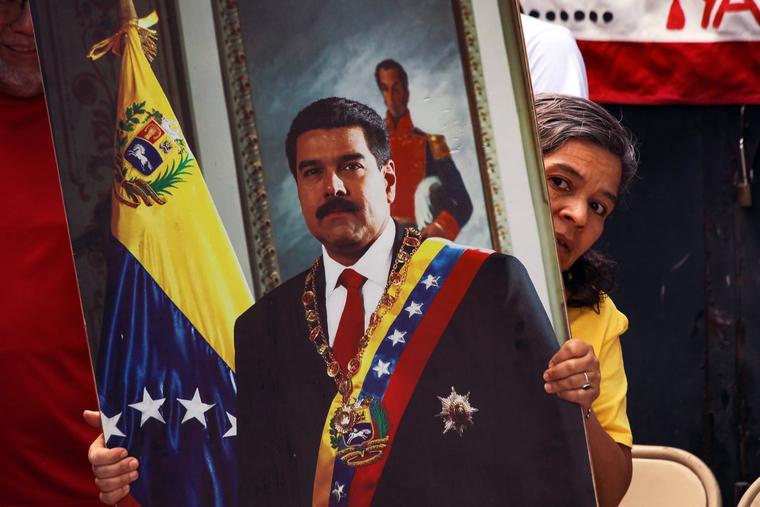
This weekend’s news out of Venezuela landed like a thunderclap. President Trump and his team described what appears to be an almost flawless operation as a law-enforcement action tied to U.S. indictments.
Yet Trump also spoke in the language of control — that America would run Venezuela until it is “ready” to stand on its own. He also questioned the standing of María Corina Machado, a leading opposition figure, suggesting she is not respected by the Venezuelan people.
That combination — law-enforcement language, trusteeship language and a public swipe at the opposition — triggered predictable reactions. What does Trump mean by “control?” Did he have the authority to extract Venezuelan officials?
Some cheered. Some condemned. Most people picked a team before they picked up the facts. Catholics should resist this reflex.
Not because we are naïve about evil. Not because we don’t understand threats. But because the Church teaches something inconvenient in a world addicted to slogans and, these days, instant results: truth matters, means matter, and human beings are never mere instruments — not even when the target is guilty and the temptation to “finally do something” is overwhelming.
How Venezuela Reached This Point
To understand this moment, Venezuela’s reality matters. The system known as “Chavismo” came in through the ballot box in 1998. Then, with Cuba’s help, Hugo Chávez and his supporters systematically hollowed out Venezuela’s democratic institutions that make elections meaningful.
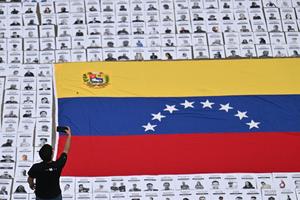
Venezuela has not been a normal nation-state since those 1998 elections. Whatever one thinks of the pre‑Chávez political order, the project that replaced it has been brutal on the Venezuelan people: political prisoners, torture chambers, hostages, censored media, weaponized courts, economic collapse, scarcity, forced exile and the steady humiliation of ordinary life.
Geopolitical Platform With Changing Faces
Venezuela isn’t merely suffering from bad domestic governance; it has become a platform. In the view of experts — and in the lived experience of many Venezuelans — Cuba, for example, has “set up shop” inside Venezuela’s security architecture, with help and partnership from Russia, China and, some argue, Iran.
Venezuela is not simply an “elections issue.” It is a party-state survival system, hardened by external patrons, and reinforced by security and intelligence know-how imported from abroad. Maduro is no saint.
And Chávez — dead now for more than a decade — is still treated by many as a kind of spiritual president in the national imagination. Not North Korea deity-style, but as close as Latin America’s political world tends to get: a mythic figure whose image serves as a loyalty test, a symbol that outlives the man. That matters because it tells us something sobering: removing one leader does not automatically dismantle the system. Systems survive by replacing faces.
Means and Ends
Catholics should never be impressed by earthly power. The Church is called to insist on truth and moral clarity, especially when emotions are high. Even a tyrant does not lose his human dignity. Justice is not vengeance.
The Christian moral imagination refuses the most tempting lie in politics: that because the end feels righteous, the means are automatically clean. They are not. Catholics can acknowledge the suffering of Venezuelans and the danger of hostile influence in our hemisphere and still insist that any use of force must be judged by moral standards — protecting innocents, limiting harm and keeping power under discipline.
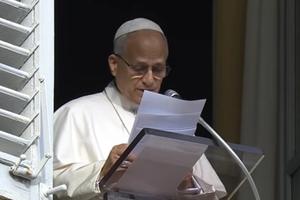
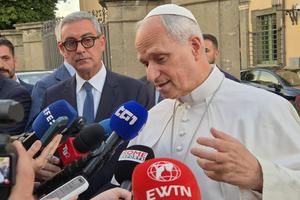
Pope Leo XIV expressed “deep concern” about what is unfolding in Venezuela and stressed that “the good of the beloved Venezuelan people must prevail over every other consideration. This must lead to the overcoming of violence, and to the pursuit of paths of justice and peace. I pray for all this, and I invite you to pray too.”
It is with that deep concern that we should follow developments in Venezuela, and indeed all of the Americas. That’s why the first Catholic posture toward an event like this should be prudence: We do not yet know enough to declare moral victory — and perhaps we never will. We need truth about aims, methods, limits and what comes next.
Subsidiarity
Catholic social teaching gives us a useful concept here: subsidiarity. Decisions should be made at the lowest competent level, as close to the people affected as possible.
A republic that respects subsidiarity does not casually announce that it will manage another nation’s political future by declaration. So if Washington wants regional legitimacy, it should pursue regional legitimacy. Use the inter-American framework. Build a coalition of willing partners among responsible nations. Make the case in the hemisphere, not just in Washington.
Consequential Hemisphere
Yes, Venezuela has oil. Any serious reader should assume oil factors into the thinking of great powers. Right now, that oil has been squandered by a socialist system that ran a wealthy country into the ground. But the larger story is geopolitical.
One cannot make sense of Venezuela without focusing on its foreign policy — its deliberate partnerships with America’s adversaries and how those partnerships turn the country into an anti-American platform. This is not merely about a dictator in Caracas; it’s about whether the hemisphere becomes a safe base from which hostile powers can undermine the United States and its neighbors.
We know very little in the immediate aftermath of an operation like this. But we know enough to say this: American policymakers should pay more attention, and the rest of the hemisphere should as well. Neglect is how external powers move in, how criminal networks metastasize and how dictators consolidate.
Catholics do not have to pretend that Chavismo is a normal political program, or that Venezuela is merely a messy democracy that needs better election observers. Party-states use elections as management, not consent. They centralize power, hollow institutions and punish dissent. They do not simply “lose” and walk away.
Truth and Justice
But Catholics also should not be drafted into a simplistic story where the only moral choices are “applaud everything” or “oppose everything.” The Church’s role is older and deeper: Insist on truth, demand restraint, keep the protection of the innocent at the center, and press all actors toward peace with justice. That translates into concrete expectations:
- Tell the truth about what was done and why — without propaganda.
- Define limits: aims, timeline, exit ramps, and who governs day-to-day.
- Protect civilians as a moral duty, not a public-relations line.
- If the Venezuelan people choose it, be ready to support a bounded transition that is locally owned — not permanent management from abroad.
- Keep the humanitarian reality front and center: refugees, shortages, reprisals, and the vulnerability of civil society and the Church.
Yes, pray seriously — for Venezuela, for the Church in Venezuela, for the safety of innocents, and for prudence among leaders here and there. Because the final distinction modern politics hates is this: Strength is not the same as domination, and justice is not the same as revenge.
If we forget that, we will not only lose moral credibility — we will also lose strategic wisdom in the very hemisphere we cannot afford to lose.