How Eastern Catholics Can Help Leo XIV Unite a Divided Church
COMMENTARY: The ancient witness of the Eastern Catholic Churches may hold the key to healing divisions and reviving true Catholic unity in our time.

The late Pope Francis was a great friend to the East. He worked closely with Ecumenical Patriarch Bartholomew on issues ranging from the environment to a common date for Easter. He lifted the long-standing ban on the ordination of married men to the priesthood in diaspora areas such as North America and visited many countries with Eastern Christian majorities. Early in his pontificate, he was even seen wearing a chotki (an Eastern Christian prayer rope), indicating a devotion to the Jesus Prayer.
Now, with the accession of Pope Leo XIV, the East looks with renewed hope to the continuation of a Church “breathing with both lungs,” as Pope St. John Paul II often said. That hope is deepened by Leo’s choice of regnal name. Pope Leo XIII is remembered for his fatherly care for the Eastern Churches, and many now pray that the new Leo will follow in his footsteps.
What might Eastern Christians expect from Pope Leo XIV? What might the East contribute to his papal program? And what fruits of union might we hope to enjoy as a universal Catholic Church?
As the world continues to learn more about our new Holy Father, I take this occasion to offer a few hopes for his pontificate.
Authentic Synodality
We should begin with a looming topic from the previous pontificate: synodality. The dominant voices for and against this movement have too often been grouped into “liberal” and “conservative” camps, or “reformer” and “traditional.” One task before the Holy Father is to break down these walls and lay out a truly “Catholic” vision of synodality.
To facilitate this, he need only look to the orientale lumen — the “light of the East.” To look to the East is to look to an apostolic tradition that has maintained both doctrinal and liturgical orthodoxy within a system of synodality. Too often in discussions of synodality, the various camps bring their own baggage — insisting that liturgy must be “this” or “that” way, or that Church teaching must be maintained “this” way or adapted “that” way. These points are often unrelated to synodality itself, but because we’ve “pitched our tent,” as it were, all the baggage comes too, distracting from the real issues.
Synodality has existed in the Church since its earliest history. Ecumenical and local councils bear this out, as does the consistent witness of the Eastern Churches — including Eastern Catholic Churches — and their synodal ecclesiology.
Of course, there are plenty of examples of breakdowns in synodal models of governance, both ancient and modern: “Robber Synods,” failed synods, Germany’s disastrous “Synodal Way,” and missteps in the recent Synod on Synodality. Consequently, there are three major points our Holy Father could bring to bear on the topic of synodality.
First — and most obvious, given the subject of this article — is the need to listen to the witness of the East. The Catholic East has a living, apostolic tradition of synodal governance and is represented by sui iuris Churches in communion with Rome. This communion is living and breathing. East exchanges breath with West, and West with East — this must be! To cut off the air flowing from the East in favor of imposter ecclesial models (like the “Synodal Way”) is to diminish our communion and threaten bodily disintegration. A body cannot be divided against itself; East must share life with West, especially on the subject of synodality.
Beyond this, the Church has a marvelous opportunity to foster greater unity with our separated Eastern brethren. The Orthodox Churches and other ancient Churches of the East, though lacking the Petrine ministry, have vast experience with synodal governance. Pope Leo XIV, especially in this 1,700th anniversary year of the Council of Nicaea, could invite them to the table of fellowship to share that experience of synodality.
Second, the synodal discussion should include greater attention to the diaconate. The Synod on Synodality blundered in the near absence of deacon participants. The few who attended were not even identified as deacons.
I’m currently reading a wonderful book, Understanding the Diaconate, by Archbishop W. Shawn McKnight, who lays out the history of the diaconate as a social intermediary between other clergy and laity. In discussions on synodality, many decry lay participation as a threat to the hierarchical nature of the Church. Pope Leo XIV can easily correct this neglect by ensuring diaconal inclusion in synodal processes.
Third, a final point on synodality — likely close to the heart of our new Holy Father — is the principle of subsidiarity. Although it was formally defined by Pope Pius XI, the foundations are evident In Pope Leo XIII’s encyclical Rerum Novarum. The principle holds that problems should be addressed at the lowest level of authority: Issues in the home should be dealt with at home; problems at the city level by the city. Only when these fail should higher levels intervene.
The principle of subsidiarity is a bedrock of Catholic social teaching. In theology, the various theological disciplines often integrate and inform one another. For example, we cannot divorce Mariology from Christology, nor moral theology from Christian anthropology. The various disciplines commingle and inform one another. Perhaps a Leonine pontificate can bring subsidiarity into the discussion on synodality, letting our social teaching inform our ecclesiology. This is an underdeveloped avenue of thought, but it could be very quickly remedied by the successor of Leo XIII.
Authentic Tradition
Beyond the topic of synodality, I hope that the Holy Father continues, as his venerable predecessors did, to encourage the Eastern Churches to maintain their own theological and disciplinary traditions.
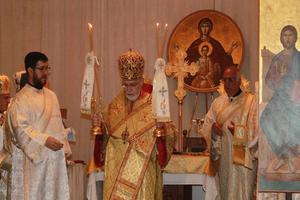
Since the Second Vatican Council, the East has been rediscovering her roots and returning to authentic expressions of her faith. Her liturgies, architecture, iconography, desert spirituality, and the witness of her many contemporary martyrs are all occasions for celebration and mutual enrichment. The more faithful the Eastern Churches are to their traditions, the more effective their witness to the universal Church.
I return to that key phrase from John Paul II: We need to “breathe with both lungs.” Too often, the East has been viewed as an exotic add-on to the Church — Catholic enough to be tolerated, but not mainstream, and thus easily ignored. My evidence for this is the sheer number of Latin Rite Catholics who have no idea that the Catholic East even exists. How can we not know that we have two lungs? It’s like not knowing your other hand, or your other eye. This lack of awareness ought to be remedied within a robust program of seeking reunion with the East ... all of the East!
The Eastern Catholic Churches exist, in union with Rome, as historical examples of partial successes in reunion. Today, they serve as intermediaries of full communion with the Orthodox and other ancient Churches of the East. A robust papal program to bring them into full communion is not a pipe dream. Union is the command of the Lord Jesus Christ, who prayed “that they may be one, as we are one” (John 17:22).
The year 2025 has seen a convergence of notable events pointing toward unity. This year, the Western and Eastern Churches celebrated Pascha (Easter) on the same day. May it be so forever! We also mutually celebrate the 1,700th anniversary of the Council of Nicaea. The celebration of our common Trinitarian faith is an opportunity to strengthen our ties of unity.
And Providence has given us a new Holy Father. As the pope is the visible symbol of unity in the Body of Christ, ought we not to see in Pope Leo XIV a fresh opportunity for the work of full unity to come to fruition? It is certainly something to work toward with fervor.
Each new pontificate brings with it a renewal of hope for God’s people. The task of “feeding the sheep” and “confirming the brethren” is uniquely entrusted to the successor of St. Peter. It remains to be seen how Pope Leo XIV will accomplish these tasks put before him. However, the Eastern Catholic Churches stand ready in service to the successor of Peter. Our ancient and loyal Churches can provide much orientale lumen in these days of confusion and darkness. We are committed to standing with Peter and building him up, so that he may accomplish what God has commanded of him.
To our Holy Father, Pope Leo XIV: May the Lord God grant him health, peace and many blessed years!
WATCH
The Holy Father addressed a delegation of Eastern Catholic hierarchs, clergy and laity in an audience in the Paul VI Hall. You can view EWTN’s coverage of that event:
- Keywords:
- eastern catholicism
- 'pope leo xiv'