Dads, Step Up and Protect
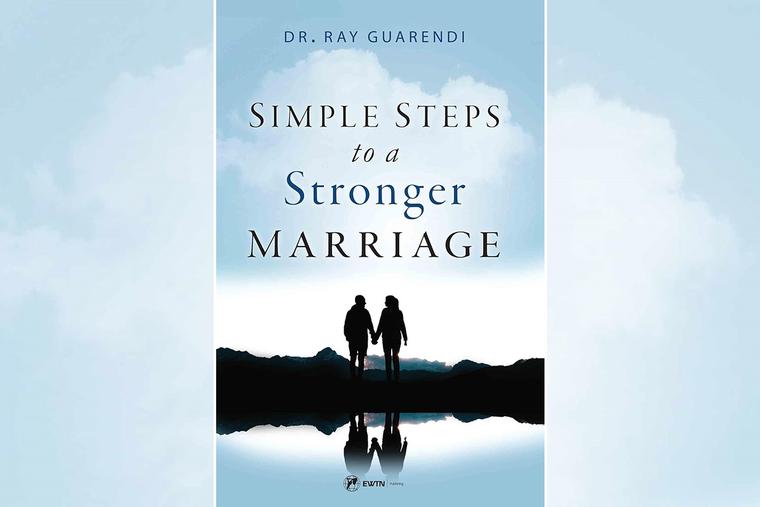
An excerpt from ‘Simple Steps to a Stronger Marriage’ by Dr. Ray Guarendi
Dads, this is your move. Moms, you get the benefit. So do your kids. If hubby isn’t much inclined to read this, read it to him.
The scene: Mom and Polly are locked in an escalating back-and-forth while you’re lying in the recliner two rooms away, all the while thinking, “I can’t tell which one is the 12-year-old.” Someone needs your help, and it’s not Polly. Time to get up, get in there, and get involved. In short, time to protect.
“That’s not only your mom you’re talking to that way. That’s my wife. You go to your room. I’m going to see what she wants me to do about this. (Okay, initially, you might need some help yourself.) Then I’m going to do more.”
Shun feeble language like, “Is that how you talk to your mother?” or “You watch your mouth, young lady,” or the really squishy, “What’s going on here?” Protect means fewer words, more action. You’ll burnish your image as a man. You’ll also burnish your wife’s as a woman. You’re there to stand beside her, not behind her.
Jumping into the maelstrom might at first feel alien. Your wife could wonder, “Who are you, and what did you do with my husband?” Even Polly could be caught off guard. “What’s Dad doing? I thought he was asleep.”
No matter who reacts how, you’re committed, which will soon be clear to all parties. It’s your new default response. Repetition is how the unexpected becomes expected.
Sir Isaac Newton defined the scientific Law of Inertia: “A body at rest will remain at rest unless acted upon by an outside force.” In this case, the body at rest (Dad’s) will remain at rest (in the recliner) unless acted upon by an outside force (Mom’s frustration, Polly’s volume, the dog’s howling).
The Law of Inertia also states: “A body in motion tends to stay in motion unless acted upon by an outside force.” Once acting in defense of your wife, you’ll gain momentum. It will become who you are rather than “Who are you?”
You are not questioning your wife’s discipline style, even should you think it needs to be questioned. Neither are you there to hold court, judging who is more guilty — Mom or Polly. Your sole aim is support.
Protection doesn’t usurp a wife’s authority. It doubles it. It tells the children, “We are a team.” Two acting with one voice, one discipline union.
Does the better player on a tennis doubles team subtract from his partner’s game or add to it? Does the top hitter on a baseball team make his team better or worse by his talent?
If a wife adroitly handles all discipline matters, you can spend more time dozing in the recliner. That level of competence, however, lives only in parenting books. In the real world of family, inconsistent discipline is, well, a pretty consistent thing, as it is tied tightly to being human. At marriage conferences, after pushing husbands to protect, I watch wives’ body language: Heads nod, grins appear, elbows prod ribs. The message: “Listen to this guy.” Some wives hug or squeeze their husbands’ arms, as if to say, “You do that already. Thank you.”
Protection brings multiple benefits. One, it short-circuits the conflict — fast. The longer a parent argues at a juvenile’s level, the hotter both get.
Two, it teaches through modeling with calm, resolute discipline. Spouses gain discipline skills by watching each other do it well.
Three, protection reinforces a mother’s God-given status. Even if her style could improve, she is Mom. God protects her honor with his commandment.
A wife who feels protected can also feel very affectionate. When our children were younger, every so often I’d hand one a couple of bucks with the instruction, “Go nag your mom.” Within seconds, I’d ride to the rescue like the cavalry, basking in my wife’s admiration. My tactic worked pretty well until one day my daughter asked, “Mom, why did Daddy give me two dollars to nag you?” Maybe I should have started with five.
- Keywords:
- dr. ray guarendi
- fatherhood
- marriage