How Changing Your Language Can Change Your Relationships
An excerpt from ‘How to Get Along With (Almost) Everybody’ by Dr. Ray Guarendi
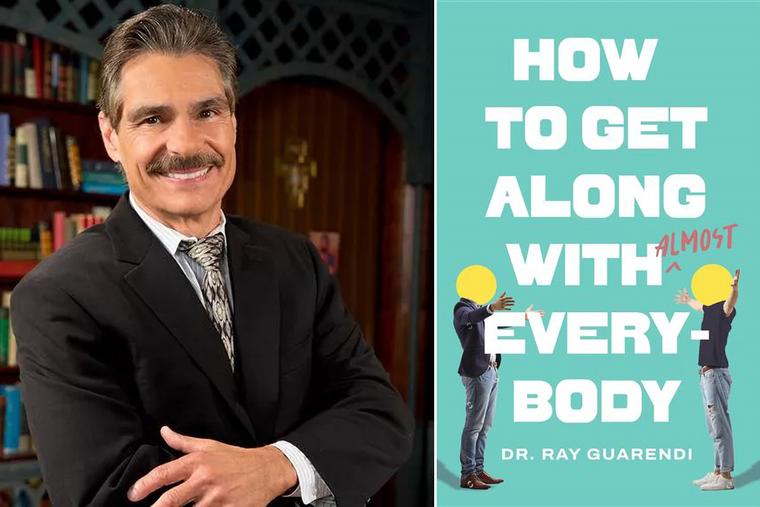
This selection appears courtesy of EWTN Publishing. The full book is available here.
To get along better with everybody — well, almost everybody — the first question to answer is “Why?” After all, aren’t there people in your life who just don’t seem that willing to get along better with you? What’s more, they seem to be okay with that. As they see it, you’re the problem. They’d be easier to get along with if you were.
The temptation nags: Seek relief. Retreat from the relationship. Shun it if you can. But are these your only options? Or your best? Or even possible?
For those embracing the name Christian, the why is clear. More than that, it is obligatory. Jesus the God-man, the Master Psychologist, says so. Tolerance, forgiveness and kindness are not to be given only to those we think deserving but also to those we think much less so.
You can’t change anyone without his cooperation. Changing yourself, however, may be the best way to get his cooperation. Put simply, changing you might just change another.
Watch Your Language
Language is a chameleon. It changes colors to match the latest hues of the culture’s thinking. Leading psychology’s new-speak are toxic, narcissist and emotional abuse. The words declare the judgment: Some people are beyond social reach. Major defects mark their persona, making connecting with them, if not futile, emotionally exhausting. So dictates the language.
Toxic, narcissist, emotional abuse — all have the potential to push another out of my life. But what if that other is my spouse, my parent, my child, my sibling?
Who would I be more likely to write off: Someone I think toxic or someone I think a major pain in the neck — or some lower body part? Someone I call a narcissist or someone I see as self-centered? Someone who abuses my emotions or someone who riles them?
Is all this playing word games? Whatever the language, this person disturbs my peace. Granted, but our language can mark a relationship as hard to tolerate or intolerable.
We act how we think. And how we think is shaped by the words we use.
What Is Difficult?
In a classic study, psychologists asked college students to complete a brand-new, state-of-the-art personality questionnaire. College students and rats rank high on psychologists’ list of favorite research subjects.
After reading their profiles, each student was asked, “How well does this fit you?” The consensus: Right on. The catch: All received the same description. Those weaselly psychologists.
The researchers gave their one-size-fits-all summary a name: Aunt Fanny. Meaning, it could fit anyone’s hypothetical Aunt Fanny. In other words, a typical person.
How did they do that? They filled the profile with “trait” words — honest, outgoing, introverted, thoughtful — broad summary statements open to interpretation.
“Difficult” is one such word. It covers a sundry set of off-putting behaviors — “He brags constantly; She thinks she’s always right; His temper flares fast.”
Like all traits, though, difficult doesn’t characterize the whole person. The braggart may be a generous guy, giving his time to help others. The self-centered woman is a devoted mother of five.
A difficult person or a person who can be difficult? Someone difficult with me but relatable to others? Am I “wordsmithing”? Sort of. Influencing another to be less difficult begins with looking more closely at when, where, how, and most personal, who he is difficult with.
“Difficult” is among the widest of relationship words. If someone is difficult with me, but not with most others, the “why?” would best begin with me, not him. For guidance, ask Aunt Fanny.
The More You Know
Not so long ago, I sat pondering whether the DH is good for baseball when a green light commanded, “Go already!” For the record, I wasn’t texting. A prolonged horn blast shattered my reverie. Properly chastened, I accelerated, but apparently not fast enough, as the fuming driver swung around me, his fingers gesturing what looked to be “Goodbye.”
My first thought, “What’s his problem?” My second thought, “What really is his problem?” (So shrink-like). Is it just traffic light ire? Or an emergency? A critical appointment? A rough day? A rough life? One light later, was he still agitated? If so, living so near the edge of ire has to be a rough road. I could drive away from him. He couldn’t drive away from himself.
A video features a young man who early one morning finds what looks to be an ordinary pair of sunglasses. Donning them, he soon finds that they are anything but ordinary. His restaurant server botches his order, but the glasses reveal to him that earlier she was forced to leave her ill child with a neighbor. Upon seeing a densely-tattooed, disheveled teen, the glasses tell him that she had to choose premature self-reliance over a chaotic home life.
I once led a Bible study at a local jail. Few of the guys had an upbringing anywhere close to my own — two good parents, stability, discipline, opportunities. Could their language be coarse? Of course. Could tempers erupt? Abruptly. Did some follow the code: Get what you can when? Followed. Still, as they talked about their family life — stretching the term — I heard how their yesterday reached into their today.
This is not to call bad good or right wrong. Or to shrug with a moral “Whatever.” It is to be aware how history — the recent and long ago — can shape a personality. The more you know, or at least are willing to speculate why someone is who he is, the softer your judgment. And a better relationship follows softer judgment.