4 Habits to Help You Get Along Better With Others
An excerpt from ‘How to Get Along With (Almost) Everybody’ by Dr. Ray Guarendi
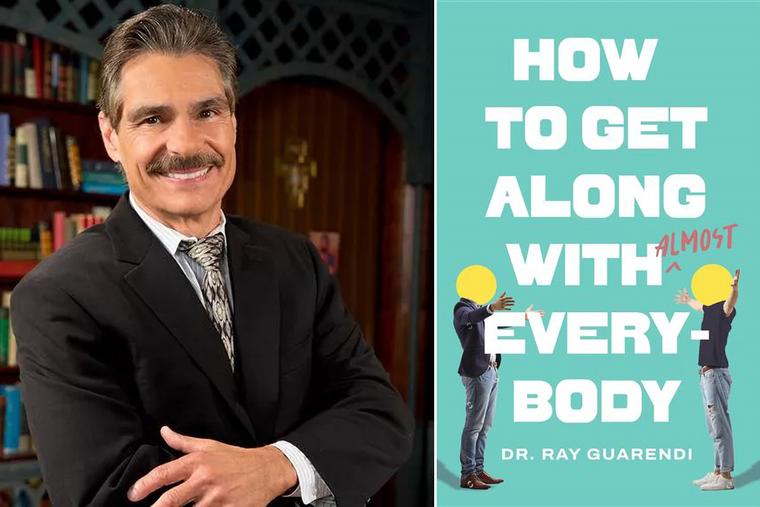
This selection appears courtesy of EWTN Publishing. The full book is available here.
Show Some Interest
Have you ever met someone and immediately liked them? Why such a good first impression? Afterward you realized: She was interested in you. She genuinely liked hearing about the bits and pieces of who you are.
Your mother-in-law believes your parenting could use some adjustment. She comments and corrects, each time you listen slower and argue faster. Change the dynamics. Ask her about her own motherhood. I know, you’ve heard plenty without asking. You don’t have to do anything she says; just listen and show interest. Your respect for her experience may nudge her to show some for yours.
Almost everyone, those easy to like and those not so, respond well to, “Tell me about yourself.” Genuine interest can pause the downward slide of a relationship. It can even reverse it.
Going Easy
Easygoing is a trait that sits high on the likeability scale. It is flexibility in the everyday give and take of a relationship. It is an easy agreeability in minor matters.
A friend invites you to meet at her favorite restaurant, a place that is a one-star on your “Better Dining Today.” Accept or decline? Spend time with your friend or pass unless she switches venues? Easygoing is sociable.
Your father beelines toward the front seat whenever he’s a passenger. So do you. Do you plead your position? “Dad, I’m really more comfortable in the front seat.” Bargain? “Let me ride shotgun this time; you take it next time.” Or without a word of protest, do you slip into the back seat? Easygoing is respectful.
It’s marital movie night. Your wife’s choice is “Playground Puppies.” Yours is “The Grizzly Growls.” You offer, “You pick,” hoping to hear, “Whatever you like.” Instead, the pups rule. Can you nod, along with a “Sounds good.” It doesn’t really, but you faked it. Easy going is easy giving.
Relationships are loaded with opportunities to be more easygoing. They are small surrenders in minor matters.
“What’s best for you?”
“Sure, I can do that.”
“You choose.”
“I’m open to that.”
A few simple lines can convey easygoingness.
Find Good Words
The second law of thermodynamics rules the universe. Called also the law of entropy, it dictates: Everything moves towards decay: iron rusts, food rots (except processed snacks), the sun will one day burn itself out. Fortunately, we should all be long gone by then.
A parallel law can rule the universe of social relationships: Call it the law of social entropy. Giving good words — praise and compliments — decays.
“He knows what I like about him. I don’t need to keep saying it.”
“I told her how great she looked on our wedding day. I still think so, even if I don’t say it much.”
Compliment corrosion can creep into any relationship, even a good one.
A whimsical comment on marriage states: After each physical union during the first year, place a marble in a jar. Thereafter, with each union, remove a marble. Prediction: The jar will never be emptied. Exaggeration? Perhaps. Nonetheless, the jar displays truth. Early in a relationship, we try harder. We more naturally see and say positives.
It is said: Our actions are influenced not so much by what others think of us but by what we think they think of us. Tell me you think I’m a courteous person, and will I be more or less courteous around you? If I say to you, “You are so easygoing,” will you try harder to show me your easygoing side?
Human nature, however fallen, is your ally. People want to believe what you say positive about them is true. They want to believe you believe it, too. One compliment a month sounds foreign. One compliment a day is a fluent second language.
If there’s an opening for a genuine compliment, but you don’t feel it, fake it. As long as your jaw isn’t clenched and your eyes aren’t crossing, few will notice that your words aren’t in sync with your “authentic self.” Good words without good feelings are far better than no good words at all.
When the law of entropy rules a relationship, good words are among the first things to decay. Resurrecting even a few revives a better relationship, or at a minimum, a less poor one.
Unoffendability
A neologism, a made-up word. Until Merriam-Webster adds it to the lexicon, here’s a definition: Unoffendability is the ability to take little or no offense when taking offense would be the “normal” reaction, or when most others would.
“Taking offense” and “feeling offense” aren’t the same thing. Taking offense needs the head’s cooperation. It involves interpreting another’s words or actions.
Feeling offense is reflexive. Someone acts offensively and automatically, I react emotionally. The mind isn’t engaged to settle my emotion. When feelings rule, taking offense rules.
Taking offense has roots in automatic thinking.
“They shouldn’t say/do that.”
“I don’t deserve that.”
“I don’t do that to them.”
All may be true, but the reality is: They did say/do that. Now you have to decide how much to absorb it, to let it breed the sense of offense.
“I try not to offend others. I would think they’d do the same for me.” The Golden Rule says: Do to others what you would have them do to you. It doesn’t say: If you do right to others, they will do right to you.
Unoffendability is an ideal, one not easily or consistently reached. The closer you get to it, though, the smoother your relationships. Fortunately, being unoffended does not so much depend upon others being unoffensive. It depends upon how you think, not how they act, that sets the conditions for offense.
Only one person who ever lived deserved no offense whatsoever. And look how He was treated.