Why 3 p.m. Should Stop Us in Our Tracks
COMMENTARY: The Hour of Mercy is not merely a devotion; it is a daily invitation to prepare for the one appointment none of us can avoid.
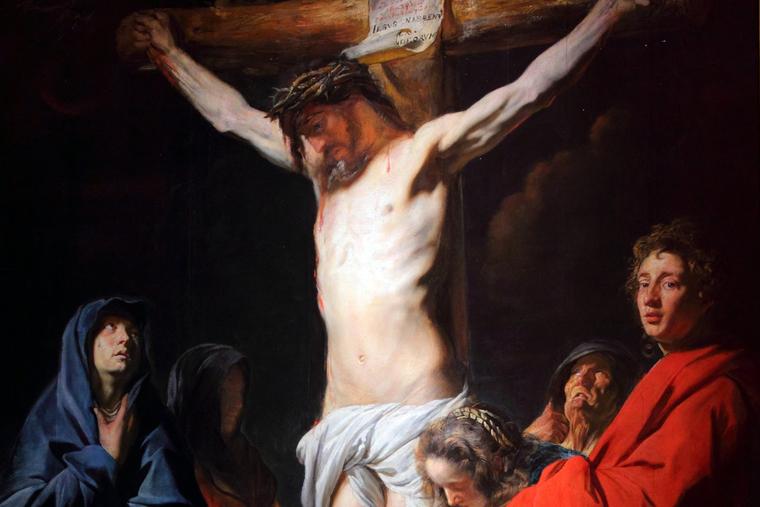
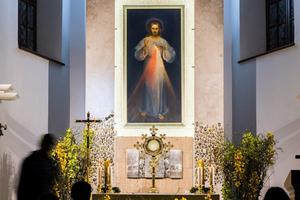
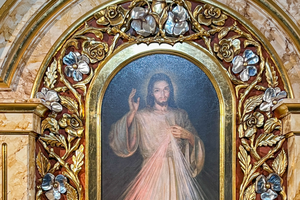
At 3 o’clock every afternoon, the Church tells time differently. It is the hour when Christ breathed his last, commending his spirit into the hands of the Father. As Our Lord instructed St. Faustina Kowalska, this “Hour of Mercy” was no pious afterthought but a daily remembrance: “At 3 o’clock, implore my mercy, especially for sinners … immerse yourself in my Passion, particularly in my abandonment at the moment of agony. This is the hour of great mercy for the whole world” (Diary, 1320).
To pause at 3 p.m. is to insert a sacred interruption into a secular day, to remember the moment on which all of history turned — the moment when the Son of God died for man’s salvation.
Jesus asks us to take some time regularly to recall that moment on which human history turned: the moment when the Son of God breathed his last in his human body and commended his Spirit into his Father’s hands.
There is a value to creating a spiritual rhythm to our day. The Church structures it for the clergy through the Liturgy of the Hours, but it has been lost for the laity, even though the Church also once structured their day. Such a spiritual rhythm reminds us to insert prayer, i.e., the “raising of the mind and heart to God” (Catechism of the Catholic Church, 2559).
How was the day structured? Well, the Angelus was not just an opportunity to go and look at the Pope in a window. Traditionally, ordinary Catholics prayed it at 6 a.m., noon and 6 p.m. I’m old enough to remember church bells ringing in my New Jersey hometown at those hours. Among Polish Catholics, 9 p.m. was a moment for the Apel jasnogórski, a short hymn to Our Lady of Częstochowa as Queen of Poland, imploring her protection.
And the Hour of Mercy …
The Hour of Mercy reminds us of the immense love of God for us that gave his Son in death to free us from death (John 3:16). It reminds us of God’s goodness, doing this “while we were still sinners” (Romans 5:8). It reinforces the seriousness of salvation: a God who does this demands a response.
These are the themes that often illumine our thoughts as we immerse ourselves in the Lord’s Passion, as he asked through St. Faustina. But I want to propose the other side of the coin: The Hour of Mercy is also an opportunity to attend to something neglected in our times — remembering our own death. Memento mori!
Our times do not like to talk about death. It’s a paradox of the contemporary culture of death that while we sometimes see death as a “solution” to human problems (aborting the unborn, “assisting” the sick and elderly to kill themselves, the uptick in suicide), we don’t like to see death. Most people die in clinical settings, not homes. Funerals are often scheduled at the convenience of the “mourners” rather than quickly after death, and (oftentimes) the younger members of the family are deliberately not taken along. The throes of death are terra incognita to many people.
But, as the author of Hebrews and Benjamin Franklin both remind us, death is inevitable and unavoidable. It’s the one sure appointment on everybody’s calendar on which eternity depends.
So, shouldn’t we think more about it?
Daily recollection of Christ’s Death at 3 p.m. is an opportunity for us to remember our own. And it’s not just about remembering it, but deliberately connecting it to Christ’s.
We have all been made sharers in Christ’s death by virtue of baptism: “Those who are baptized into Christ Jesus were baptized into his death …” (Romans 6:3). From our infancy, we have shared in Christ’s death: the Church reminds us of this when it gives us a white cloth to cover the Christian’s casket just as it once gave him a white garment to symbolize his baptismal innocence. And Christ’s death is the only thing that makes sense of ours, because without his conquest of death through his cross and resurrection, the grave would remain for us a one-way street.
Jesus urges us to share in his “abandonment.” Death is the one threshold each of us must cross alone. We take nothing with us into the next world except what we have made ourselves to be.
No one “accompanies” us — except Christ. Which is why we should join our deaths to his, because no sane man wants to step into that night alone. He has a choice: either he follows Christ or he vainly “rages” against the inevitable “dying of the light” of this world in a futile frenzy to save himself from a reaper who will cut him down.
Jesus speaks of the “moment of agony.” When Catholics were more familiar with family members dying at home, the immediate stage before death was usually called a man’s “last” or “final agony.” Jesus likewise experienced it. So will we. Our prayer should be not to experience it alone.
The man who remembers Christ’s agony joins himself implicitly to Christ, opening his heart to the action of the Holy Spirit who can “bend the stubborn heart and will//Melt the frozen, warm the chill//Guide the steps that go astray” (Sequence for Pentecost). Is there no better daily preventive exercise against final impenitence?
- Keywords:
- divine mercy
- death
- memento mori