Pray Where St. Faustina Met Jesus: The Shrine at the Center of the Divine Mercy Devotion
In the city where this beloved devotion originated, the Sisters of Merciful Jesus witness in the footsteps of the ‘Apostle of Divine Mercy.’
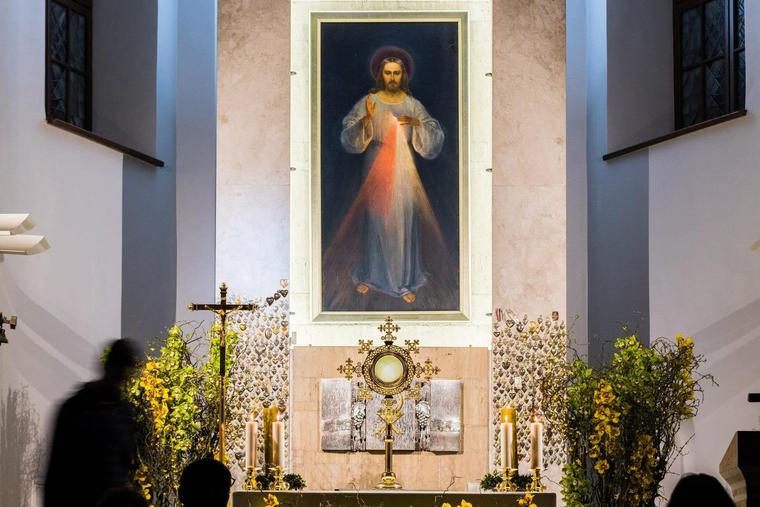
On a narrow cobblestone street in the Lithuanian capital of Vilnius’ Old Town, pilgrims and locals alike slip into a shrine that never closes its doors. Formerly known as the Church of the Holy Trinity, the late Gothic church dates to the turn of the 16th century. It was reestablished as the Divine Mercy Sanctuary of Vilnius in 2004.
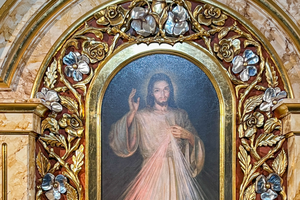
Today, it stands as one of the world’s principal centers of the Divine Mercy devotion and is home to the original painting based on the visions of Jesus experienced by Polish mystic St. Faustina Kowalska. Many faithful kneel before the exposed Blessed Sacrament, which is always available for adoration. Others stand in quiet awe before the revered painting housed inside the sanctuary.
Each day at three o’clock, the Sisters of Merciful Jesus, the congregation responsible for safeguarding the message of Divine Mercy, gather for prayer in their convent. Yet it is often interrupted by pilgrims ringing the convent doorbell, hoping to pray in the same chapel where St. Faustina once prayed. The interruption matters. It breaks silence, disrupts meditation and asks the sisters to choose between protecting their own personal prayer and responding to another’s longing. Mercy, then, becomes a decision that costs something.
“What is more important,” asks Sister Marcelina, mother superior of the Sisters of Merciful Jesus, “to stay with Jesus or to be merciful to this person who rings the bell?” The nuns always respond to the bell.
The shrine’s significance is rooted in the years St. Faustina spent in Vilnius. After arriving in the city in the early 1930s, she experienced some of her most important revelations associated with the Divine Mercy devotion.
It was also here that she met her spiritual director, Blessed Father Michał Sopoćko, who helped discern her visions and encouraged the spread of the message Christ entrusted to her, which was that no sinner is beyond God’s mercy and that the faithful should respond with trust, repentance and mercy toward others.
Under Father Sopoćko’s guidance, the original Divine Mercy image — depicting Christ with red and pale rays streaming from his Sacred Heart and the words “Jesus, I trust in You” — was painted in Vilnius in 1934 by artist Eugeniusz Kazimirowski according to St. Faustina’s instructions.
The city is also the birthplace of the Divine Mercy Chaplet, the prayer devotion revealed to St. Faustina that asks God’s mercy for the whole world through meditation on Christ’s passion, making Vilnius one of the most important pilgrimage destinations for devotees of Divine Mercy worldwide.
That legacy will take on renewed visibility in June 2026, when Vilnius hosts the World Apostolic Congress on Mercy, an international gathering held every three years in a different country to deepen devotion to and awareness of the Divine Mercy message. Scheduled for June 7-12, this year’s congress is expected to draw thousands of pilgrims under the theme of building a “city of mercy.”
Mercy in the Sacraments
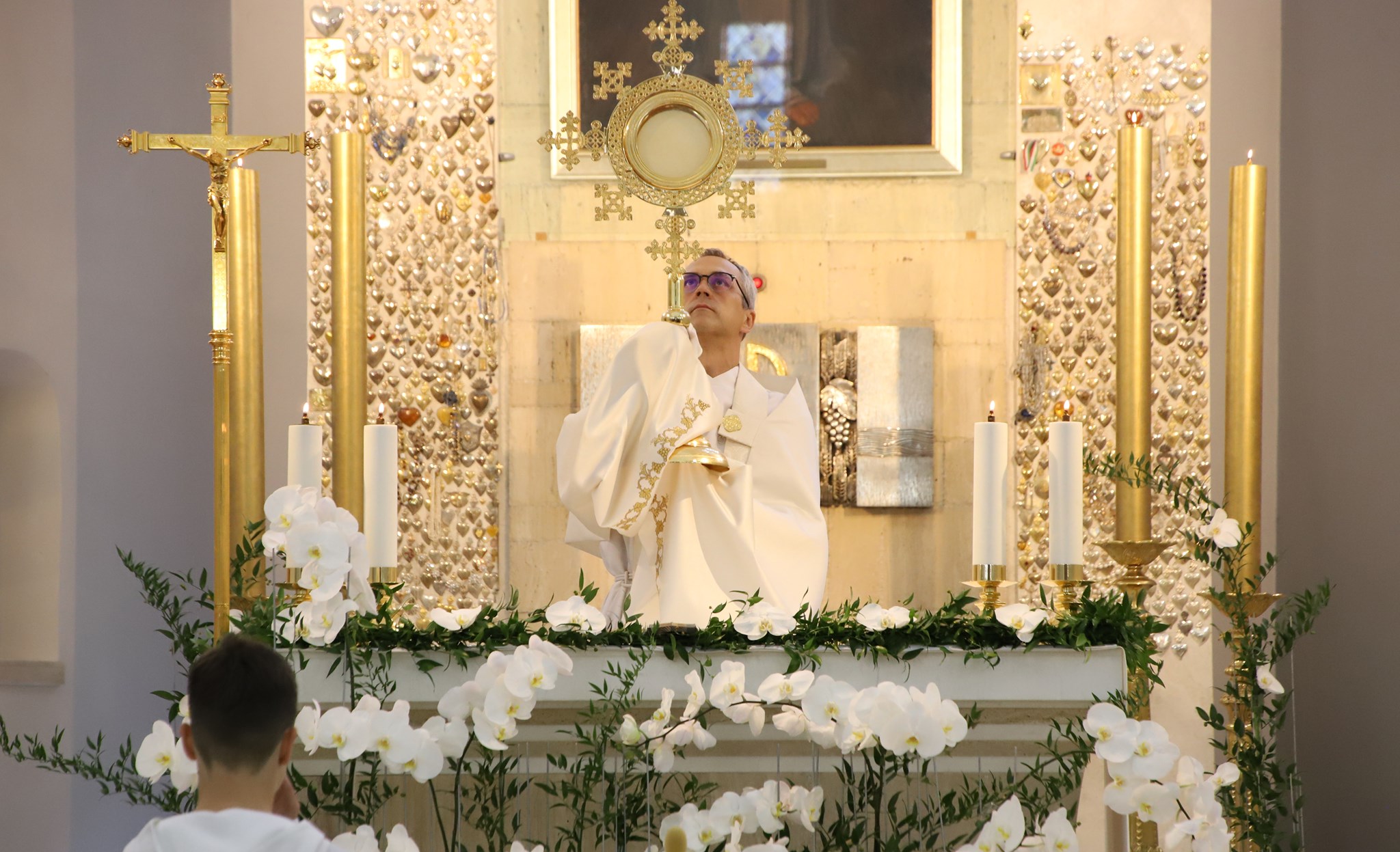
With thousands of pilgrims expected to attend the congress, Father Povilas Narijauskas, rector of the Vilnius Shrine of Divine Mercy, warns how quickly a pilgrimage can become a checklist. During Mass, groups sometimes enter, glance at the image, take photographs and leave. “They can say, ‘Oh, I was in the shrine. I saw the original image,’” he says. “But it’s not just to see Him. We must also spend time with Him.”
“The image is not just for show,” he said. The shrine stays open 24 hours a day so that people can return anytime to pray whenever they feel God’s impulse to do so.
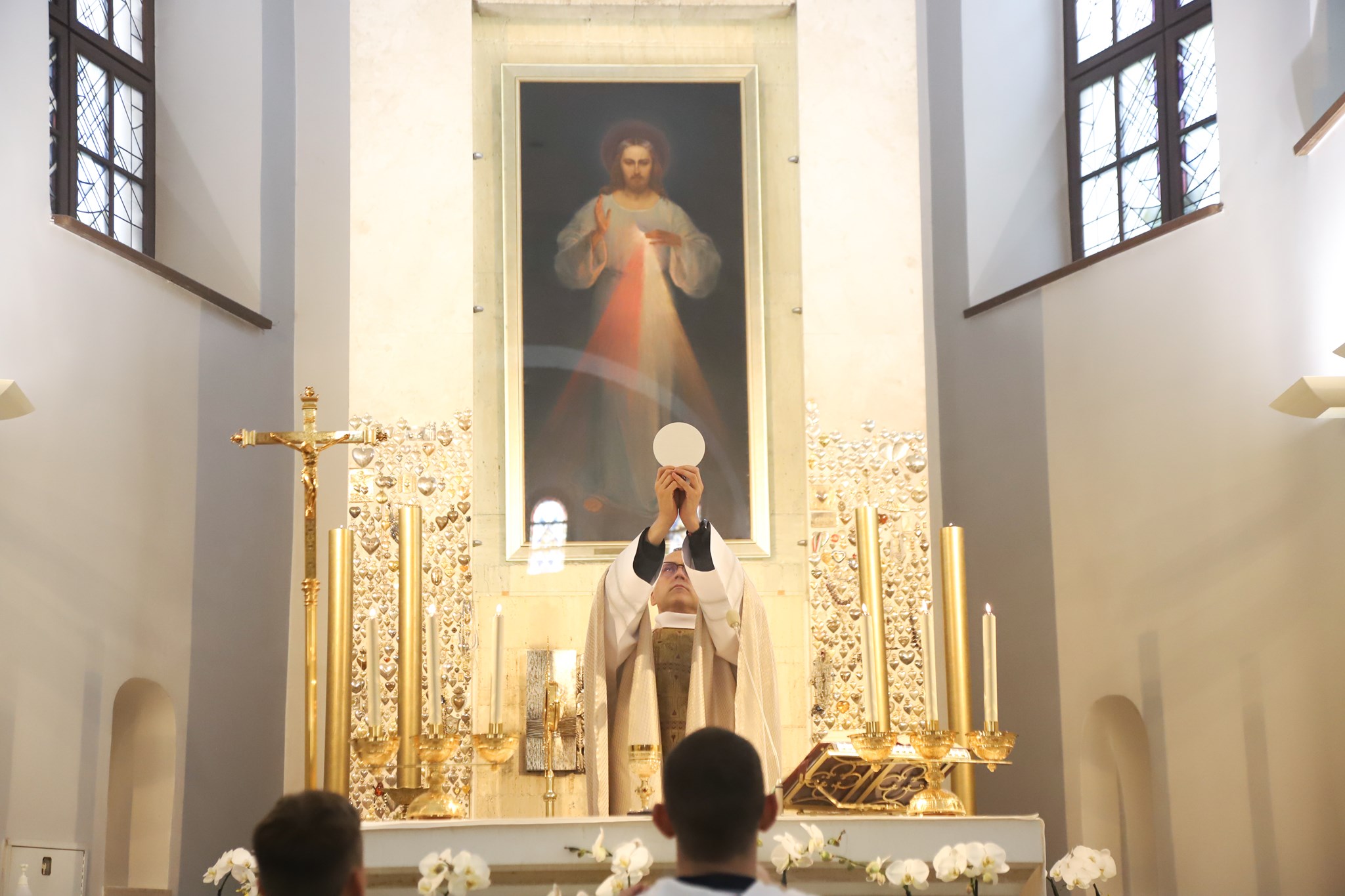
When Father Narijauskas speaks about Divine Mercy, he leads with the Eucharist. “What gives me the most joy is still Holy Mass,” he told the Register. “For me, the bread is becoming his Body. I am not merely just giving bread. I am giving the real, living Jesus to people. It is still a miracle.”
That “miracle,” he says, draws people toward reconciliation. “Every day, morning, afternoon and evening,” he says, “there are people coming for confession.”
Asked whether the message of Divine Mercy has been fully received in the world, he refuses to draw a neat conclusion. “Not enough — it can still be received more strongly,” he says. In his view, mercy does not reach a finish line; it must be received repeatedly so that mercy becomes a practiced interior and exterior reflex, not a rare spiritual highlight alone.
Continuing the Divine Mercy Message
After St. Faustina died in 1938 due to tuberculosis, Father Sopoćko continued to promote and spread the message of Divine Mercy. He was active in publishing brochures of the devotion and spreading images of the “Merciful Jesus” painting, while defending the message against critics and ridicule. In accordance with the revelations received by St. Faustina, Father Sopoćko was instrumental in pushing for the establishment of Divine Mercy Sunday. He considered it one of his life goals to see the institution of the feast of Divine Mercy on the first Sunday after Easter.
To ensure the survival, preservation and growth of the devotion, in the midst of World War II, he established the Congregation of the Sisters of Merciful Jesus in Vilnius.
In an interview with the Register ahead of Divine Mercy Sunday, Austrian native Sister Marcelina explained that the congregation’s founding was not merely a historical coincidence, but an act of divine Providence. St. Faustina herself, due to her health, was unable to found a congregation, but she was “shown a priest she could trust”: Father Sopoćko.
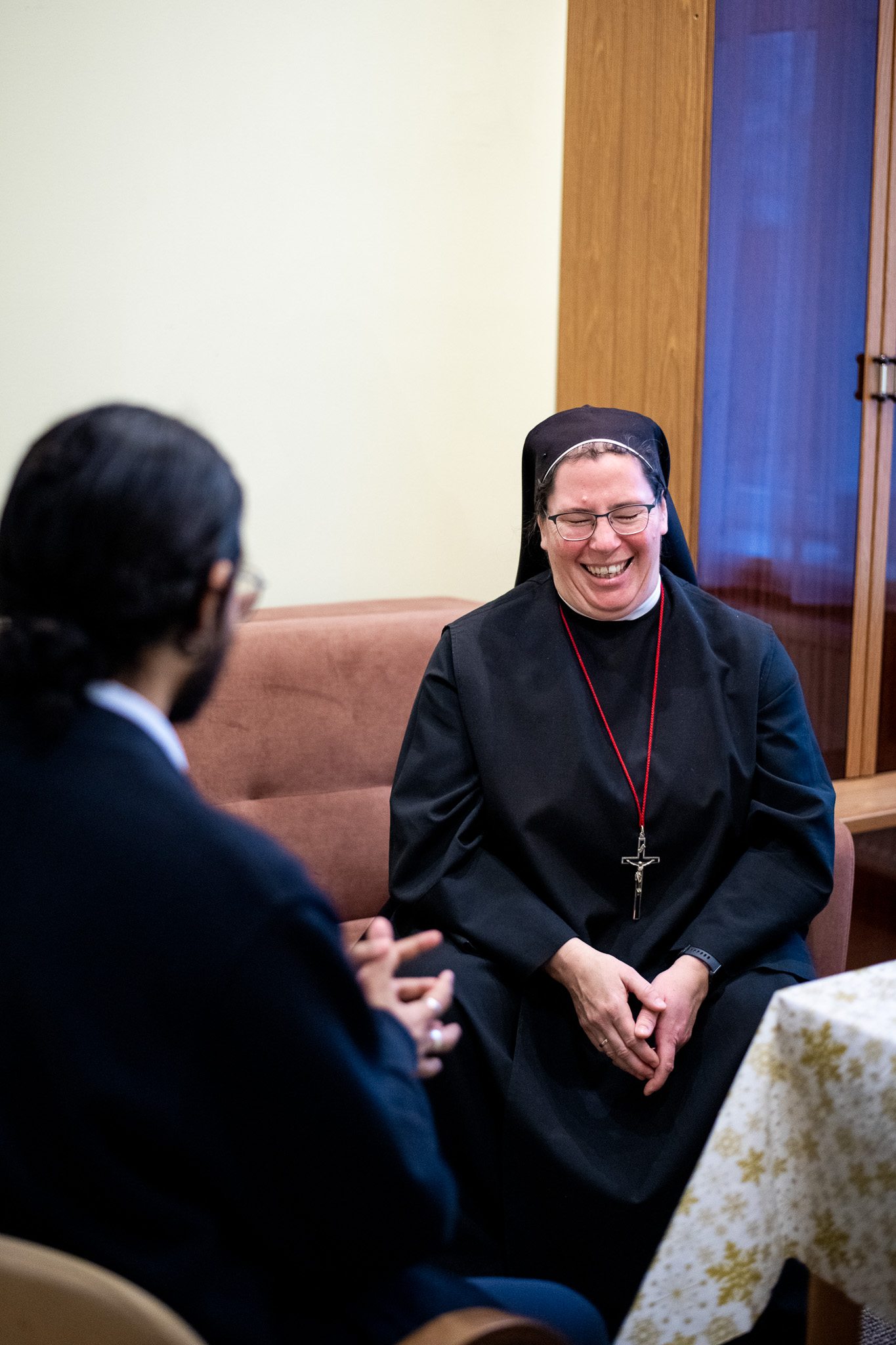
The spirituality of the congregation is profoundly Christocentric and rooted in contemplating the life of Jesus. Sister Marcelina explained: “As stipulated in our constitutions, we contemplate the life of Jesus from his birth to his death on the cross.” This contemplation is not abstract, but something the sisters live out concretely through mercy in their daily lives.
“The most important value is to be merciful in daily life,” she said. The sisters combine contemplative prayer with apostolic service and work in parishes, schools, hospitals and social institutions. “We are both apostolic and contemplative,” she said with a smile, pointing out that the sisters’ prayer life remains central even when they are engaged in practical work.
Mercy in the Little Things
For Sister Marcelina, Divine Mercy is expressed not only in extraordinary acts, but also in ordinary decisions made with love.
Her point is that prayer should produce a heart capable of being merciful amid the unpredictability of life. Mercy, she explained, is often practiced in choosing gentle patience and quiet kindness over irritation and rudeness. “It’s really easy, but very important,” she said, because these choices happen “during the whole day.”
She clarified that such mercy is not the result of personal effort alone. “We are able to do this by praying, ‘Jesus, I trust in you,’” she explained, pointing to the central prayer of the devotion as the source of grace. She encourages others to do the same.
Silence That Makes Mercy Possible
Sister Marcelina also points to modern conditions that, she says, can make mercy harder to live out, particularly the constant distractions of contemporary life that can drown out what she describes as God’s voice. Her congregation is responsible for the daily care of the Divine Mercy Shrine in Vilnius, assisting priests before Mass, leading public recitation of the Divine Mercy Chaplet, and helping maintain an atmosphere conducive to prayer. Within the shrine, she says, silence is deliberately preserved. “Silence in this time is very important,” she explains, “because our heart and soul need time to hear God.”
Her observation has practical implications for visitors. Pilgrims can attend every talk and still leave unchanged if they never learn to listen to God’s voice.
In Sister Marcelina’s view, mercy begins before the doorbell rings and before difficult conversation happens; it begins when people allows God to speak and allows that voice to soften their hearts.
Preparing Hearts for Mercy
As Catholics from all over the world celebrate the feast of Divine Mercy, Sister Marcelina's message is direct and straightforward. Christians, she noted, should “open their hearts” and be ready to listen. And for those who feel distant from God or burdened by guilt, her final message is the simplest and most profound expression of devotion itself: “Jesus, I trust in you.”
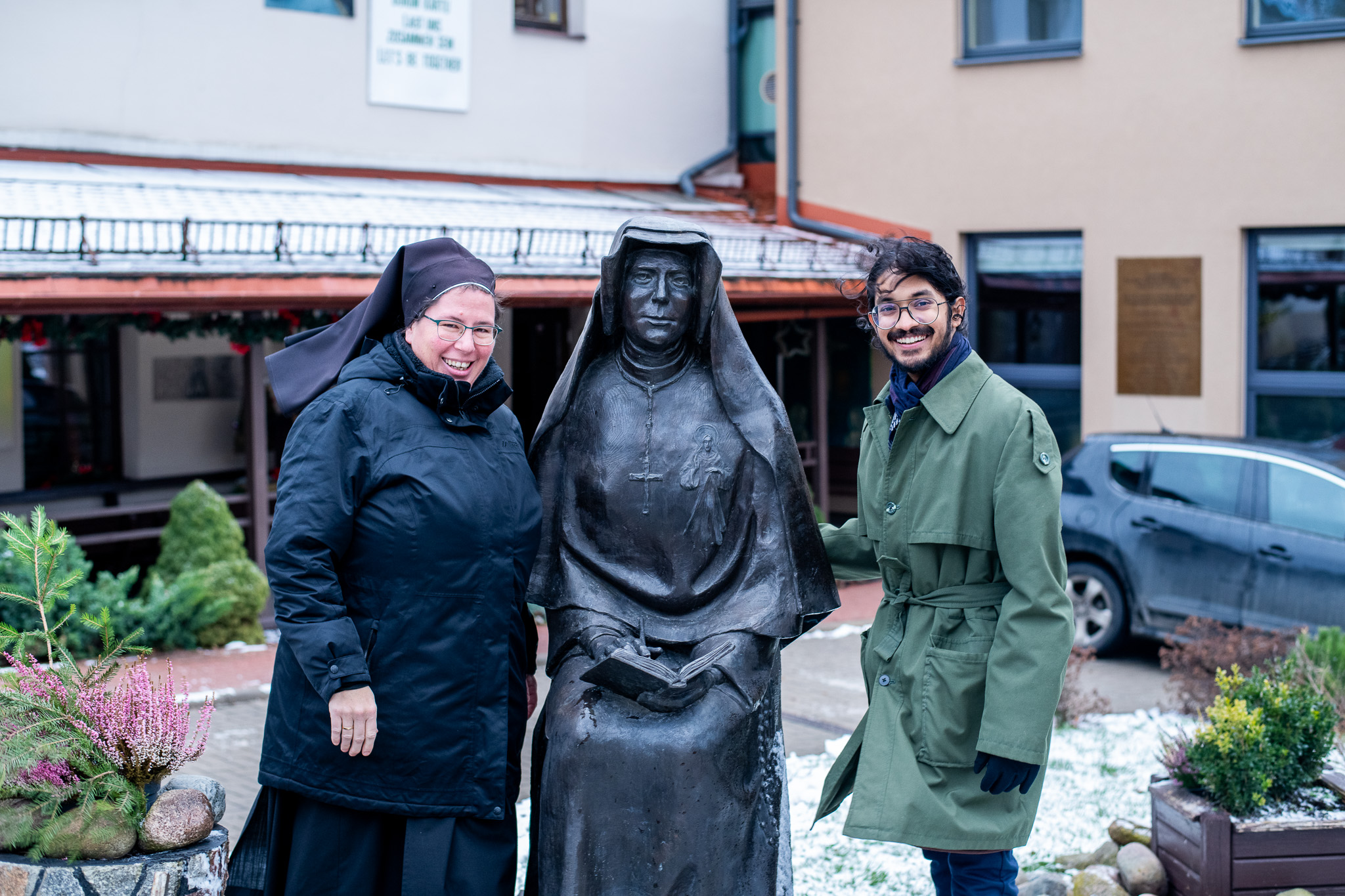
In the city where devotion to Divine Mercy originated, the Sisters of Merciful Jesus continue their witness — not through grand gestures, but through fidelity, prayer and the daily practice of mercy, as did St. Faustina, who once lived within these walls.
- Keywords:
- divine mercy devotion
- divine mercy
- st. faustina