Jesus’ ‘Peace Be With You’ Greeting and the Blessing of Divine Mercy
Sunday Guide for April 12
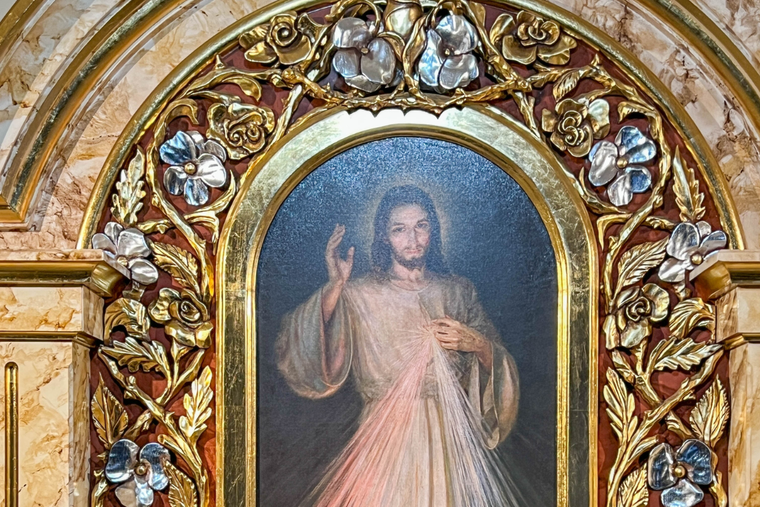
Sunday, April 12, is the Second Sunday of Easter (or Sunday of Divine Mercy). Mass readings: Acts 2:42-47; Psalm 118:2-4, 13-15, 22-24; 1 Peter 1:3-9; John 20:19-31.
God’s divine mercy is beautifully illustrated in the Gospel. Let’s look at it in four parts.
On the evening of that first day of the week, when the doors were locked, where the disciples were, for fear of the Jews …
Certainly the disciples are discouraged, lacking in hope, and maybe even angry. They had experienced the earthquake that Jesus’ crucifixion was for them. Some of the women, earlier that day, claimed to have seen Christ alive; but now it is night, and they have heard of no other sightings. But at least they’re in the right place, gathered together.
Jesus came and stood in their midst
and said to them, “Peace be with you.”
When he had said this, he showed them his hands and his side.
The disciples rejoiced when they saw the Lord.
Jesus said to them again, “Peace be with you.
As the Father has sent me, so I send you.”
Consider the astonishing mercy of this greeting: “Peace be with you.”
They had largely abandoned the Lord, but he greets them with peace. He also gives them the power to extend his mercy through confession. Such a great mercy — and, suddenly, there is a completely new reality, a new hope, a new vision, a new serenity, a peace: but only for those who are present.
This is a basic purpose of the sacred liturgy and the sacraments. Through the proclaimed word, we are increasingly enabled to see things in a new way that gives us hope, clarity and confidence. The Eucharist is thus the sign of our victory and our election. As we receive the Body and the Blood of the Lord, we are gradually transformed into the very likeness of Christ.
Thomas, called Didymus, one of the Twelve, was not with them when Jesus came. So the other disciples said to him, “We have seen the Lord.” But he said to them “… I will not believe.”
Thomas misses the blessing of seeing and experiencing the resurrection and mercy of the Lord. Second, he also refuses to believe the testimony of the Church that the Lord has risen. Some people want Jesus without the Church — but esus is found in his Church, among those who have gathered. There is surely joy to be found in a personal relationship with Jesus, but the Lord also announced a special presence whenever two or three are gathered in his name. It is essential for us to discover how Mass attendance and confession are essential for us if we want to experience the healing and mercy of the Lord.
The Gospel indicates that, the following week, Thomas returns to fellowship with the other apostles. Whatever his struggle with the faith, he has chosen to work it out within the Church. Now comes the blessing: He sees the Risen Lord.
It is an essential truth that Christ is found in the Church, his Body and his Bride. The Risen Lord is right here, right now: Behold the Lamb of God who takes away the sins of the world. Blessed are those who are called to the Supper of the Lamb.
- Keywords:
- divine mercy sunday
- sunday guide
- divine mercy