St. Moses the Black: From Violent Outlaw to Saint
COMMENTARY: The fourth-century Desert Father abandoned a life of theft and bloodshed to follow Christ, becoming a powerful witness to Divine Mercy.
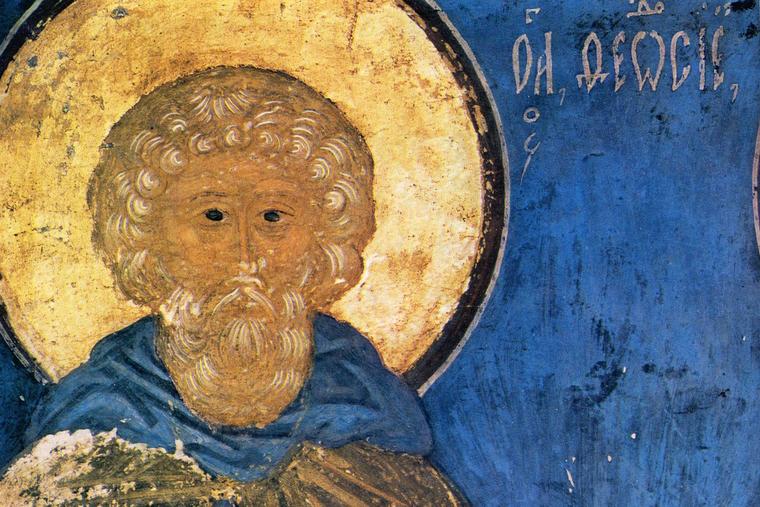
Every Catholic knows tales of heroic virtue that the saints present to us.
Some shock us. Some amaze us. Some thrill us. Some make us grateful that we’ve met a friend.
Moses the Black, also known as Moses the Egyptian, was a hardened, murderous criminal who gave up his narcissism for the Son of God who forgave him for his misspent life.
This fourth-century Desert Father dedicated himself to the ascetic life. Our principal source of information on this glorious saint is from Sozomen’s Ecclesiastical History.
Moses was born a slave of an Egyptian government official. Upon being dismissed from service for theft and suspected murder, he fell in with 75 other ne’er-do-wells who haunted the Nile Valley looking for easy prey.
By all accounts, he was said to be a huge, imposing man who feared neither God nor man. Instead, he worshipped himself.
One day, Moses came upon an innocent traveler who was in possession of a particularly fierce and protective dog. Moses, unwilling to challenge the formidable beast, withdrew and secretly followed the owner to his hut. The man was alerted to Moses’ approach and hightailed it out of there. Frustrated a second time, Moses stole four of the man’s sheep and sold them for their meat and wool. This crime angered the local constabulary and he quickly made his escape.
Moses made his way to a monastery outside of Alexandria in the desert of Scetis (Wadi El Natrun). He was humbled by their kindness and generosity and impressed with how they radiated Christ’s peace and contentment. Moses soon gave up his old way of life, accepted baptism and joined the monastic community.
Things weren’t easy for Moses as he was rough around the edges and a perfect foil to the monks’ natural goodness. He found monastic discipline difficult and felt out of place. Isidore, his wise abbot, assured him that the Lord of All would aid in his conversion.
The Lord of All, in his great Providence, allowed the monks to be beset by a group of robbers who thought them ill-prepared for their attack. Imagine their surprise when Moses singlehandedly subdued them all. But, instead of killing them, he dragged them to the monastery’s chapel where the monks were praying, and he asked them what to do with them.
The robbers, impressed with Moses’ self-restraint, gave up their worldly ways and became his disciples. Moses’ natural energy made him zealous in all aspects of his life. Despite this, he was racked with guilt due to his previous life, concluding that he wasn’t good enough to be a follower of Christ. His despair and self-doubt led him to consider leaving the monastery to go back to his old life.
Inspired by the Holy Spirit, Abba Isidore took Moses outside to watch the dawn rise over the desert. He told Moses, “Only slowly do the rays of the sun drive away the night and usher in a new day, and thus, only slowly does one become a perfect contemplative.”
His time in the monastery was filled with reminders of his previous ungodliness and newfound repentance. On July 1, 405, when marauders planned to attack the monastery, Moses, who was elected its new abbot, forbade his monks from defending themselves. Instead, he urged them to hide in the wilderness.
He and seven of his companions stayed behind to preach to the thieves and convince them to give up their sinful lives. He quoted the Scriptures, saying: “All who take the sword will perish by the sword.” (Matthew 26:52) He defended his decision to remain behind by suggesting that a violent death was the appropriate death for a former robber.
According to The Paradise of the Holy Fathers, when the raiders were spotted on the horizon, Abba Moses asked Abba Zechariah, “Father, is it good that we should hold our peace?” And Zechariah said unto him, “Yes, my son, hold your peace.” Before he was executed, Abba Moses looked up to heaven, and said, “Rejoice and be glad, O my son Zechariah, for the gates of heaven have been opened.”
His relics are venerated at the Coptic Orthodox Paromeos Monastery, located in Wadi El Natrun in Egypt.
Among the many pearls of wisdom Moses offers us is this: “If a man’s deeds are not in harmony with his prayer, he labors in vain.” We should be grateful that the Church holds up men and women like St. Moses the Black as exemplars of heroic Christian lives. If Moses can make it, then there’s still hope for the rest of us.