The Simple Habit That Transforms Families: Reading Aloud
COMMENTARY: From medical studies to classic Catholic stories, evidence abounds: reading aloud is one of the most powerful gifts parents can give their children.

In today’s cacophonous, tech-heavy world, trekking the priceless read-aloud journey requires taking a road less traveled, which is a sad reality, both for parents and children alike.
According to a 2018 survey by the Read Aloud 15 Minutes National Campaign in 2018, only 14% of parents of younger children said that they read to their children 15 minutes per day, 2% of families have no books in their home for children, 20% of families have only 1-9 children’s books, and the average family only has 61 children’s books (approximately half of a bookshelf). Although most of these numbers have improved since 2016, they are still far under the ideal.
The academic and intellectual benefits of cultivating a read-aloud culture in one’s home are abundantly clear. As Trelease explains, “The educational values of reading aloud are well documented: introducing vocabulary, modeling fluency, demonstrating expressive reading, developing comprehension, and assisting children in making connections.”
But the emotional, mental, and psychological benefits are perhaps even more essential and long-lasting — although they may be less obvious or immediately recognizable. Reading aloud to children can help them grow into the healthy, intelligent, strong, beautiful people God has created them to be.
In the spring of 2017, Georgetown researchers wrapped up a study that revealed the astonishing influence that reading aloud to babies and children may have. It focused on the effects of reading aloud to 20 premature babies aged 26 and 34 weeks. The babies were monitored for 90 minutes, with machines recording their heart rates, blood pressure, breathing and oxygen levels. In order to protect the babies, the parents were unable to read to them in person; they recorded themselves reading various materials of their choice and played the readings for their babies on small speakers located inside their incubators.
The babies were so deeply consoled upon hearing the voices of their parents that the markers of their physical and physiological health dramatically improved. During the readings, the oxygen saturation of the babies improved as their breathing regularized and their heartbeats stabilized. Considering the deeply fragile condition of the babies, these improvements could be seen as life-saving measures.
As Meghan Cox Gurdon explains in The Enchanted Hour:
One girl had been born at twenty-five weeks and had suffered complications, including bleeding on the brain. Two weeks later she was stable and snoozing when a nurse pressed a button and her incubator was filled with the sound of her mother’s voice. In an instant, the tiny girl had shot to alertness and had begun groping around inside her incubator. It was not a matter of indifference. The intonation reached her baby brain and, we can assume, set it sparkling in the sort of dramatic neural response the Montreal researchers had seen.
The doctors were continually amazed by the results of the study, so much so that they called the parents’ voices a kind of curative for the preemies struggling to make it in this world.
Indeed, reading aloud to children of all ages can be therapeutic for both parent and child. In many ways, it is an oasis in the desert of life, a light in the midst of a culture pervaded by darkness. As Scott Riley relates in The Read Aloud Handbook:
As a father, reading aloud is a chance to experience something with your child and not having to tell her what to do or feel. When you are both behind the pages of a book, you’re no parent/child, you are humans taking it in together. Your roles are shed, and you are both exposed on a deeper emotional level. It’s a window into deeper conversation without knowing the right answer.
Furthermore, as Trelease says:
The time we spend reading to our children can feel like a return journey to destinations we visited long ago and never thought we would see again. We may find ourselves soaring, with Sinbad the Sailor, through the skies ... or resting in the shade of the cork trees with Ferdinand the bull ...
Bearing this in mind, it is clearly worth it to dedicate ourselves to cultivating a profound love for reading in our homes with the help of fabulous works of Catholic children’s literature such as these:
Classics
- The Mitchells: Five for Victory (series) by Hilda von Stockum (Bethlehem Books)
- The King of the Golden City by Mother Mary Loyola
- Catholic Tales for Boys and Girls by Caryll Houselander
- Catholic Stories for Boys and Girls by Catholic Nuns in America
- Brother Juniper by Diane Gibfried
- Our Lady’s Wardrobe by Anthony DeStefano
- A Pictorial Catechism by M.B. Cousinier
- Facing Danger (and additional books in this amazing series for boys) by Father Francis Finn
- An Alphabet of the Altar by E. Vincent Wareing
- Children’s First Chants by Pueri Publications
Recent Releases
- The Martins: The Extraordinary Family of Saint Thérèse of Lisieux by Sophie de Mullenheim
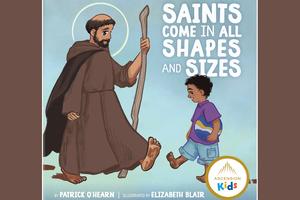
- Go and Fear Nothing by Patrick O’Hearn
- Saints and Sacramentals: Saint Dominic and the Rosary by Shaun McAfee
- Sacred Heart of Jesus: Devotion to Jesus’ Heart for Children by Patrick O’Hearn
- The Crooked Court Jester and the Last Knight by Susan Joy Bellavance
- Got it! The Catholic Bingo Game by Ignatius Press
- Sister Clare Gets Ready for Prayer by Katie Warner
- The Redemption of San Isidro by Father Lawrence Edward Tucker, SOLT
- Courage Under Fire: Father Willie Doyle, S.J., Priest and Hero of the First World War (Vision Books) by Fiorella De Maria
Upcoming Releases
- Dear God, Thank You by Patti Armstrong (Holy Heroes, 2026)
- Adventures in God’s Country by Amanda Evinger (En Route Books and Media, 2026)