The Daring 1965 Bishops’ Letter That Enraged Communists — and Helped Heal a Wounded Europe
Signed by 36 Polish bishops at the Second Vatican Council, the letter sought to break cycles of vengeance by embracing the Gospel’s mandate to forgive.
Ideologies divide, generating war, death and mass resettlement of people.
In Soviet-occupied Poland, Catholic bishops sought reconciliation with their German brethren through an invitation, in which truth resounds like a drum resonating through the psyche.
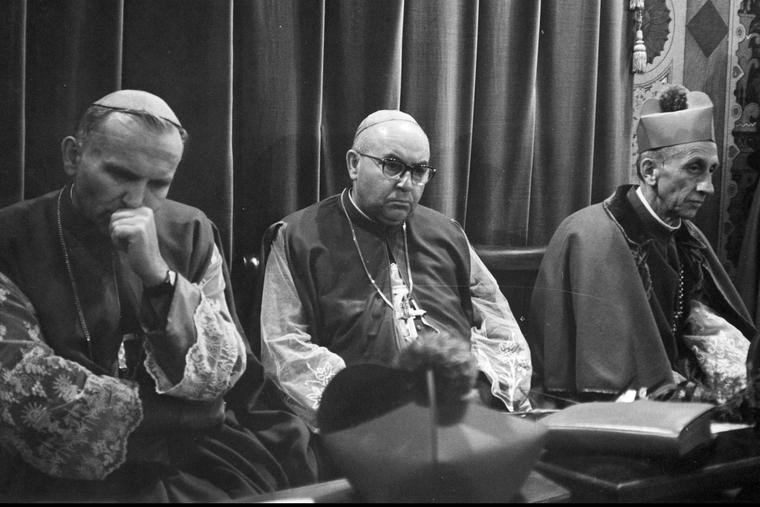
The document is a letter signed by 36 Polish bishops on Nov. 18, 1965, inviting German bishops to join a millennial celebration — marking 1,000 years of Christianity in Poland, a birthday for Church and Nation — to be held May 3, 1966, at the Jasna Góra Monastery, home of the Black Madonna of Częstochowa.
The letter was one of 56 distributed by the Polish delegation to other national episcopates attending the final session of the Second Vatican Council. But the one to German bishops is an exquisite example of how Christianity dares to challenge sin by proposing an escape from political cycles of blame and retribution, as crystallized in its most famous sentence:
“We forgive and ask for forgiveness.”
Yet it provoked the regime’s wrath at the time, especially fierce anti-Catholic propaganda from Polish communist authorities.
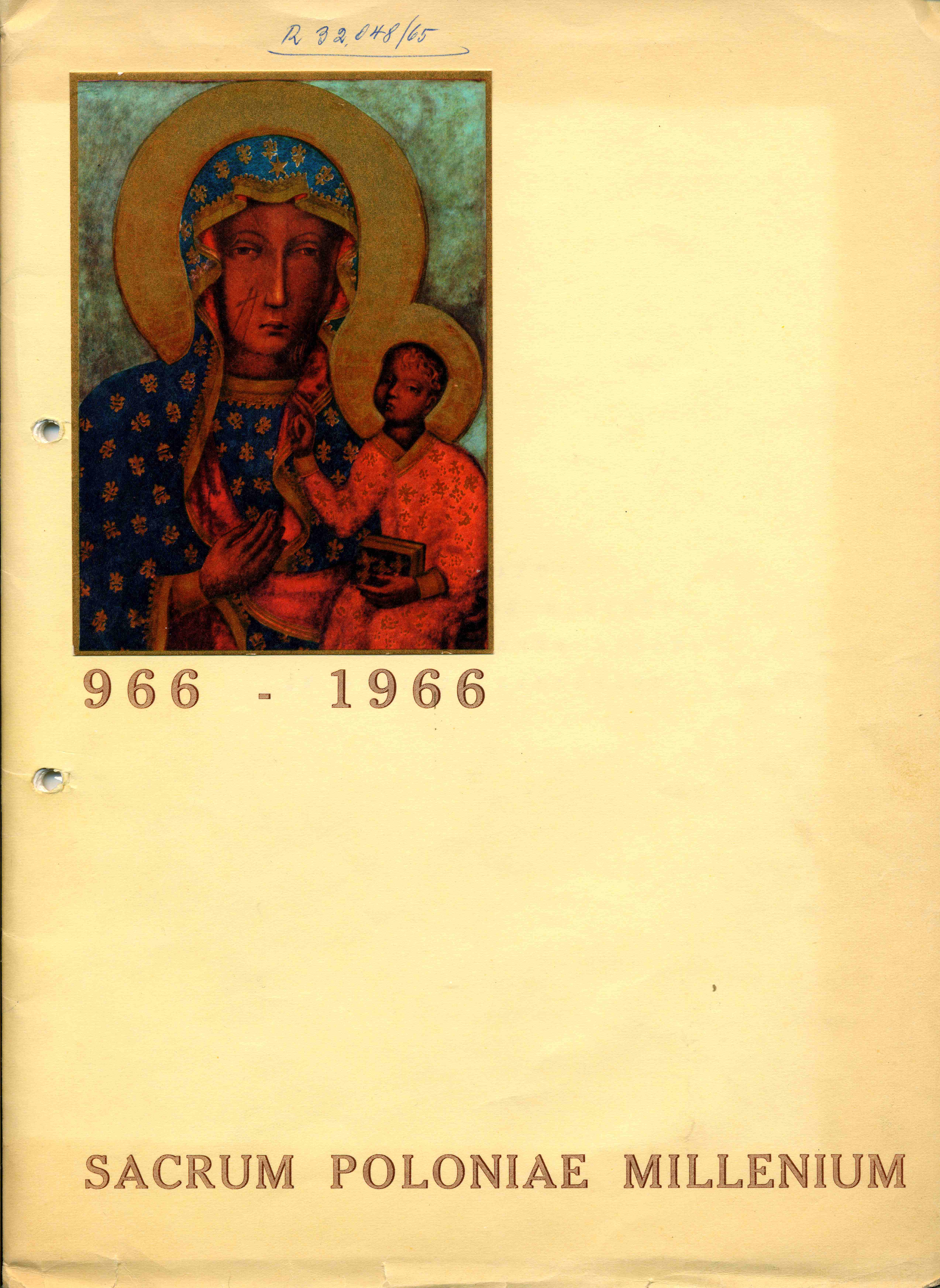
The letter remains so meaningful that Polish and German bishops (and public officials from both countries) will meet this Nov. 18 in Wroclaw, Poland, to celebrate Mass together; salute the letter’s author, Wroclaw’s Archbishop Boleslaw Kominek (1903-1974); and view “Reconciliation for Europe,” an exhibit at the archdiocesan museum.
An international academic conference on the letter’s 60th anniversary will convene on Nov. 19 at Wroclaw’s Pontifical Faculty of Theology, featuring experts from around the world.
Crucial Context
Before highlighting the letter’s exceptional content, three historic factors should be recalled.
First, it was the German invasion of Poland Sept. 1, 1939, which kicked off World War II. Adolf Hitler announced he was responding to attacks from Poland, and that Germans living in Poland were in jeopardy; both claims were fabricated.
Hitler wanted more land and considered Poles to be inferior beings. (This invasion triggered Britain and France’s military engagement because they had pledged to defend Poland against Germany.)
Hitler was confident the Nazis would defeat Poland because he had signed a secret pact: the Molotov-Ribbentrop Pact with the Soviet Union in August 1939, agreeing to split Poland and to divide Eastern Europe into German and Soviet spheres of influence.
Indeed, the Soviet military attacked Poland on its eastern border Sept. 17. Unable to defend against both forces, Poland surrendered on Oct. 6. The brutality was horrific: The Nazis murdered 65,000 Poles in the last three months of 1939.
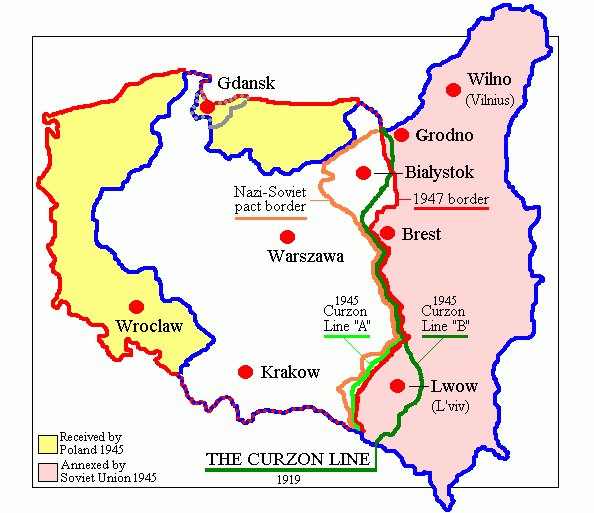
Second, at the conclusion of World War II, the victorious allies (U.S., Great Britain, Soviet Union) met in February 1945 at the Yalta Conference and decided to redraw the borders between Poland and Germany as well as between Poland and the Soviet Union. The same three powers met at the Potsdam Conference in July-August 1945 and finalized the Poland-German border along the Oder and Neisse rivers, stretching north from the Baltic Sea to Czechoslovakia in the south.
It was a traumatizing decision for millions of Germans who were forced to resettle, pushed out of their homes just because they were suddenly located in Poland. At the same time, about 1.3 million Polish and/or Ukrainian citizens were forcibly “repatriated” from former Polish territory on the country’s eastern border awarded to the Soviet Union.
Relevant to the letter’s story, Breslau, Germany, became Wroclaw, Poland, as a result of the new national lines. Thousands of Poles who lived in Lviv (in Ukraine today), which was located in southeastern Poland, were forcibly moved to Wroclaw because Lviv was given to Moscow.
Soviet troops remained on Polish soil and only left at the end of the Cold War.
Third, the letter was drafted and circulated in Rome. This circumstance allowed numerous Polish bishops to consult with each other on the approach toward other episcopates — and for Cardinal Stefan Wyszyński, primate of Poland (1948-1981), to discuss the millennial event with bishops from around the world, including the Germans.
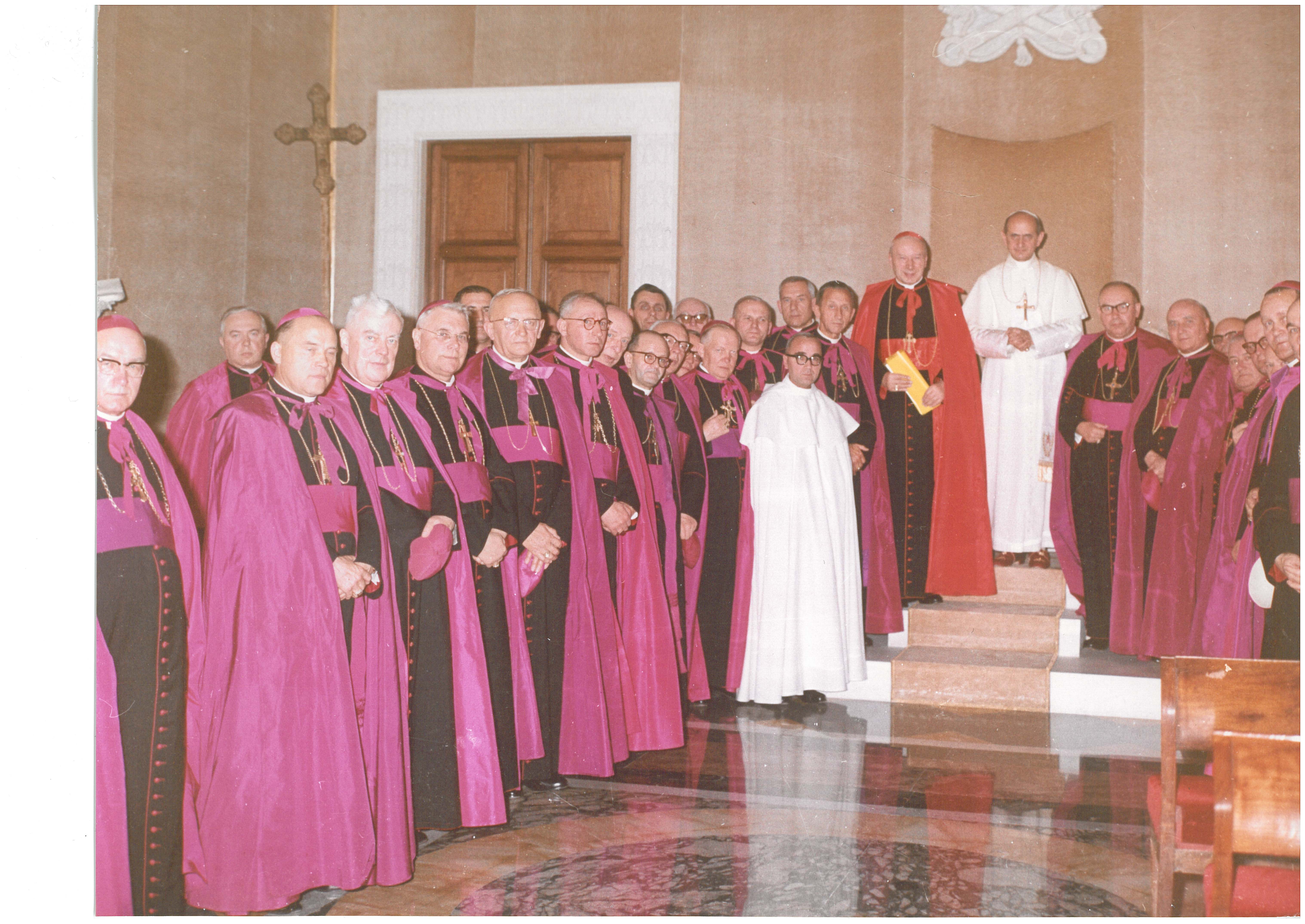
Although unknown today compared to his peers (especially compared to Cardinal Wyszyński and Krakow’s Archbishop Karol Wojtyla), Archbishop Kominek, serving as Wroclaw’s apostolic administrator at the time, was distinctly suited to draft the sensitive invitation. Born to a Polish mining family in Silesia, which was then part of the German Empire, he grew up in two cultures, speaking both Polish and German. He emerged as an expert on complexities around the postwar border and an adviser to Cardinal Wyszyński.
Archbishop Kominek “broke through nationalistic thinking,” notes Wojciech Kucharski, deputy director at the Zajezdnia History Center and a Church historian, speaking to the Register via Zoom.
Fruit of Vatican II
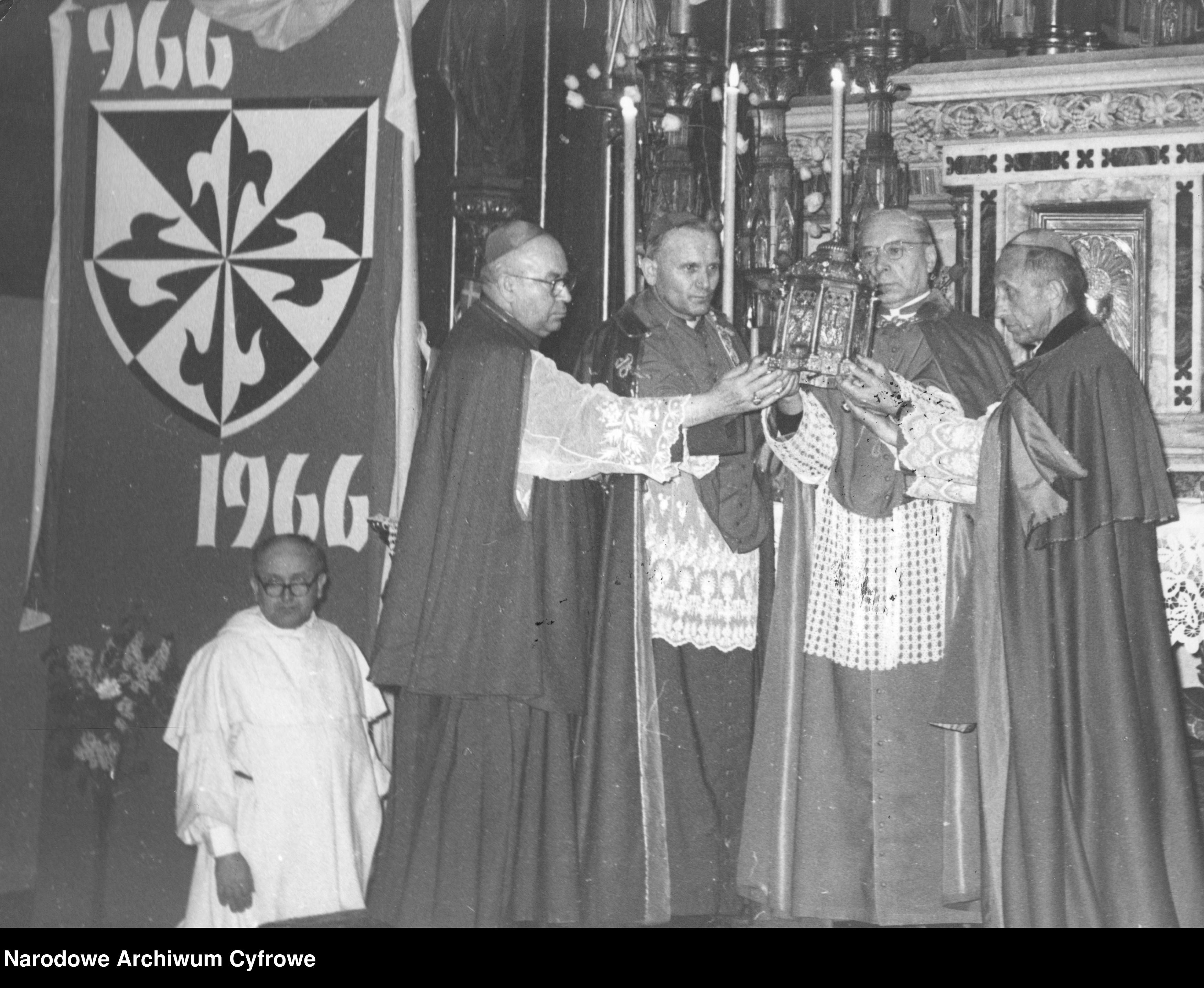
To remind letter recipients of Poland’s origin, Archbishop Kominek traced the nation’s story to 966 when Mieszko I (influenced by a Catholic wife) became Poland’s first ruler to receive the sacrament of baptism — and to have the whole court baptized. Many centuries of fruitful Polish-German cooperation followed but the history lesson culminates in World War II, described as “an act of total destruction and annihilation.” Germans, too, suffered in concentration camps, the text acknowledges.
The Polish bishops then point to the example of the Second Vatican Council as modeling the best course of action:
“Despite the situation almost hopelessly burdened with the past, we appeal to you now, reverend Brethren: let us keep trying to forget. We do not want any polemics, any cold war but just the beginning of a dialogue pursued also by the Council and Pope Paul VI. If there is good will at both sides — and there undoubtedly is — a serious dialogue is definitely possible and can bear positive fruit with time, despite everything.”
Then, with a reiteration of the invitation, the Poles suggest that German participation will truly make the celebration a worthy, Christian event:
“In this most Christian but also very humane spirit, we extend our hands to you sitting on the benches of the ending Council. We forgive and ask for forgiveness. Only if you, German Bishops and Council Fathers, grasp our hands held out to you in a gesture of brotherhood will we be able to celebrate our millennium in the most Christian way and in peace.”
In the letter, we find a “catalogue of values,” explained Kucharski: “truth, because we cannot hide the bad moments of history and must acknowledge injury; dialogue, because it restores the ability to see another’s humanity; and forgiveness, a deeply Christian idea that entails consciously choosing love over vengeance.”
“It was sent by a nation of victims, which shows that through Christianity, you can think in another way,” observed Kucharski.
Disappointing Response?
A reply from the German bishops came less than three weeks later, signed by 42 prelates. They expressed “emotion and joy” regarding the eloquent invitation and pledged to continue the dialogue initiated by their Polish peers.
The reply acknowledged the tragic wartime events and the difficulty of restoring trust: “Terrible things have been done to the Polish people by Germans and in the name of the German people. We know that we must bear the consequences of the war, which are also difficult for our country.”
It also accepted the moving offer of mutual forgiveness: “With fraternal reverence, we grasp the offered hands. May the God of peace grant us, through the intercession of the ‘regina pacis’, that never again may the evil spirit of hatred part our hands!”
![The German reply to the Polish invitation reads 'To our Venerable Brothers, Bishops of Poland, [from the] Bishops of Germany' in Latin calligraphy](https://publisher-ncreg.s3.us-east-2.amazonaws.com/pb-ncregister/swp/hv9hms/media/20251117061132_ff2e839090e3a31351e4c67ddac2377cf0b4b5e110e3cc667560fbeda3626819.jpg)
According to University of Maryland historian Piotr Kosicki, writing in Church Life Journal, the Polish bishops were disappointed that the Germans did not more explicitly affirm the new border between Poland and Germany or confirm Polish jurisdiction over the dioceses in that territory.
Most disturbing, Kosicki explains, the Polish communist government reacted with fury to the appeal for reconciliation because it saw the bishops as meddling in foreign relations. Communist General Secretary Władysław Gomułka launched a propaganda campaign against the Catholic Church and mounted a secular millennial celebration for the state to rival the Church’s plans.
Gomułka also refused to allow Pope Paul VI into Poland for the 1966 festivities as had been planned. However, there were immediate positive repercussions from the Polish bishops’ initiative.
According to Kucharski, 500,000 people gathered for Mass at the shrine of Częstochowa as part of the Church’s millennial program. When Primate Wyszyński proclaimed, “We should forgive our oppressors!” The people responded, “We forgive! We forgive!”
“It meant that something had changed in Polish society, because every family experienced something terrible in the war, and everyone considered themselves victims,” explained Kucharski. “The Church changed those hearts.”