Supreme Court Delivers Victories for Parental Rights, Women’s Sports and Free Speech
COMMENTARY: In one of the most contested questions, the court ruled that states may protect female athletics for biological females.
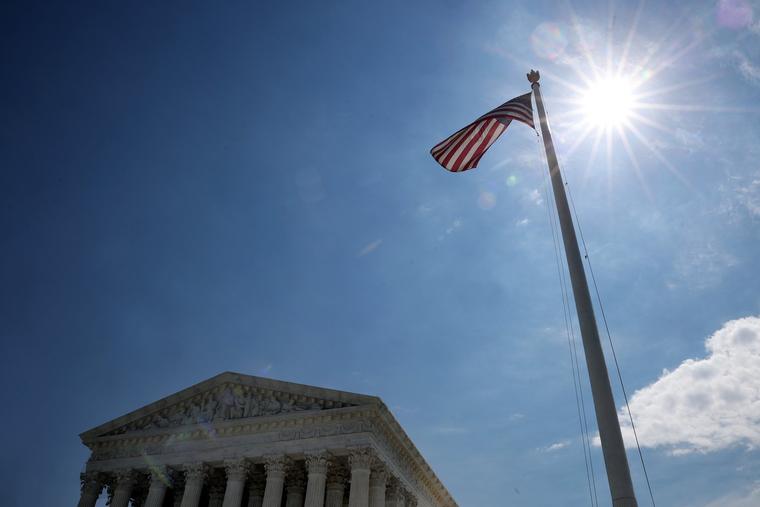
The Supreme Court has closed its books on a consequential term that delivered significant wins for parental rights and free speech, disappointed prisoners seeking to remedy offenses against their religious liberty, redrew the boundaries of executive power and closed with developments that serve as reminders of how much work remains.
And in one of its final rulings, the Court addressed one of the most contested questions of the moment: whether states may protect female athletics for biological females.
In the consolidated cases of West Virginia v. B.P.J. and Little v. Hecox, the Court held 6-3, with partial dissents, that schools may determine eligibility for women’s and girls’ sports based on biological sex without running afoul of the Equal Protection Clause or Title IX, the federal law barring sex discrimination in educational programs that receive federal funding.
The cases involved two biological males who identify as female: Lindsay Hecox, who challenged Idaho’s Fairness in Women’s Sports Act after being barred from trying out for Boise State University’s women’s track team, and B.P.J., a West Virginia high schooler who sought to compete on girls’ teams under the state’s Save Women's Sports Act.
Justice Brett Kavanaugh, writing for the majority, explained that on the Title IX question, separate sports teams for biological males and biological females are reasonable, since the physical differences between the sexes mean that limiting women’s and girls’ teams to biological females reduces the risk of injury and protects fair competition. Turning to equal protection, he added that while the West Virginia and Idaho laws draw a sex-based classification triggering intermediate judicial scrutiny, they survive that scrutiny: “The interests in safety and competitive fairness are important for purposes of equal protection analysis,” and the laws’ sex-based line “is substantially related to those interests.”
In characteristic brevity and wisdom, Justice Clarence Thomas added a brief concurring opinion that is worth noting.
First, “transgender status is not a suspect class requiring heightened equal-protection scrutiny.” Second, “[m]en and boys with gender dysphoria are not women or girls, even if they believe that they are.” He added, quoting Josef Pieper, “To use language to obscure reality — to show ‘indifference regarding the truth’ — is to lie to the public and cease to treat our fellow citizens as ‘equals.’”
The ruling in B.P.J and Hecox arrives on the heels of two other significant wins for those who resist gender ideology’s legal advance. In March, in Chiles v. Salazar, the court ruled 8-1 in favor of Kaley Chiles, a Christian therapist in Colorado Springs whom the state sought to bar from discussing her clients’ faith in counseling sessions with minors struggling with gender confusion.
Colorado had banned so-called “conversion therapy,” defining it broadly enough to silence any conversations between a counselor and a willing minor client about the child’s biological reality. The court said No. It was a victory not just for Chiles, but for every family that believes a confidential counseling session belongs to the therapist, the client, and — especially when the client is a child — the parents.
It was also the third time Colorado has lost at the Supreme Court on a case touching ideological compulsion. Masterpiece Cakeshop was first, when the court found that Colorado’s Civil Rights Commission had treated Jack Phillips’ religious objections to baking a wedding cake for a same-sex civil marriage with unconcealed hostility. 303 Creative came next, vindicating a web designer’s right not to create wedding websites for same-sex weddings in violation of her beliefs. Chiles makes three.
St. Mary Catholic Parish v. Roy, already accepted for next term, asks whether Colorado may use its universal preschool program to compel a Catholic parish school to abandon its religious identity as the price of participation. If the court rules for St. Mary’s, it will be four and a pattern will have become a verdict on how one state has repeatedly overreached.
Earlier this year, on the emergency docket, the Supreme Court intervened in Mirabelli v. Bonta. California had a policy permitting public schools to socially transition children by changing their names, pronouns, and presentation without parental knowledge or consent. The court, in a per curiam decision (in the name of the court rather than a judge), found the policy was likely unconstitutional as applied both to parents alleging interference with the free exercise of religion and those arguing a violation of substantive due process and lifted the lower court stay that had blocked its enforcement. The case has not been fully resolved on the merits, but the court’s signal was unambiguous: Parents, not school administrators, are the primary educators of their children, and the state’s presumption otherwise is constitutionally suspect.
That same commitment to parental rights animates the high court’s decision to review International Partners for Ethical Care v. Ferguson next term. The state of Washington passed a law allowing the state to shelter runaway minors seeking cross-sex medical interventions while withholding the child’s location from parents. The question before the Court is whether parents can even challenge that law in federal court.
Whether the venue is the athletic field, the classroom, or the shelter, the Supreme Court is paying attention to ideologues that target the young and alienate children from the parents who love them.
Not every development this term gave cause for celebration, however. In Landor v. Louisiana, the Court ruled 6-3 that RLUIPA, the federal law protecting religious freedom for prisoners, does not authorize money damages against state officials in their individual capacities. Damon Landor, a Rastafarian prisoner who was physically restrained while prison officials unlawfully shaved his head, will receive no compensation for what was done to him.
Two other developments deserve mention, and neither is straightforward. The Court declined to reinstate a lower court stay of the FDA’s loosened safety protocols for mifepristone, leaving the merits challenge to those rules still pending. The regulatory framework was rushed and cuts corners on women’s safety, which remains in place for now, even as the underlying legal fight continues. And the Court declined to stop judicial review of a challenge to Peter’s Pence donations. The foundational principle of church autonomy, which protects a church’s internal decisions from judicial scrutiny, as a threshold matter, remains dangerously uncertain.
The next term is already taking shape, and it promises to be as consequential as the one just concluded. Beyond St. Mary and Partners, the Supreme Court may have the chance to review whether a state may require passive displays of the Ten Commandments in public schools. Review by the Court can clarify that the Establishment Clause does not prevent recognizing America’s religious heritage.
Taken together, this term’s rulings affirm that parents hold primary responsibility for their children’s upbringing, that believers may live out their convictions in public without being forced into silence, and that the Constitution bends to neither fashion nor ideology.
Some of these fights are settled; others are only beginning. Next term will be another test.