‘Unknown Number’: The Mystery of Iniquity in the Digital Age
Netflix documentary offers disquieting reminder of what’s at stake — both spiritually and socially.
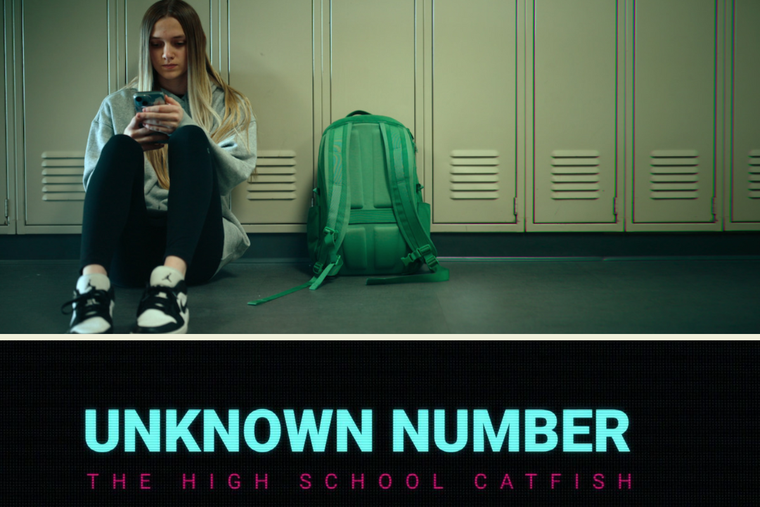
One of the top movies on Netflix this month is Unknown Number (spoilers ahead), a disturbing true-crime documentary about a 2020 cyberbullying case in the small town of Beal City, Michigan. In the opening scenes of the film, a young man confesses, “It’s crazy how having a phone could become the worst thing that happened to me.” And this story is, if nothing else, a horrific cautionary tale of how smartphones can unravel a community and, indeed, a family.
The story revolves around two 13-year-olds — Lauryn and her boyfriend, Owen — who begin receiving anonymous text messages from an unknown number. Over the course of a year, the messages roll in with increasing frequency — at times 40 to 50 messages a day. They also become increasingly abusive and sexually graphic (viewer discretion advised). At the peak of the harassment, the anonymous texter even encourages the young girl to commit suicide.
Friends, family, friends’ families, administrators and police officers try to get to the bottom of who might be doing this. Naturally, they suspect a friend from school, and the finger-pointing begins; particular girls look, for different reasons, particularly suspect. Throughout the entire process, the parents refuse to get rid of their kids’ phones or even change their numbers, insisting on finding out who’s responsible.
And to their credit, they do. I went into the film knowing the big reveal (again, spoiler ahead), but it barely mitigated the shock and disorientation of watching it unfold: The unknown sender was, in fact, Lauryn’s mother, Kendra. Having already served her jail sentence, Kendra is interviewed throughout the documentary, and in the first half, she appears as just another concerned party watching all of this unfold to her poor daughter.
The second half, of course, asks that aching question that every viewer, together with Lauryn and this whole community, now has to ask: Why? How could this woman do such a thing to her own daughter, who even now craves the presence of her mom? How could she inflict such untold pain — not only to Lauryn and Owen but to countless other people around them? The film floats out a few different theories: Perhaps Kendra had a secret obsession with Owen. Perhaps, in a bizarre case of Munchausen syndrome by proxy, she inflicted pain and suffering on Lauryn so as to be her comforter and garner the attention and admiration of others. Kendra’s own explanation — which doesn’t hold water — is that she didn’t start the messages, but began sending them to try and get to the bottom of the harassment (having been abused herself as a young woman), but found that she couldn’t stop playing the role of harasser. Maybe — and this is the most unnerving possibility — there really was no discernible logic to the thing at all. Perhaps Kendra, like St. Augustine stealing from the pear tree, simply reveled in the heinousness of what she was doing in secret.
Whatever the truth of Kendra’s mind, Unknown Caller is a striking affirmation of what Catholic tradition, following St. Paul (2 Thessalonians 2:7), calls the mysterium iniquitatis — the mystery of iniquity — a tendency toward evil that lurks in the hearts of human beings by nature. Men and women who lead staid and respectable lives on the surface are capable of great wickedness in the shadows — a wickedness that seems to surface without source or aim. Learning that this prim, mousy IT worker and basketball coach is behind this awful torment, and watching her get caught in the tangle of her own madness and struggle to explain herself, is a hard lesson in the inaccessible depths of the human self and of the depravity that, absent divine graces, can run amok within it. Kendra’s behavior may have been exceptionally deranged, but derangement is hardly exceptional.
But Unknown Number isn’t just about strangeness of sin; it’s also about how smartphones tend to play to our worst instincts — and in a particularly powerful way. While the practical benefits of the iPhone and social media have been undeniable, a growing body of evidence — both scientific and anecdotal — also suggests dire social consequences stemming from their design. (And if you doubt it’s all by design, watch the documentary The Social Dilemma.) These technologies aren’t just overwhelmingly addictive; they also tend to fragment human attention, reward social deviancy and —despite the long-held promise of greater connection — deepen human alienation and political divisions. Perhaps most disconcerting is the unknown unknowns: the hidden, long-term effects of this remapping of human thought and communication — assuming we stay the course — over the next two, three, four generations.
These dangers are particularly pronounced for young people, whose immersion in the Wild West of iPhone and social-media use is uncharted territory. The social psychologist Jonathan Haidt (The Anxious Generation) has been ringing the alarm about what he calls a “great rewiring of childhood” through handheld devices, including a corresponding rise in mental illness, especially among young girls. Haidt has recommended “four new norms” for Gen Z: no smartphones before high school (“You do not give a child the internet in their pocket,” he warns, “where strangers can reach them and they can watch beheading videos”), no social media before 16, phone-free schools, and more real-world independence.
It’s worth observing that Unknown Number is practically a negative picture of all four norms. Smartphones are ubiquitous among 13-year-olds; TikTok videos flash across the screen; the kids remain on their phones all day at school, even throughout the investigation; and the families, parents and kids alike, stay glued to their phones outside of school, right to the end of the crisis.
Of course, a mother, not the kids, is the offender in this case, but there are countless stories of young people inflicting similar harm on each other. And while it would be a mistake to say that the smartphone is somehow to blame for what Kendra did, this story is inescapably intertwined with the growing tech crisis striking at all generations. A dysfunctional environment encourages dysfunctional behavior, and no one is immune to it.
Unknown Number is a disquieting reminder that — both spiritually and socially — the digital age is in desperate need of some big changes.
- Keywords:
- digital age
- protecting children and youth
- american society
- netflix
- social media use
- smartphones