Blessed Mary Magdalene Bódi: Hungary’s New Virgin-Martyr of World War II
Beatified Sept. 6 in Veszprém, Hungary, the young factory worker gave her life resisting a Soviet soldier’s assault in 1945.
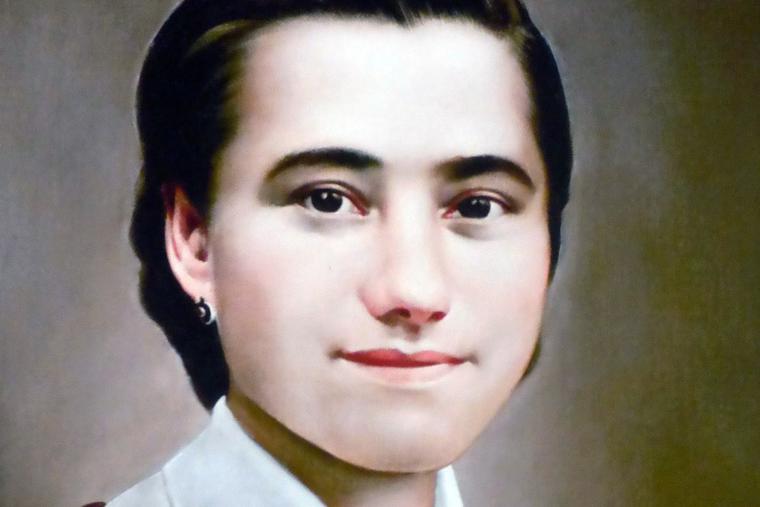
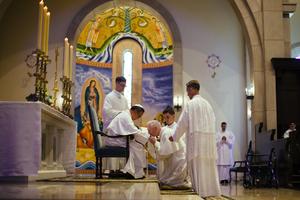
Hungarian Catholics are celebrating the beatification of Mary Magdalene Bódi (1921-1945), honored as a martyr. The ceremony took place during celebrations Sept. 6 in Veszprém, an archdiocese dating back at least 1,000 years. Her cause was approved in May 2024 by Pope Francis.
Bódi was born Aug. 8, 1921, in a small village on Lake Balaton — a vacation site called the “Hungarian Riviera” — where later Eastern-Bloc citizens, unable to travel west, could take a summer vacation during the Iron Curtain era. She was one of three children of manorial servants. The children were technically illegitimate because the father, having found himself in Hungary as a prisoner of war in World War I, lacked civil papers to marry.
Some sources speak of early manifestations of piety on Bódi’s part — for example, that her family would travel a great distance to reach a village where Mass was regularly celebrated. But others say that while she received the sacraments of initiation, the family did not necessarily provide the strictest religious upbringing.
Her own response to God’s grace and the reading of books from the parish left an impact on her. It’s said that, around age 10-11, she noticed an orphaned child in their village being raised by poor grandparents, for whom she undertook her own campaign to obtain donations to buy warm clothing.
At age 17, during a local mission, Mary decided she wanted to commit herself wholly to Christ, especially through work for the poor. She hoped to enter religious life, saying, “How beautiful is the life of one who can be close to God,” but the order she sought to enter deemed that her illegitimacy disqualified her.
At 18, she went to work in a factory that, in her day, manufactured explosives. (Later, under communism, it expanded into various chemicals before restructuring after 1989 into environmental protection.) A daily communicant, her modest and calm example won her the respect of her somewhat rowdy and less religious co-workers. She is remembered for being available to make deliveries for anyone who needed help on the bicycle her father gave her.
As she deepened her own spiritual life and continued working with the Catholic organization for young boys and girls, she committed herself entirely to Christ. On Oct. 26, 1941 — the feast of Christ the King — she made a private, irrevocable vow of virginity. She also became more involved with the Congregation of Mary, a Jesuit-led movement for young people to deepen their spiritual lives.
By this point, Hungary was embroiled in a complex situation in World War II. The government was allied to Germany, but sometimes did not pursue Nazi policies with the same zeal as Berlin. It did, however, preside over the near-total destruction of much of Hungarian Jewry. By 1944, the collaborationist regime was replaced by direct German occupation, both out of fear that the Hungarians might join the Allies and because the Soviets were advancing westward.
Bódi took a course in nursing, hoping to use her skills to alleviate some suffering, but her factory deemed her an essential worker and would not release her.
April 1944 found Bódi in Litér, where she continued her factory job while organizing the local “Catholic Working Girls’ Association” to provide food to the hospitalized, sew clothes for indigent children in the area, and provide what nursing services they could. She also emphasized the importance of the women preserving their virginity.
The end of 1944 brought the Red Army into Hungary, including a prolonged and bloody siege of Budapest. The Soviets would control all of Hungary in spring 1945.
On March 23, Bódi, along with some women and children, was at the entrance to a makeshift local bomb shelter when two armed Soviet soldiers attacked them. One shoved her into the bunker where he attempted to rape her; she resisted, warning another girl to flee or suffer the same fate. “Annuska, run away, because it will be your turn! I am dying. … Mother, get out of here, I am dying now!” As Bódi tried to flee, the Red Army soldier emerged and shot her six times. Her last words were, “My Lord, my King! Take me with you!”
The grace of her example had almost immediate effects. Roughly two weeks later, her parents regularized their marriage in the Church.
Veszprém’s new bishop, József Mindszenty, took testimony about Bódi’s death within a month of her martyrdom. With the war still on, Soviet troops destroyed church structures in the town. Mindszenty was transferred to Esztergom, the primatial see. The local process was concluded by 1950, but with Hungary under Stalinist communism, the possibility of sending the case of a Hungarian working girl to Rome as a possible saint became impossible. Over time, documents were “lost.”
The case started up again in 1990. It stalled without the earlier documents, but the discovery of records in a Veszprém parish archives in 2010 allowed the case to move forward. The diocesan phase ended in 2016, the case moving to Rome in 2017. Originally scheduled for beatification last April 26, the death of Pope Francis postponed it until Sept. 6.
Bódi stands in line with other Central European women who gave their lives defending their chastity in wartime against Russian rapists. Blessed Karolina Kózka, a 16-year-old Polish girl, was killed in 1914 by a Russian soldier’s saber after he led her out into the neighboring woods, where her beaten body was found.
Blessed Anna Kolesárová, a 16-year-old Slovak girl, was shot by a drunken Soviet soldier in front of her father for refusing to submit to his advances, her last words being “Goodbye! Jesus! Mary! Joseph!”
Ten Sisters of St. Elizabeth, beatified in 2022, were also martyred amid incidents involving attempts to violate their chastity, as well as the abuse of orphans and the profanation of sacred vessels in Wrocław, western Poland, in 1945 at the hands of Soviet soldiers.
Some might downplay Bódi’s defense of virginity, focusing instead on her overall life of charity, her concern for human suffering irrespective of the political picture, and her Christian leadership as a lay woman. All those things are true, but we would do the martyr a disservice if we do not appreciate the value for which she had consecrated herself and for which she gave her life — a foundational value whose recovery remains a challenge for our times.