How Coffee Found a Home in Catholic Culture
Learn about coffee’s Catholic ‘baptism’ — and more.

The average American is physically, biologically, psychologically, and neurologically unable to do anything worthwhile before he has a cup of coffee. And that goes for prayer, too. Even sisters in convents whose rules were written before electric percolators were developed would do well to update their procedures. Let them have coffee before meditation.
— Fulton J. Sheen
Coffee is everywhere in Catholic life — and so ordinary it barely registers as remarkable. The early-morning cup before Mass, the coffee pot at parish coffee hour, the steady drip in a monastery kitchen: It is woven into daily rhythms of prayer, work and community.
Yet according to long-standing tradition, this familiar drink once carried a far more controversial reputation. In early European accounts, coffee was viewed with suspicion because of its foreign origins and, in some cases, was even labeled as the “devil’s drink.”
The historical record behind that claim is thin, and historians generally regard the story as legend. What is more securely documented, however, is coffee’s journey from an exotic import of the Islamic world into Europe and its gradual incorporation into the Catholic culture that influenced much of the continent and, in time, the world.
Coffee’s origins are commonly traced to the ninth century in Ethiopia — and the story of a goat herder named Kaldi, who is said to have noticed his animals’ unusual energy after eating bright red berries from a particular plant. While widely regarded as a traditional legend, the story is consistent with coffee’s early cultivation in Eastern Africa before its spread to Yemen and the Arabian Peninsula.
By the 15th and 16th centuries, coffee had taken root in parts of the Islamic world, particularly among Sufi communities (Islamic mystics), where it was used to sustain energy during long nights of prayer. Coffeehouses, known in Persian as qahveh khaneh, soon became fixtures in cities such as Mecca, Cairo and Istanbul as places of intellectual exchange and commerce.
When coffee reached Europe in the late 16th century through Venetian trade routes, it entered a culture shaped by political and religious tension with the Ottoman world. As with many unfamiliar imports, it was met with both fascination and suspicion.
It is in this context that one of coffee’s most enduring Catholic traditions emerges.
According to legend, around 1600, advisers urged Pope Clement VIII to consider condemning coffee, arguing that Christians should not drink a beverage associated with the Muslim world. Before making any judgment, however, the Pope reportedly chose to taste it himself.
What followed became part of Catholic lore.
Pope Clement is said to have found the drink so pleasing that he remarked it would be a shame to allow non-Christians exclusive enjoyment of it. He then gave his blessing, thus “baptizing” coffee and deeming it acceptable for Catholics to enjoy.
There is no documentation of such a decree regarding coffee. Still, it reflects the broader pattern of coffee’s reception in Europe: initial suspicion followed by gradual acceptance.
By the 17th century, coffee had become a growing feature of urban life.
Coffeehouses were firmly established in major cities across Western Europe, later described as “penny universities,” where the price of a cup of coffee bought access to news, debate and conversation.
Within this broader European development, Catholic life incorporated coffee in quieter, more ordinary ways. Monasteries, with their balance of prayer, study and labor, adopted it as part of daily material life — particularly in settings requiring long hours of work and wakefulness.
That tradition continues in more modern forms. Among monastic coffee roasters in the United States, the Carmelite Monks of Wyoming produce Mystic Monk Coffee, which is available through EWTN Religious Catalogue.
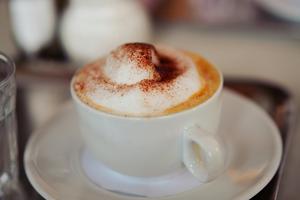
This connection between Catholic religious life and coffee has even left its mark on everyday language. The cappuccino takes its name from the Capuchin friars, its color said to resemble their brown habit and its name derived from the Italian word cappuccio, meaning “hood.”
In parish life as well, coffee has become part of the informal space that often follows Sunday Mass, where conversation extends beyond the liturgy, and community life takes shape in simple exchange.
Whether or not Pope Clement VIII ever “baptized” coffee, the tradition attached to him captures a shift from novelty to habit for a beverage that entered Europe as an imported curiosity and became, over time, part of daily life.
- Keywords:
- coffee
- catholic history