US Bishops Urge Labor Department to Reject Expanding IVF Insurance Coverage
U.S. Catholic bishops and other Catholic organizations warned that IVF destroys human embryonic life and encouraged the department to support life-affirming fertility treatments instead.

The U.S. Conference of Catholic Bishops (USCCB) and other Catholic organizations submitted public comments urging the Labor Department to reject a proposed regulation that would expand insurance coverage opportunities for in vitro fertilization (IVF).
Regulators will consider a rule change that would create a category of limited excepted benefits that covers IVF and other fertility-related treatments. It does not impose mandates but rather creates more opportunities for employers to offer the coverage.
In a 17-page letter submitted by the USCCB’s legal counsel, the bishops expressed support for expanding fertility-related coverage that respects unborn embryonic human life and the natural procreation process — but strongly discouraged any inclusion of IVF.
“IVF, especially as practiced in the U.S., kills or freezes at least as many preborn children as abortion — at a magnitude of hundreds of thousands or perhaps over a million per year,” the bishops’ comment noted.
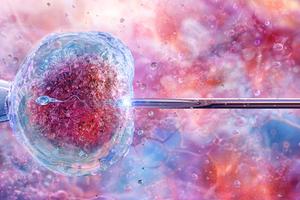
When a person receives an IVF treatment, “multiple fertilized eggs or zygotes — human beings — are produced” for every cycle, at which stage most die, according to the bishops’ comment. For embryos that survive, some are implanted but “others [are] destroyed or put in inhumane cryopreservation.”
The process for selecting which embryos are implanted and which ones are destroyed includes genetic screening, which the bishops’ comment called a “dystopian form of modern eugenics that kills those children deemed genetically inferior.” At times, when more than one embryo is implanted but the parents only want one child, the others are aborted through a process called “selective reduction,” they explained.
“Promoting IVF,” the statement said, “... stands in glaring contrast to this administration’s other pro-life statements and actions.”
The bishops said indefinitely freezing surviving embryos “is also a profound and terrible violation of their dignity and rights,” adding: “Hundreds of thousands of our smallest brothers and sisters in the U.S. are experiencing this fate right now.”
Additionally, the bishops warned IVF “commodifies our fellow human beings and treats them like products and property.” They warned the technology violates “the exclusivity of the marriage bond in its most unique context and unnaturally [separates] the procreative aspect from the unitive aspect (that is, regarding the unity of the spouses) of the marital act.”
The comment also cited practical concerns for the Labor Department, warning the inclusion of IVF could put the entire rule at risk because it may exceed the department’s statutory authority and that it is arbitrary and capricious, which could be a problem in court.
If IVF is ultimately included, the bishops requested guardrails. This includes rules that prevent the destruction of embryos, prohibit genetic screening, and clearly communicate alternatives, such as restorative reproductive medicine (RRM).
Regardless of whether IVF is included, the bishops encouraged flexibility to ensure coverage of RRM is clearly included so employers “can make meaningful use of that flexibility by affording them the opportunity to know of the full range of possible fertility care that can identify and heal a patient’s underlying conditions while safeguarding human life and dignity.”
RRM healthcare focuses on addressing the underlying conditions that cause infertility and works toward helping the couple achieve conception naturally through the marital act.
More Catholics Chime In
The bishops’ concerns were echoed by other Catholic organizations, including the Catholic Medical Association (CMA), the National Catholic Bioethics Center (NCBC), and the National Association of Catholic Nurses, USA (NACN-USA).
“In the IVF process more babies die than are ever born,” the CMA comment said. “The babies that are eventually terminated, after lengthy periods of cold storage, do not voluntarily sacrifice their freedom, their potential, or their lives.”
The statement promoted RRM, which CMA called “more holistic, gentler, more respectful of human life, more compassionate, more empathetic, and more generous.” It stated RRM is “devoid of violence or neglect or disdain toward viable beings denied access to being ‘in utero.’”
CMA also joined NCBC and NACN-USA in a joint comment, which called the initiative to expand infertility care “a valuable opportunity to advance real solutions to infertility that respects the God-given dignity of parents and of children, born and preborn.”
Yet they jointly encouraged the department “to refocus the rule on therapeutic, restorative treatments and to abandon its inclusion of IVF, which is profoundly flawed both legally, therapeutically, and morally, and does nothing to address the underlying pathology.”
“If IVF is included in the final rule, regulations must limit the number of embryos being engendered by the number of embryos that can safely be implanted and gestated unto birth,” the statement added.
“Engendering embryos with the intent to provide ‘spares’ for eugenic or research purposes is an [affront] to humanity and should be prohibited; and current practices of selective reduction, especially after there has been a deliberate engendering of more embryos than can safely be gestated is an egregious [affront] to human life and should be prohibited,” it stated.
- Keywords:
- ivf
- in vitro fertilization
- church teaching on the dignity of life
- u.s. bishops
- trump administration
- health insurance