Thousands of Young People March for Life in Paris, But the Absence of Bishops Risks a Generational Divide
ANALYSIS: In an age of profound moral confusion, national Churches cannot afford to appear more hesitant about their own teachings than the young people who are embracing them.
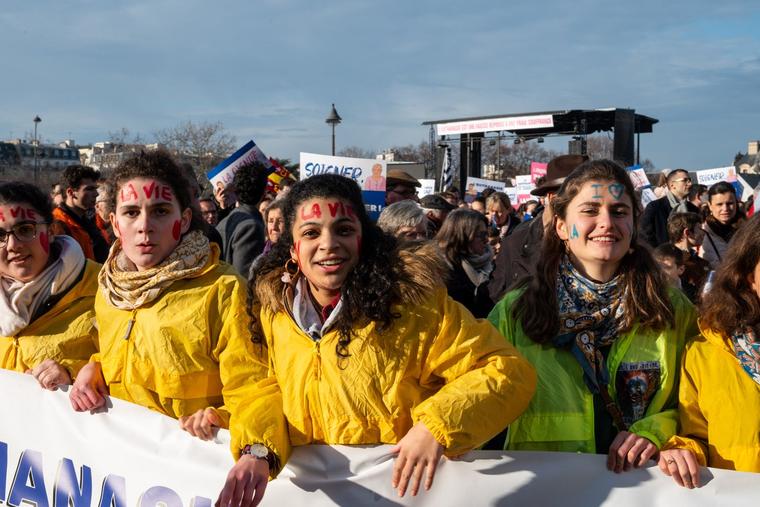
Around 10,000 people gathered at Place Vauban in Paris, in front of the iconic Invalides palace, for the annual March for Life, Jan. 18.
The crowd, largely young, visibly engaged and unapologetic, came together to defend the dignity of human life at a moment of heightened legislative stakes for France.
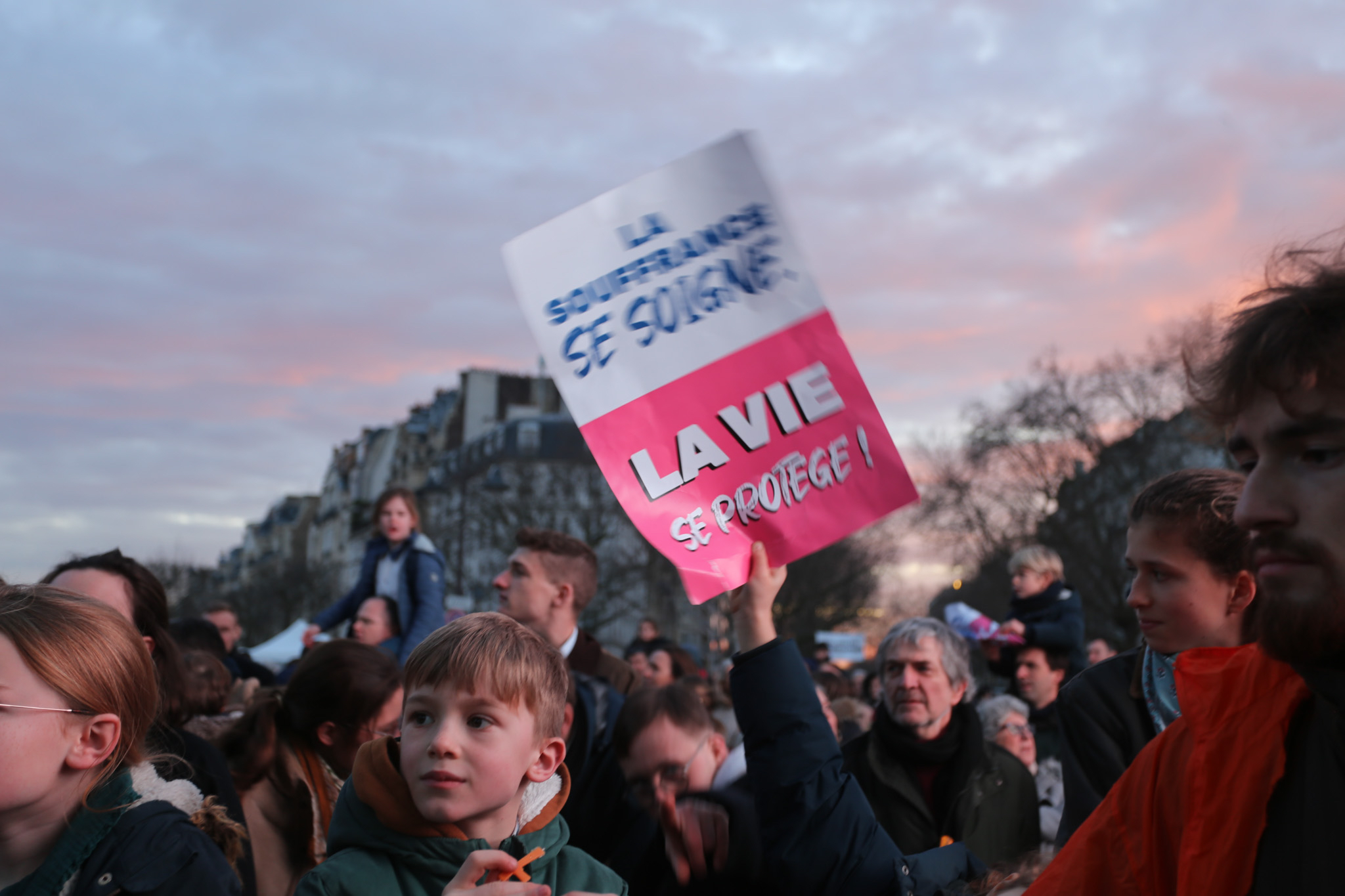
The march took place just two years after abortion was enshrined in the French Constitution and a few days before a Senate debate on so-called “end-of-life” legislation, a bill that would normalize euthanasia and assisted suicide, placing France among the most permissive end-of-life legal frameworks in the world. For many participants, this convergence gave the march a historical dimension.
Yet, while pro-life activists — mostly young Catholics — filled the square in large numbers to defend what they considered to be a matter of civilization, the French Catholic hierarchy was conspicuous by its absence. Only the former bishop of the Diocese of Toulon-Fréjus, Dominique Rey, was present.
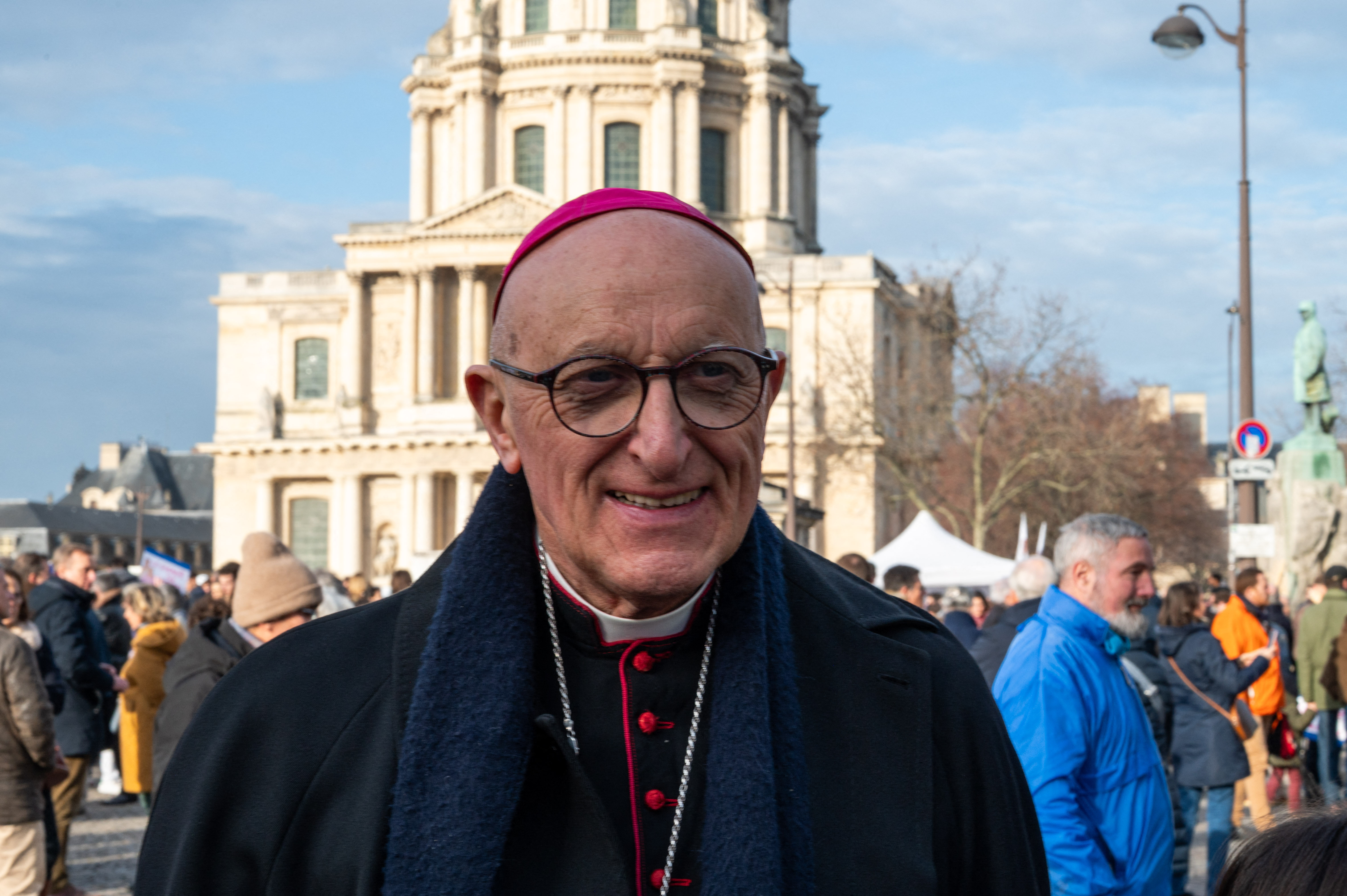
This absence, consistent over the years, invites deeper reflection on how Church leaders engage — or hesitate to engage — in public moral issues at a time when faith is experiencing a generational renewal, driven by a youth craving moral anchors.
A Youthful and Uncompromising Mobilization
Behind a banner reading “Treat and support, never suppress,” a fervent crowd poured into the streets of the French capital city on Sunday afternoon, setting the tone for a demonstration that was both peaceful and resolute. Students, young families and first-time demonstrators stood alongside veteran activists. Organizers estimate the average age of participants at around 20 years old, while attendance reached several thousand — a turnout achieved despite limited institutional support and minimal media coverage.
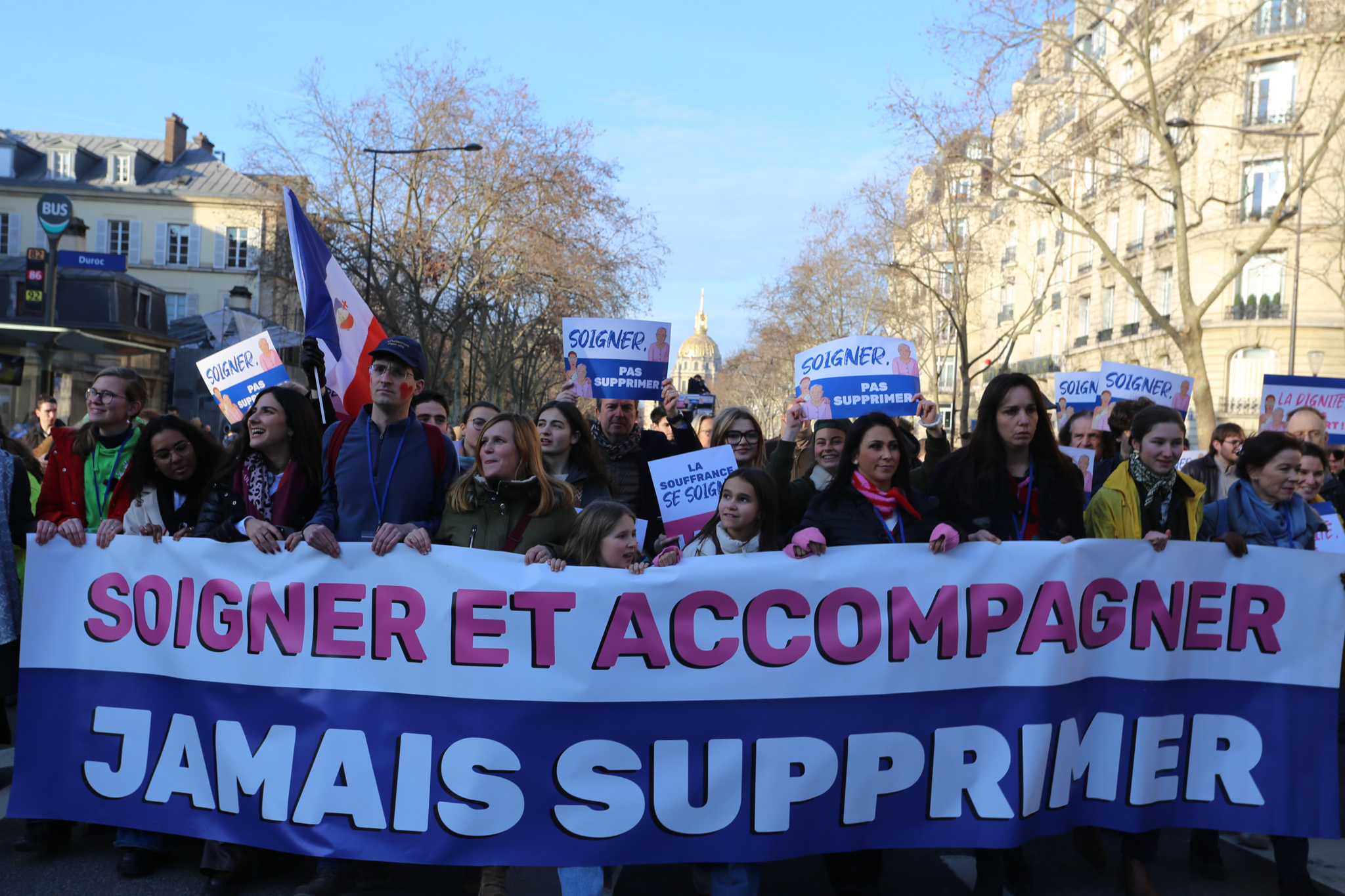
“Going out into the street seems essential to us,” Marie-Lys Pellissier, the 24-year-old spokeswoman for the March for Life in France, told the Register. “It is the only moment in the year when we can publicly express our opposition to abortion and euthanasia and propose concrete solutions. The rest of the time, the media never give us the floor.”
If the march drew a predominantly young cohort, she explained, it is because these bioethical questions confront younger generations early and directly, leaving little room for neutrality or indifference. Formed in a context of moral relativism and increasingly permissive bioethical legislation, many young participants feel compelled to make their opposition visible by taking to the streets.
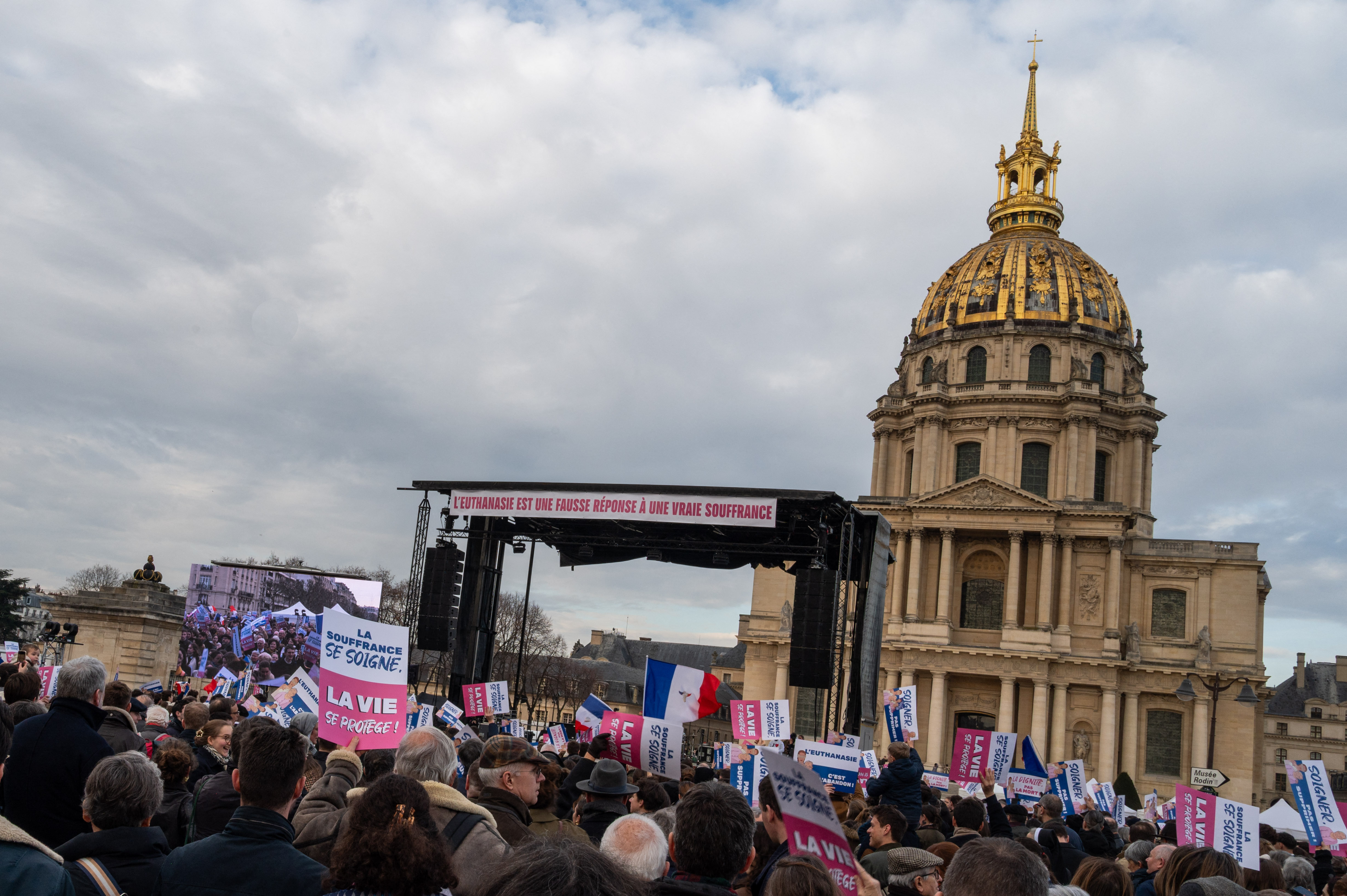
Another notable development this year was the prominence of women, many of them young, willing to speak openly about their own experiences with abortion. Some testified publicly about past abortions and the long-term psychological and moral consequences they endured, seeking to challenge the dominant narrative that presents abortion as a liberation. Among them is Emilie Quinson, who has recently spoken at the European Parliament to raise awareness about the realities of abortion and the lack of alternatives offered to women facing unplanned pregnancies. Quinson has revealed that she underwent three abortions in the past, endured profound trauma, and later raised five children — an experience she now frames as central to her public witness.
The Silence of Shepherds
In today’s France, taking a public stance on abortion or end-of-life issues has become increasingly costly. Abortion is now regarded as a constitutional right, and the crime of “obstruction of abortion” has greatly narrowed the space for opposition. This context gives particular weight to the choice made by many young people to speak out in defense of life. However, this willingness to take such risks, sometimes at the expense of their careers, has not been echoed in the same way within the ecclesiastical hierarchy, which often shows great caution on these issues, including in their homilies.
“Every year, we write to the bishops to invite them to the March for Life, to announce the date, and to ask them to come,” said Pellissier. “Some never respond. Others assure us of their prayers. And sometimes we are told, very frankly, that it is not their priority.”
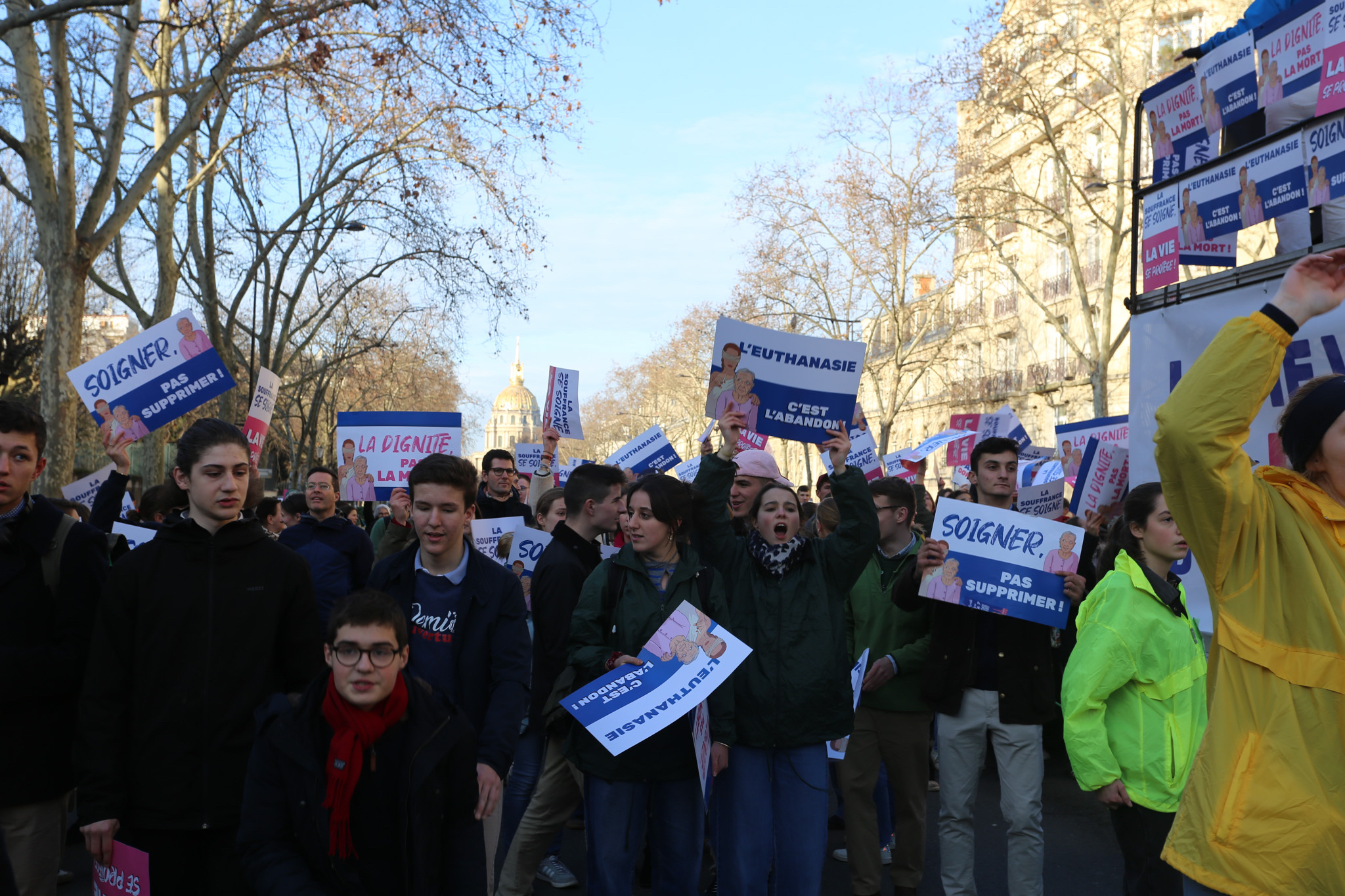
She added that many dioceses remain reluctant even to announce the event. Organizers were also struck by the fact that, ahead of the Senate debate on euthanasia, the French bishops issued a collective op-ed opposing the proposed legislation without mentioning the March for Life a single time.
This year, Bishop Emeritus Rey of Toulon-Fréjus was once again the only member of the French episcopate to attend the march. Pellissier claimed that over the past five to six years, Bishops Rey and Marc Aillet of Bayonne have been the only bishops to show up in person. Former Archbishop Michel Aupetit of Paris attended only after leaving office, a detail that underscores how uneasy it is for sitting bishops to be publicly present at the March for Life.
This lack of commitment is all the more incomprehensible to these young activists, given that the Vatican has always taken an unambiguous stance on these bioethical issues. In his new year’s address to diplomats, Pope Leo XIV reaffirmed the Church’s firm teaching on life, denouncing abortion as a practice that “cuts short a growing life” and condemning euthanasia as “deceptive compassion,” while urging public authorities to support mothers, families and the vulnerable rather than suppress life. “The message is clear,” Pellissier said. “The bishops are supported by the clarity of the Vatican and of the Church’s teaching. They do not have to invent anything — they simply have to take it up and stand with us.”
The New Generation Is Asking for Clarity
Drawing on years of experience with the pro-life cause, Pellissier observed that clarity on life issues is one of the main reasons a growing number of young people are drawn back to the Church. Today’s catechumens, she said, are not looking for a softened or evasive faith, but for one capable of addressing the moral questions that structure contemporary society. In several cases she has witnessed, debates over abortion or euthanasia served as an initial point of contact with Christianity, an intellectual and moral encounter that later opened the way to conversion.
“Young people should ask their bishops to join us in the future,” she said. “We need to tell them: ‘You are our pastors. We need you on these societal issues.’”
Questions surrounding the beginning and end of life, she insisted, are not secondary, but anthropological, as they touch the foundations of society and belong squarely to the Church’s teaching mission. At a time of a discreet but profound renewal of the Catholic faith in the country, the question raised by this year’s March for Life is therefore not only why so few bishops attended, but whether Church leadership recognizes the historical moment it is living through and the responsibility it bears toward those rediscovering the faith despite, rather than because of, cultural approval.
In this age of profound moral confusion, national Churches cannot afford to appear more hesitant about their own teachings than the young people who are embracing them.
- Keywords:
- prolife witness
- Paris March for Life