The Pandemic Spiritual Survival Plan
British bishops offer guidance for the ongoing COVID crisis.
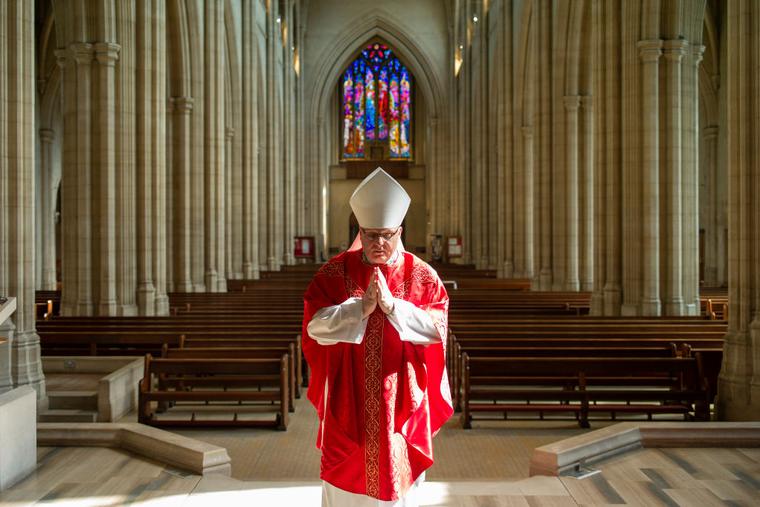
LONDON, England — Catholics in the United Kingdom find themselves once more in various degrees of lockdown. In most regions, the availability of the sacraments is disrupted. As a result, many Catholics are developing faith strategies in addition to the parish ways that formerly sustained them.
So how can U.K. Catholics keep their faith alive in these times? The Register asked three British bishops to offer a bishops’ “Spiritual Survival Plan” in response to the current crisis.
“I like the title ‘Spiritual Survival Plan,’” said Bishop Mark Davies of Shrewsbury. “If only we realized how such a plan is needed throughout the whole course of our lives! If the strangely restricted conditions of these days lead us to appreciate how we need to use the time of our lives and take advantage of all its stages and circumstances, then we will have drawn at least one, great benefit from the pandemic.” He went on to quote a 20th-century saint, Josemaría Escrivá, who “reflected how there could be no striving for holiness without a plan, a daily plan. […] The practice of making the Morning Offering at the beginning of each day is a great start. The difficult conditions of isolation, sickness, furlough or even unemployment, in which not a few are living, can serve not merely as ‘wasted time,’ [but] rather as a rediscovery of what our time is truly for.”
Bishop Philip Egan of Portsmouth, echoed these sentiments, adding: “It is certainly a graced opportunity for every Catholic and every family to adopt their own ‘rule of life.’ Why not take a leaf from the timetables of religious communities, with times for morning, evening and night prayers?”
Bishop John Keenan of Paisley also sees this time of pandemic as a great opportunity to use resources at hand rather than lamenting what is not currently possible. “In the Church we found the sadness at the closure of our churches was compensated by the availability of Mass around the world online,” he said, while noting that some priests who were used to having “only a handful coming to their devotions in church or talks in the parish hall have found dozens come and join them online.” In this, he senses Catholics “have taken a generational step forward in our use of technology to gather together and to spread the Good News.” Furthermore, he feels that, in doing so, “at least one part of the New Evangelization, new in methods, ardor and expression, has been achieved.”
With regard to the present digital phenomenon, Bishop Keenan accepts that, for some, there may be “a certain reluctance to embrace this new development. They say it is virtual and not real, that it will prove an enemy of real communion in person in the long run, with everyone opting to watch [Holy Mass] online rather than come to church. I would appeal to all Catholics fundamentally to embrace with both hands this new providence of online connection and broadcast [since in Scotland the churches are currently closed by order of the Scottish government]. When God created silicon metal [needed to make computers, etc.], he put this capacity in it and hid it till now, when he saw the time was right for it to help also unleash the power of the Gospel.”
Agreeing with Bishop Keenan’s observations, Bishop Egan pointed out many spiritual resources available online that would not have been accessible a decade or so previously: “The internet is full of resources, although we need to be discerning,” he said. “I find helpful I-Breviary or Universalis. These give you the Divine Offices for the day and also the texts for the Mass. You could also take out a subscription to one of the liturgical guides, such as the excellent monthly Magnificat.”
So what specific spiritual practices would the bishops propose to the mainly housebound laity at this time? “Spiritual reading is perhaps more within our reach than for any generation before us,” suggested Bishop Davies. “At the click of an iPhone or iPad we can have before us all the Scriptures, the Catechism of the Catholic Church and the lives and writings of the saints. It might be good to consult a priest or spiritual director to help guide us to find the spiritual reading which might help us best.”
While Bishop Keenan reminded the faithful of an obvious and trusted spiritual practice that needs no church building or internet connection: “The daily Rosary is a terrific prayer. I was always struck by the words of St. Louis Marie de Montford: ‘Never will anyone who says his Rosary every day be led astray. This is a statement that I would gladly sign with my blood.’”
And, given the present circumstances, what would bishops say to Catholics too fearful to attend Holy Mass where it is still available?
“As bishops we are more determined than anyone else to ensure our people’s safety, and I personally would be surprised if anyone has caught or passed on the virus in church,” said Bishop Keenan. He suggested that the benefits of attending outweigh any risks. “Most governments have now recognized the personal and social harm of closed churches. Going to church is good not only for our spiritual health but can be such a benefit to our mental health and sense of well-being. There is no joy greater than coming away from Mass filled with the grace of the Lord and the assurance of his love and care. So I would suggest just try it once. If at any point you feel afraid, you can turn around and go back home, but you may find it is great, and you are so glad you started going again.”
While prefacing his remarks with a similar note of caution, Bishop Egan said: “If you are able to go out to the supermarket, then why can’t you go to Mass? Going to Mass in a Catholic church, with the various safety protocols in place, is far safer. Just as your body needs food, so, too, does your soul.”
Bishop Davies views time away from the sacraments and, in particular, the Eucharist, as a time of preparation for an eventual return of the faithful to Holy Mass and a deepening of “Eucharistic faith and love.” He said, “The mystery of faith that we might always be in danger of taking for granted can be rediscovered, with that wonder and Eucharistic astonishment. The very deprivation of being unable to take part in the Mass or receive Holy Communion can be a time to grow in our longing to be in the Eucharistic presence of the Lord Jesus; to share in the Eucharistic Sacrifice; and to hunger to receive Christ as the Bread of Life perhaps as Holy Saturday prepares us for Easter Sunday.”
In particular, many priests are suffering in hidden ways at this time. Cut off from their parishioners as well as their friends and extended families, what would the bishops say to their priests?
“I think, with all the faithful, the specific word must be ‘thank-you!’” said Bishop Davies. “We have seen throughout the days of this crisis how our priests never lacked the generosity to meet every challenge. I am especially conscious of the demands of COVID safety and security, which have weighed on the shoulders of the clergy; and all that has been demanded in ministering to the sick, the isolated, the dying and the bereaved during this pandemic. In the Catholic priesthood we have seen no shortage of generosity during the days of this crisis. To those priests who have had to self-isolate and spend much of this time deprived of their active ministry, I would also wish to say a word of thanks for remaining close to the Lord by offering Holy Mass each day; praying the Divine Office; and in their quiet and often hidden prayer for us all.”
In this current situation, specifically in regard to priests, Bishop Keenan sees an unforeseen positive emerging. “The pandemic has allowed [priests to have] more control over their lives and lifestyles, and many have used it as a good opportunity to put in place a daily plan of work and prayer, study and recreation, work and sleep. It is good to have such a plan of life, and I hope we can continue to think of how our priests can enjoy more stable lifestyles, even while being available to their people.” He also noted that the current crisis had been a good reminder that the priesthood is “a presbyterate, a fraternity of clergy working as companions in the Lord’s vineyard. So we are our brother’s keeper, and a wee phone call to our brother-priest just to pass the time of day and see how he is doing can make the world of a difference.”
For all, the many volunteers, both priests and laity, who have helped keep parish life going, Bishop Egan is grateful, saying they have done a “fantastic job.” In addition, for all Catholics, he sees the need of an ongoing “‘ministry of the telephone’ to the lonely, the sick and the isolated.” Very much in line with an outreach ministry, the bishop of Portsmouth considers how the pandemic is “a time [that] presents the Church with an opportunity for evangelization. In history, the Church has always responded valiantly to plagues, epidemics and calamities, by being on the front lines, caring for the sick and the dying. As Catholics, mindful of this, we should not respond to the COVID crisis with a fearful timidity, but in the power of the Holy Spirit; do our best to give leadership; to pray and care for the sick; to witness to the truth and love of Christ; and to campaign for a fairer world post-COVID. Looking ahead, dioceses will need to enter a period of review and reflection in order to plan with much more vigor how to meet the challenges in and of the future.”
In some ways, during the pandemic, it seems there has been a new forging of bonds between people, priests and bishops. For example, the simple witness of laypeople has left a profound memory with Bishop Davies. “I will long remember the commitment of the teams of lay volunteers which enabled the reopening of the churches and the celebration of the Mass and the sacraments. I will also remember the great lay witness to the essential place of public worship in their numerous emails and letters to members of Parliament, which I believe had a profound impact in England. I am always happy as a bishop to say, with St. Paul, ‘the witness to Christ has been strong among you.’”
In conclusion, Bishop Keenan is keen to remind the faithful that they are not alone today or in the future, whatever that brings. He exhorts Catholics in this time of widespread anxiety about their future: “Be not afraid!” reminding them: “Remember, our Heavenly Father has every hair on our head counted. He knows what he is about and does nothing in vain. He knows what we need even before we ask and reassures us that there is no need for us to worry. The Lord goes before us always. He is our Good Shepherd, who knows how to lead us through valleys of darkness and into green pastures and quiet waters. He will bring us through these times together as a family, and this means that our lives, our Church and our world be will so much the better for this time of pause for reflection and fresh conversion.”
- Keywords:
- pandemic lockdown
- lockdown in uk
- uk churches
- covid-19