How the Story of a St. Thérèse Devotee Who Became a Carmelite Nun Moved Swedish Hearts
In a country known for its secularism, the story of Sister Maria of the Annunciation, told in a documentary sequel, stands out as extraordinary — complete with roses from the Little Flower.
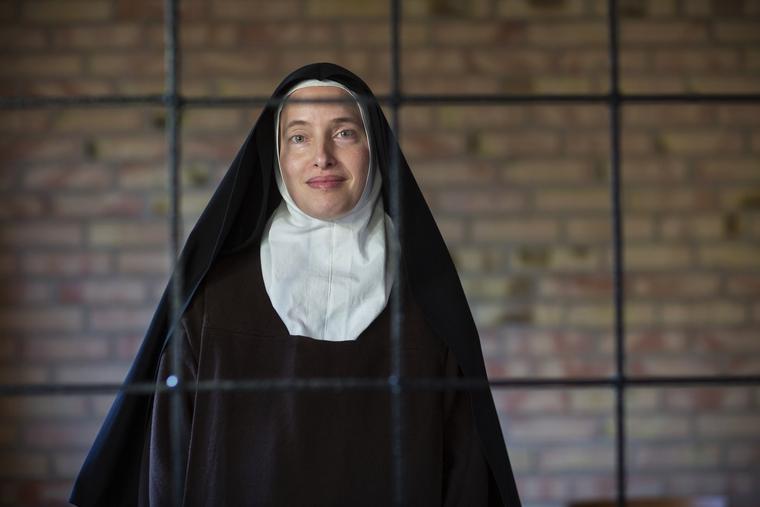
GLUMSLÖV, Sweden — When Swedish film director Maud Nycander released her documentary Nunnan — The Nun — in 2007, the world first met Marta Cavallin, a young high-school student who, in 1996, at the age of 19, had decided to enter a Carmelite monastery in Glumslöv, Sweden, to devote her life to God.
There, amid the quiet and solitude of the monastery, her life as Sister Maria of the Annunciation began.
The first documentary quickly gained widespread attention. It captured not only a young woman’s unusual and radical choice in a secular landscape, but also the profound reality of leaving everything behind to embrace a life of prayer, seclusion and absolute obedience.
It also revealed the love and heartache of a family whose beloved daughter and sister had chosen to live for God.
The documentary was seen by 1.7 million people on SVT, Sweden’s national public television broadcaster, and won both Swedish and international awards, such as the Prix Italia.
Since then, 18 years have passed.
In Sweden, hearts were moved, and questions stirred among the secular audience: How is Marta? How is she feeling? What is she thinking now? Did she stay? — questions Nycander received year after year, by letters and emails, from people around the world.
In the newly released follow-up documentary, “Nunnan: 25 År i Kloster” — The Nun: 25 Years in a Convent — Nycander reveals that Sister Maria of the Annunciation not only remained but is now thriving as the prioress of the same Carmelite monastery in Sweden.
25 Years Earlier
Maud Nycander first met Marta in 1996 while working at SVT on a program that followed young people taking different paths after high school.
“I didn’t even know that Carmelite monasteries existed, or that there were even monasteries so strict that you never leave them,” Nycander told the Register. “I come from a very secular family, and so it wasn’t something I was familiar with. But I became incredibly curious about Marta, about her choice, her conviction, and how authentic she was in it.”
Recalling how 19-year-old Marta had many friends at school, a loving family and many dreams for the future, Nycander observed: “She was a young girl who had everything going for her, every opportunity for a good life. So it was that paradox that made me very interested in her.”
“That we were able to enter the monastery was almost an enigma,” Nycander recalled, explaining what it was like filming for a day inside the monastery while Marta was still a postulant – something she was never allowed again.
Nycander wanted to make a documentary right away, but because the novitiate is a time of uncertainty and discernment, “the monastery understandably said, ‘No.’” Still, the Swedish film director said, she and Marta stayed in touch over the years.
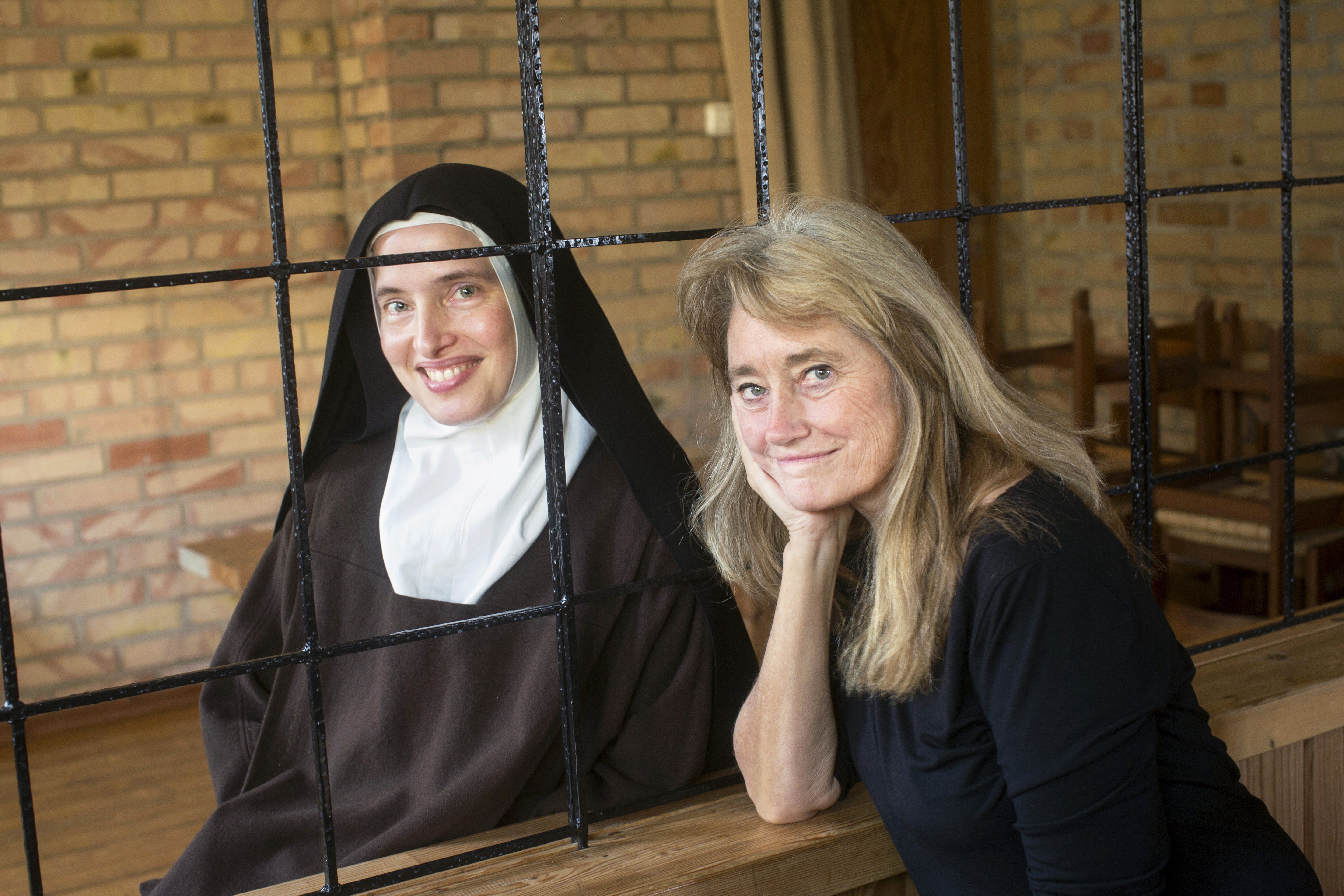
Finally, five years after Marta first entered the monastery, Nycander was allowed to return and film — but this time, only in the monastery’s parlor.
“The first film is just as much about her family as it is about her,” the director explained, describing how it shifts between the quiet life of the monastery and scenes from the Cavallin family home, where we follow Marta’s parents and siblings, their reactions then and now, their longing and loss, and sometimes conflicted feelings toward Marta’s choice.
The youngest brother, Emanuel, took it the hardest. He was only 5 when his older sister, his second mother, left — despite his attempts to stop her by clinging to her suitcase. For years, he consoled himself with the thought that they would meet in heaven, where they could “play every day, forever and ever.”
A Total Self-Gift
Growing up in a large Catholic family with nine children, Sister Maria of the Annunciation never experienced a dull moment as a child.
“I was very full of initiative and joy for life, always coming up with all sorts of plans and projects,” Sister Maria told he Register. “My main plan was to have many children and build my own house there on the farm, and I was going to become either a farmer, a police officer or a preschool teacher — I was just bursting with possibilities.”
Describing them as “on fire for the faith,” Sister Maria’s parents, members of the Third Order Carmelites, had built a chapel on their farm — where, with the bishop’s permission, they had the Blessed Sacrament — and prayed the Divine Office and the Rosary together.
Their lives were deeply Catholic, but religious life had never crossed her mind — until one summer, when a volunteer visit to the Daughters of Mary changed everything.
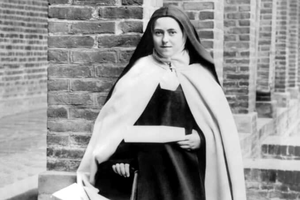
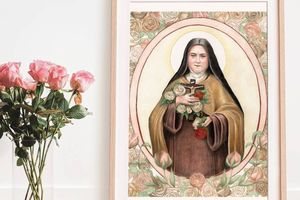
“I remember thinking, ‘This is what I want.’ I was so fascinated by their way of life and by how they could give up everything and give themselves completely,” Sister Maria recalled. “At the same time, I was also reading St. Thérèse’s autobiography, and her total, burning love for Jesus made a huge impression on me. She kind of became my best friend.”
“In that moment,” she added, “a decision was made in a way, that this was what I wanted to do, and it never left me.”
Drawn by the Carmelite spirituality, radicality and total self-giving, and “very eager to enter as soon as possible,” 19-year-old Marta entered the Carmelite monastery on October 1, 1997, on St. Thérèse 100th heavenly birthday.
Reflecting on her first years in the monastery and the release of the first documentary 10 years after her entrance, Sister Maria recalled how “many were very moved in different ways, believers as nonbelievers, Catholics and non-Catholics,” both “by the family, the choice, the radicality of it” and the young age at which she had made her vocational discernment.
“It’s just so incredibly different from our secularized country,” Sister Maria reflected. “It’s just not part of their lives. For most people, God doesn’t exist, at least not in practice. And suddenly they catch a glimpse of the eternal, of another world, of heaven.”
‘Is She Still There?’
Over the decades, the documentary was used in religion classes across Sweden. And, for years, Nycander received questions from countless students who wanted to know what happened afterward.
“I’m like most people,” Nycander admitted, “afraid of loneliness and of facing my inner self. I am incredibly grateful for my family and my children.”
“The challenge of giving those things up, of actually doing it and then becoming such a vibrant person as Marta, it’s truly a mystery,” she added. “Meeting her has been incredibly fascinating for me, and, yes, sparked some very thought-provoking reflections within me.”
Unlike the first documentary, the second one goes deeper, moving beyond examining Marta’s choice and its consequences to try “to get close to and understand Christian mysticism.”
Nycander emphasized that, despite the general lack of faith, “there is a longing for something” among the Swedish people.
“There is a strong pull toward what exists in religions, which has often been turned into exercises or things meant to ‘make us feel good,’” Nycander observed, mentioning yoga and mindfulness exercises as particularly popular.
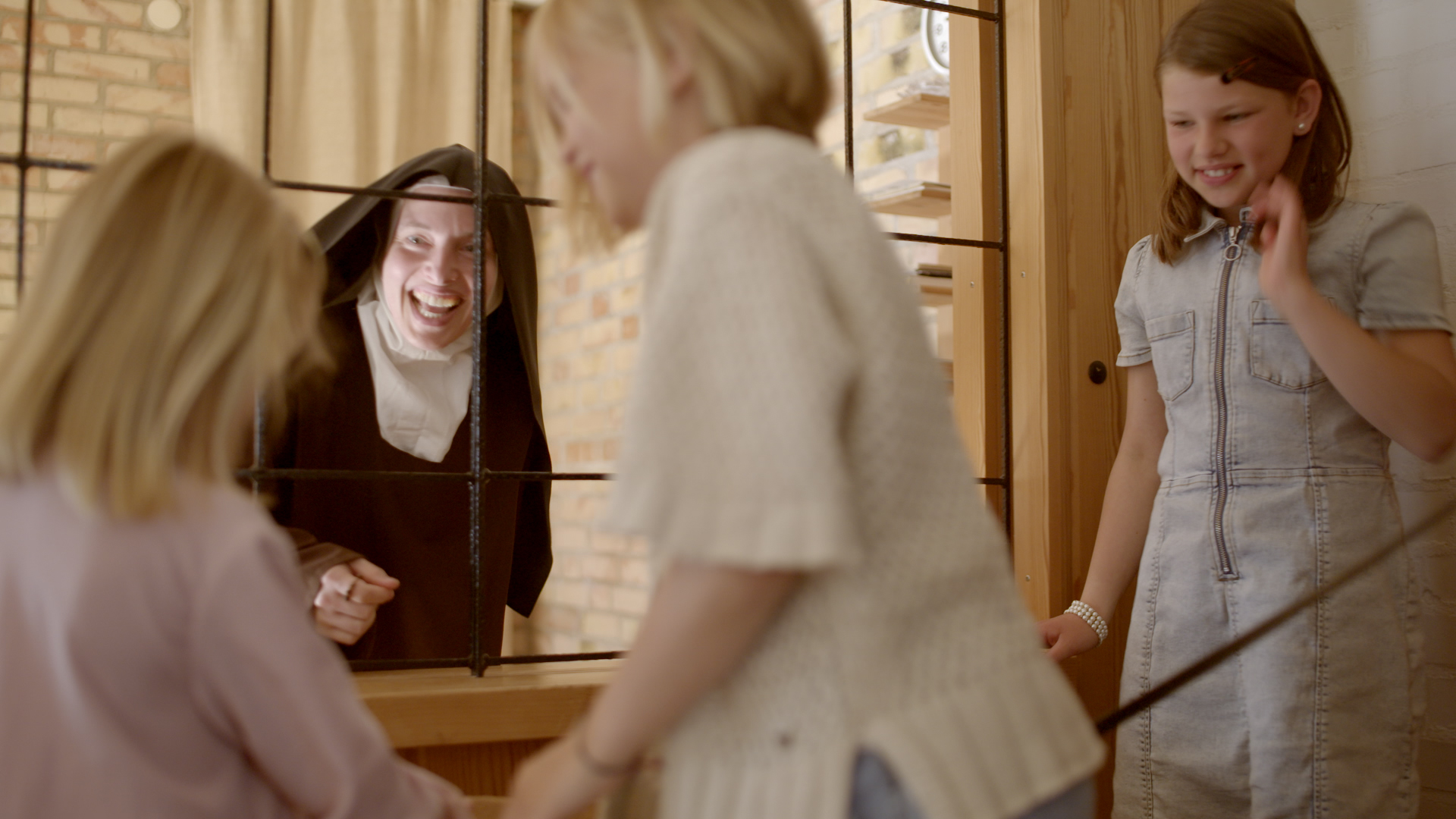
“But Marta isn’t doing this to feel good. She’s not even doing it for herself. What Marta does, she does it for someone else. She does it for us,” Nycander said. “And I believe that touches people very deeply.”
Noting the large, mixed crowds of believers and nonbelievers going to see the film, including “surprisingly many young people,” Nycander stressed: “It’s very clear that there is such a strong need to discuss and reflect around existential questions and choices.”
“I, myself, could sense that the family had something that I, perhaps, was missing: a kind of engagement with existential questions that isn’t really present in society today, in open conversation. And I think that’s why there is such enormous interest in the film in Sweden.”
A Hidden Life of Prayer
It wasn’t an evident choice for Sister Maria, now 47, to let Nycander come back to film. After all, part of their vocation is to remain “hidden,” she explained.
Sister Maria spent a year praying about allowing the film director to return, asking St. Thérèse for two roses. One day, after completing a novena to the Holy Spirit, one of her 43 nieces and nephews came to her with exactly what she had asked for: two roses, freshly picked from the garden.
Like the first documentary, the second gives viewers a glimpse into the life and faith of Sister Maria’s siblings, many of whom have been deeply shaped by their Carmelite sister’s prayers. Some who had strayed from the faith have returned; one who longed to marry has done so; and her youngest brother, Emanual, now 34, has embarked on a new chapter in his life.
“A lot of people asked about my little brother, how things turned out for him,” Sister Maria of the Annunciation shared. “Well, he met a Catholic woman from the United States on Catholic Match. Now, he lives in Texas, and they have five children.”
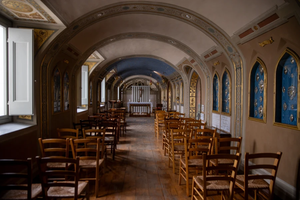
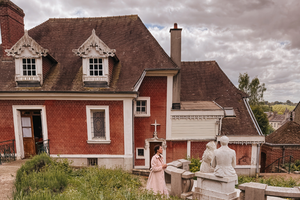
Although she still has the chance to see her family on rare occasions, Sister Maria of the Annunciation’s life is — and will always be — within the monastery, where 13 sisters (including three novices, one postulant and one aspirant) live a quiet life centered on prayer.
The monastery is also one of the few places in the Diocese of Stockholm allowed to celebrate the traditional Latin Mass, which Sister Maria described as “a gift and blessing.”
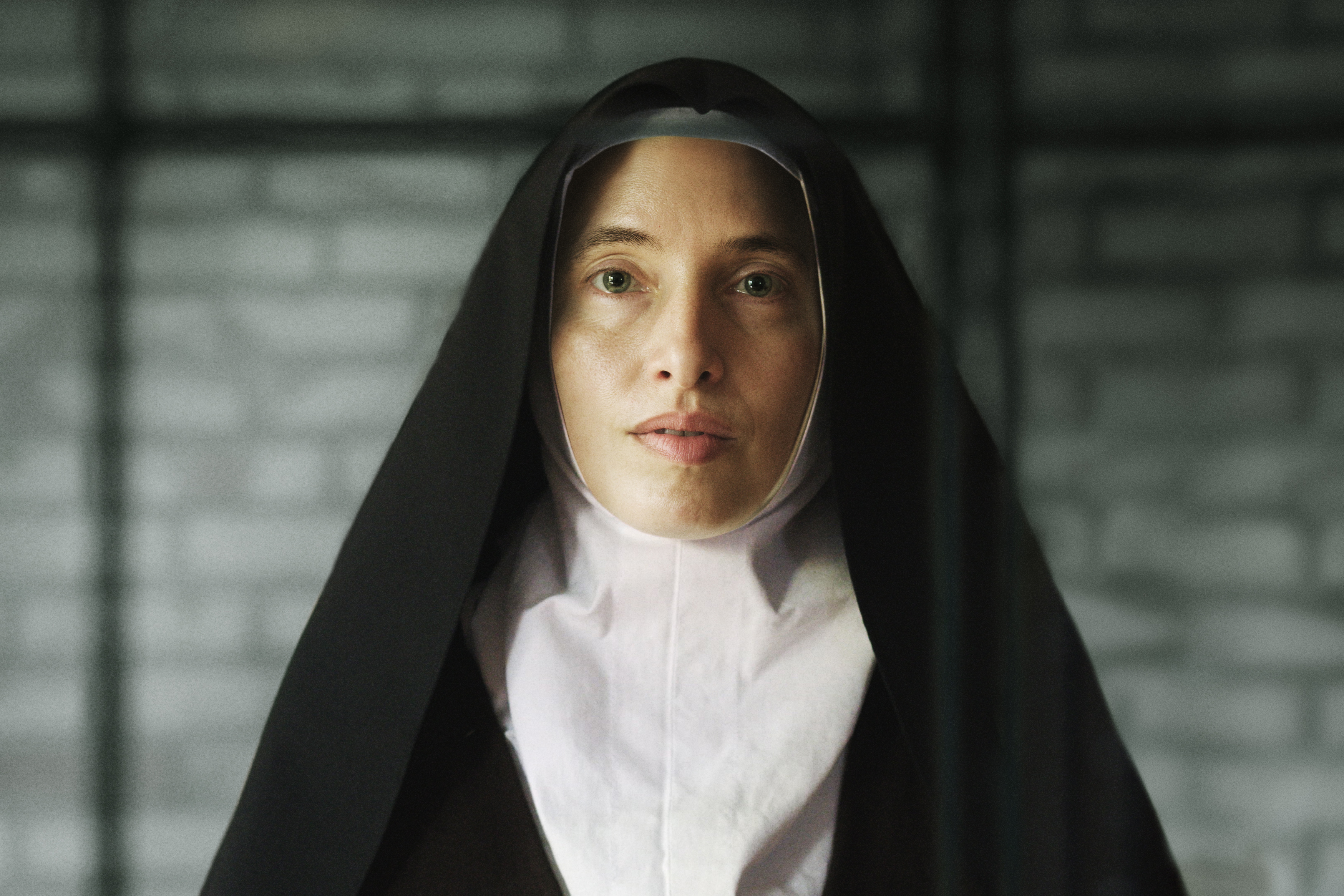
According to her, there is “a certain explosive power” in the Latin liturgy, something which is evident when she observes the young girls discerning a potential vocation: “They’re either already deeply engaged with it, or very open and filled with longing when they encounter it.”
“Personally, I think it has really deepened my understanding of what the Mass truly is, as well as my contemplative vocation,” Sister Maria explained. “These low Masses, the silence — even during the sung liturgies — leave all the focus on Our Lord. It’s centered on his presence, drawing us away from ourselves and directing everything toward God.”
Sparking Conversations and Personal Reflections
While neither Sister Maria of the Annunciation nor Maud Nycander believe that there will be a third follow-up film, both hope that the two documentaries will spark conversations, inspire new reflections, and prompt a deeper encounter with the mysteries of faith.
“I’m incredibly curious,” Nycander admitted. “I can see that they have something I myself am lacking in life. I mean, just look at Marta — she’s chosen solitude, and yet, on a deeper level, she’s in touch with people outside the monastery in a surprisingly beautiful way.”
“Just the fact that they practice self-examination in the monastery, reflecting twice a day on how they have acted and what they have thought,” Nycander added. “Imagine if we all did that, what a completely different world we would be living in.”
For the St. Thérèse devotee-turned-Carmelite nun, her heavenly friend teaches what searching souls long for.
Sister Maria emphasized: “We are created for heaven,” adding, “Even if they aren’t consciously aware of it, it resonates within them beneath all the weight of worldly things, and it surely awakens a longing for home.”
LEARN MORE
Note: Den Barmhärtiga Kärlekens Karmel — the Carmel Monastery of Merciful Love — is facing some urgent renovations, to remediate the monastery’s facade and the soil around the entire monastery due to high PCB levels. If you want to donate, read more: https://karmel.se/renovation/