St. Thérèse at 100: 3 Lessons From Lisieux
Daughter of a watchmaker and a lacemaker, St. Thérèse of Lisieux was born into beauty and surrounded by it.

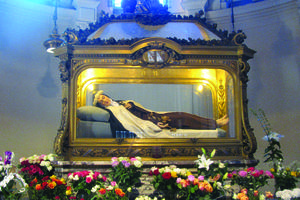
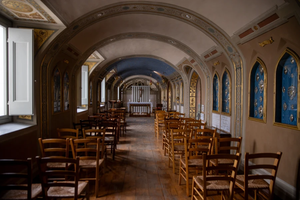
Last week I finally met my heavenly best friend, St. Thérèse of Lisieux, the Little Flower. It was the most beautiful moment, one I had waited years to see unfold. I had been to Lisieux once, briefly, over a decade ago. It was a whirlwind stay, and though I was able to walk through St. Thérèse’s childhood home, I wasn’t able to see her basilica or Carmel, where her relics are. I remember making her promise I’d come back, and she kept that promise. I returned, this time, with my husband and our son. Not only were we able to walk through her childhood home, we were able to pray in front of her relics and ask for her intercession.
For as long as I can remember, I have turned to St. Thérèse of Lisieux of the Child Jesus and the Holy Face, asking her to intercede on my behalf. The saints are God’s gift to us. The saints “do not cease to intercede with the Father for us” and lead us closer to Christ, the source of all grace, as Pope St. Paul VI reminded us in Lumen Gentium. They strengthen us in our journey towards our heavenly home, instilling in us the hope of the Resurrection through their life story, witness and prayer. The more we call upon their intercession, the more we realize how active and effective their friendship is.
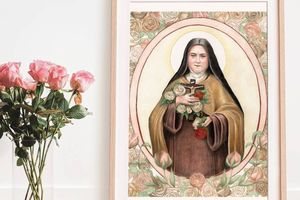
St. Thérèse is one of the most faithful friends and one of the greatest saints, or, as my pastor quips, “everyone’s favorite saint.” The majority of practicing Catholics know her name, even more recognize her prayer-card image, and some even have a story about her. Countless miracles have been attributed to her intercession (you can read about mine here)!
God’s timing is perfect. The years in between my visits were not wasted getting to know St. Thérèse. I know that I would have deeply appreciated visiting her basilica and Carmel all those years ago, but God really had prepared my heart to see her last week.
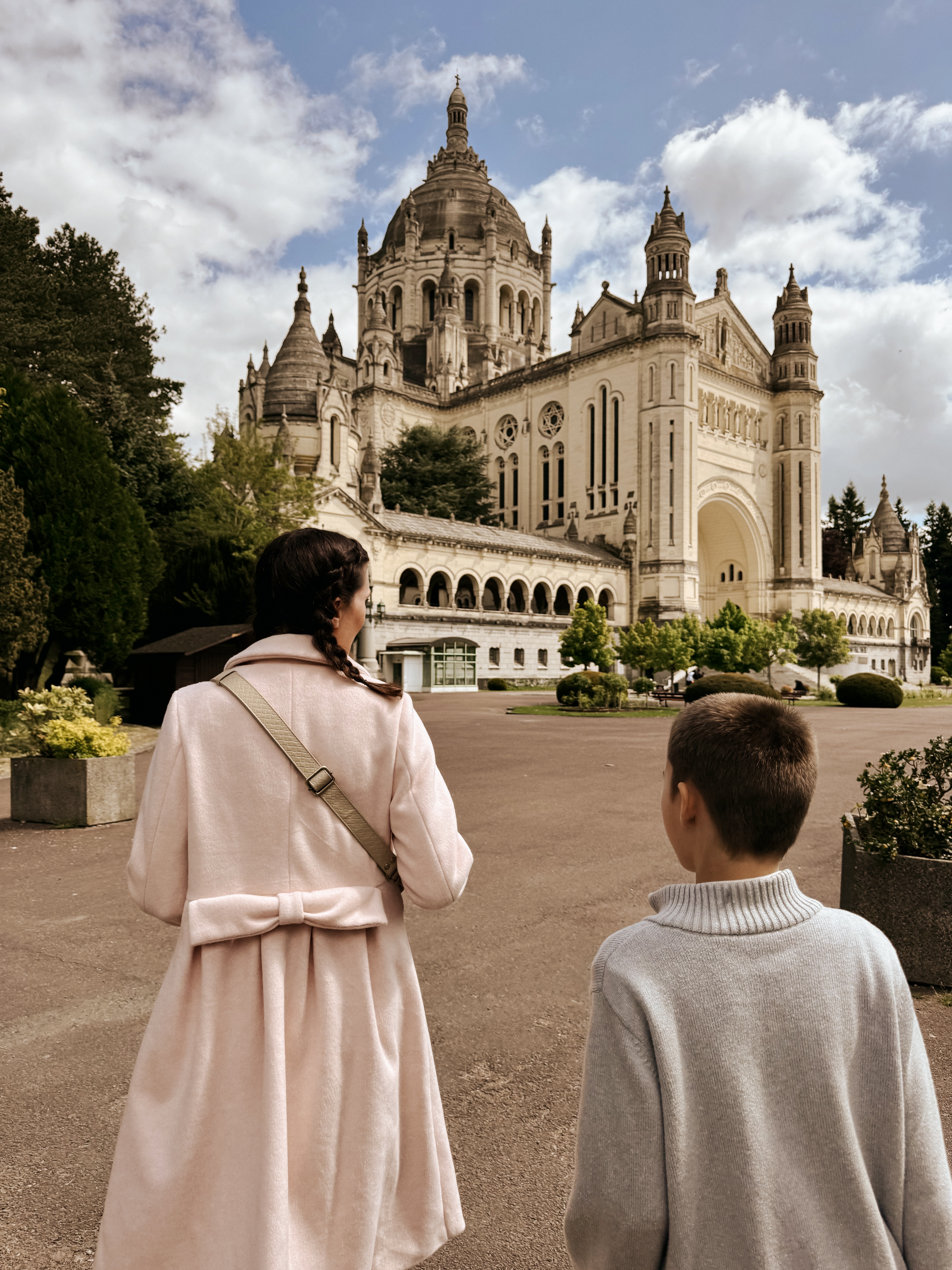
Over the past decade I have studied her life and read all her works — her poems, plays, prayers, letters, last words and her autobiography — many times over. I have called upon her help throughout the milestones of my life: nursing school, dating, working as a bone marrow transplant nurse, marriage, motherhood, home schooling, and all the little daily tasks, joys and sufferings that she herself found sanctity in.
All those life lessons prepared my heart for the lessons of Lisieux last week. I realized that in this year of the 100th anniversary of her canonization, St. Thérèse of Lisieux has lessons for each of us, if we are open to them. These are the ones that came to my heart. Among everything I encountered, three key insights made an impact on me:
1. Sanctity grows in ordinary homes.
“Those teacups look like yours!” was one of my favorite messages I received in my inbox when I shared images of St. Thérèse’s childhood home, Les Buissonnets, with my Instagram community. And so did the table, and the bed, holy statues and images, and family photographs. They looked like they could belong in any Catholic home. That’s when it hit my heart: Sanctity grows in ordinary homes. As I played with my son in St. Thérèse’s back yard, I realized this is what we are called to do as a family: fully and deeply enter into the present moment within the walls of our homes, loving one another and sacrificing for one another, simply and joyfully.
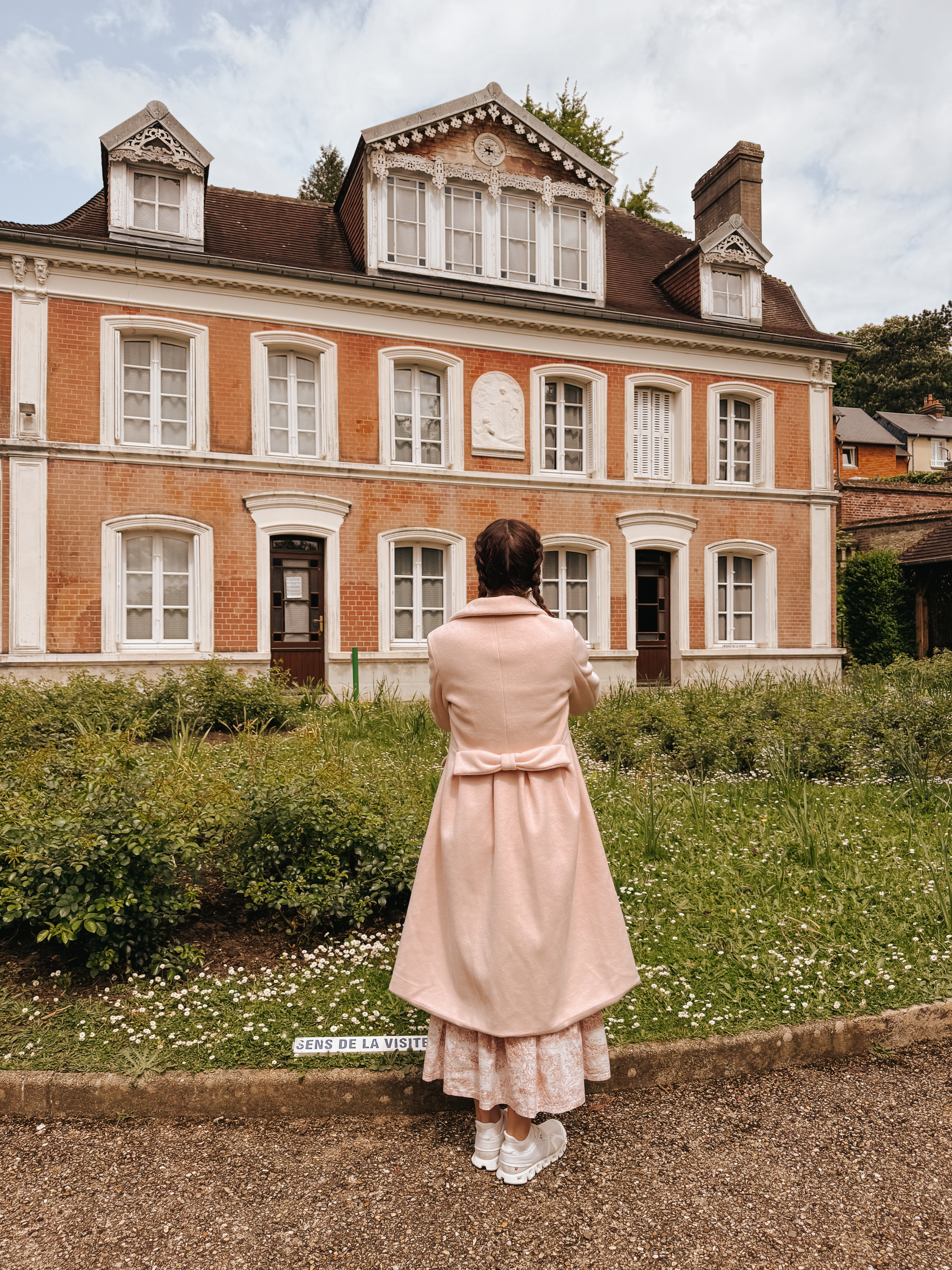
“The most extraordinary thing in the world is an ordinary man and an ordinary woman and their ordinary children,” wrote G.K. Chesterton. Virtue is practiced and lived out not only in the heroic moments, but most often, in the mundane. We often look at the saints as distant, like their holiness is unattainable. Yet St. Thérèse addressed this directly throughout her final conversations before her death: “What does me a lot of good when I think of the Holy Family is to imagine a life that was very ordinary. For example, the Child Jesus, after having formed some birds out of clay, breathed upon them and gave them life. Ah! no! Little Jesus didn’t perform useless miracles like that, even to please His Mother. Why weren’t they transported into Egypt by a miracle which would have been necessary and so easy for God. In the twinkling of an eye, they could have been brought there. No, everything in their life was done just as in our own. How many troubles, disappointments! How many times did others make complaints to good St. Joseph! How many times did they refuse to pay him for his work! How astonished we would be if we only knew how much they had to suffer!” (St. Thérèse of Lisieux: Her Last Conversations). St. Thérèse’s message reveals how God sanctifies the ordinary with his mercy and love. He is ready to sanctify us, our families and our ordinariness.
2. Holiness and femininity are not mutually exclusive.
Something that impacted me the most when being immersed in St. Thérèse of Lisieux’s environment, especially her childhood home and the beauty (her drawings, plays, letters and paintings) she created at Carmel, was how feminine she was. St. Thérèse exudes femininity in a profound and deep way.
For as long as I can remember, I’ve been teased with cutting comments about how much I love feminine things: bows, pink, florals, lace, pretty stationary and embroidery. Yet I knew in my heart of hearts that all these little beautiful things led me closer to God, Beauty himself.
After seeing Thérèse’s items — her ribbons, her little tea set, her pink sash, her handwritten notes and her dainty accessories — I told my husband: “Our world has stripped away beauty for the sake of function and efficiency. Everything that is actually baseline beauty seems ‘extra’ or ‘frivolous’ to people. Yet beauty is essential; it leads to Beauty himself.”
St. Thérèse knew that beauty is a form of mercy because, through it, God is revealing the mystery of himself to us here on earth. When we receive that merciful gift from our Creator, we are, in turn, able to share it with one another. So often it is beauty that leads to conversion. The good can annoy, the truth can put off, but who can refuse the beautiful? It stirs our hearts and challenges us to use our intellect, contemplating details and thoughts greater than ourselves.
Femininity doesn’t mean you have to love pink or bows; many of the greatest, most feminine saints didn’t. Yet they all loved and responded properly to beauty. In turn, let us not shy away from drawing closer towards it, because, through it, we draw closer to Him.
3. Our hobbies and talents are most beautiful when they are used to glorify God.
When I asked my husband what his favorite part of Lisieux was, I was expecting a much different answer. Yet I love his response: “The altar candles she painted.” At the Carmelite monastery next to the chapel, many of St. Thérèse’s items are displayed. Her white rose crown, her shoes, the vestments she embroidered, the chains and sword that were used in her St. Joan of Arc play, her painting supplies, and the items she painted.
Daughter of a watchmaker and a lacemaker, St. Thérèse of Lisieux was born into beauty and surrounded by it. She cultivated the talents that both came naturally to her and were instilled in her by her lessons and family life, one of the many being painting. As I heard my husband’s love for the candles she painted, it stirred my heart: Our hobbies and talents are most beautiful when they are used to glorify God.
In the floral-painted altar candles, I saw the intrinsic connection between beauty and suffering; the suffering even found in the hours and sacrifice it takes for our hobbies and talents to bear fruit. Yet even more deeply, the beauty of those candles were meant to adorn the altar where the ultimate sacrifice of the Mass happens. “Beauty wounds, but this is precisely how it awakens man to his ultimate destiny,” Benedict XVI reminded us. “The One Who is Beauty itself let Himself be struck in the face, spat upon, crowned with thorns…Yet precisely in this Face that is so disfigured, there appears the genuine, the ultimate beauty: the beauty of love that goes ‘to the very end’” (On the Way to Jesus Christ).
This is what the greatest saints learned and lived out, and this is what they teach us: that a life lived in constant awe of Christ made present here on earth through the beautiful strengthens our hearts, wills and minds; that even when stripped of everything and of every earthly beauty — some suffering alone in prison, others ragged and starving, still others plunged into the darkest of nights — they knew that they were imitating Beauty himself and could gaze within their innermost being at the most beautiful of all realities, a culmination of all the beauty they had experienced up until that moment, the Wounded, Resurrected Christ. It is for Jesus that all this beauty here on earth exists. The sweet symphony, the saint’s martyrdom, the little Carmelite’s altar candles — it is all for Christ. And because Christ is Mercy and Love, because it is for him, it is for us.
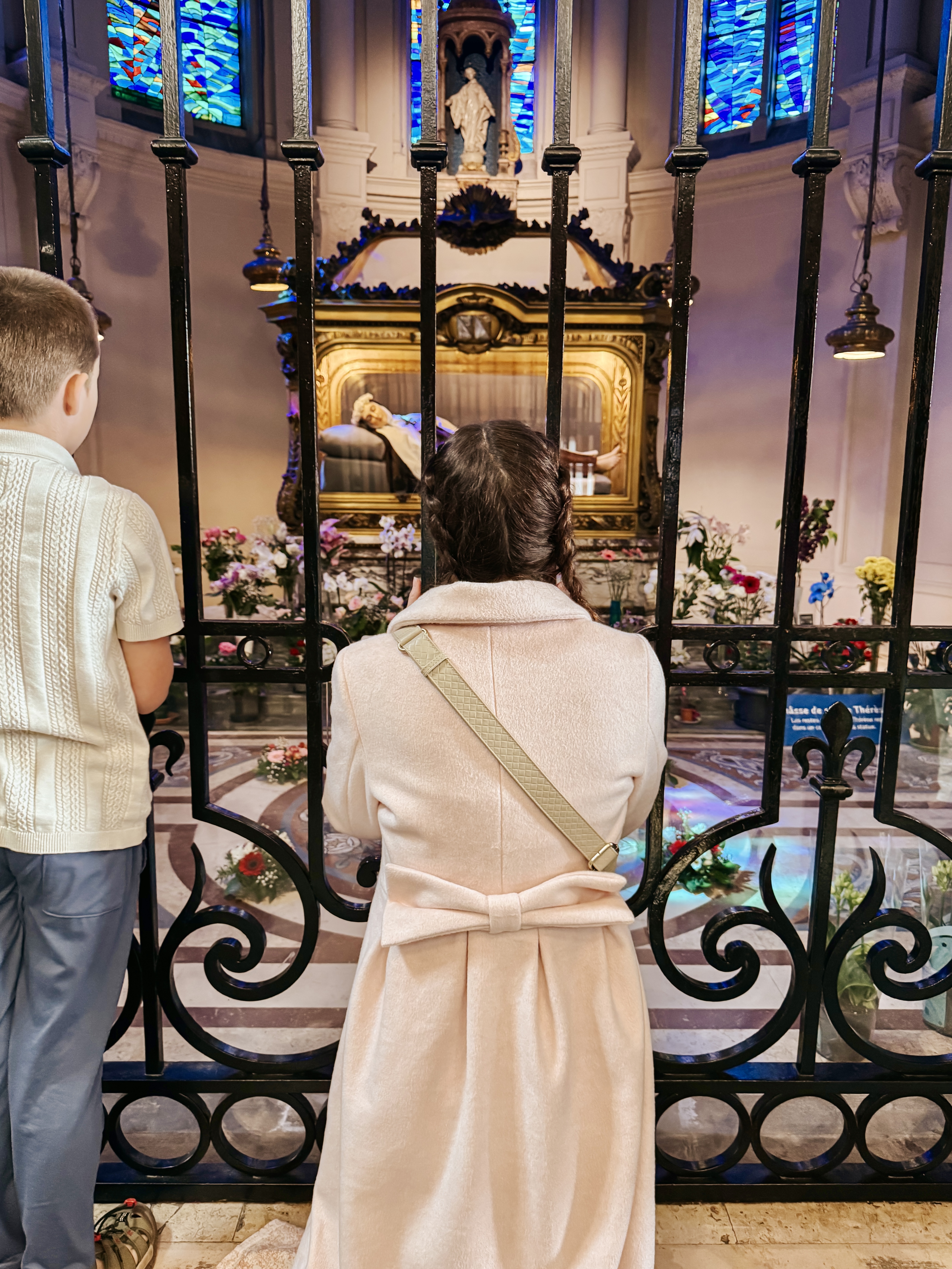
These three lessons are what St. Thérèse of Lisieux is teaching me this 100th year of her canonization. What is she teaching you? May our hearts and minds always be open to the lessons of Little Flower from Lisieux.
Visit the hometown of St. Thérèse: Claire Couche is visiting St. Thérèse and Lisieux again this October 2025 for a pilgrimage in honor of the 100th anniversary of the Little Flower’s canonization and her feast day and would love for you to join her. Email her at [email protected] for more information or visit this link. Also visit her website.