Sigrid Undset’s Surprising Epilogue — and Why ‘Her Writing Opens Up the Whole World of Christendom to Modern Readers’
A cause for canonization is underway for the author of the Norwegian novel Kristin Lavransdatter, which has become a huge hit with Catholic readers in the U.S.
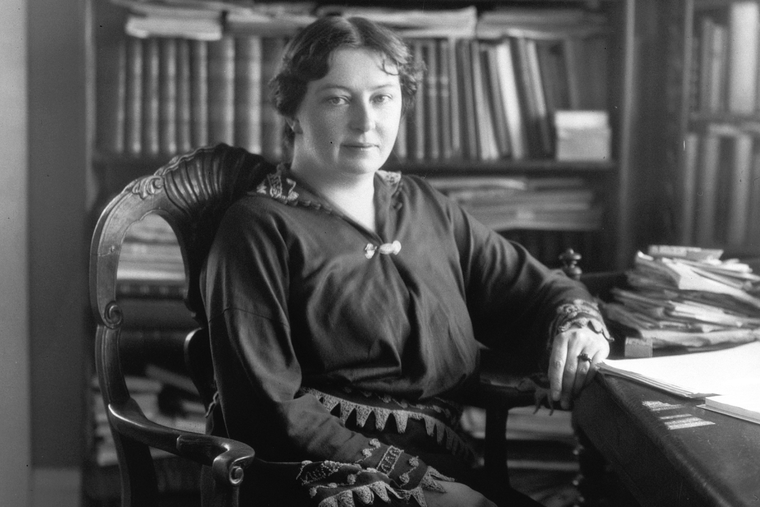
Clocking in at more than 1,100 pages — with a tongue-tripping title to boot — the novel Kristin Lavransdatter, about a rebellious young woman who defies the sexual mores of 14th-century Norway — might not sound like an obvious choice for a Catholic book club.
Yet, more than a century after its publication, the book has become a staple for countless Catholic literary circles in the United States, prompted by the arrival of a readable new English translation from Penguin Books in 2005 and a compelling narrative built around a flawed but relatable heroine, who struggles with the consequences of sin before ultimately finding forgiveness and peace.
Now, there’s a surprising twist to the story: The novel’s Norwegian author, Nobel Prize-winner Sigrid Undset, whose own real-life conversion to the Catholic faith shares similar themes, is on a path to possible sainthood.
On July 8, Bishop Frederik Hansen of Oslo announced that a canonization cause will be opening for Undset, who, he said, lived a life of virtue and holiness (following an unconventional life before being received into the Church).
“She showed a constant and practical concern for the poor. She gave of herself in caring for her daughter, in her commitment to life and to the sanctity of life,” he said.
Her writing, Bishop Hansen said, also played a part in the decision to pursue her cause for sainthood.
“Through her many books she has shaped countless believers, inspired them to live in Christ, and borne witness to our medieval saints,” Bishop Hansen said.
The Register spoke with several Catholic admirers of Undset’s work to better understand both her literary genius and her contributions to the Church.
A Storyteller for Our Times
Amy Fahey, a professor of literature at Thomas More College of Liberal Arts in Merrimack, New Hampshire, assigns her students readings from the Icelandic and Norwegian sagas as well as Kristin Lavransdatter in her tutorial on “Northern European Literature.”
Undset is not only a gifted storyteller, Fahey told the Register, but her books — both her medieval historical fiction and her contemporary novels — invite readers to journey more deeply in their faith.
“Her writing opens up the whole world of Christendom to modern readers, as she allows her characters to take faith seriously — not in a saccharine superficial way, but as they struggle with belief,” said Fahey.
Having been introduced to Undset through Kristin Lavransdatter, many of her readers have gone on to read her other books, including her tetralogy, Olav Audunssøn, and her contemporary novels, including The Wild Orchid (1929) and its sequel, The Burning Bush (1930). Like the works of fellow 20th-century Catholic authors Graham Greene, Evelyn Waugh and Walker Percy, these novels explore the inability of modern secularism to satisfy the deepest longings of the human heart while affirming the enduring truth of Christianity.
For many of her readers, what makes Undset’s writing so compelling is how effectively she portrays the confrontation of sin as a possible channel for God’s mercy.
“Undset’s depictions of the interplay between fallen nature and grace are among the finest ever put to paper,” said Michael Foley, professor of patristics at Baylor University, in an interview with the Register.
“I rejoiced to hear the news about the opening of Undset’s cause, which was a complete surprise to me,” he said.
Dominican Father Raymund Snyder, who teaches philosophy and the humanities at the Pontifical University of St. Thomas in Rome, also known as the Angelicum, told the Register that Undset’s work offers readers a “convincing portrait” of the Church’s teaching on salvation and grace.
“I think we can understand the way God moves the human heart and therefore how God moves my human heart by thinking through her characters,” he said.
“At moments they felt distant from God. Then you wonder what actually brought them closer. So you can imagine those moments of light and conversion that come to Kristin as she realizes the consequences of her sins.”
Fahey likewise emphasized Undset’s understanding and compassion for the sinner, noting that mercy is a constant theme in the author’s work.
“I think that she both understands the nature of sin and the attractiveness of the unfettered self. She’s very good at tracing for us, slowly and patiently, the consequence of those sins, but never in a way that feels insurmountable,” she said.
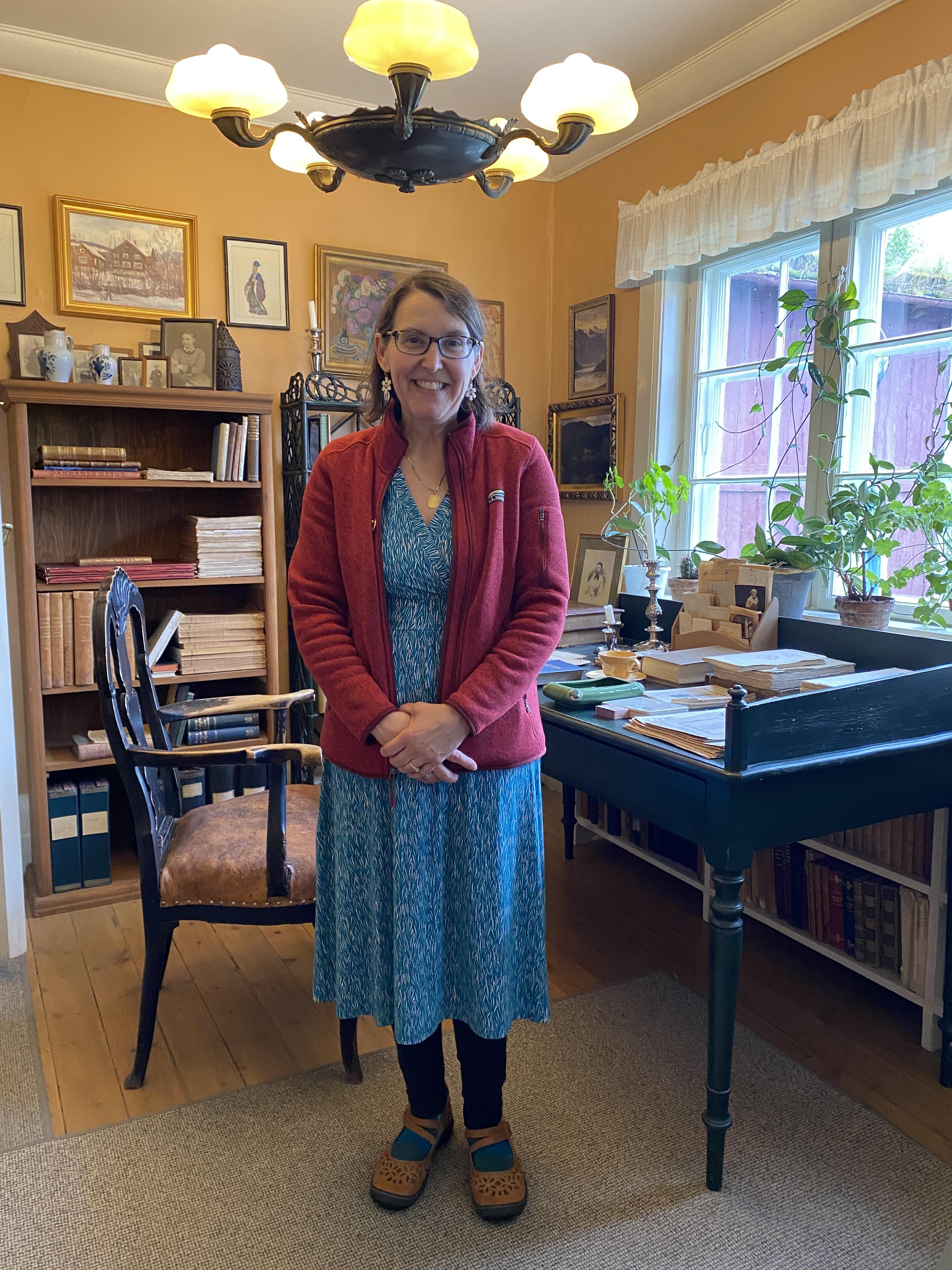
Erin Kamprath, a mother of young children living in Wisconsin, first encountered Kristin Lavransdatter in Fahey’s class, and she has since reread it three times. The book “came at a really, really good moment for me in my life,” she said, noting that she was “very young and dating for the first time.”
“She never minimizes the forces in this life like our human passions, or the circumstances that pull us towards sin. Her writing is so good that she helps you feel what the characters are feeling and to see the complex context that makes the right decision difficult,” Kamprath said.
“She also just as faithfully shows the ugliness that sin brings when you do give in to it and the suffering that it causes,” she said. “What’s really comforting is she also shows us how God can work his grace the whole time, as well, and how he always continuously provides moments of grace to turn the consequences of sin or other suffering to healing.”
Jacinta Sigaud, another student of Fahey’s and a recent Thomas More College graduate, told the Register that reading Undset’s works strengthened her faith.
“Undset’s unflinchingly realistic writing explores the notion that, though we have been scarred by sin, God’s grace nevertheless permeates our existence and acts within the confines of our fallen world,” she said.
In fact, Kristin Lavransdatter was the inspiration for Sigaud’s senior thesis, where she argued that the novel presents “the Catholic understanding that the material world, rather than being a hindrance to the spiritual, is the very conduit through which human beings receive grace and work out their salvation.”
Catholic Book Club Favorite
Marcie Stokman, a mother of nine and the founder of Well-Read Mom, a nonprofit book group with nearly 10,000 members, has selected Kristin Lavransdatter for the organization’s reading list twice.
She told the Register that when she read the book for the first time, she wondered if she should stick with it.
“I thought, ‘Oh, dear, should I be reading this?’ It felt scandalous. But as you stay with it, you start to understand Undset is really taking you on a journey of deeper and deeper conversion,” she said.
“She also shows, especially in Kristin Lavransdatter, that our hearts are divided and we have a love for God, but also a love for our own will and for the world, and that the process of conversion is the process of this surrender to God’s will for our life. There’s a suffering involved in that,” she said.
John Boyle, a professor of Catholic studies at the University of St. Thomas in St. Paul, Minnesota, has his students in a graduate class on “The Essentials of the Catholic Faith” read two books: the Catechism of the Catholic Church and Kristin Lavransdatter.
When asked why he chose Undset’s book, he said he wanted a work of literature that would offer something “concrete” to allow the class to talk about the substance of the Catechism. Kristin Lavransdatter, he said, is “simply a glorious text to teach in that context.”
Boyle told the Register that the book might at first be frustrating for a reader accustomed to a “rom-com” storyline, where any difficulties are swiftly dealt with as the plot wends its way to a happy ending.
“Undset has frustrated us with a portrait of life that we feel is true — we just wish it wasn’t true — and then shows us what it might look like to live that life well in the struggle, in the limitations, to use Pope Leo’s language,” he said.
“What would it mean to grow through those limitations, not simply to possibly overcome them? Really, that’s the place where God is operative,” Boyle said.
Relatable to Modern Readers
Undset’s focus on the spiritual consequence of ordinary daily life — “the daily care of children, the relationships between husband and wife, father and daughters” — can spark spiritual reflection among modern readers, said Maria Cecilia Ulrickson, a theology and religious studies professor at The Catholic University of America.
Ulrickson explained that while she doesn’t teach Undset’s work, she often recommends it to her students.
“The fact that she’s taking that subject matter, which is where we are today as a society, and then she gives this vision of the eternal consequences of these relationships, these institutions and these situations — it’s this beautiful occasion of evangelization,” she said.
In choosing to set her novels in medieval Norway, Undset is able to communicate the truths of the Gospel in a way that is, somewhat paradoxically, accessible to the modern reader, Fahey explained.
“I think it enables her to talk about sin and belief and faith in a way that is far more difficult in a modern setting because in that historical and theological context it’s just taken for granted,” she said. “Yet the pagan past isn’t so remote that it doesn’t still have some pull on the culture and characters."
However, the historical setting isn’t merely a literary device, she said. Undset was personally so inspired by the story of Nordic Christianity and the lives of Norway’s saints that she wanted to share them with her readers.
Foley, too, argued that Undset was able to avoid the limitations of a contemporary secular setting.
“One blessing that her writings bring is the way they portray a wholistic, integrated Catholic culture — Christendom — and against this thick backdrop her characters live out — or fail to live out — their baptismal vows,” he said.
“Most other modern Catholic authors, by contrast, portray modern Catholic characters navigating the shards of modernity, a kind of ‘love in the ruins.’ Both contributions are valuable, but sometimes it is good to get out of one’s own historical cave and imagine a different world,” he said.
Undset’s Journey Towards Holiness
For several of Undset’s fans, her personal life is as inspiring as her writing. Before converting to Catholicism, she led an unconventional life. She had an affair with a married man, whom she later married and with whom she then had three children.
After her conversion, she would become a Dominican tertiary and a generous benefactor to the poor, and, Foley said, she was among the few 20th-century-Catholic writers known for living a life of virtue.
“Along with Flannery O’Connor and G.K. Chesterton, I consider Sigrid Undset to be not only a great Catholic writer but a great and holy Catholic,” said Foley.
“Undset went from sinner to saint, from a ‘loose woman’ in a bad marriage to a pious and generous soul who gave all her Nobel Prize money to fight the Soviet invasion of Finland, who was on the ‘hit list’ of the Nazi Gestapo, and who spent her exile during World War II pleading the cause of European Jews,” he said.
Foley noted that Greene and Waugh, also renowned for their Catholic-themed writings, were “equally great writers,” but said that “they don’t have a snowball’s chance in hell of getting canonized.”
Kamprath, too, contrasted Undset’s life to other literary Catholics, noting that Greene wrote The End of the Affair while having an affair.
“[Undset] has depictions of men who are tempted to break their marriage vow, but they don’t. And someone could criticize that and say it’s unrealistic, that people can’t really act that way. But she did. She lived those virtues heroically,” she said.
Like the heroine of Kristin Lavransdatter, Undset “didn’t live out a perfectly holy life,” Sigaud said, but, “like Kristin, she experienced the healing grace and forgiveness of God.”
“Her life, like the lives of so many of her characters, bears witness to the power of Christ’s redemptive love within a struggling, sinful world. It is within the complexity and weakness of human existence that we can find a path to holiness.”