World Cup: Ahead of Final, Bishop Warns Against Making Sports an Idol
After noting the benefits of sports for athletes and fans, Bishop José Munilla of Spain pointed out the pitfalls of exaggerating their value and turning the game and star players into idols.
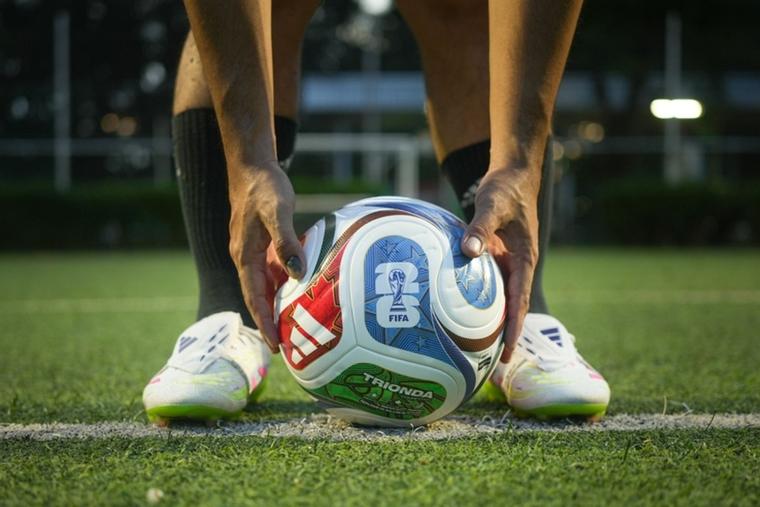
Ahead of the 2026 World Cup final, which will see the national soccer teams of Spain and Argentina face off on Sunday, the bishop of Orihuela-Alicante in Spain, José Ignacio Munilla, reflected on the values of sport and the risk of idolatry.
Speaking on his program “Sixth Continent” on Radio María Spain regarding the sporting event, the Spanish prelate noted that soccer “possesses values that deserve to be recognized."
He said the Church “cultivates the spiritual values of sport,” which unites families and friends, creates opportunities for social connection in an increasingly individualistic society, and offers a chance to share joys and disappointments, among other virtues.
‘Who Holds First Place in Our Hearts?’
However, Bishop Munilla pointed out that “precisely because soccer stirs the human heart so deeply, it also becomes a magnificent mirror of our contradictions. For enjoying the sport is one thing, but turning it into a religion is something else entirely.”
“Our era has a curious way of manufacturing saints, but without holiness,” he added, referring to the attention lavished on sports stars, particularly soccer players.
While “it’s not wrong to admire someone who has developed an extraordinary talent through effort and sacrifice,” Bishop Munilla suggested it’s worth asking, “Who holds the first place in our hearts?”
The saints, he emphasized, guided generations of Christians for centuries as “models of humility, self-giving, mercy, fortitude, and faithfulness. They weren’t perfect, yet they pointed the way to human fulfillment.”
At another point in his radio reflection, the prelate said: “We all need role models; we all need points of reference. We all end up resembling those we admire. That is why it’s worth asking whether our children are more familiar with the biographies of great soccer players than with those of St. Francis of Assisi, St. Teresa of Calcutta, St. John Paul II, or Blessed Carlo Acutis. It would be a tragedy, of course, not because one must choose between them but because the saints teach us the art of living.”
‘Idols Are Always Made of Clay’
Today, people are fascinated with certain athletes, and "when we turn someone into an idol, they will inevitably end up disappointing us. Idols are always made of clay," he added, because just as "today we raise them to the heavens, tomorrow we will tear them down on social media over a missed penalty kick, a bad season, or making some personal mistake, because idolatry always ends up being cruel."
This reveals “that we are not truly loving the people themselves but rather using their successes to fuel our own emotions.”
Bishop Munilla also pointed to “the enormous financial disproportion surrounding professional soccer,” reflecting that “the market tends to put a price on what we turn into something indispensable.”
“The problem is not merely about money. The problem lies in the heart. For wherever we place our admiration, that is where our time, our attention, and our resources ultimately go,” Bishop Munilla observed, recalling Pope Francis' words: “You roar for a goal, yet you are unable to praise God with that same intensity?”
‘Only God Can Fill the Heart Forever’
On a purely human level, the bishop of Orihuela-Alicante reflected on a lesson to be drawn from sports: “Not knowing how to accept defeat is a sign of immaturity. But the person who needs to humiliate others doesn’t know how to win, either.”
He argued that “true sportsmanship lies in discovering that the rival player is not an enemy but someone who made the game possible. Only those who respect the loser truly know how to win. And only those capable of acknowledging the victorʼs merit without resentment truly know how to lose.”
“Let’s never confuse a ball with the meaning of life,” Bishop Munilla concluded, emphasizing that “a championship can fill a public square for a night, but only God can fill the heart forever.”
This story was first published by ACI Prensa, the Spanish-language sister service of EWTN News. It has been translated and adapted by EWTN News English.