Pope Leo XIV’s Pontificate Officially Begins With a Resounding Call for Unity and Peace
The Holy Father addressed a throng of more than 200,000 with a tone of humility and gratitude, conscious of the enormous task the Lord has given him.

VATICAN CITY — Archbishop Andrew Nkea Fuanya of Bamenda, Cameroon, spoke for countless of the faithful around the world at the end of Pope Leo XIV’s Inauguration Mass Sunday that further mapped out the new Holy Father’s pontificate.
“I feel proud to be Catholic,” he said.
The Cameroon archbishop, who took a leading role at the Synod on Synodality last year, has been struck by Pope Leo’s emphasis on peace, noting how his first words on the loggia of St. Peter’s Basilica on May 8 were those of Christ after his resurrection: “Peace be with you!”
“Looking at the world today with a lot of wars, conflicts, all over the place, we think his pontificate will be marked by the search for peace and wishing that people can live together in harmony,” Archbishop Nkea told the Register, noting a widespread hope that his pontificate “will realize peace among peoples.”
The era of Pope Leo XIV began on Sunday with a resounding call by the new Supreme Pontiff for the Church to be harmonious and united.
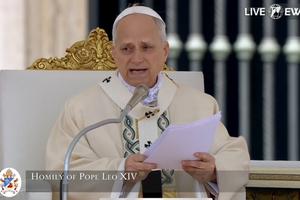
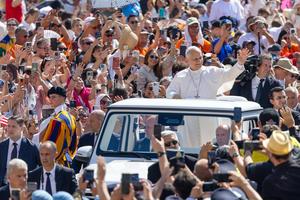
Addressing a crowd of over 200,000 pilgrims and 200 dignitaries from across the world at his inaugural Mass, Pope Leo XIV struck a tone of humility and gratitude, conscious of the enormous task the Lord has given him. He expressed a “great desire” for a “united Church,” which “becomes a leaven for a reconciled world.”
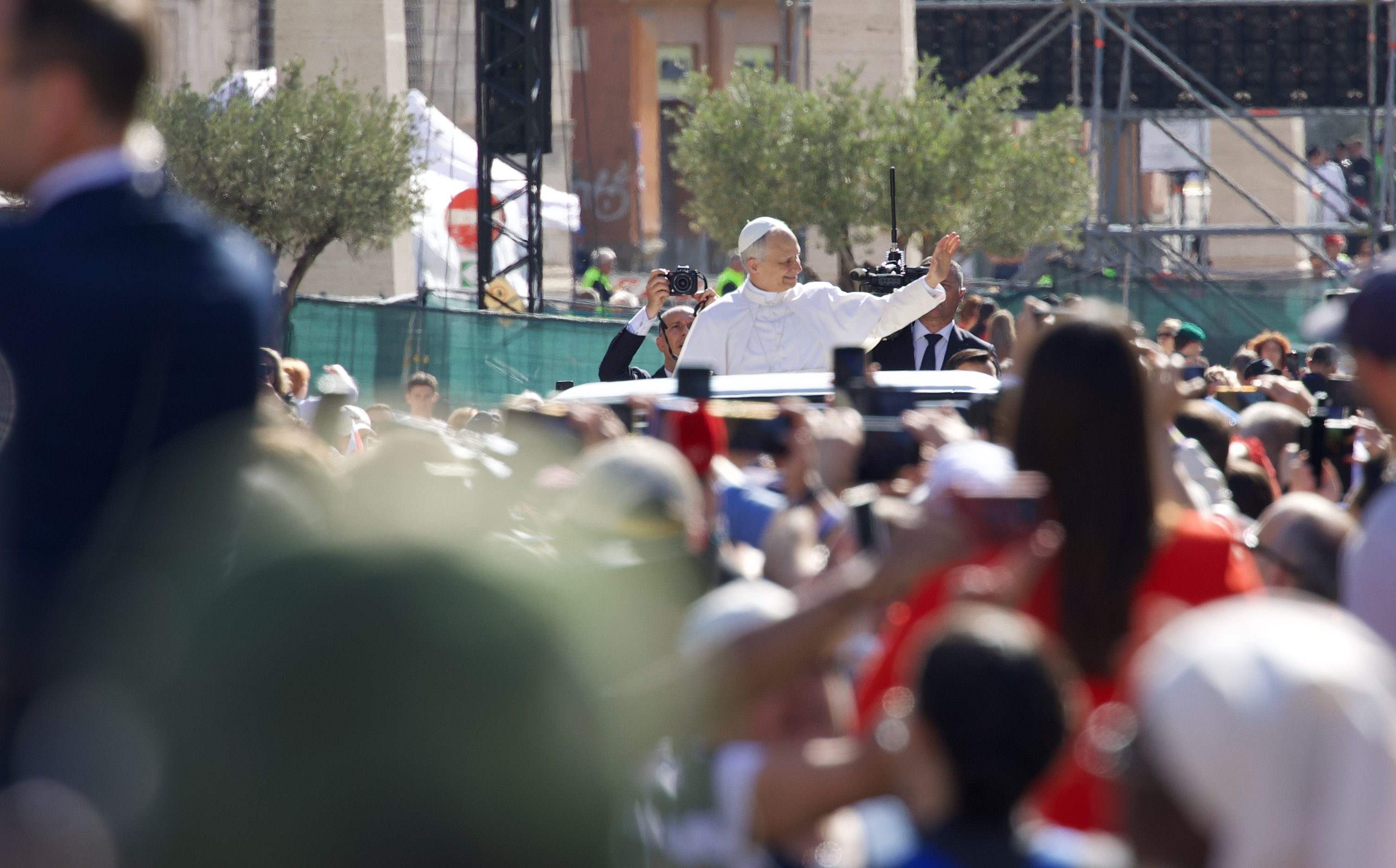
After paying homage to Pope Francis, Pope Leo recalled how, accompanied by the prayers of the faithful, the cardinals at the conclave “could feel the working of the Holy Spirit, who was able to bring us into harmony, like musical instruments, so that our heartstrings could vibrate in a single melody.”
The rest of his homily centered on unity, love, and service. He repeatedly invoked the need for “harmony,” and, referring to the day’s Gospel, stressed how the Lord called Peter and the Apostles to be “fishers of men” so they could bring the “hope of the Gospel” to the “waters” of the world, so that all may experience God’s embrace.
He drew out the qualities needed for the Petrine ministry, noting that Peter accomplished his mission because his life had been “touched by the infinite and unconditional love of God,” even after he had denied Christ. Only when one has experienced this unfailing love of God, Leo said, is one able to “feed my lambs” and love “more” by giving one’s life for the flock.
Self-sacrificing love is what distinguishes the ministry of Peter, Leo said, and its “true authority” is the charity of Christ. “It is never a question of capturing others by force, by religious propaganda or by means of power,” he explained. “Instead, it is always and only a question of loving as Jesus did.”
He also stressed that St. Peter “must shepherd the flock without ever yielding to the temptation of being an autocrat, lording it over those entrusted to him.”
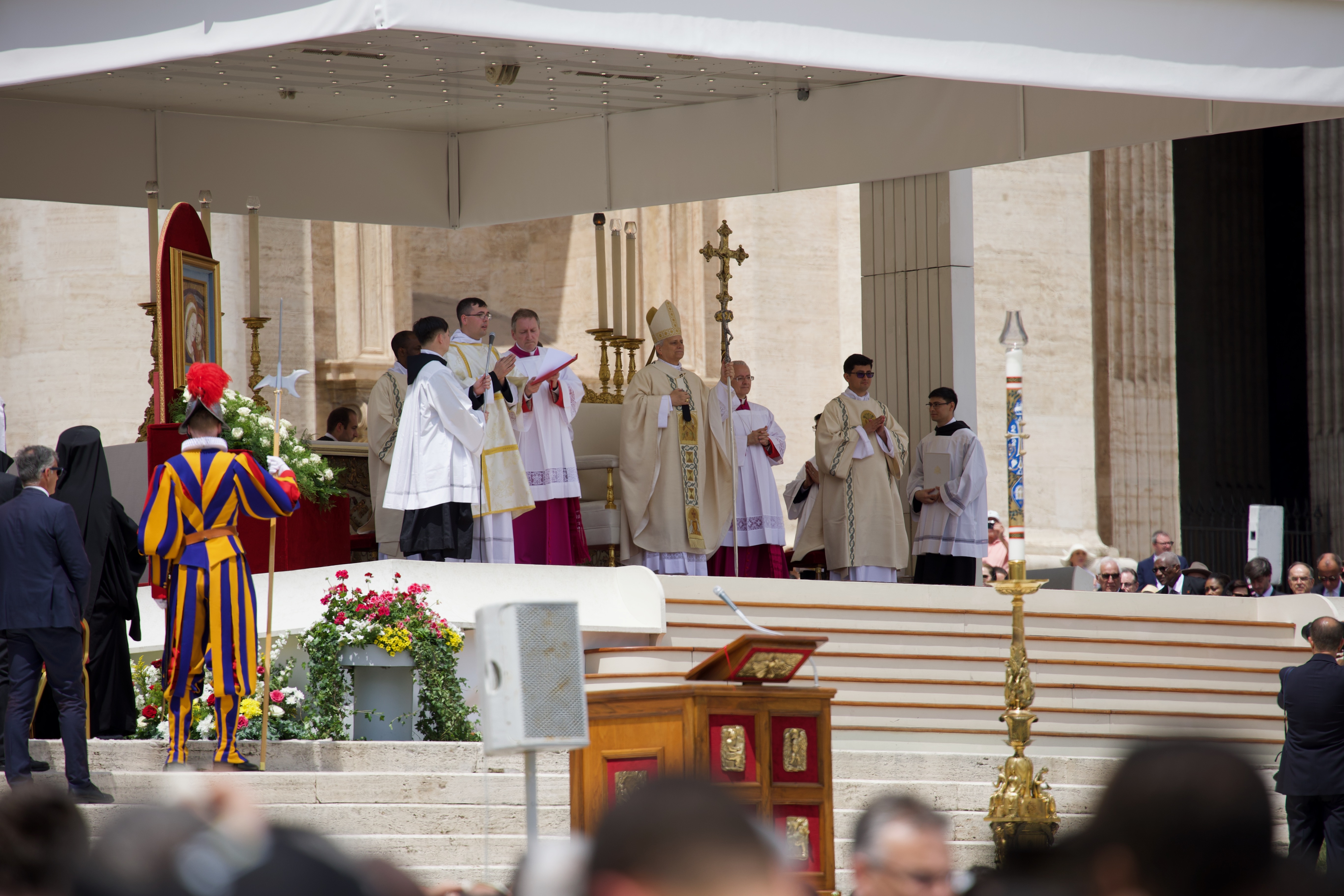
On the contrary, he said, “he is called to serve the faith of his brothers and sisters, and to walk alongside them.” Peter’s ministry, he added, is one of “fraternal communion, in the harmony of the Spirit, in the coexistence of diversity.”
“Our first great desire,” he continued, is to be “for a united Church, a sign of unity and communion, which becomes a leaven for a reconciled world.” He noted that in our time, there is “too much discord, too many wounds caused by hatred, violence, prejudice, the fear of difference, and an economic paradigm that exploits the Earth’s resources and marginalizes the poorest.”
He spoke of the importance of being a “small leaven of unity, communion and fraternity within the world” and to be Christ’s one family. “In the one Christ, we are one,” Pope Leo said, referring to his own episcopal motto. And he applied this to relations with “our sister Christian churches” who follow other “religious paths” but who, he said, are searching for God “to build a new world where peace reigns.”
Moreover, Pope Leo urged the faithful to promote a missionary spirit “not closed off in small groups” or “feeling superior to the world” but offering God’s love to everyone and so achieve “that unity which does not cancel out differences but values the personal history of each person and the social and religious culture of every people.”
The Pope made several references to St. Augustine and Pope Leo XIII, drawing on their wisdom to attain unity and peace in Christ by becoming “a leaven of harmony for humanity.”
Mapping a Future Direction
As with all papal inauguration Mass homilies, this one has been closely scrutinized as offering an indication of Leo’s plans and direction for the Church.
In their respective inaugural Masses, Benedict XVI mapped out a plan to do the Lord’s will rather pursue personal ideas, and place the Eucharist at the heart of the Church’s life, while Francis underlined his priorities of serving the poor and protecting creation. Pope Leo has thus chosen to focus on the search for unity, harmony and peace in view of discord and polarization within the Church, and in the world in general.
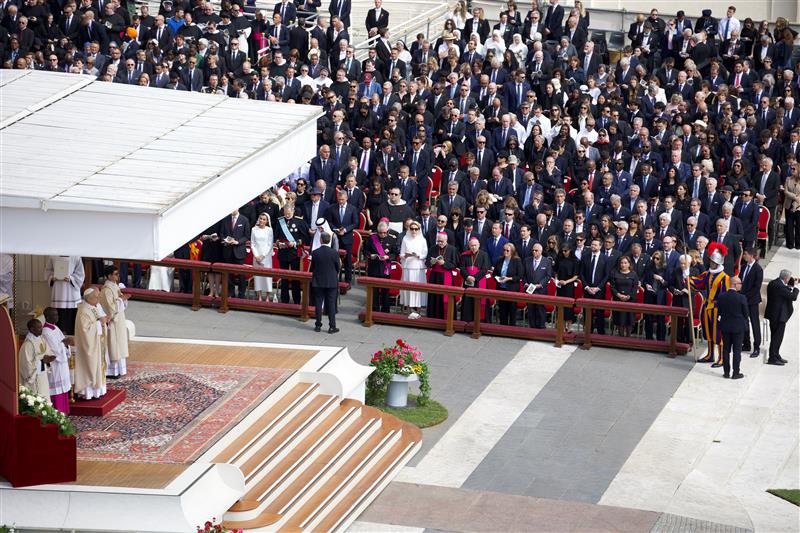
But although he offered some fulsome praise of Pope Francis’ pontificate, saying that his death left the faithful “like sheep without a shepherd,” Pope Leo omitted referencing some key aspects of Francis’ pontificate, such as synodality, relations with China, interreligious dialogue, or Francis’ disputed suppression of the Traditional Latin Mass.
Leo’s homily instead painted with broad strokes. The early indications are that he prefers a quiet continuity with the Church’s long tradition than Francis’ more revolutionary vision. Leo already has returned the papacy to its traditional past in minor aspects such as papal vestments and the liturgy. He is expected to return to the apostolic apartments within six weeks, according to Vatican sources.
Pope Leo’s determination to heal internal Church divisions means he has so far toed a discreet and careful line, but he will soon have to face some tough and revealing decisions. These will be seen in his approach to such thorny subjects as China and the Church in Germany. His appointments will also be indicative of the direction he wishes to take the Church, and how much he wishes his pontificate to be in continuity with that of his predecessor.
The widespread consensus is that he will try to embody all of the last three pontificates while steering a distinctly Leonine course. This will likely mean retaining some of Francis’ appointments, but some, given their importance for the Church, will need to be made within the next week or two, such as his former important position as prefect of the Dicastery for Bishops.
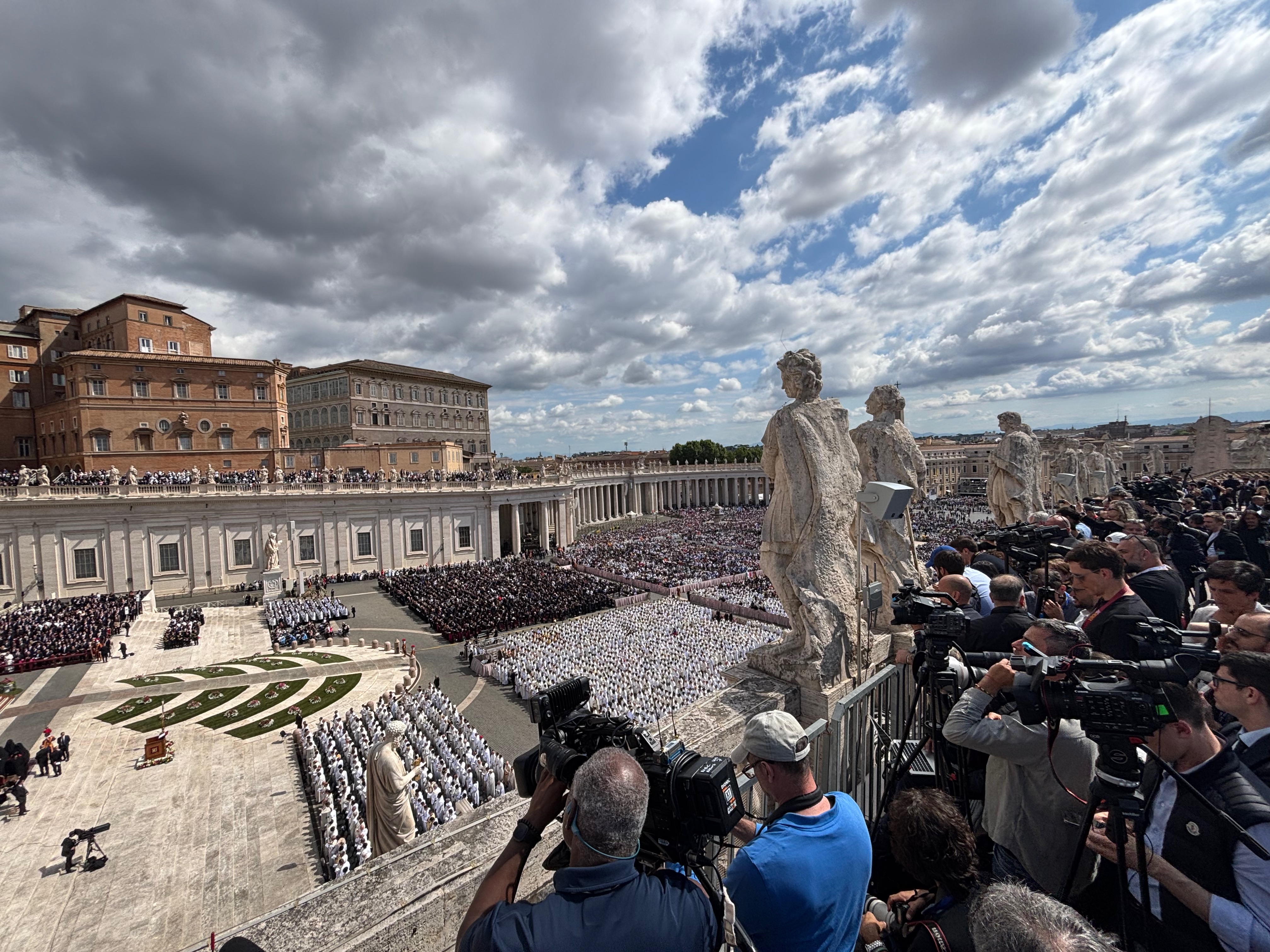
In his May 18 comments to the Register, Archbishop Nkea expressed confidence that Leo will exhibit a certain sageness in his leadership. Having come to know the future pope last year when he spent two weeks at the same discussion table as then-Cardinal Robert Prevost during the Synod on Synodality in the Paul VI Hall, he praised the new Pope as a “very humble man, full of wisdom.”
“One of the things that impressed me during the synod at our small table was that he has the gift of listening,” said Archbishop Nkea, adding that he prayed his pontificate would “make us truly see ourselves as one holy Catholic and apostolic Church.”
- Keywords:
- pope leo xiv
- pontificate

Edward Pentin Edward Pentin is the Register’s Senior Contributor and EWTN News Vatican Analyst. He began reporting on the Pope and the Vatican with Vatican Radio before moving on to become the Rome correspondent for EWTN's National Catholic Register. He has also reported on the Holy See and the Catholic Church for a number of other publications including Newsweek, Newsmax, Zenit, The Catholic Herald, and The Holy Land Review, a Franciscan publication specializing in the Church and the Middle East. Edward is the author of The Next Pope: The Leading Cardinal Candidates (Sophia Institute Press, 2020) and The Rigging of a Vatican Synod? An Investigation into Alleged Manipulation at the Extraordinary Synod on the Family (Ignatius Press, 2015). Follow him on Twitter at @edwardpentin.